
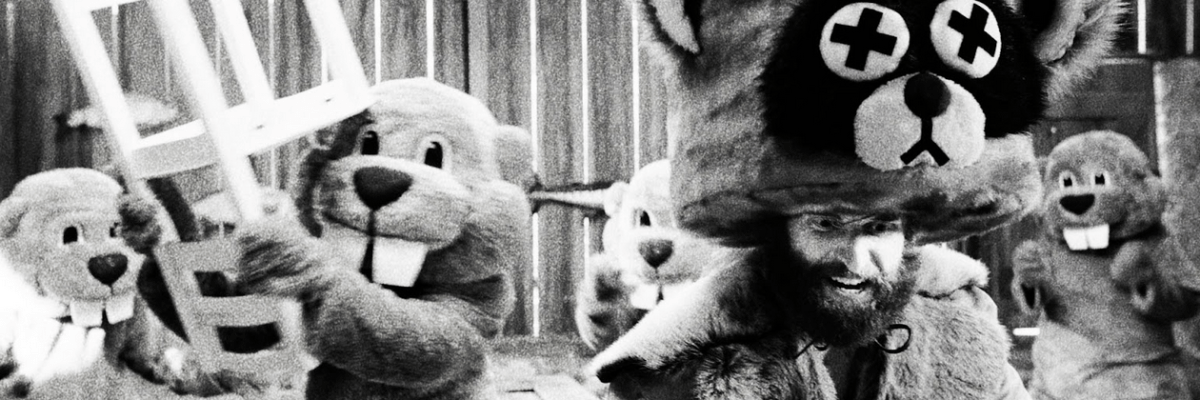
Hundreds of Beavers (USA, 2023) had me from the trailer. I knew I loved it from the moment when I saw a pair of rabbits—played by actors dressed in rabbit mascot suits—turn and look back at the camera. This was cinema, pure cinema. And the trailer didn’t lead me astray—Hundreds of Beavers is one of my favorite films so far this year. It’s very different from Asteroid City (USA, 2023), Nocebo (Ireland / Philippines, 2022) and Fuga (Poland, 2018), other favorites I saw this year. But like them, Hundreds of Beavers has a unique vision and explores the possibilities in film at a time when studios seem hell bent on constraining those very possibilities. Hundreds of Beavers is imaginative, interesting and entertaining fun that recalls silent movies and old Golden Age cartoons, including both the Fleischer Brothers (Popeye; Betty Boop) and Chuck Jones’ Looney Tunes (especially Wile E. Coyote, Super Genius).
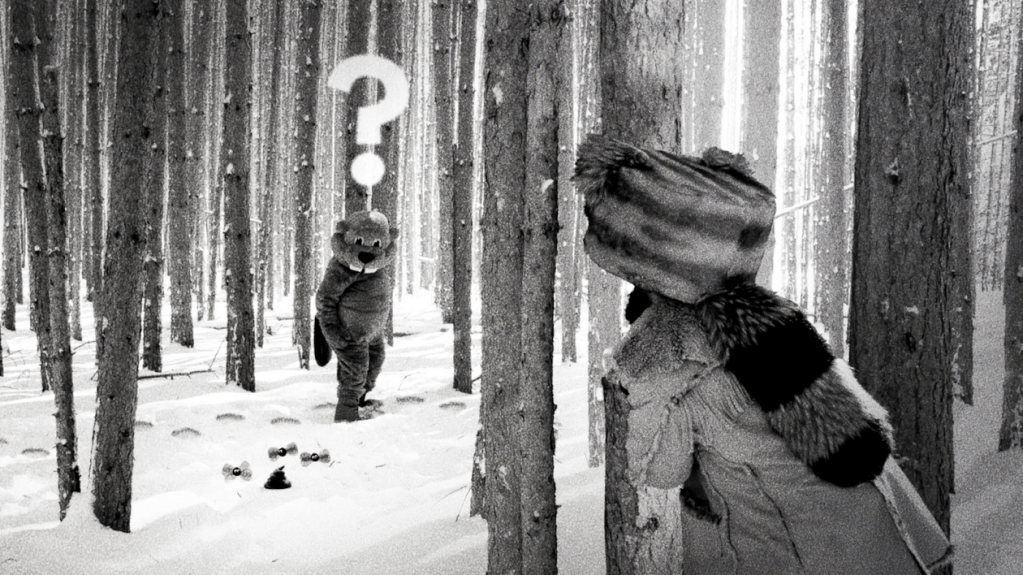
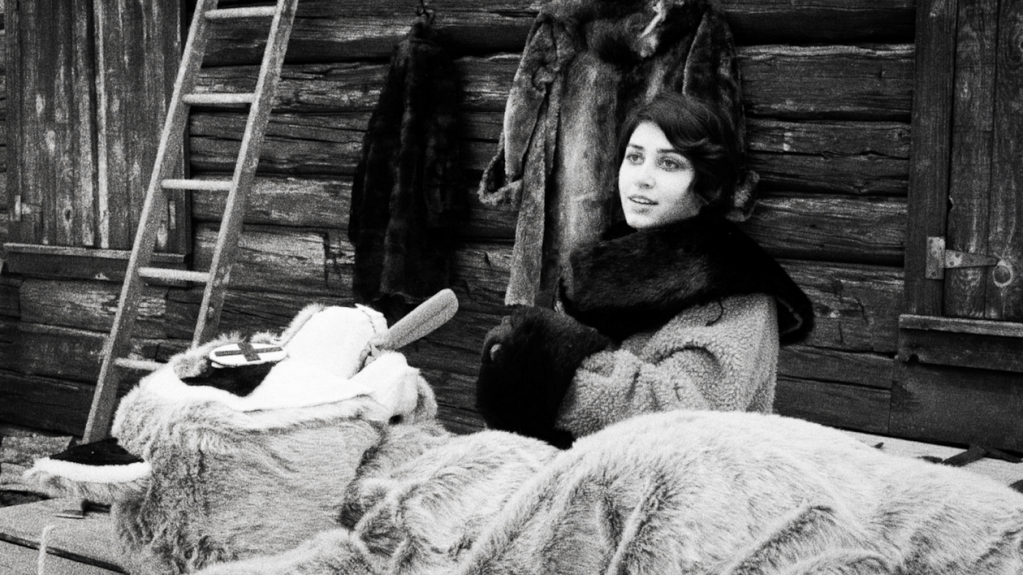
In Hundreds of Beavers, a hooch-related disaster leaves Jean Kayak (Ryland Brickson Cole Tews) lost in the frozen woods of what was then New France—not far from what would become Green Bay, Wisconsin. He has only his boots and comically patched long underwear, but with some help, Jean becomes a fur trapper. He hassles and harrows all the critters in the area as he tries to win the hand of a fair furrier (Olivia Graves). And all the animals are either people in mascot suits (the rabbits, the raccoons, and the beavers) or puppets, which is plain delightful and hilarious. (I have more thoughts about the film here).
Hundreds of Beavers was directed by Mike Cheslik and co-written by Cheslik and Tews. You might remember them from Lake Michigan Monster (USA, 2018). But the person I really wanted to talk to was Jon Truei. A filmmaker in his own right, Truei is also Hundreds of Beavers action choreographer and “beaver stunt man.” That’s right—there are beaver-related fight scenes, beaver-related stunts and a lot of slapstick beaver, rabbit and raccoon action that require choreography. So read on to find out about designing stunts and action for with people in mascot suits, some of his and the film’s inspirations, and upcoming projects!
What were some of the challenges of choreographing and performing the stunts in Hundreds of Beavers? What kind of constraints were there? And were there any unexpected benefits?
The biggest challenge/constraint with having a bunch of stunts and fight scenes in this movie had to be the mascot suits. Luckily I’ve done some monster/suitmation type projects in the past, so it wasn’t completely new territory–no matter how primitive or sophisticated the suits are, a couple obstacles always stay the same.
Fighting in creature suits will always be uncomfortable, you have to take breaks out of them to prevent exhaustion/heatstroke, and as a performer, your overall mobility, dexterity, and vision are going to be impaired pretty substantially. If your aim in doing a creature suit fight scene of some kind is to match the speed, rhythm, agility, and overall complexity of movies and fight scenes where the suits aren’t a factor, you’re fighting a losing battle in my opinion.
That being said though, once we got the ball rolling, the unexpected benefits of having the mascot suits ended up being the creative spine that we built a lot of the gag effects and physical comedy out of.
They were definitely a little janky, but when we had all of the pieces of a Beaver suit on, it was surprising how much padding/armor they provided, especially in the helmet (the suits also made it easier to hide extra pads wherever we needed). Instead of having to rely on perspective illusions/blocking for impacts, in a lot of fighting exchanges, we were able to just have Ryland line up his moves up full contact.
I think the single biggest asset the mascot suits brought to designing the fight scenes was that, in any scenario where we needed to perform stunts that were either too dangerous for an actual person, or impossible to perform through natural human physics, we could rig up empty suits, and then just deal pretty much infinite damage to them. That ends up being a linchpin comedy element throughout the entire movie.
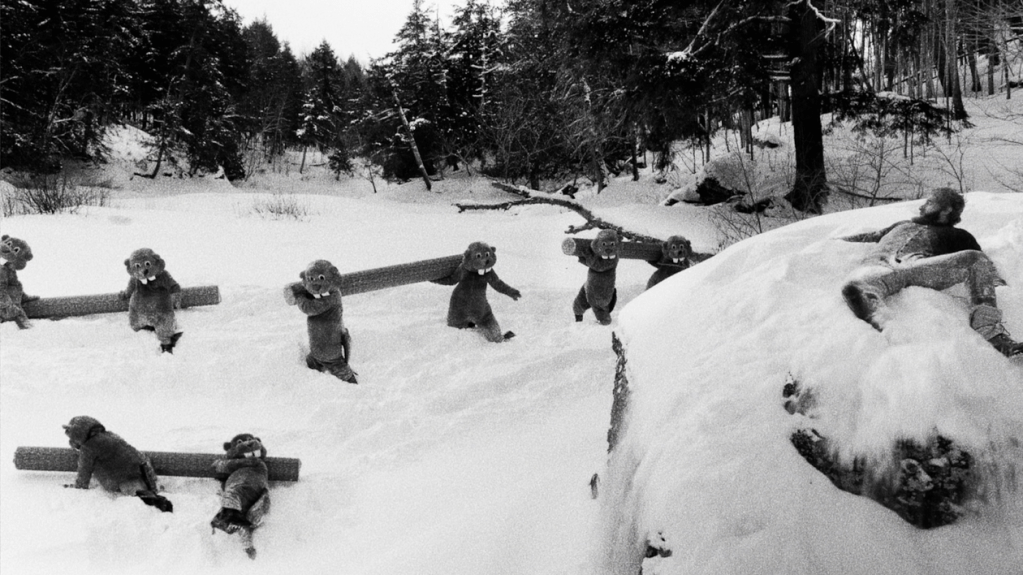
Another major benefit that comes with the mascot suits (which is one I learned filming with my friends as a kid and still always keep in mind with this kind of on-the-fly project) is the interchangeability of the suit performers. Whenever you’re scheduling a shoot around the off-time of friends and volunteers, especially for something like a fight scene with a huge group of people, it becomes a major liability if someone has shown their face in the scene who has to leave before the filming of the scene is over. It’s always handy to have minionlike villains whose faces are obscured, so if someone has to leave, you can just swap the next available person into the costume for them. This happened a lot.
Were there any particular inspirations or influences in designing the action of Hundreds of Beavers? How did you conceive of the action?
There were definitely movies and scenes we had in mind in prep for the big lodge fight. Mike and I are both rabid old school Hong Kong Action fans, so I was thinking a lot about Jackie Chan’s Armour of God, most especially the fight near the end of that movie where Jackie beats the crap out of a gang of monks in their cave hideout. That kind of slapstick, hyper expressive, almost vaudevillian tone, using things around the environment as props/weapons was always in the back of my head, but since the Jean Kayak character isn’t so much of a martial arts ace/technician type, we were aiming for something between Armour of God and an Indiana Jones/James Bond movie, kind of in the way Indy and Bond aren’t really martial arts specialists as much as they are scrappy and inventive in the way that they improvise themselves out of situations with their guts.
We definitely wanted to push the violence to a really absurd, cartoonish Wile E. Coyote / Stephen Chow kind of place. I’m always trying to find opportunities to secretly turn projects I’m working on into Shaolin Soccer. Mike had us watching a lot of old school Popeye cartoons and Stephen Chow’s Chinese Odyssey during breaks on set.
There were some other titles we looked through in prepro for slapstick fight scene inspiration that you might not expect, like The Pink Panther Strikes Again and Pineapple Express.
The actual conception of the choreography usually started with Mike’s storyboards. We didn’t have the upfront runway to storyboard or previs the fight scenes shot for shot, but in each of these fight scenes, Mike had boarded frames for almost all of the unique Beaver kills. Those boards kind of served as the skeleton for the whole fight scenes at large, where I was mostly trying to block/lead everybody’s actions in the most appealing rhythm leading into each of these kill gags while we raced against the clock to shoot everything on schedule.
What is your own background in film making, fight choreography and action?
When I was a kid, I was obsessed with old Hong Kong martial arts action movies. I did take some martial arts classes, but was mostly discouraged from being as involved in them as I wanted by my parents, so I ended up just watching old kung fu movies over and over and copying the moves and camera angles myself at home. Around when I was in middle school, I found an online community founded by a group called THE STUNTPEOPLE. They had archived reviews of over 500 martial arts films, and detailed breakdowns of all the action scenes, and a message board where other backyard martial arts filmmakers from all over the world like myself would congregate to share their videos and secrets. Eventually we all started traveling across the country (and even the world) to collaborate with each other. It was super punk rock, like a kind of secret magician’s club. I learned so much from that time. So many of our old friends from the STUNTPEOPLE forum are top action designers in the industry now, it’s actually crazy all the movies and shows they’ve had a hand in designing, choreographing, or performing the stunts for (Black Panther, Lucifer, The Mandalorian, Everything Everywhere All At Once, etc.)
I later attended film school at NYU’s Tisch School of the Arts to be a writer/director (which is where I met Mike), and so I didn’t end up specializing exclusively in stunts and martial arts choreography the way a lot of my old friends from the scene did. It’s a skill I still keep in my back pocket for whenever a cool project like this pops up though, and what I do think I bring to the table is a shared experience as a director and an independent filmmaker, and a kind of shorthand communication and understanding of a director’s mindset and problems.
Mike and I also have a shared interest in animation from film school. We’ve collaborated on animated projects in the past, and so, even though I myself am a much crappier animator than he is, this often helps me to understand idiosyncrasies in shots he’s trying to achieve.
Is there anything you’d really like people to know about making Hundreds of Beavers–something you really wish people would ask about it?
Even though we eradicated quite a large number of Beavers in the process of completing this film (some might even say there were Hundreds), the world still isn’t safe from them. I hope after watching this movie that people will stay on their guard for this menace which is certain to return.
How does Hundreds of Beavers advance your plans as a supervillain genius (and occasional filmmaker)? And are you willing to share any of your supervillain (and/or film making) plans for the future?
When we were in film school, there were hardly any other filmmakers who were trying to make fun movies about monsters and laser guns and kung fu fight scenes. Mike is one of the few, and we’ve been deeply in cahoots since then. My favorite filmmakers I’ve met in life are almost always the ones with a relentless obsession for films and subgenres that aren’t just in line with whatever is part of the current zeitgeist, and I think you’ll see a lot of that in Hundreds Of Beavers. This film brings life back into a lot of film and entertainment tradition that has been abandoned in modern times, and if we can succeed in that, it would be the most evil scheme of them all. Filmmakers like Mike and Ryland are our last line of defense against completely abandoning this approach to the artform. We have plans to keep doing more of the same.
In the meantime, I’m working on putting together a martial arts comedy feature called The 44th Chamber Of Shaolin, based on a short film I’ve completed which is currently doing festival rounds. It’s kind of like a reverse-Karate Kid, about a crackpot martial arts master who tricks a gullible kid into believing that a bunch of menial chores will teach him the secrets of kung fu.
Like Hundreds Of Beavers, it’s an absurd, highly physical, slapstick comedy about a bunch of buffoons learning a series of unusual skills that they’ll later need to conquer evil. Mike and Ryland have also been cooking up an international vampire adventure that I plan to help out with as much as possible. I hope to be answering interview questions for both of these completed films not too far in the future!
I very much appreciate the time and thought Truei put into his answers. Thanks, Jon! To keep up with Jon’s doings, make sure to visit his website here.
~~~
Carol Borden is looking forward to the upcoming movies about unusual skills for conquering evil and international vampire adventures as well as asking questions about them. In conclusion, Lake Michigan is the Greatest Lake.
Categories: Screen



 The Cultural Gutter
8 replies »