
Watching tv and movies as a trans guy, I often feel like a mythical creature. There are stories about me, but no one ever sees me. I’m like Bigfoot: shy and reclusive, rarely photographed, frequently demonized or misrepresented, and somewhat traumatized by human society’s reaction to me. I know I’m not alone in this. Anyone who belongs to a group of people who haven’t seen themselves represented in media at all or authentically has their own version of this experience. Like many queer and trans folks I have found myself in the shadows of art1, reflected in the shining eyes of liminal monsters whose physical existence or transformation unsettles comfortable systems of classification and causes existential dread. And while I personally enjoy the campy queerness of William Castle’s Hitchcock homage Homicidal (1961) or the icky horror of Hellraiser (2022) with a gender bent Pinhead, it’s ultimately distressing to only see your identity depicted through the funhouse mirrors of body horror or psychological damage.
This video is only tangentially related but “It me!”:
That’s been shifting in the past 5 years or so though, and it’s been so exciting to finally see trans masc actors and characters appearing as regulars on network tv shows. My recently watched list includes two major network shows – Kaos and Umbrella Academy (both on Netflix) – with main characters who are trans men, played by trans actors, where their trans identity is not the focus of their storyline. There are even enough examples now for me to list them off and not have included everything. Grey’s Anatomy (ABC) has a trans male doctor, the main character in The Fosters (ABC Family) has a trans boyfriend in seasons 4 and 5, The Chilling Adventures of Sabrina and the Spanish teen drama Elite! on Netflix both have trans masc characters, and 9-1-1 Lone Star on Fox (yes, even Fox) stars Brian Michael Smith as a hot firefighter. He was the first Black and openly trans man to be a series regular on a network tv show and made the list of People’s sexiest men alive in 2022.


I think one of the core struggles around transcribing identity into art is the desire to be seen as both different and the same; the importance of exploring your own identity and seeing it represented without having it define or limit all the other things you are or the stories you might want to tell. It’s the need to be seen as part of a group with a specific experience, but also as both a human being like any other and uniquely yourself unlike any other. While there is absolutely an important place for stories and documentaries about the trans experience, what I as a trans person have always wanted is for it not to be the point. Being a trans guy is just my resting state. It’s what I am in all temperatures. What I want for myself and the trans kids in the world today is to see a bunch of stories about ourselves being and doing all kinds of other things, as we are.
A lot of the value for me in seeing more trans characters in shows is the authenticity of the smaller moments and the scenes that either resonate because they’re taken from real trans experience or demonstrate what that experience could be if so much of the world weren’t hung up on what’s in our pants. In The Umbrella Academy, there’s a super-relatable transboy haircut scene where Viktor (Elliot Page) stares at the men’s styles outside a barber shop before climbing into the chair and taking that first big step into his own skin. They also managed to capture a lot during the brief beat of tension in his coming out moment as he waits for his brothers’ reaction to his new hair and name, but all his siblings clearly see it as something that makes sense and nowhere near the weirdest thing that is happening to them. They basically treat it as a relative non-event compared to the latest imminent apocalypse, which seems legit to me.

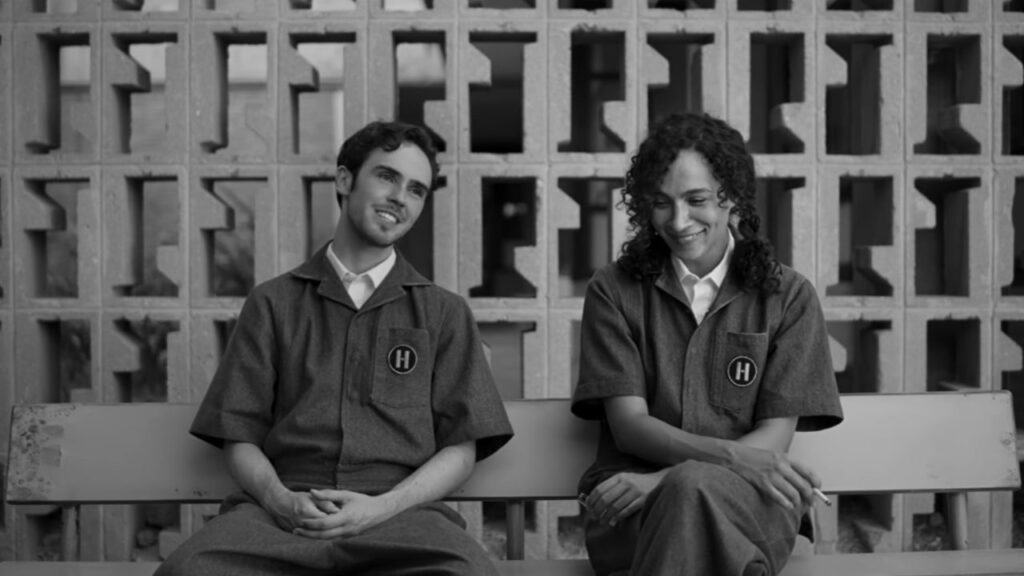
One moment that hit me hard was in Netflix’s Kaos. Jeff Goldblum’s modernized take on the Greek gods includes casting a trans male actor, Misia Butler, as Caeneus and mercifully transforming his origin story, which of course involved being raped because the Greek gods were notoriously rapey, and then murdered for being trans because humans are tragically notorious for murdering trans folks. Caeneus’ trans identity is foundational to his story, but (slight spoiler alert) most of his storyline is about what’s happening to him now and he gets to be a hero and fall in love. I have never seen a trans man play a romantic lead and just have someone attracted to him, kiss him, and sleep with him the way cis characters would. We assume that they’ve talked about their pasts, but he doesn’t have to come out to her and there’s no stressful moment showing him risking rejection beyond what we all risk when we open up to another person. She just wants him as he is and it’s fine. It really made me think about how much never seeing someone like myself making a romantic connection on screen without caveats or lots of exposition has contributed to my sense that dating is super high stakes and I have to come with warning labels.
While I would dearly love to be at a point in time when we could show happy, uncomplicated trans experiences of falling in love, going on epic quests, or just making perfect cupcakes, the reality is that the politics of visibility are incredibly important right now. With bigots actively working to strip away human rights, there is a burden on trans artists and allies to tell our stories in ways that build compassion and empathy for trans people and support for trans rights. I think if anything can save the human race from self-destruction it would be empathy, and nothing builds empathy quite like falling in love with a great character through a really good story. The creative teams for both Grey’s Anatomy and 9-1-1 Lone Star have talked openly about how they’re hoping to achieve that with their trans storylines.
Grey’s Anatomy showrunner, Krista Vernoff, intentionally cast a trans actor as a response to Trump’s proposed ban on trans people serving in the military and to help advance the types of storylines for trans characters and actors beyond trans-focused stories. She said she re-wrote one of the lines more times than she could count to get it right. Dr. Casey Parker (Alex Blue Davis) doesn’t identify himself as trans right away, saying to his boss, “I’m a proud trans man, Dr. Bailey. I like for people to get to know me before they find out my medical history.” In entertainingly dramatic tv style, he hacked the DMV to change his gender on his license because they refused to do it for him, which is a serious problem for everyday trans folks but unfortunately not a practical everyday solution.
The showrunners for 9-1-1 Lone Star have said they want to present authentic characters and deepen people’s understanding and compassion for trans folks through firefighter Paul Strickland’s story. The actor, Brian Michael Smith, said that there’s a storyline later in the show that felt very much like an experience from one of his own diaries, where Paul connects romantically with a woman he knew in school before his transition but struggles between attraction and not wanting to open doors to his past. One line that I found especially relatable was during Paul’s job interview, where they ask if all of his commendations for threat assessment have anything to do with him being trans and he says, “Growing up the way I did, there was a lot of folks who wanted to hurt me, so I guess I learned to figure out who they were before they figured who I was.”
Ultimately, trans actors love the same things about acting that most actors do, the chance to play a wide range of characters and portray experiences and people very different from themselves. Actor and activist Chaz Bono has played only cisgender characters so far (American Horror Story, Bold and the Beautiful) and says playing trans roles isn’t a priority for him, that he’s done 25 years of public advocacy and now he just wants to be a working actor. Personally, I look forward to a time when trans artists can explore messiness and be imperfect without being villainized. If artists feel pressured to present only the best for fear that people who hate them will use anything negative as ammunition to take away their human rights, it also takes away their right to be a hot mess, to fuck around and find out who they are and what or who they want, and to change their minds. Everyone deserves that grace.
- For an entertaining and informative set of interviews with queer folks about their love for horror films, check out Queer for Fear: The History of Queer Horror (2022) on Shudder ↩︎
~~~
Just to make it clear, Alex MacFadyen would probably still be a shy, reclusive, and rarely photographed creature even in a less adverse world.
Categories: Screen



 The Cultural Gutter