

This week Guest Star and film scholar Earl Jackson writes about an injured Japanese teen hearthrob’s return to the screen in a movie that references his injury and the incident that caused it.
~~~
Rushing headlong into the kaleidoscopic tumult of world film history, kibbitzing at a bazaar we might happen upon not a masterpiece but a magic act, whose slight-of-hand does not depend upon the magician’s skill at distraction but rather demands the spectator’s committed attention. Saitō Buichi ‘s Kimi wa Koibito /You are My Lover (1967) is a studio’s response to both a disaster that befell one of its biggest stars as well as his tentative recovery from it. The film that marked Hamada Mitsuo’s return registers the shock to the Nikkatsu system both in the spectacle and the narrative: it questions the mode of being of the figures on screen and disavows the apparent certainty of its story telling. Part One of my exploration deals with the spectacle; Part Two will deal with the narrative.
Appearing as Oneself
German has a variety of very handy verbal prefixes. The prefix er-, for example, in many cases marks the success of the action of the base verb. Tragen means “to carry” but ertragen, means to bear the burden fully. Schiessen means “to shoot” but erschiessen means to shoot to kill. Scheinen mean “to appear” in the sense of “to seem”, while erscheinen means to appear as what it is. Schein means “shining” or “seeming” while Erscheinung denotes the appearance of the real. Kimi wa koibito looks like a confused crime film that trespasses into romantic comedy territory, but it is actually a forum for Nikkatsu stars to slide across various points between Schein and Erscheinung, vividly exposing the internal contradictions within the act of appearing as oneself.
Since this film serves as an intimate interface between the screen image and studio reality, it requires more backstory context. Hamada Mitsuo was still a baby-faced high school student when he was cast opposite Yoshinaga Sayuri in Gurasu no naka shojo /The Girl in the Glass (1960).Their on-screen chemistry led to a series of “pure love” films whose popularity paralleled the Nikkatsu crime films. To their credit, these films acknowledged sexuality as a series of options other people might take, which not only engaged the teen audience through their honesty, but also elevated their situational abstinence to a valid choice.
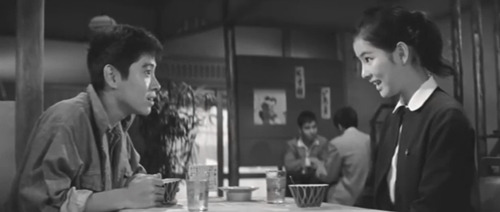
Both Hamada and Yoshinaga skyrocketed to stardom and made dozens of films together, a joint career that came to an abrupt halt in the summer of 1966 in a real-life situation that seemed like a scene from a Nikkatsu action flick. Hamada was drinking in a shady Nagoya club with fellow actor Hayama Ryōji, who had set the screen ablaze when he played a reporter that made love to a poet dying of cancer in her hospital bed after a double mastectomy in Tanaka Kinuyo’s Eien no Chibusa /Forever a Woman (1953). Out of nowhere an enraged customer pulled a lamp from a table and assaulted Hayama with it. Hayama evaded it but the lamp shattered, sending a shard into Hamada’s eye. Hamada had emergency surgery and took over a year off to recover. It would actually take seven more years and several more surgeries for a full recovery.
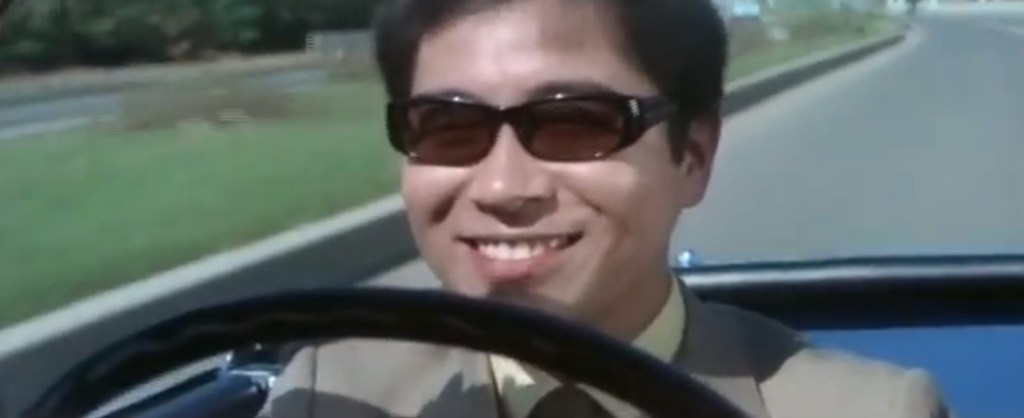
You are My Lover was Hamada’s comeback film in 1967, and the comeback itself is a central focus, not only in the opening scene, but distributed across the film in the number of major stars who either cameo as characters or appear as some version of themselves. The film opens with a shot of Hamada driving a sports car to Nikkatsu studio. His sunglasses signify his star mystique while keeping the spectator in suspense about the extent of his injuries. As he bounds up the stairs, however, Hamada takes off the sunglasses with a deliberate flourish to reveal two reassuring, functioning eyes, accompanied by applause from the workers on the staircase.
Entering a main room, two Nikkatsu stars hurry to him to shake his hand: Matsubara Chieko, who had recently played Watari Tatsuya’s true love whom he abandons for no apparent reason in Tokyo Nagaremono /Tokyo Drifter (1966), and, more surprisingly, Kawachi Tamio looking normal and rational in a well-tailored suit (Figure 3)–a version of Kawachi never even suggested in his screen roles as the chaotic sociopath Akira in Kurahara Koreyoshi’s Kyōnetsu no kisetsu /The Warped Ones (1960); the homosexual heroin dealer and psycho killer Hideo in Yajū no seishun /Youth of the Beast (1963); or the relentless hit man “Viper Tatsuzo” in the aforementioned Tokyo Drifter.
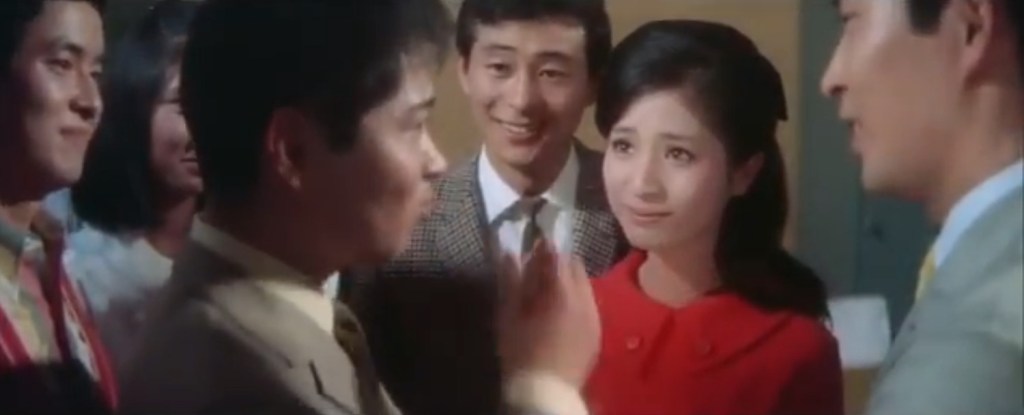
As Hamada enters the set–a cluster of bars on a Shinjuku street–he is greeted with more applause by the crew and the extras, and set up for his first scene by the director, played by superstar Ishihara Yujiro, whose appearance designates the film as an auspicious occasion. The film gestures toward conventional fiction as the director’s chair identifies Ishihara as “Ishizaki.” The screenplay also evinces attempts at plausible deniability by slightly altering the names of the stars who appear. For example, Araki Ichiro’s “character” is given the name Arakawa Ichiro, however he is never addressed by name and he sings two of his biggest hits that identifies him as who he is. Even Hamada, according to the screenplay, is a fictional actor named Yashiro Mitsuo, however in the first scene, the wardrobe woman and a set manager both address him as “Hamada-san.” He even plays a young man named Mitsuo and is called that throughout the film.
Two of the major stars function differently, Katsumi Shigeru plays a street singer named Inoue Shigeru who figures in the main plot and two subplots. Katsumi also appears in a scene speaking with Hayama Ryōji, just as Hamada had done before the attack. Watari Tetsuya, fresh from Tokyo Drifter, plays Akai, the screenwriter of the You are My Lover film within the film.
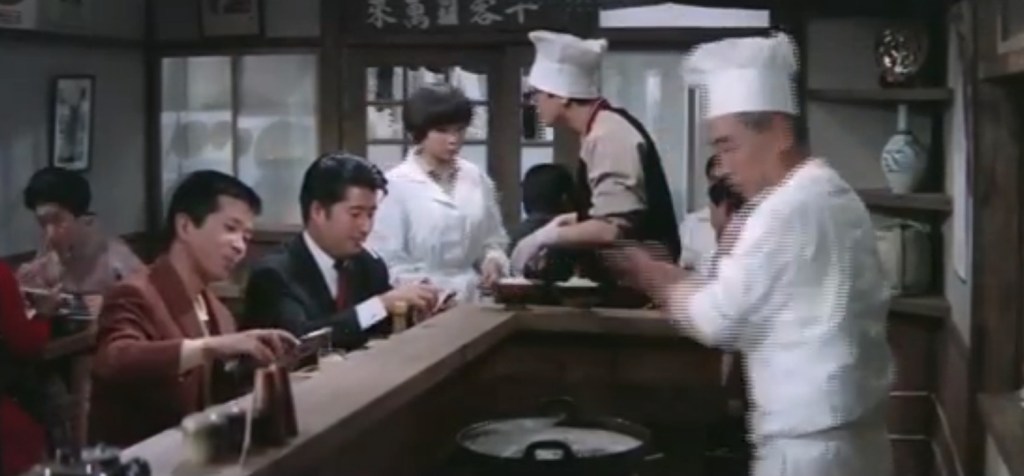
Several of stars who appear signify excessively beyond their general celebrity because of situations in the “real world” of Nikkatsu. In the story, Hamada plays a factory worker, Mitsuo, who decides to improve his lot by quitting his job at the Ishido Factory, to become a gangster in the Ishido-gumi yakuza organization. “Ishido” in rapidly spoken Japanese can sound like “Shishido” which is an incredibly rare surname, known chiefly because of Nikkatsu shoot-‘em-up film star Shishido Joe. Mishearing the name is encouraged by the casting of Shishido Joe as the oyabun, or top boss of this gang.

Shishido Joe’s appearance carries another irony with it since You are my Lover premiered on November 3, 1967, while Shishido’s starring vehicle, Koroshi no Rakuin /Branded to Kill premiered on June 15, 1967. The presence of Shishido in Hamada’s film serves as a vivid reminder of Nikkatsu’s firing of director Seijun Suzuki over Branded to Kill for “making no sense” and the beginning of the blacklisting of Suzuki when he attempted to sue.
Other stars carried darker baggage. Katsumi’s image in 1967 hid his growing gambling addiction, but it would be another nine years before Katsumi’s full degradation changed the meaning of his image permanently, a future now imposed on the film in retrospect. For several years in the 1970s, Katsumi borrowed money heavily from his mistress, bar hostess Okada Hiroko to pay his gambling debts, stringing her along with a promise of marriage, and not telling her he was not actually divorced. His debts became so huge Okada had to work in a “soapland” (sex spa) to make enough money. When she discovered Katsumi was still married, she threatened to report him. He strangled her and hid her body in the trunk of a borrowed car he left in the Haneda Airport parking lot when he flew to Hokkaido for a performance.
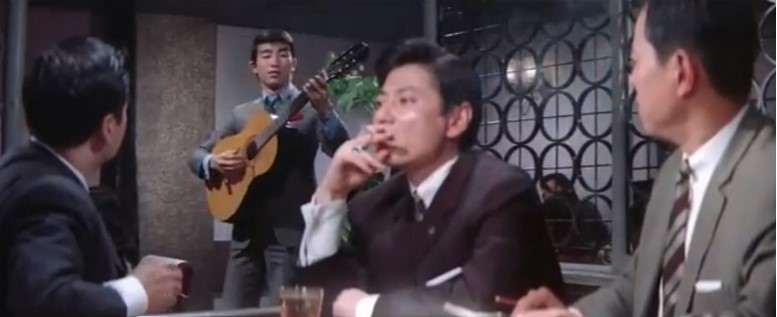
There is also, however, a complex sequence that alludes to sinister workings already in play at the time. It is set in the yakuza bar where Ono (Tada Akihisa), who replaced Ishido as head of the gang, holds court. Araki comes in, plays guitar and sings a ballad. One of Ono’s henchmen asks him to play a more upbeat number, and he complies. Araki’s reluctant sexuality stutters in a kind of morse code, piggy-backing on the passion of his lyrics, while his non-committal face recalls the randy high school student he played in Nihon shunka-kō / Sing a Song of Sex (1967) only a few months earlier.
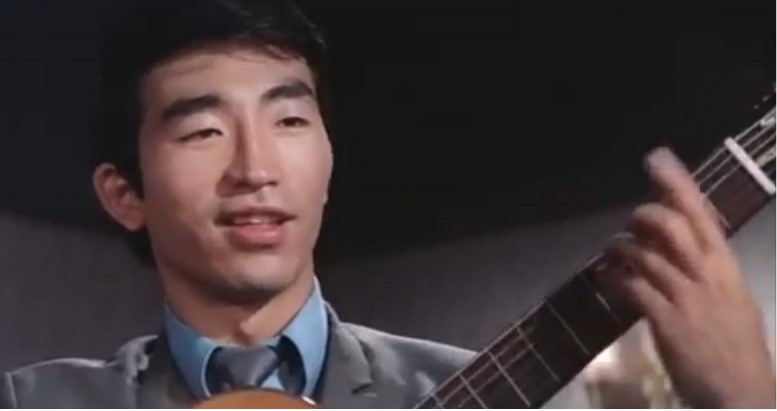
When Araki complains that he was not paid what he was promised, Ono explains that he has increased the percentage he takes off the top. Araki objects, and one of the underlings punches him directly in the face, but we do not see the punch land. Instead the punch comes directly at the camera, followed by a rapid cut to a completely different face recoiling, as if from the blow. The face is that of Nakatani Ryō, a member of the boy band, the Johnnys, and he was reacting in surprise to something he had just been told.
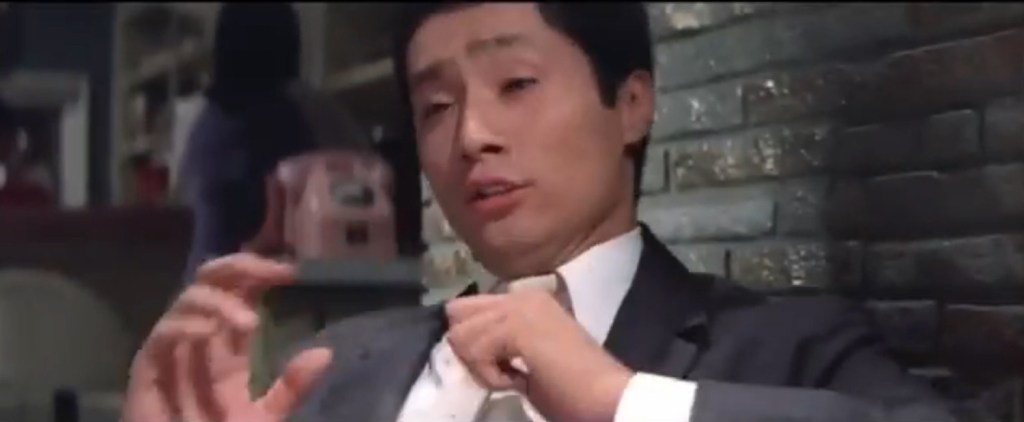
A medium long shot reveals all the actual members of the Johnnys at a table with a fictional manager (Okada Masumi), representing their real-life manager, Johnny Kitagawa. The manager is encouraging the Johnnys to perform in the Shinjuku neighborhood where Inoue is having trouble with harassment. Okada speaks in feminine Japanese, striking poses in a series of nearly baroque, flamboyant seductions. The performance deliberately fuses Okada’s own racial otherness (his real name was Otto Sevaldsen) with the sexual otherness of Kitagawa. After Kitagawa’s death countless reports came in of his decades-long sexual harassment of his young male clients. Even Nakatani Ryō wrote an exposé of Kitagawa’s abuse in 1989. Okada is not imitating Kitagawa but using a stereotypical affectation to signify Kitagawa’s behavior. The Johnnys were formed in 1962 and disbanded on November 20, 1967, two weeks after the release of You are My Lover. Their breakup must have been well underway during the filming, just as Kitagawa’s reign of terror was inscribed obliquely in Okada’s dramatics.
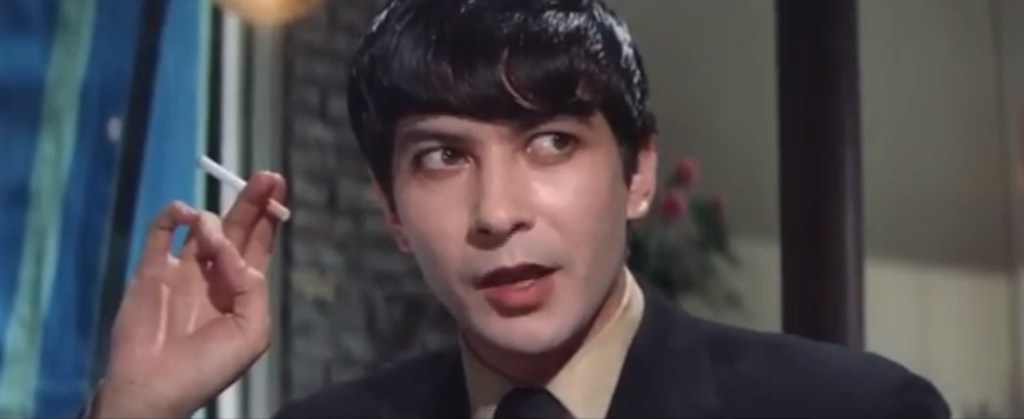
Within the fantasy structures of the film, the Johnnys then flaunt their sex appeal on their own terms. After singing on the streets of Shinjuku, the four of them strike a pose, followed by a cut to a sound stage where each of the members strikes a different pose in his own spotlight and a dance commences.
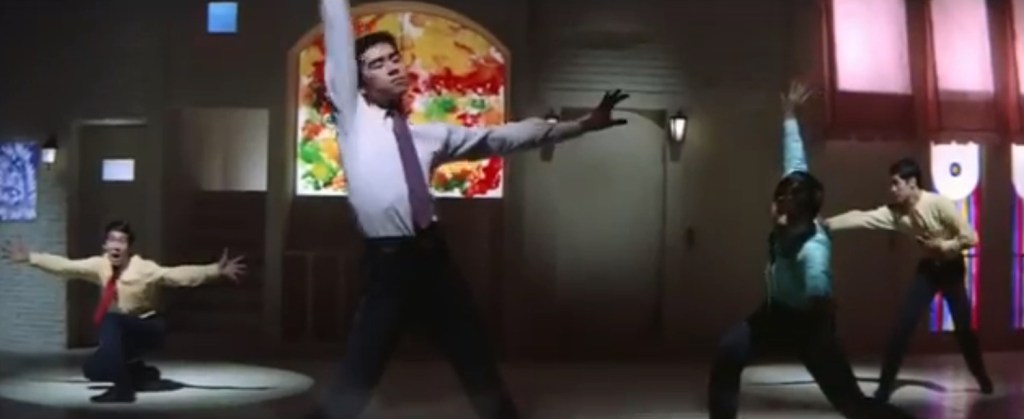
While all of these appearances, these image-modulated selves are integral to the texture and network of the film, it is Yoshinaga Sayuri’s persona behind her image, the tentative promise of her Erscheinung that haunts the film. Very early in the film Mitsuo stops at the stand of a street portrait artist. He selects components of a face from several sketches and the artist comes up with a drawing of Yoshinaga. This Frankensteinian method undermines the images authenticity.*
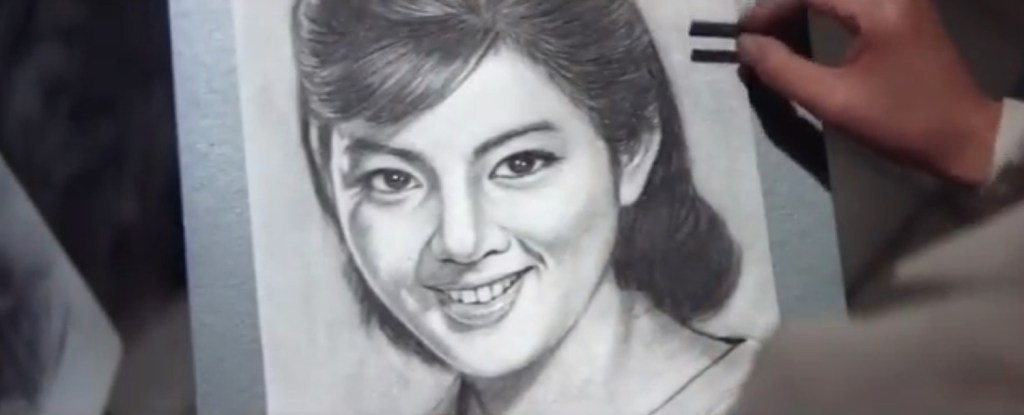
Mitsuo tells his boss that she is his lost love he has vowed to find again. This is Hamada playing a fictional actor playing a fictional Mitsuo who recalls a woman–a unified object of desire of a series of previous personae in Hamada’s repertoire.
The drawing triggers a cut to the “real” Yoshinaga, concentrating as she plays the organ in a church service.
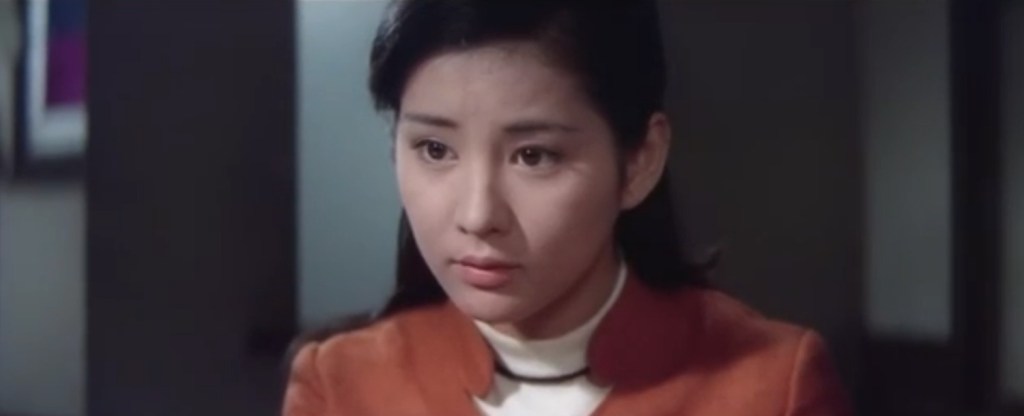
Yoshinaga appears several times in the church throughout the film, but when Mitsuo finally sees her there, she is in a bridal gown heading toward the altar. He leaves without her seeing him. Hamada’s actual injury had drawn a line between his past films and the present, but that past lingers for a long goodbye, surrounded by all the personae in their respective half-lights between memory and a compromised presence on a tremulous, wounded screen.
*Ironically in 2011 the candy company Glico would sponsor the construction of the CGI idol Eguchi Aimi by taking features from seven members of AKB48.
Read Part II here.
~~~
Earl Jackson lives in southern Taiwan by an ocean-bound river that flows backwards at high tide. Jackson’s cinephilia began the evening that his mother took him to see The Creature from the Black Lagoon at the Ellen Terry Theater in Buffalo, New York. His favorite phrase is “a conversation in progress.” Jackson believes that paying attention is an ethical imperative that also makes life a lot more interesting.
Categories: Guest Star, Screen




 The Cultural Gutter
1 reply »