
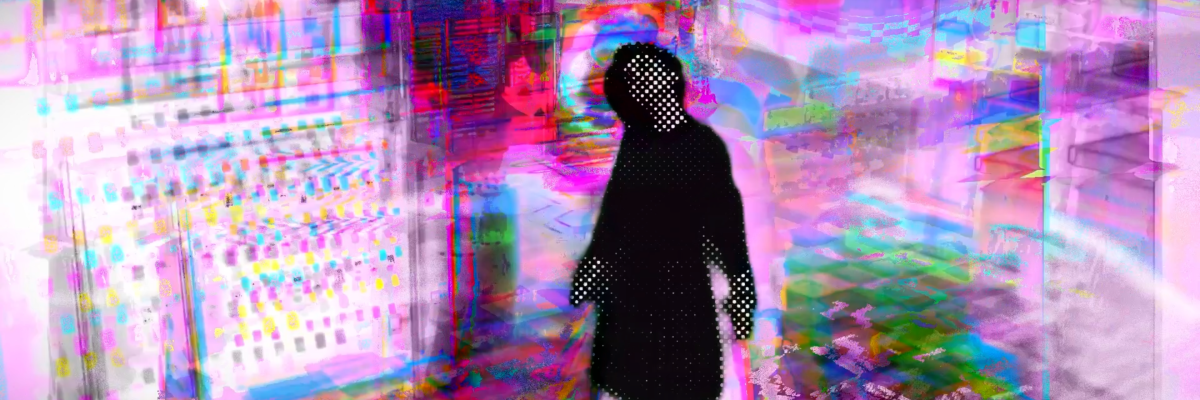
It all started with the Racer Trash collective, a group of decentralized film editors, who had a stated aim to “attack and dethrone cinema.” Working remotely as COVID was just starting to worm its way through us, this self-described ‘freeform collective’ gathered in virtual spaces to plan their assault on traditional narratives and visual conventions, wielding their considerable editing prowess to carve up and rebuild their targets. They would pick a project, often a beloved or perhaps not beloved enough film, cut it into segments (called ‘segs’), and each editor was randomly assigned one to “attack” or re-edit, using filters, overlays, re-engineered soundtracks, and bits from other media to change the tone entirely. The result is a ‘wave’, something akin to a chaotic collage that contains the kernel of the film’s original idea, malformed but with it’s own scrambled beauty.

My first exposure to the wave community was, like so many wonderful cinematic discoveries over the past couple of years, courtesy of Peter Kuplowsky. Peter’s curation of the TIFF Midnight Madness programme and the Toronto After Dark Film Festival before that, along with his one-off screening events here in Toronto have exposed me to all types of weird cinema, and his ability to root out some of the strangest people and projects in the film world have unquestionably broadened the fabric of the film scenes in Toronto and elsewhere. In this case, Peter programmed one of Dream Video Division‘s (a spinoff group of Racer Trash) waves ahead of the premiere of Zach Cregger’s Barbarian at Toronto’s Royal Cinema last year. It was, to my knowledge, the second time a wave has been presented in a for-real theatre, with Peter having brought the Racer Trash folks to town the year prior.
On that night, the wave on offer was ‘Seabizkit’, a predictably (if you’re familiar with waving) incongruous mashup of 2003’s saccharine racehorse drama and the oeuvre of late 90’s and early 2000’s buttrock band, Limp Bizkit. I have no evidence of this besides observing and participating in the wave community Discord, but I suspect that Seabizkit was conceived entirely from an in-joke in a groupchat. Watch this wave and you’ll find Seabiscuit re-imagined as an intense and chaotic nightmare, set against the abrasive tones of Fred Durst, in an entirely different way that the original is (to me at least) a nightmare. It is, like all waves, a jarring experience the first time. You’re watching a scrambled image, with no real indicator of where to look. Every wave I’ve seen starts with a warning about strobing, and it takes at least a few minutes to orient your eyes to the screen, which is usually flashing in some way for whole segs. But if you stick with them, your eyes adjust like when you first open your eyes to a bright room upon waking.
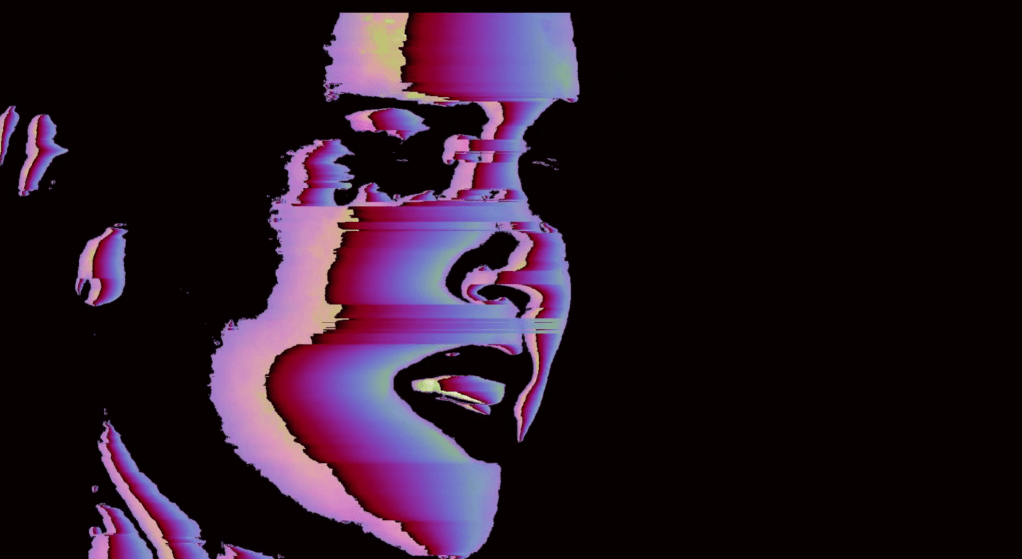
I didn’t know it then, but seeing a wave on a big screen in a theatre was not a typical way to consume one. Waves premiere in an online space, usually Twitch these days, and are a group experience where the chat and the community feels almost as important as the art itself. Communal viewing online was certainly a thing before 2020 brought us COVID lockdowns, but it seemed to explode in the first few months of the pandemic when many of us were forced to find new ways to work, to connect, and to consume art without the whole ‘going outside’ part. Along with a new style and aesthetic for cinema, Racer Trash built a community of fans that gather with the wavers themselves to screen their creations. Just as the waves feel like a logical extension of video game culture and a late 80’s vaporwave aesthetic, it feels natural for these screenings to occur on a site built for streaming video games.
At the Royal, the chat experience was replicated with a second screen, showing an ever-scrolling Twitch chat comprised of people who had second screens in the theatre or were watching from afar. Despite Racer Trash’s stated (and somewhat tongue-in-cheek) purpose, to ‘attack and dethrone cinema’, wave premieres and retrospective screenings almost always take the form of a pleasant, laid back hugfest in which fellow wavers cheer on the editor whose segment is on display, showering them with praise.
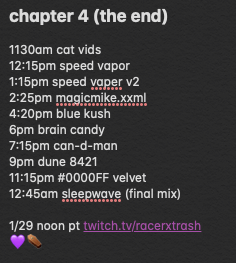
I also didn’t know it then, but the screening I attended was kind of an elegy for Racer Trash, which officially disbanded as a collective in early 2022. I hadn’t completely missed the boat, though. Wavers regrouped in many of the same online spaces to continue to produce their art. I spoke with one of my favourite wavers and founder of a wave and glitch art channel called A69, Sloane Kay (@pierogiwitch in the chat), who says that “we’d always joke that Racer Trash succeeded in [dethroning cinema], and we were building it back up in our image.” It rings true, because the waves and the premieres I’ve (virtually) attended since that first one have been a uniquely sweet experience. Wave screenings embody almost pure positivity, a safe space to express joy and delighted disbelief in what’s being injected into your eyeballs. Adding to the good vibes, waver screenings are always paired with a charity, so you can donate to a good cause while vibing out. Basically, it feels like the opposite of a place where cinema is under attack. Instead, it feels like a place where a film is passed around from editor to editor and lovingly re-molded into something new and beautiful, each putting their own special (though slightly demented) touch on it. Says Sloane on their process, “the way I conceptualize my segs for each feature, and each editor has a different process, is very much akin to choreographing a dance. I was a dance major in college until an injury made me choose another career path, so it was particularly rewarding to discover an art form that tickled that same part of my brain that choreographing did.”
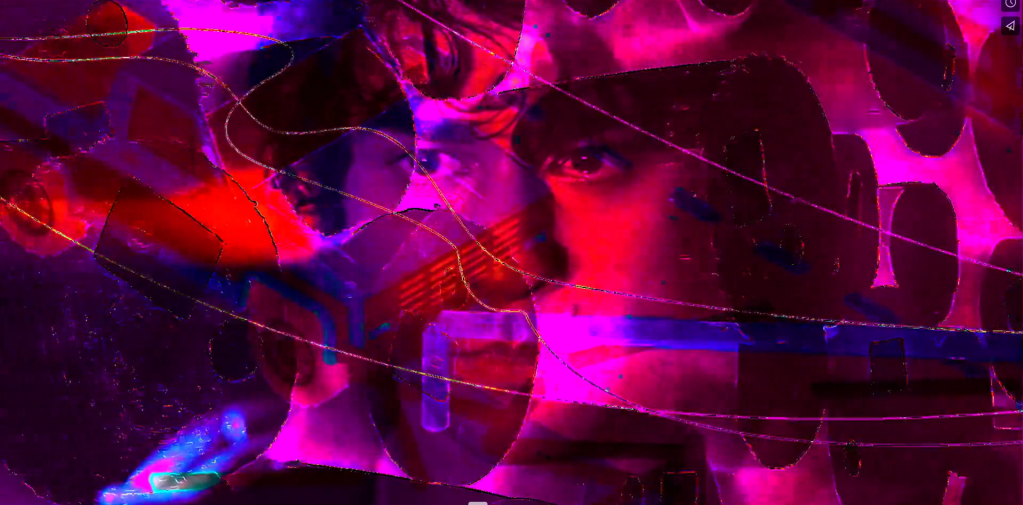
There’s also an immediacy to a wave screening. Segs and waves tend to vanish – at least for a while – after they’re screened, only sometimes reappearing in retrospective streams from the wavers that created them. Archives exist for waves that premiered months or years ago, but there’s no VOD here to catch up on a fleeting seg that you missed, so it feels like an increasingly rare experience of catching something cool or weird on broadcast TV or the radio, never knowing where or if you’ll see it again. Perhaps it’s Netflix that’s truly being dethroned.
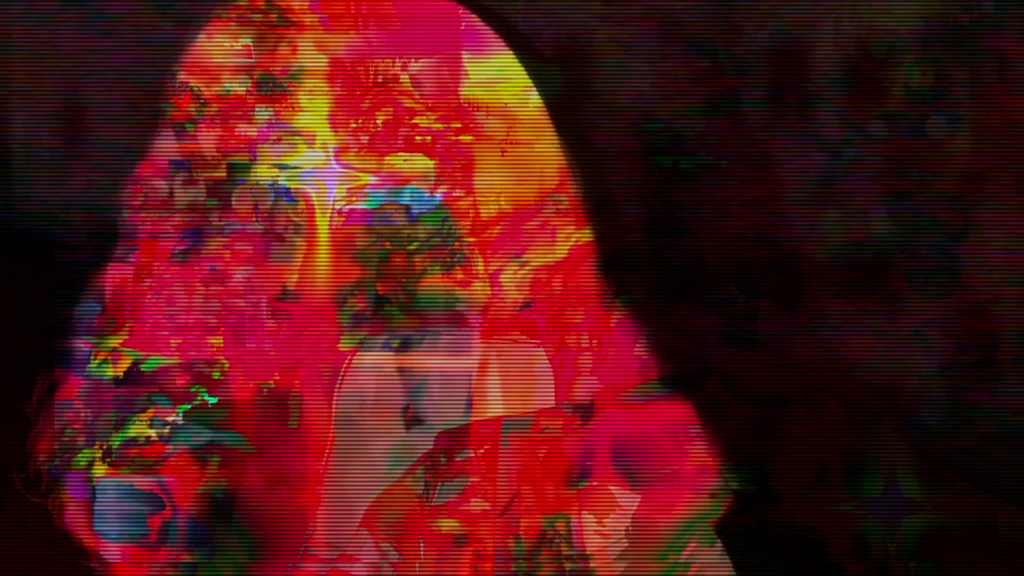

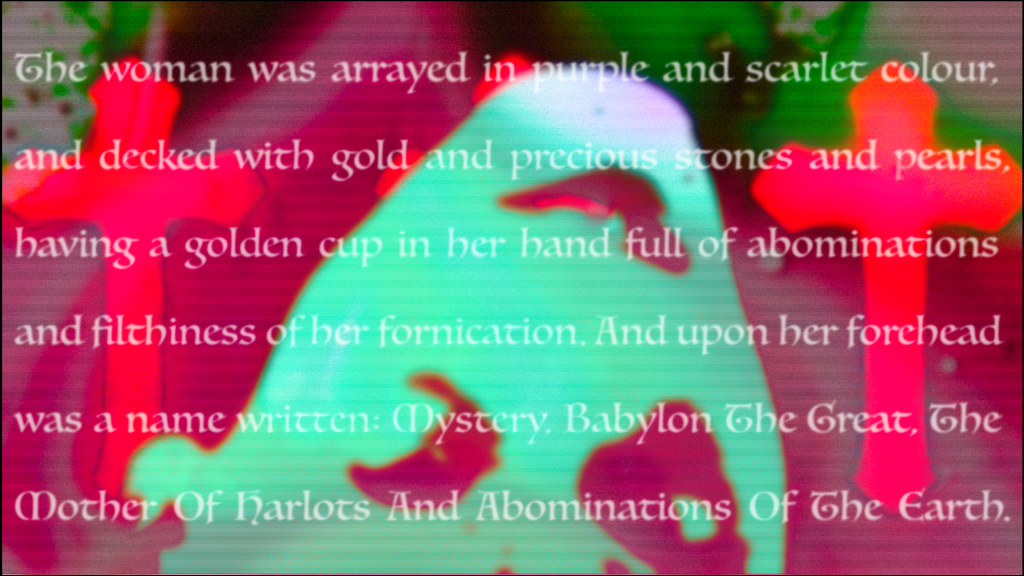
Waves feel like a half-remembered retelling of a film, picking up on ideas from the original but often eschewing and subverting the details as they’re stitched back together like an exquisite corpse. They’re a metatextual experience that uses the original text as a launching pad into abstract, chaotic tangents that synthesize something completely new. Sloane says about their philosophy of building a seg, “[it’s] worth noting that a lot of the time, if I don’t have something to say with a wave, I will have very little interest in creating it. Waves have always been political. [For example] I’m considering showing [Racer Trash’s edit of The Abominable Dr Phibes] on Friday just because of the upswing of COVID cases.”
Calling waves ‘remixes’ gets at the basic concept, but feels inadequate to capture what’s going on when you watch them. Rather than recontextualizing the entire movie, there’s a more complex practice going on where wavers will add context to individual scenes, turning a single film into a kind of mixtape where one seg may not (and usually doesn’t) have much to do with the ones before and after – in theme, aesthetic, or tone. There’s a very punk rock way in which they come together, perhaps no better embodied than Zoë Wolfe‘s seg from ‘TNK_GRL‘, in which 20 different editors remixed the criminally-underrated Tank Girl (1995):
A wave, like this seg from the Racer Trash wave of 1995’s Hackers or 1983’s Dune, both by director Kati Skelton, might draw out a single scene, repeating a single line or moment as though it’s a broken record. It may draw focus to a part of the frame that the original doesn’t, bringing forth ideas that the original filmmaker never intended to be either implicit or explicit. It will bring in a psychedelic overlay or images from other parts of the same or even other films or media. Sloane says, when I ask them about their process and their approach to segs, “I like to use a lot of different resources other than the standard tools, and many others do as well. Sites like tv tropes, whosampled, random specific spotify playlists, deep dives into filmographies, a random phrase said in a seg that stood out to me while watching (I write in a journal to brainstorm), and I use pinterest to moodboard if i need to keep an aesthetic…Personally I like to split mine up into chunks and create emotional journeys and twists.”
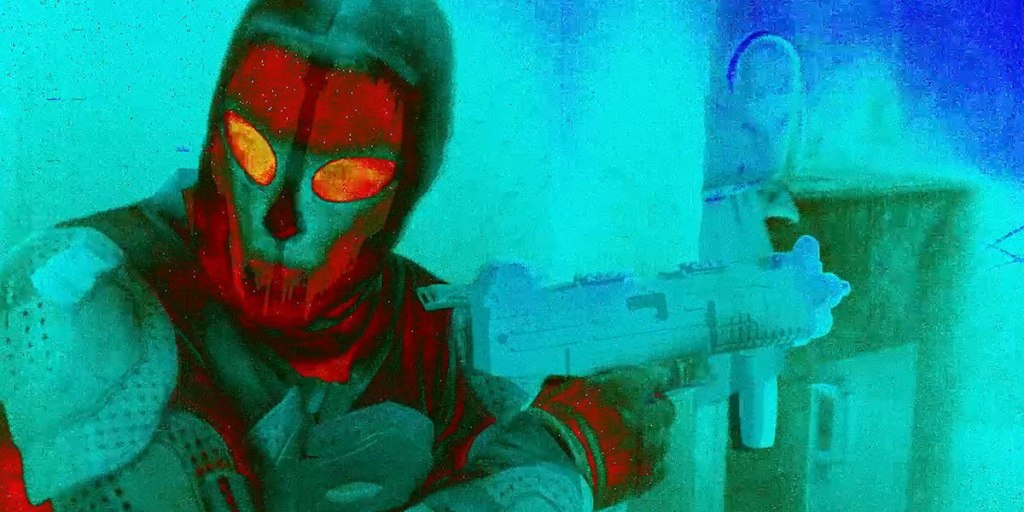
I don’t know this for sure, but I suspect that waving inspired or at least shares some DNA and conscious or unconscious osmosis of ideas into Harmony Korine’s latest film, AGGRO DR1FT. The aesthetic of that film, shot entirely in infrared and the way sections of the frame fluidly morph into otherworldly imagery feels like it was plucked directly from a wave. So, too, does the mantra-like, repetitive nature of the dialogue feel like something a waver created as part of a seg. Given that Korine has some of the same stated goals as the original Racer Trash editors, wanting to find ‘what comes after’ cinema, it’s intriguing if AGGRO DR1FT adopted the style and feeling of waved cinema (right down to the alphanumeric title, a convention that Racer Trash often uses, like #0000FF Velvet or CMD+O, which is a take on 1985’s Commando). It’s equally intriguing, though somewhat less likely, if the prolific and disruptive director came to these ideas independently.
For me, that night at the Royal Cinema changed how my mind deconstructed and thought about film. It felt like being handed a translator for another language, a Duolingo for visual noise. At the same time, being in a theatre that featured, on a second screen off to the side, a rolling and almost equally chaotic and hilarious live chatroom that mirrored the chaos happening onscreen with Seabizkit, felt like something from the future. It, perhaps for the first time, made films that I loved, or even ones I disliked, feel like they weren’t finished products. That in the hands of a capable and slightly unhinged editor, they could be rebuilt into a completely different kind of art. Harmony Korine wonders what comes ‘after’ cinema, and perhaps strapping into a gamer chair in front of Twitch, or in a theatre that not only encourages playing on your phone or second screen while the feature rolls but provides you with one, might be that thing. But more than anything, I feel like however and whenever I’m watching and experiencing the work of Racer Trash and the ‘rogue editors’ that spun off of that movement to create their own, I’m on the cusp of the next wave.
Sachin Hingoo has been carved up and handed over to several editors for a reworking.
Jason Bettineski invites you to check out the SegFest community over on Discord.
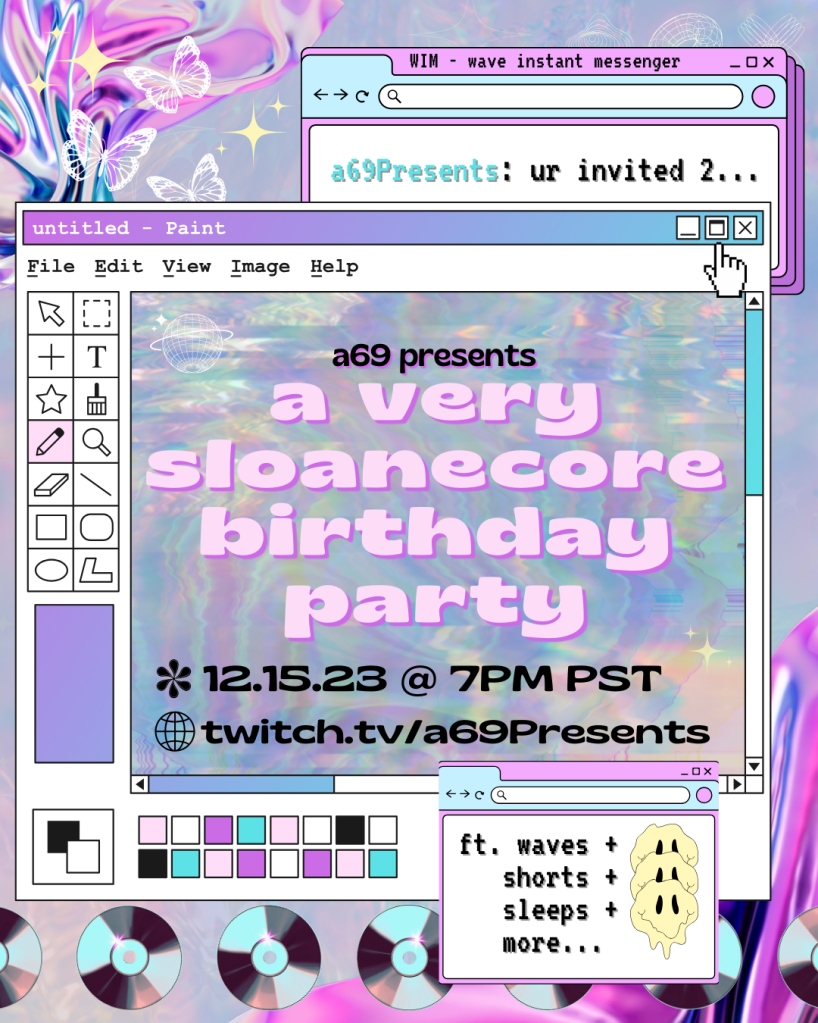
Sloane Kay‘s work can be found on the A69 Twitch channel and they will be hosting a showcase of waves (including some of their newest work!) to celebrate their birthday this Friday December 15 at 10pm EST. You can also find the A69 community on Discord here.
Categories: Screen



 The Cultural Gutter
1 reply »