
Horror wears many different skins. Sometimes literally, although in this case I mean that while people have come up with a multitude of wildly different concepts for horror stories, what lurks underneath that shifting surface of zombies, serial killers, parasites, and clowns is our deepest fears. Among the most fundamental underlying horrors of horror are that someone or something is out to get you, that maybe you can’t stop people from hurting you or the people you love, that you are not good enough and deserve to suffer, or that suffering is truly random and no amount of goodness will prevent it. Perhaps the one that has always disturbed me the most, though, is the feeling that you can’t trust your own mind; that your ability to perceive reality is broken and you have no way to know what’s real or true, or even know whether or not you’re mad. In some horror stories that’s the central theme, but it seems to me that the writer gaslighting the characters is actually a structural pillar of the genre.
Applying the term “gaslighting” to the relationship between writers and fictional characters may seem like a bit of a stretch but hear me out. Gaslighting can be defined as manipulating someone into questioning their own sanity, or intentionally distorting reality to make someone feel like what they’re experiencing isn’t real. If the characters in horror movies and everyone around them immediately believed what was happening to them was real, the films would either be a heck of lot shorter or more like creepy action movies. Horror narratives frequently rely on no one believing the people who are experiencing the scary thing or them convincing themselves it can’t be real and feeling too crazy to tell anyone about it, and it’s the writer’s job to create those circumstances. They have to set up a situation where the character doubts their own perception or feels like they’re losing their mind, which means that underlying whatever concrete monsters the story involves is also the monstrous fear of not being able to tell what is real.

There are many causes of insanity in western tragedy and the precursors to modern horror, from ancient Greek authors who routinely had their characters turned mad by the gods, to guilt and grief in the hallucinated heartbeats and haunting ravens of Edgar Allan Poe (1809-1849) or the xenophobia-infused tales of H.P. Lovecraft (1890-1937), where people gaze upon unfathomable alien gods and lose their minds. Sometimes it’s clear that the story is actually about madness, but in a lot of horror films the writers use people’s conviction that reality will behave in a certain way against the characters to create an opportunity for the horrifying thing to take root. In the Amityville Horror series and a multitude of other films, the family doesn’t believe there’s anything supernaturally wrong with the house until it’s too late. No one is quick to accept the idea that there’s a sadistic serial killer doll on the loose in Chucky, or that the kid is the source of the evil in movies like The Omen, The Exorcist, or Orphan. Aliens have already achieved critical mass by the time anyone believes there are pod people in Invasion of the Body Snatchers, and the adults in Stephen King’s It all think the kids are telling stories when they say they’re seeing a creepy clown in the sewers. Anyone who notices these things early on and tries to point it out ends up getting treated like they’re losing it or making things up, either to get something they want or just because they’re kids.
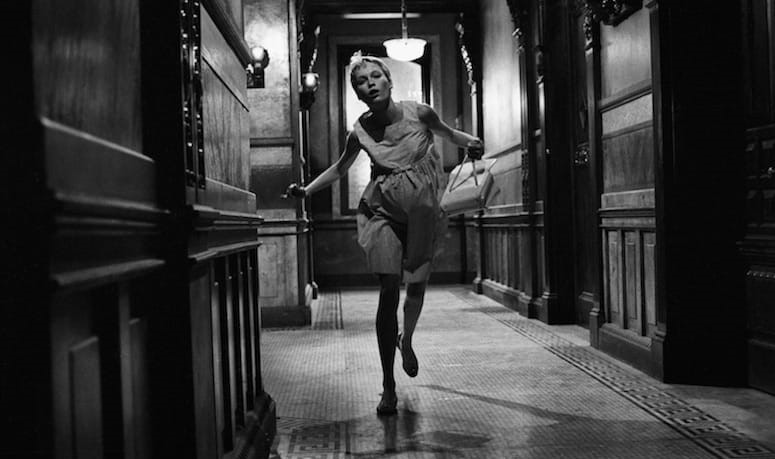
Being treated like you’re crazy is a fear that anyone might relate to, but it has particular resonance for women due to a long and extensive history of being treated like their experiences, feelings, and opinions are irrational and their resistance is insanity, and for trans folks, whose entire existence is the focus of aggressive denial. It makes the horror genre a natural fit for flipping narratives about women succumbing to delusions and hysteria on their head to explore the experience of being treated like what’s happening to you isn’t real. One of the classic gaslighting movies is Rosemary’s Baby (1968), where Rosemary remembers being drugged by her neighbor and raped by a demon, but her husband tells her she fell asleep and it was him. She starts to believe that her neighbors are Satanists and her unborn baby is the child of the Devil. She’s right and her husband is in on it, but she can’t get anyone to believe her, and the film doesn’t confirm for the audience that she’s right until the very last scene. She finally thinks she’s convinced her doctor but he’s actually just called her husband to come get the crazy pregnant lady and take her and her unborn devil spawn home. They continue to gaslight her about her Antichrist baby, but in the end she finds him with the coven in his evil crib and presumably her motherly instincts win out. It’s a product of its era, based on a book written by Ira Levin and directed by Roman Polanski, which means there are plenty of ways to view Rosemary’s experience through a feminist lens but it’s not shot from that perspective.
Many films since then have been though, and one of the most interesting and complex examples I can think of is Jennifer Kent’s The Babadook (2014). Amelia is raising her son, Samuel, alone after his father is violently killed in a car accident. Sam has behaviour problems at school, difficulty with social interactions, nightmares, and trouble sleeping, so Amelia reads him lots of storybooks in bed. One night a strange and frightening book called Mister Babadook mysteriously appears on their bookshelf and soon Sam is seeing the Babadook everywhere and bringing handmade weapons to school. Amelia thinks it’s his imagination at first and hides the book, but the book keeps coming back. She tears it up and burns it, but it shows up back on her doorstep with more pages, including terrible illustrations of her hurting Sam and their dog. She still doesn’t believe Sam that the Babadook is real, but she does think maybe she’s being stalked so she tries to report it to the police,. They treat her like she’s crazy and say they can’t do anything about it when she tells them that a scary children’s book appeared on her front doorstep and she burned it, but I can’t say it’s too far off the experiences I’ve had in the past around trying to report an assault or stalker to the cops.

Amelia is struggling with grief, depression, extreme sleep deprivation, and the overwhelming experience of single parenting an emotionally challenging child, and Sam is struggling with both his own trauma and hers. Sam feels like everyone including his mother thinks he’s crazy for seeing the Babadook, and experiencing the Babadook without seeing it makes Amelia feel crazy. Everyone treats her as if she’s unstable, and when she starts to lose awareness and have episodes of abusive behaviour towards Sam she can’t tell if she’s losing her mind. From the audience perspective, the Babadook is both a monster and a metaphor for grief and mental health issues, so it all works brilliantly on both levels. Sam feels like he has to save her because only he sees the Babadook, but how often does anyone truly believe a child who says they’ve seen a real monster?
It’s almost always the children who do see the thing that other people don’t, though, both in scary movies and fantasy stories. Fantasy is the other genre that often has a component of no one believing the main characters about a thing that is really happening to them, but there it plays out in a way that makes the characters feel special rather than insane. In both cases there’s a satisfaction for the viewer in the omniscient knowledge that the fantastical thing is true and the story will prove it out, but horror often achieves that with death and destruction, whereas in fantasy movies it ends up as a shared secret between the characters who now know something no one else does.
I think maybe the reason why writers can keep repeating the narrative of denial in the face of the fantastical and horrifying in so many films is that we’re equally or even more afraid of being or seeming insane than we are of the monsters. No matter how many movies I’ve seen where the eldritch things are real, if they showed up at my house I wouldn’t immediately react as if they were real. I’d question my own sanity, sleep habits, and the tap water before I’d truly think I’d seen the Babadook in my basement. I’d check if an emu had escaped from the local park petting zoo and look at recalls on mushrooms from the grocery store. And then I like to think I’d grab my camping axe and lock the damned thing in the basement.
~~~
Alex MacFadyen definitely does not have any emus in his basement, but he does think they would look quite a lot like the Babadook if you put little top hats on them.



 The Cultural Gutter