

The only way to learn is by playing,
the only way to win is by learning,
and the only way to begin is by beginning.– Sam Reich, Dropout
There was probably a time when, if you were to suggest to me that we watch even thirty minutes of improv comedy – the traditional style where a group of performers take cues from a live audience – I would recoil and find an excuse to do just about anything else. I generally prefer to have my improvised entertainment be resolved with someone being hit with a trashcan or at least an elaborate submission hold. But in my ongoing quest to find any respite from the soul-crushing news and depictions of the crumbling world around me, I was introduced to Sam Reich’s cavalcade of improvised comedy, Dropout. And even though there are several popular shows under the Dropout banner, including the tabletop RPG playthroughs of Dimension 20 that was specifically recommended to me, it’s the game show coded Game Changer that keeps me coming back most of all. I’ve always been a fan of the ‘competition’-style reality shows like The Amazing Race and The Mole because they focus on more think-on-your-toes mental challenges and have a teensy element of confusion and disorientation involved on the part of the competitors, and Game Changer has a unique way of scratching that particular itch.

The improvised scenarios, of which there are dozens and counting, on offer from Reich and the vast array of comedians and creators in the Dropout (formerly College Humor) community usually don’t resolve with violence but their main appeal comes with their unmatched ability to surprise and delight me with nearly every single episode. Just as wrestling provides a, ahem, relatively blank canvas on which its participants are given broad creative freedom to paint, so does Reich provide a similar blank slate for his troupe of artists on Dropout. Not unlike Lorne Michaels did with Kids in the Hall and Saturday Night Live, Dropout feels like a collaborative effort that is purpose-built for developing and showcasing the talent under its umbrella. And like those shows, the success or failure of this venture hinges completely on the multi-talented actors and comedy savants it employs. But as a wrestling ring is bounded by ropes to signify the area in which the performers are meant to remain, so do Sam and Game Changer provide constraints to keep his contestants within the parameters of the game on offer. But, as with wrestling, the performance is almost always enhanced as the participants blur and make their way outside of those boundaries.

Game formats and styles for Game Changer change with nearly every single episode (there are a couple of concepts that are repeated as “Game Samers” and at least one, the impressions-focused Make Some Noise, that’s been spun off to it’s own Dropout series as of this writing ) and the contestants are always caught off-guard with what’s in store for them. A concept called ‘Sam Says’ has the three players compete in a complex and elaborate game of Simon Says, while “You-Lympics” features the three participants try to best the scores they accrued in a previous attempt from a week earlier when they weren’t aware that they were literally setting the bar. One of my favourites is a Season 5 episode called “Name A Number” where contestants Becca Scott, Izzy Roland, and Erika Ishii have to place wagers on tasks without knowing what those tasks are, like ‘how many people will you group text requesting $3400’ or ‘how many times will you say “I’m hungie” while ordering pizza.’ Concepts like these tap into the performers’ improv instincts while keeping the game surprising from moment to moment and retain a madcap element to the proceedings.


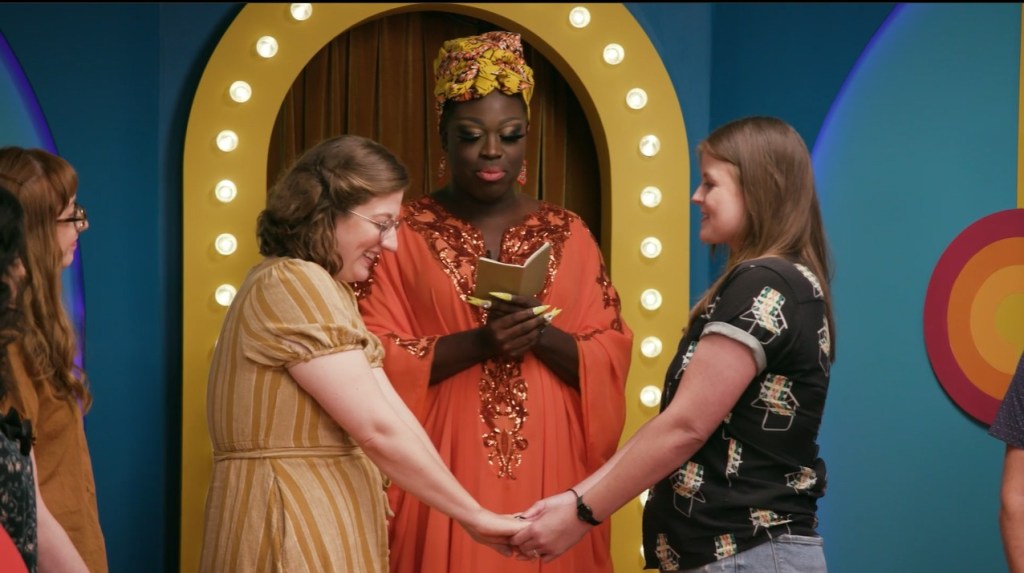
The interesting thing to me about Game Changer is that, as you go through the seven (and counting) seasons, the setups for each game become more and more elaborate and pre-planned, even though it’s heart is in improv. Something that started out as a riff on Whose Line Is It Anyway and the UK’s Taskmaster, I find that the most complex Game Changer setups feel like something akin to a smiley-faced Saw, where Reich puts his victi..I mean contestants through varying levels of psychological or physical torture all in the name of big laughs. At the same time, there is a core to Game Changer that is unquestionably kind and wholesome. Prizes awarded are significant – a karaoke machine, a weekend trip, a dinner at a Michelin-starred restaurant, even plane tickets to any destination of the winner’s choosing – but the competition is lighthearted. Especially in concepts like ‘Sam Says’ the players form a kind of bond as they find themselves playing against Reich as much, or more, than each other. And sometimes the vibes are just sweet all around underneath that surface-level psychological torment. An episode from Season 7 called “Earnest-est” asks the players – Zac Oyama, Ally Beardsley, and Lisa Gilroy – to answer the challenges without any of the tools available to a comedian in the form of bits. This means a ‘Compliment Showdown’ and ‘Tell Me What You’re Working on in Therapy’ that seems to mine the players’ insecurities and vulnerabilities but feels emotionally cathartic for all involved (me included!) by the end. A Season 4 episode called “Don’t Cry” seemingly puts the players through all manner of tearjerking prompts, but ends up being a celebration of longtime writer and cast member Jessica Ross whose wedding was postponed both due to the pandemic and because of a surgery. So Sam and the gang, in the most smiley-faced Jigsaw way possible, arranged for Ross’s partner and all her friends to shower her with gifts and compliments and the kind of emotionally-wrought speeches they would have delivered at her ceremony in the most public setting possible, all under the auspices of a game show where she was given the impossible task of not crying from all of this.
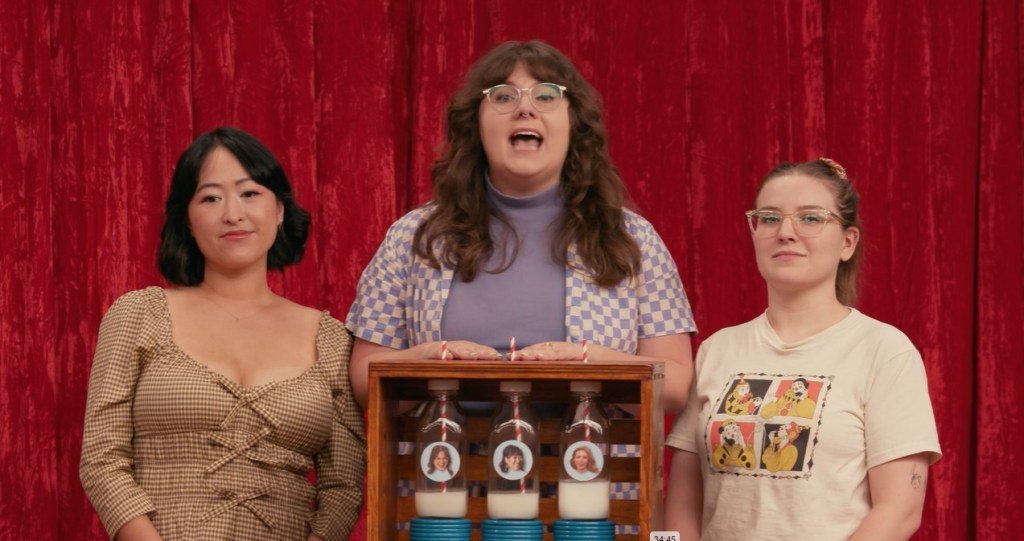
The last couple of seasons of Game Changer have pulled back the curtain on both the production of the show and its devilish machinations in the form of Behind The Scenes ‘making of’ episodes as well as concepts like “Fool’s Gold” that reveal the impetus and the magic behind some of Sam’s wacky games. The latter example is a riff on the ‘Dragon’s Den/Shark Tank’ concept where cast members pitch video concepts to their fellow performers Mike Trapp, Rekha Shankar, and Jordan Myrick in an effort to amass the most views on social media. The pitches ranged from…okay all of them were pretty nuts, from Paul Robalino’s weirdly-satisfying “cover himself in glue and peel it off in huge strips” idea to Izzy and Lily’s “taste test each of our breast milk and try to guess whose is whose” which seemed tailor-made for Jordan, who is a professional food tester and took perhaps too much joy in sampling her castmates’ bodily fluids. Using social media clips with an eye toward getting the most views, it’s somehow both marketing for the show and the very show itself. But the behind-the-scenes episodes also shed light and recognition on the vast crew of writers and prop artists that put these elaborate setups together and craft custom claw machines, an array of custom American Girl doll shoes, and so many more single use sight-gags that have have so much love behind them.
Where Sam and the Dropout team really excel, for me, though is situations where they can showcase their cast’s incredibly unique talents. I’m thinking especially of concepts like Season 4’s “The Official Cast Recording” in which Zach Reino, Zeke Nicholson, and Jess McKenna have to improvise an entire musical based on Sam’s concept called Welcome To Mountport.
Welcome To Mountport is truly mind-boggling and occasionally moving enough that even Sam is taken aback at Jess, Zach, and Zeke as they bring forth fully-formed musical numbers from the most scant of prompts. The trio develop characters, relationships, settings, and the conflict between Mountport’s newest baseball star and the town’s dictatorial real estate tycoon almost from stream of consciousness. Another Game Changer of this ilk is Season 5’s ‘Karaoke Night’ in which Zach Reino, Ross Bryant, and Rashawn Nadine Scott have come up with a song on the topic and in the style of the artist provided, all on the spot. It’s gorgeous to behold, in the way that watching three people at peak musicality and peak improvisational instincts can only be.
More and more in our vast and tortured media landscape, I find myself wondering about how much of the art I consume is ethically sourced and created. It seems like you can’t turn on a streaming service and fire up the latest Ryan Reynolds vehicle without being bombarded with AI slop or the knowledge that it was produced in concert with the Russian government or something. With Dropout content, I feel at ease. Right off the bat you’ll see that every video on Dropout comes equipped with actually comprehensive and useful content warnings so as not to catch their viewers off guard. And Dropout makes great effort to present itself as an open and accepting environment for its diverse voices both onscreen and behind the scenes. Watching older Dropout videos to newer ones, you’ll see performers like Ally Beardsley undergo a transitioning process with the full support of their castmates and Reich himself. And it seems like all the folks – performers and crew alike – are appropriately compensated for their work, which is all too rare in the world of comedy. In the way that all the art to which I’ve gravitated in ~these uncertain times~ feels not only enjoyable for it’s own sake but also because it is doing content creation in a way that makes me feel good. One might say that it’s effectively changed the game.
Game Changer and the other Dropout content is available with a subscription to Dropout.tv
Sachin Hingoo was formed from nothing more than an audience prompt on a particularly slow night at the improv theatre.
Categories: Screen



 The Cultural Gutter