
Making something adorable terrifying generally has the potential to be either shocking or hilarious. Sometimes it’s intentionally hilarious, and sometimes it’s just funny in its failure to be shocking. And what is more synonymous with adorable than fuzzy bunnies? So, naturally, there are a whole raft of horror movies that try (or pretend) to make them scary. Beyond the obvious absurdity and it being the opposite of what you’d expect, is there a reason it’s bunnies?
It could be like fairytales, where the forbidding witch is good at heart and the handsome prince is rotted to the core…except bunnies. And there is some horror inherent to habits of rabbits, which has a Star Trek Tribble-like quality to it where one might have to be afraid of being eaten out of house and home, or just straight up drowned in furry cuteness. But I think it might be more what hilarious American history nerd, author, and This American Life radio regular Sarah Vowell referred to in her book, Take the Cannoli, as “the pink of goth.” When she was taking goth lessons for the piece and was asked to pick a name, she chose Becky, saying it was the most perverse name she could think of. Her source told her that seeing how pink can be goth was an advanced skill. Bunnies in horror might just be the pink of goth.
There are bunny-based horror films that play on that but are not what I’m thinking about, either because they are about a maniac in a bunny suit (Bunnyman, Serial Rabbit) or straight up Easter Bunny horror (Beaster Day: Here Comes Peter Cottonhell, Easter Sunday), but these animated zombie bunnies, pet rabbits filmed at kaiju size, and possessed Pooka toys that mutate with viral social media attention all fit the bill.
Night of the Zoopocalypse (2024) directed by Ricardo Curtis and Rodrigo Perez-Castro
Billed as “from the mind of Clive Barker”, Night of the Zoopocalypse is a PG rated Canadian animated zombie horror comedy film inspired by an unpublished story called “ZOOmbies” written by the creator of Hellraiser. It’s directed by storyboard animators Ricardo Curtis (The Iron Giant, Kipo and the Age of the Wonderbeasts) and Rodrigo Perez-Castro (Ice Age, The Book of Life) and the animation was done by L’Atelier Animation in Montreal and Mac Guff in Brussels. When a meteor crash lands in the bunny-filled Kuddle Korner petting area of Colepepper Zoo, it infects the animals with a zombie virus that turns them into voracious mutated gummi versions of themselves. Patient zero? An adorable bunny that, naturally, eats the meteor fragment which causes a dramatic Jekyll-Hyde transformation . Then it does what bunnies do and proceeds to infect all its companions, creating a mutated furry alien army that takes over the zoo.


Of course, it has the types of characters you would expect in an all-ages animated feature, but somehow the structure seems more like an action film than a typical animated movie. The style reminds me of Ice Age or Madagascar, maybe partly because of the animals, but with a spooky, neon-colored, late night movie aesthetic that is much more up my alley. The low-budget horror film edge to the look, complete with synth-heavy score by Dan Levy, lends it some kinship with 80s classics like Gremlins or John Carpenter’s The Thing. The violence of a zombie apocalypse is handled creatively for intrepid children through the symbolism of glowing eyes, body transformations that are creepy-cute rather than full body horror, and the monstrous amalgamation of many creatures into a single grotesque but cartoonish kaiju-like abomination. Also, the bunnies are pretty creepy-cute.
Night of the Lepus (1972) directed by William F. Claxton
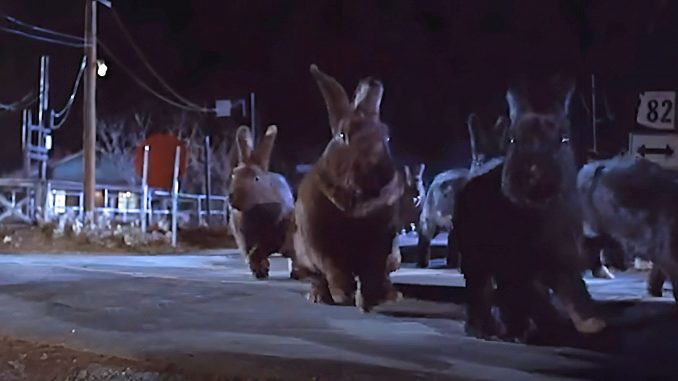
No killer bunny movie list would be completed without Night of the Lepus, a sci-fi horror film starring a bunch of pet rabbits. Director William Claxton was known for his Westerns and hired actors he had worked with in Western movies, as well asJanet Leigh (here a part of a very different kind of classic than Psycho) and DeForest Kelley, who played Bones in the original Star Trek. Lepus takes the very believable premise of a group of Midwestern scientists attempting to solve the classic problem of waaay too many rabbits with a classic human solution of experimenting on them in a way that causes more problems than it solves. Specifically, it turns the large rabbit population into an equally large, lethal giant rabbit population.
Based on Russel Braddon’s comic novel The Night of the Angry Rabbit, the film amps up the ridiculous comedy of enormous pet bunnies as scary, carnivorous monsters by playing it very seriously. The bunnies twitch their noses and hop around a miniature set of a city complete with slow-mo stomping and ketchup blood smeared onto their fur as everyone earnestly fears them. Eventually they call in the National Guard, as you do when giant bunnies are rampaging towards town eating everyone they meet, and Claxton’s Western film background really comes into play. Western star Rory Calhoun rounds up locals at the drive-in to corral the stampeding rabbits into an electrified railway and end the carnage.

Into the Dark: Pooka (2018) directed by Nacho Vigalondo and Pooka Lives! (2020) directed by Alejandro Brugués
Pookas in Celtic folklore are mischievous shapeshifting spirits and can take many forms, often a black horse or rabbit. They are tricksters and especially enjoy messing with you when you’re drunk, but they don’t try to hurt people. Perhaps the most famous movie Pooka is Elwood P. Dowd’s invisible 6-foot rabbit friend from Harvey (1950) but there is another campy movie Pooka that isn’t so friendly. Pooka is part of the Blumhouse horror movie anthology series Into the Dark. An unemployed actor takes a job as the mascot for the hottest toy of the year: Pooka. That seems great until Pooka starts worming its way into his head, pushing him to some kind of split personality possession situation until he’s part man and part Pooka. Horror ensues, but the film leaves it open as to which part of him that horror truy comes from.
Pooka is (kinda, sorta, related to) a bunny. Maybe. I mean it looks more like it’s related to Gritty, if Gritty had a really hard year, got weird contacts, and shaved. The marketing for Pooka is appropriately bizarre and the toy looks like a messed up Furby, which could be creepy-cute in an unsettling way if you like Furbies, but it is extra disturbing if you do not. It also repeats back everything you say, but it chooses whether to say it in a nice voice or not. I kept thinking about how 2012 Furbies got red eyes and were angry when you shook them too hard, and one of the kids in my life had theirs get stuck on evil.
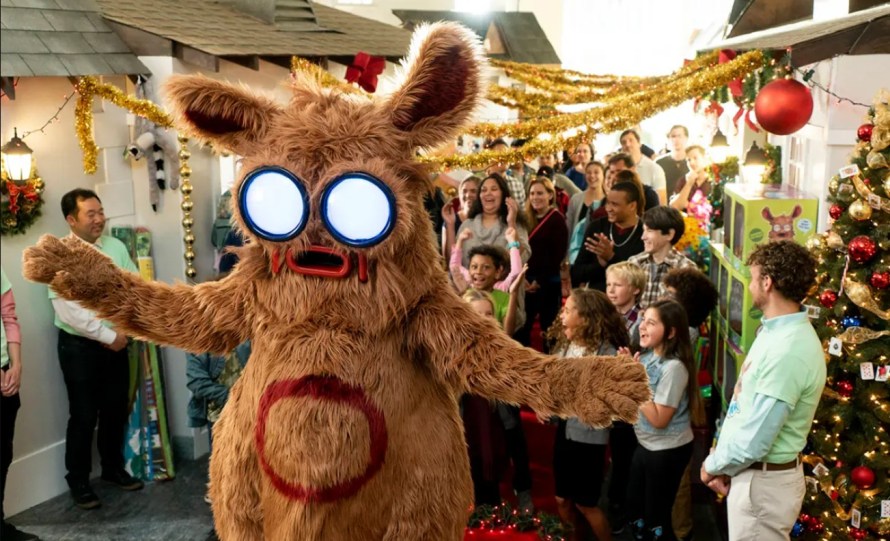
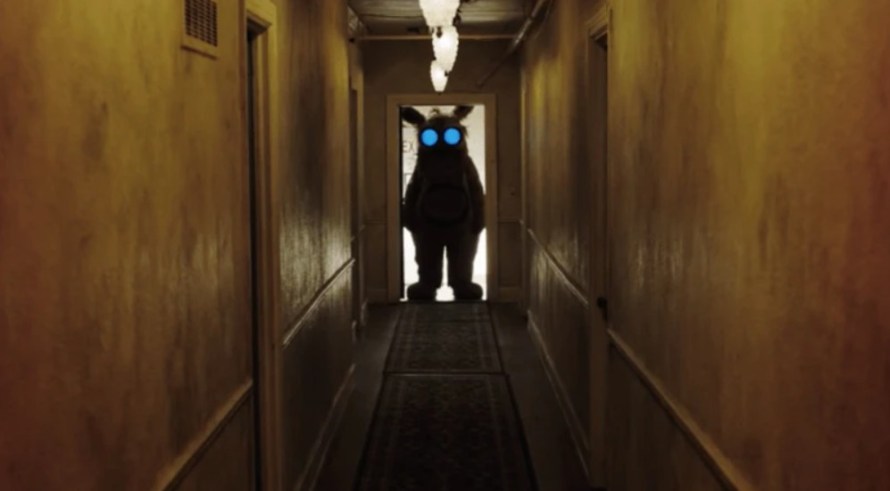
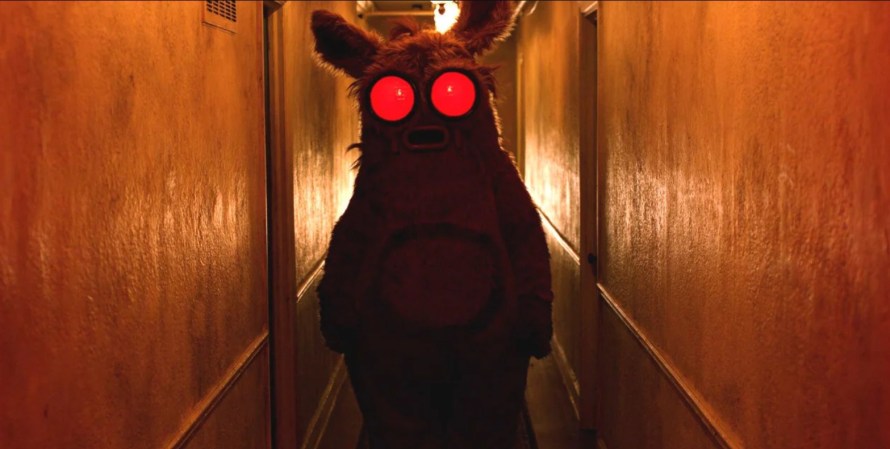
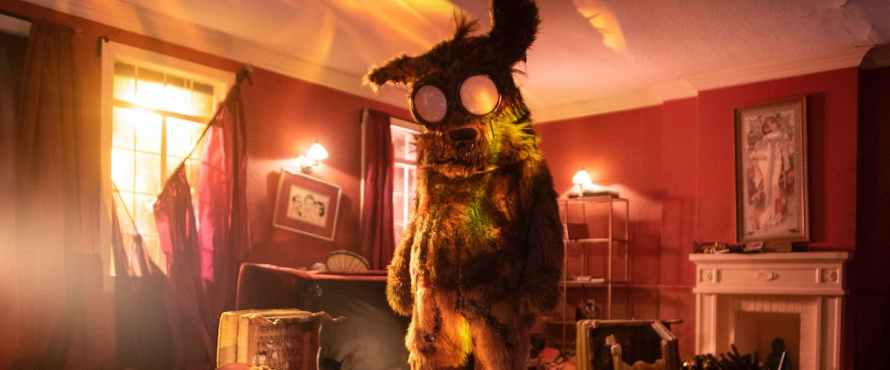
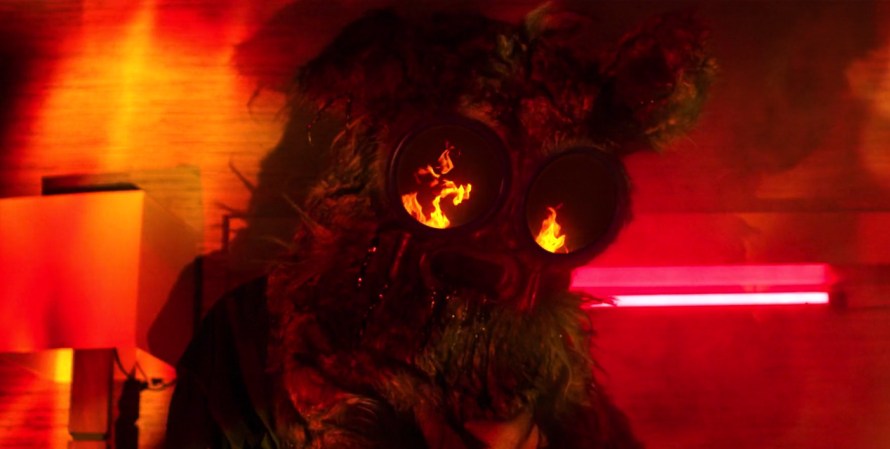
The sequel, Pooka Lives!, dials up the Chucky-ness with a group of high school kids who get high and decide to try to go viral online with a “Pooka Challenge” that involves wearing a Pooka mask, doing the Pooka dance from the first movie, eating ash (for the burned Salem witches), and reciting a rhyme to summon Pooka, who will judge your worth and punish you if you’re found wanting. It does go viral, and Pooka gleefully evolves to exceed expectations. Both films actually tackle different aspects of toxic culture in a creative and entertaining way, although the second half of the sequel does get a little chaotic. Possibly that is unavoidable with so many possessed toy Pookas involved.
Honorable mentions:
- Of course, the first thing that comes to my mind when you say “killer bunny” is the Killer Rabbit of Caerbannog from Monty Python and the Holy Grail (1975) with his “nasty, sharp, pointy teeth!” I dare not leave him out of the list.
- Personally, one of the creepiest Easter Bunny appearances was the demonic puppet that chases Ted “Theodore” Logan through his own personal version of hell for the childhood crime of stealing his brother’s Easter basket in Bill & Ted’s Bogus Journey. It looks like a rabid Monchichi. Apparently the original ending included all their worst fears arriving at the Battle of the Bands for a final fight, including a giant red-eyed, clawed mascot version of that bunny. Lucky for me, that did not test well.


- And as a final note, as Anya so wisely asserted in the musical episode of Buffy the Vampire Slayer:
~~~
Alex MacFadyen is not advocating for discrimination against bunnies and does not endorse the Pooka Challenge.
Categories: Screen, Uncategorized



 The Cultural Gutter