

It would probably be easy, if you weren’t familiar with their prior work, to write off Hélène Cattet and Bruno Forzani’s Reflection in a Dead Diamond as nothing but style without the burden of substance. I can’t lie and say that it’s not a film that’s extremely style-forward (just as the duo’s previous films Amer, The Strange Colour of Your Body’s Tears, and Let The Corpses Tan were), but I think that there’s more here – much more – going on than meets the gold-and-diamond-encrusted eye.
The James Bond films – the mainline franchise that is at least two degrees removed from Reflection in a Dead Diamond– is currently in limbo as it seeks out a new 007 to replace Daniel Craig and a new vision and philosophy from its new Bond villain-esque owners at Amazon. While we wait for that whole thing to shake out, Cattet and Forzani are happy to revel – and let us revel with them – in the problematic excesses for which Bond paved the way. It’s not exactly Bond that’s being referenced and revered here, though, but the 1960’s Italian knockoffs of that franchise. It’s possibly for that reason that Reflection in a Dead Diamond can feel like an image of an image, losing you in layers of references and winks at the camera in an ocean of subtext that feels like it’s wholly supplanted the text.
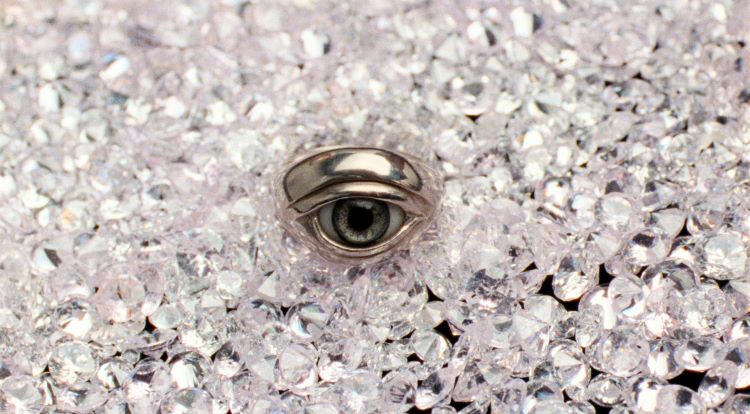
Less than a single, coherent, or cohesive narrative, Reflection in a Dead Diamond plays like a series of music videos, movie trailers, luxury brand commercials, and the elaborate title sequences from a James Bond movie, all mashed together. This is all in service of a loving homage to the 1960’s European Bond-a-likes like Bava’s Danger: Diabolik (1968) and the fumetti neri comics from which it was adapted, where all but the shiniest, slickest, sexiest scenes have been stripped away. Reflection is, like all of Cattet and Forzani’s films, great to look at. It’s a good thing too, because blink or look away and you’ll miss some crucial plot beat as the film’s story spins out of control in visual language, jumping between time periods, and layers of subtext. This is definitely not a movie to keep one eye on as you doom-scroll on your phone, and I was grateful that I first saw it in a theatre setting where I would never dream of doing so. And when you think Reflection is done confounding you, it introduces a meta-text and an entire film within the film. The result is a movie that, despite having a pretty reasonable sub-2-hour runtime, feels exhausting by the end.
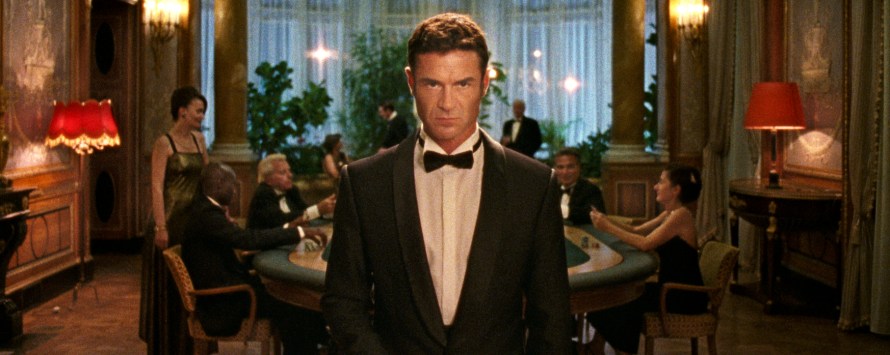
Reflection in a Dead Diamond follows a James Bond-esque character named John Dimas, a 70-year-old secret agent and hired gun who finds himself looking back on his colourful life and career in espionage. From a beachfront resort in which he’s chosen to take refuge in the twilight of his years, he stares out at the ocean and recalls his extensive exploits in a kind of highlight reel of beautiful people, flashy cars, impossible gadgets, and the kind of intrigue that most people only dream of. We’ll switch between Fabio Testi as the older Dimas and Yannick Renier as the younger version in flashback, and even this simple trope takes a few minutes to click.
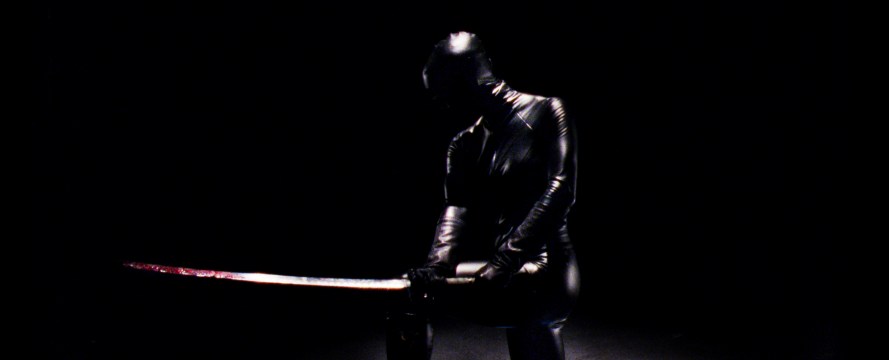
In his younger life, Dimas faced down a beautiful, skintight catsuit-wearing assassin named Serpentik who would seduce her targets and prick them with her “Cobra’s Kiss” poison ring. Serpentik is part of an elite cabal of assassins that could have been ripped from any comic, or maybe from Tarantino’s Deadly Viper Assassination Squad from the Kill Bill movies. Serpentik and Dimas make for a compelling, comic book style rivalry that snakes through Reflection in a Dead Diamond, winding its way through henchmen that distort reality via hypnosis, and an ally with a dress made of weaponized sequins that are also sophisticated cameras. For all its excess and action, there’s a place to discuss Reflection in a Dead Diamond in a horror sense. It’s filled with grisly action and murder sequences, but more than that there’s a palpable dread running through the film, a sense that no one is truly who – or what – they seem, their faces easily (and literally) torn off to reveal their true selves. Everything in the movie is so garish that it crosses over into the illusory so gradually, and it’s a visual and narrative language so complex that it didn’t click with me until fairly late in the film.
Some of the preceding might read like I’m dissuading you from Reflection in a Dead Diamond but it’s a movie that left me with such fascinating disbelief that I can’t not encourage you to seek it out. If you’re at all familiar with – or even curious about – the fumetti neri spy thrillers of the 1960’s or maybe you’ve grown bored with the direction of the James Bond films but hanker for the older Connery and Moore-era films, it’s a frankly stunning aggregation of their vibes. And that includes their often-incomprehensible plotting that’s literally glossed over with glittering diamonds, beautiful bodies, and blindingly-reflective baubles to disarm and distract you from the fact that their stories rarely, barely come together coherently. That said, if you’ve ever felt the temptation to eat all the marshmallows out of a box of Lucky Charms, you’ll understand the appeal of Reflection in a Dead Diamond. It leaves you wanting more – more sustenance, more substance, maybe a Mike Flanagan-esque exposition dump or two – but I found it satisfying even knowing that there might be a tummy ache in my future.

Frankly, no one is out here doing it like Cattet and Forzani and their lovingly-crafted, frenetic, cohesion-be-damned style of filmmaking which was present even in their prior works of homage like giallo in The Strange Colour of Your Body’s Tears and 70’s shoot-em-ups in Let The Corpses Tan. The pair have a clear love and reverence for pulp cinema of all sorts like Tarantino, but go further and even more experimental with their concepts. They take the things they love about these films and – some might say clumsily but I’d say confidently – carve out everything else. Truly, if you can steel yourself for a film that dazzles even as it confounds and leaves traditional plotting by the wayside, there’s so much excess and decadence in which to lose yourself.
Because the beauty and the thrill might be enough, even if it amounts to the reflection of a reflection.
Hélène Cattet and Bruno Forzani’s Reflection in a Dead Diamond is currently streaming on Shudder. I saw it at the 2025 edition of the Toronto After Dark Film Festival.
Sachin Hingoo has also, on occasion, been described as being like “if you ate all the marshmallows out of a box of Lucky Charms.”
Note: a version of this piece originally appeared over at BiffBamPop.com .
Categories: Screen




 The Cultural Gutter
I loved how your review celebrated Reflection in a Dead Diamond as more than just a stylish homage — you really captured how its wild visuals and layered references make watching it feel like diving into a cinematic maze of memory and fantasy. The way you describe the film’s retro-spy energy and sensory overload made me want to experience it for myself. Do you think its fragmented storytelling adds to the thrill or makes it trickier to follow?
LikeLike