
Warning: There’s some spoilers for the film Honey Bunch ahead.
Madeline Sims-Fewer and Dusty Mancinelli’s last film, their debut feature called Violation, came to me at the weirdest possible time. It was the height of COVID in 2020 and the film played the first edition of the Toronto International Film Festival that was ever held virtually, due to obvious reasons. As part of a greatly-abbreviated Midnight Madness lineup (a scant three movies instead of the usual ten) that also featured the I-Fan-Wang’s ostentatious Get The Hell Out and Roseanne Liang’s baffling Shadow in the Cloud, Violation was comparably subdued – at least on the surface. A revenge tale about a woman getting her comeuppance on the man who sexually assaulted her, the duo’s film (in which Sims-Fewer also played the lead) was chilling in a way that felt cathartic and necessarily disruptive to the usual tone of rape-revenge horror.
A few years removed from both the many complications of the pandemic, but in a world rife with many other – many worse – new atrocities, Madeline Sims-Fewer and Dusty Mancinelli return with Honey Bunch. Blending Seventies film grain and pulp mystery with gothic undertones and all the body horror, the beating heart of Honey Bunch is the love between our two leads. It’s a different love entirely from the father-daughter relationship in the Adams Family’s recent Mother of Flies (an early favourite of 2025 for me – check out Carol’s review here), but there’s a commonality in the stories that I found satisfying, having seen both within about a month of one another. In both, a woman is seeking an untested, experimental treatment for a crippling ailment. In both, she has a dedicated and loving caregiver that’s willing to sacrifice everything to save her. There’s even a quasi-analog for Mother of Flies’ father and daughter in Honey Bunch with fellow patients Josephina (India Brown) and Joseph (Jason Issacs).
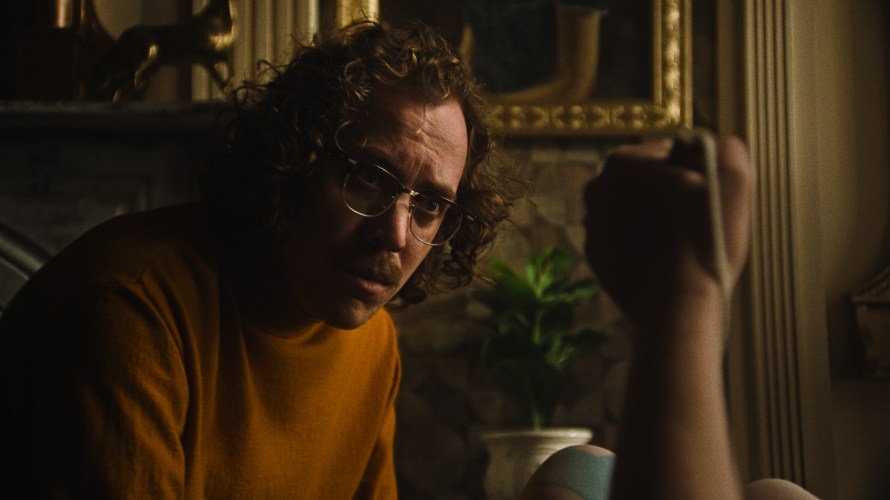
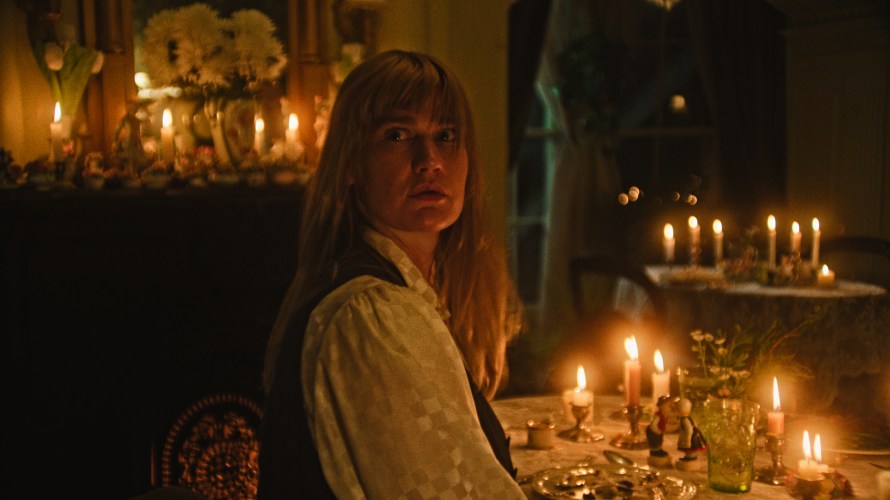
Honey Bunch is the story of Diana (Grace Glowicki) and Homer (Ben Petrie), a recently-married couple seeking treatment for a traumatic brain injury to Diana that was caused by a horrific car accident. After losing much of her memory to the injury, Homer brings Diana to Retrouvé, a private clinic deep in the woods that offers an experimental treatment for Diana. Headed up by Dr. Tréphine (Patricia Tulasne), who we won’t actually meet until a bit later in the film, the clinic is mostly run by the affable Farah (Kate Dickie) and her husband, a recovering trauma patient himself, Delwyn (Julian Richings) out of a sprawling mansion. Diana soon begins to envision, perhaps hallucinatory, curious happenings around the mansion. At the same time, Homer seems to be disappearing for lengthy periods, going out for ‘walks’ in the middle of the night. The stage is definitely being set for something bizarre going on outside of Diana’s treatments, which mostly consist of staring into a strobe light. Is the clinic up to something untoward? Is Homer as dedicated to Diana as he claims?
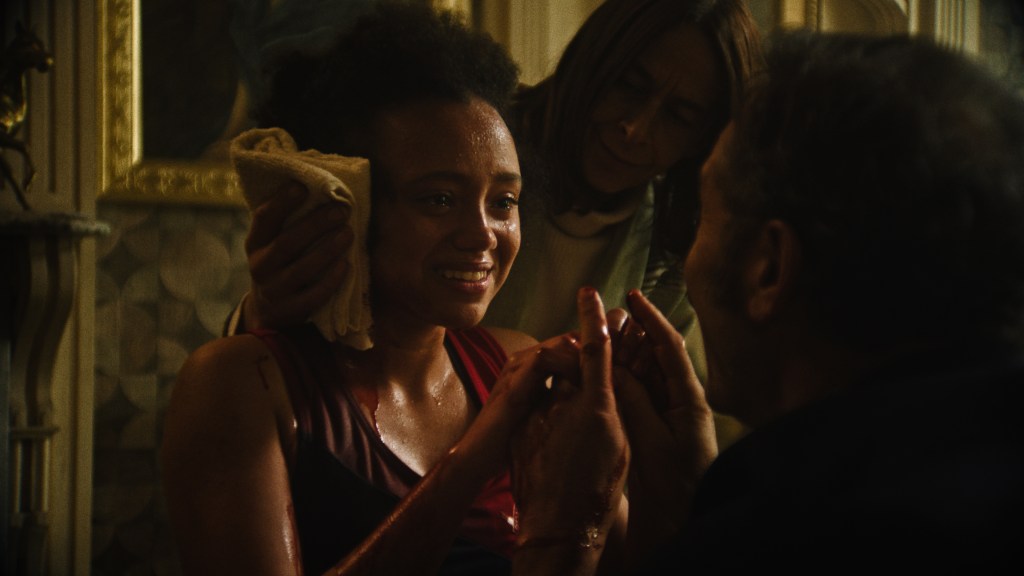
Honey Bunch keeps the mystery mysterious for much of the movie, as you’d expect, and obscures the actual happenings at Retrouvé with deflections to the seemingly only other patient at the clinic, Josephina. Jason Issacs is his always-electric self as her father, a constant source of enthusiastic, dogged encouragement for Josephina as she undergoes the treatments. He screams to her in a motivational frenzy until she literally begins bleeding out, but it’s all part of the process.
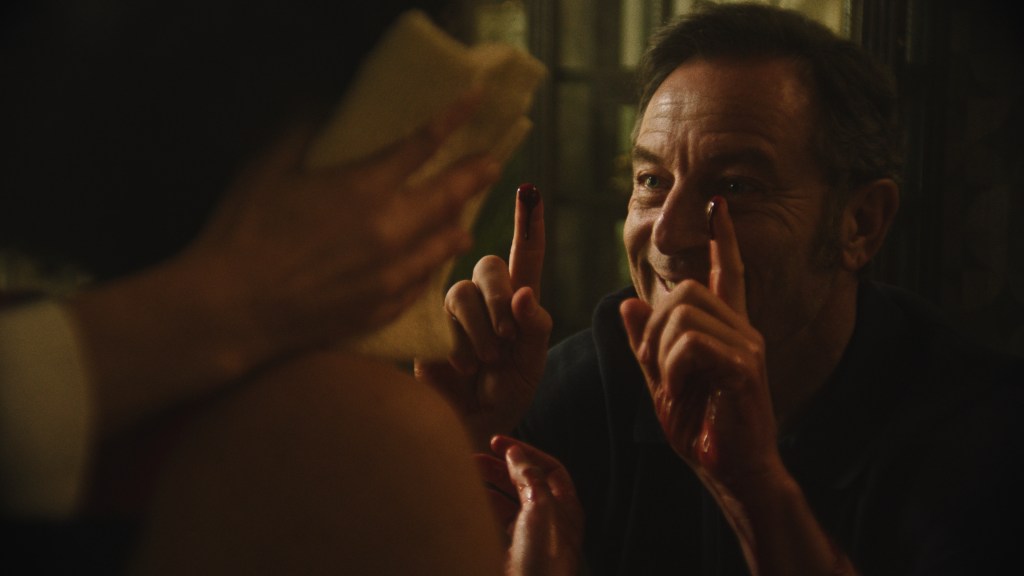
Because when Honey Bunch decides to reveal its secrets, it does so like a kind of firehose. Turns out, Retrouvé’s unconventional treatment consists of creating doppelgangers of the patients and transferring the original memories into them. It’s a trial-and-error process that seemingly always requires three or more attempts, meaning that the facility houses several of these doppelgangers in a kind of hospice if the recovery of their memories proves unsuccessful. There’s a point early in Honey Bunch where Homer posits that real love is about accepting every version of the person you’ve chosen, and that seems to bear out as we see Homer doting on the ‘failed’ versions of Diana, however malformed they might be. It’s touching, once you look past the surface, but Honey Bunch is asking, at the same time, whether this process of trying and failing with various doppelgangers multiple times is in any way ethical. We see the creation and the usually cruel and sad lives of these abortive versions all the way through to their disposal via incineration in the catacombs of the mansion, but it’s all punctuated by the profession and expressions of love from Homer to Diana and from Joseph to Josephina so that we’re urged to accept it ourselves.
Visually, there’s a broadly dreamlike sheen over the whole of Honey Bunch that feels like everything is enveloped in a kind of soupy fog. It’s meant to keep you disoriented and enveloped yourself, and it’s very effective as a visual technique. You start to lose track of where the mansion ends and where the woods begin, and how immersive the treatment is meant to be. As the film wears on it almost feels as though there’s a build-up of grime which is punctuated by some pretty effective goop in the gory sense as well. This disorientation and generally meditative feel of Honey Bunch‘s quieter moments lowers your guard as you wade through the soup, disarming you for a few jump scares that feel earned and incisive.
Honey Bunch never feels derivative of the films it’s influenced by. Part of what keeps Honey Bunch from being a highlight reel of pulp film references and throwback nostalgia is the intensely layered portrayal of Diana by Glowicki and Homer by Petrie. The two, married offscreen too, have amazing chemistry with one another (don’t miss them, as well, in Glowicki’s hilarious and wonderful Dead Lover, which is currently in limited release) but individually, bring such complexity to their characters that I felt connected to both no matter how wacky their circumstances became. Their quick and clever banter with one another make them instantly charming. I usually prefer when a movie, show, or wrestling character sticks to a tone throughout, but Honey Bunch expertly vacillates between scary, meditative, absurdly hilarious (or hilariously absurd) and heart-meltingly sweet. I am in love with the way the film will go right from stomach-turning gore effects to whimsical dialogue (usually between Homer and Diana, but not always) that tells us so much about our cast of characters and their bizarre quirks.
Just as Retrouvé’s treatment addresses the malady itself in its patients, so are the caregivers being trained to live with these new versions of their loved ones, to accept the reality that they must leave a trail of failed attempts in their wake. Honey Bunch puts us, however briefly, into the minds of both Homer and Joseph, who must watch their most loved companion die over and over, afflicted with wounds both internal and external that seem even worse than the ones originally summoning them to Retrouvé. And we experience much of it through Diana and Josephine’s eyes as well, and all the trauma they have to experience as the treatments wear on. But maybe it’s all worth it. Because if love is truly about accepting every version of our lover, maybe it’s worth another try.
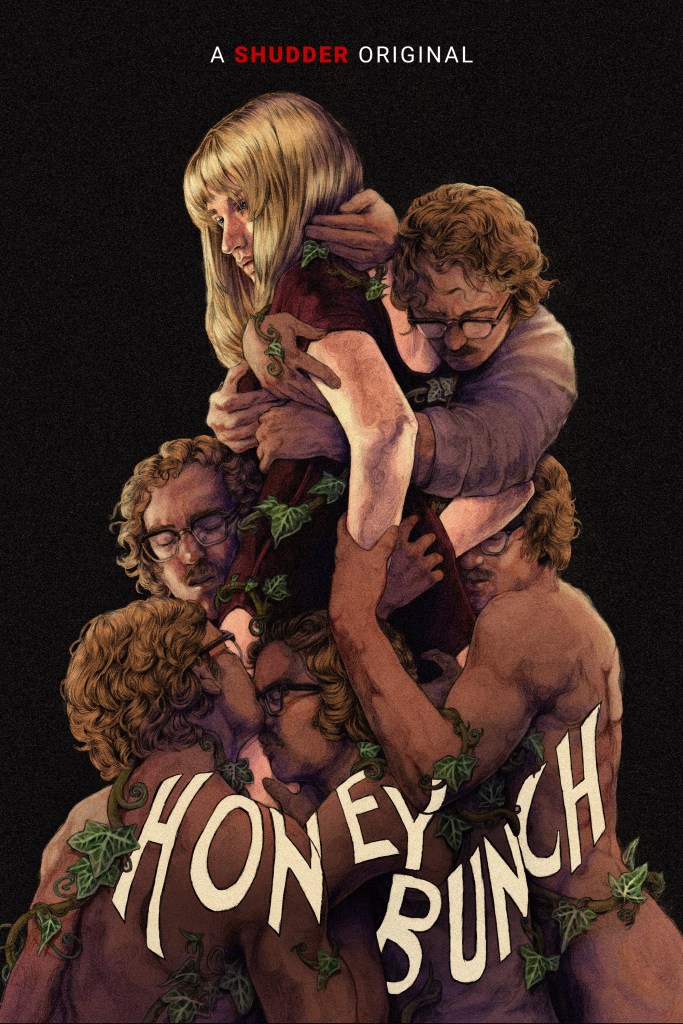
Madeline Sims-Fewer and Dusty Mancinelli’s Honey Bunch is currently streaming on Shudder.
The version of Sachin Hingoo that authored this article is the third attempt of six. Fingers crossed for the next one!



 The Cultural Gutter