

There’s something about the heat of summer that makes me want to watch something slow and surreal, like a series of mirages forming and transforming as I float in my summer heat bubble with a cold beverage. None of the films I’m thinking of are classic summertime fare, but they all have a bit of a fever dream quality that seems to match the flow of my thoughts in hot weather. Two are about vampires – possibly the least summer sun and surf friendly creatures imaginable – and the third, Universal Language (2024), is set in an alternate version of Winnipeg, Manitoba melded with Tehran. All three are films you could bake your brain trying to find all of the buried meaning in, but you can also just drift through them looking at all the fascinating shots, gorgeous cinematography, and enjoying the ride.
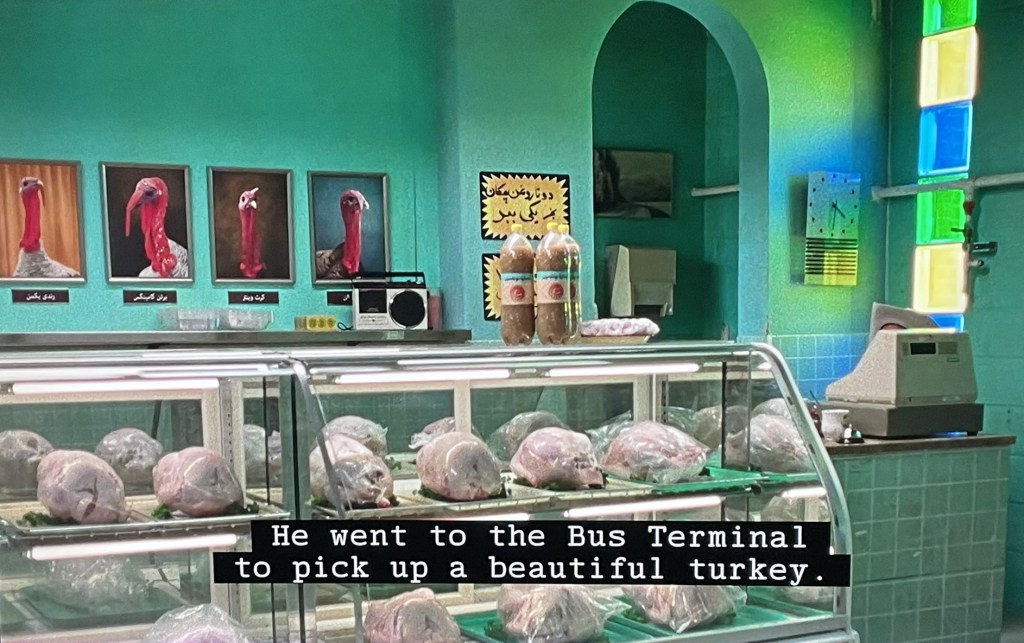
Universal Language is a very artistic, charmingly funny yet melancholy Canadian film directed by Matthew Rankin and co-written with Iranian-Canadian writers Ila Firouzabadi and Pirouz Nemati. It is set in a kind of interdimensional space that is clearly Winnipeg but overlapping with Tehran and elements of Quebec, which combines with the creative composition and offbeat script to create a surreal atmosphere that captures the experience of being between cultures, searching for connection. It reminds me a bit of Wes Anderson with the unexpected framing and an endless, seamless weaving in and out of being absorbed in a film and being aware that you’re watching a film, starting and ending with images of the film reel running in and out. Rankin is clearly a cinema nerd, and the film feels a bit like conceptual collage beautifully shot on 16mm film. He blends Western cinematic style with references to low-budget 80s commercials, the absurdist films of Jacques Tati, and Iranian New Wave cinema of the 1960s and 70s, especially the films of Abbas Kiarostami produced by the Iranian Kanoon Institute (which was a bit like the National Film Board in Canada, for those of us who grew up with those films). He even referenced the institute in the opening credits with a fake Winnipeg institute of a similar name and made their logo to resemble the Kanoon logo of a goose on a hill, but with a turkey, which is one of the recurring joke characters in the film.


Universal Language made me want to re-watch Ana Lily Amirpour’s A Girl Walks Home Alone At Night (2014), which in some ways is quite different but also creates a dreamlike city that is both clearly a blend of Iran and America, and a bit like the “Man with No Name” westerns, anyplace and nowhere. I have already written about it in Spook-o-ween Movie Time and Gutter editor Carol Borden has an excellent piece about both the movie and the comics in A Girl Thinks Too Much Alone at Night. so I won’t revisit it in detail here, but the long, slow black and white shots of the vampire girl in her flowing chador skateboarding around Bad City looking for her 1950s James Dean boy has a similar focus on atmosphere and the liminal spaces where different cultures and identities overlap.

The narrative in Universal Language shifts between the absurd and sincere human interactions, with three main strands which begin seemingly tied only by the fact that they are happening in the same place, but slowly begin to come together in unexpected and interesting ways. The first follows two middle school kids on a quest to get their hands on some money they find frozen in the ice so they can buy glasses for an unfortunate, myopic classmate who has lost his (due to the turkey, naturally). Rankin has said this was the starting point for the film and is based on a story his grandmother told him from her childhood about finding a $2 bill in the ice and the odyssey she and her brother went on to get it out. The focus on children trying to navigate adult dilemmas also reminds me of Wes Anderson, but the kids are less stylized and self-conscious and the characters’ intentions are mostly everyday good or relatable ones, aside from the bureaucrats and the teacher Mr. Bilodeau,, who honestly seems like a jerk. Everyone is trying to do their best, and there are so many moments where they look out for each other. The initial title sequence sets a frame for the film with the phrase “bah nam dosti,” which means “in the name of friendship” and is a twist on the standard dedication “in the name of God” that is at the beginning of many Iranian films.
The second strand stars Rankin himself as Matthew, a disgruntled civil servant who quits his government job in Montreal to come visit his mother, whose memory is fading. French and Farsi are both main languages in the film’s version of Canada, and bringing a character from Quebec into the film adds the experience of French language and culture in English-speaking Canada into the mix along with the Iranian immigrant experience in Winnipeg. The film was co-produced by the Montreal studio Metafilms and I can see the influence of Quebecois cinema in Matthew’s alienation and existential fatigue with the absurdity of government bureaucracy. The other film it made me think of was Humanist Vampire Seeking Consenting Suicidal Person (2023), which is a Quebecois horror-comedy written and directed by Ariane Louis-Seize about a tender-hearted young vampire, Sasha, whose empathy prevents her fangs from growing in after a childhood trauma where her family ate the clown they had hired for her birthday party. Her solution is to offer assisted suicide by vampire to a lonely teenager who has failed to throw himself off a roof. The setting and vibe are quite different, but the slow pace and deadpan, absurd humor strike a similar chord for me.

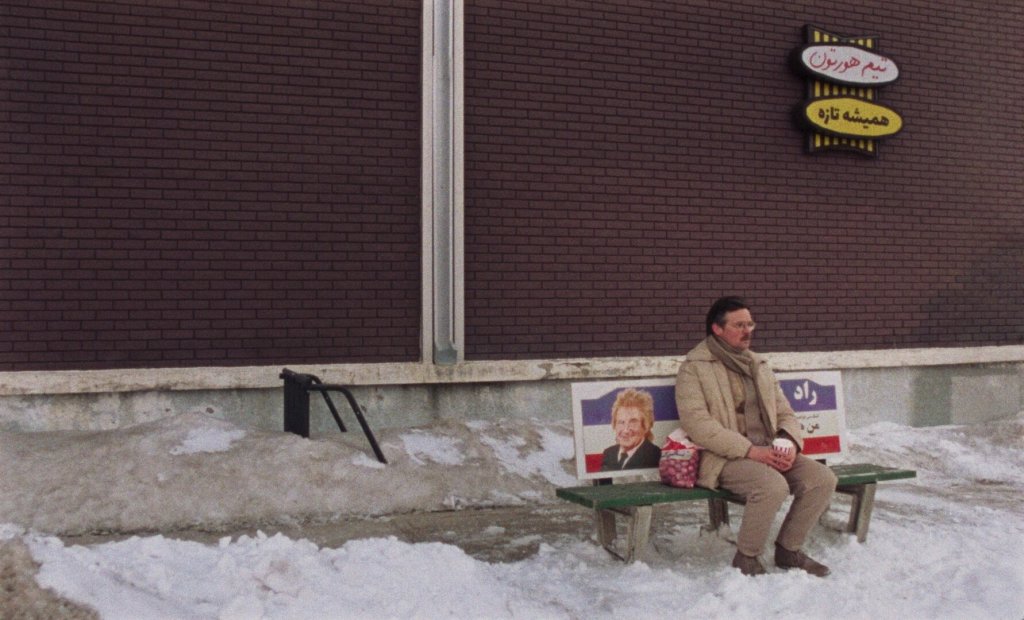
The third narrative strand in Universal Language periodically brings in an inexplicable group of bored tourists being led around apparently un-notable locations in the extremely beige and snow-blanketed city by a tour guide named Massoud. The whole palette is toned down, with the occasional colorful burst of a child’s snow suit or the décor in interior scenes, and there are lots of long shots that make the tour seem even more unremarkable and funny. That kind, quirky sense of humor infuses everything about the film, from the way the shots are composed to the actual jokes. Massoud’s pink earmuffs contrast with his very grey suit and serious tour guide tone, and there is a guy randomly walking around dressed as a Christmas tree. The recurring turkey appears as a seatmate on the bus Matthew takes home, as well as in a very retro 80s commercial selling turkeys where it squawks “unacceptable!” It’s a joke Rankin says is especially entertaining for Farsi speakers, since the word unacceptable is onomatopoeic for the sound a turkey makes. There are also quintessentially local jokes, like an Iranian version of Tim Horton’s and bench ads based on an actual Winnipeg real estate agent, Rod Peeler, who is a Rod Stewart impersonator on the side and is known for his ad slogan “I never sleep”.
So if you’re looking for something offbeat and a little dreamlike to drift through one of your summer evenings with, I recommend losing yourself somewhere like Winnipeg-Tehran or the vampiric nighttime streets of Montreal and Bad City.
~~~
Alex MacFadyen hopes never to share a seat on a bus with a turkey.
Categories: Screen, Uncategorized