
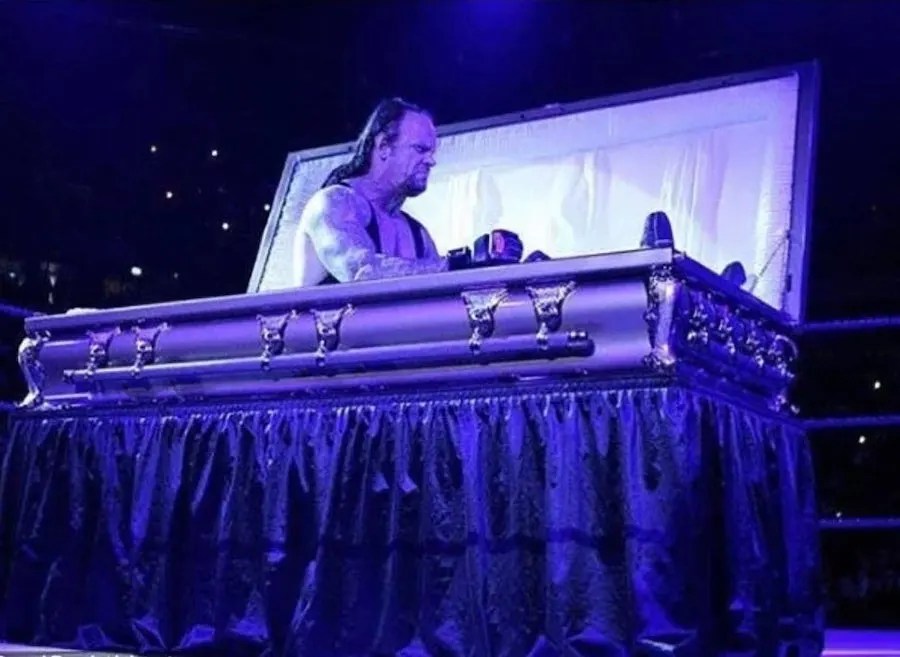
One of the more tragic and difficult aspects of being a wrestling fan – and it happens so frequently that you unfortunately have to call it part of the overall experience – is that you discover and then get invested in a wrestler only for them to die almost impossibly young. And no part of that cycle is truly optional. By definition, as wrestling fans we’re asked to buy into a whole package – a character, a personality, a story, and a person – and then watch them throw themselves and each other to the ground (or worse) multiple times a night. The idea of death is constantly referenced in wrestling promos and programming. Wrestling fans have been chanting “Kill, Steen, Kill” at wrestler Kevin Steen (now known as WWE’s Kevin Owens) and “Joe’s Gonna Kill You” at AEW star Samoa Joe for years. One of wrestling’s most enduring and popular mainstream characters is literally an undead mortician known as The Undertaker who would stuff his opponents into coffins and bury them alive in gimmick matches. Even today, matches with no rules and which are particularly violent are colloquially known as ‘deathmatches.’ But what does this all mean when the performers and the fans are faced with real, actual death?
Nearly every physical aspect of wrestling is dangerous and human bodies aren’t made for it, which is why it’s so fascinating and compelling for those of us that love it and also why it’s so annoying and boring for people to immediately proclaim that it’s “fake” in the way that, I guess, your favourite stage play or figure skating, artistic swimming, or gymnastics routine isn’t. Maybe it’s similar for people who like “real” sports like football or baseball or soccer, watching the human body contort its way into positions it was never meant to, and catastrophic injuries and premature deaths happen there as well. But there’s something so tragic and the worst kind of poetic for me when it happens to a wrestler because they’re not just another uniformed player on a field or court. Their whole thing is fostering a kind of parasocial relationship with them – cheering them when they succeed or booing them when they insult you right to your face – only for it to feel like a personal loss when they die too soon, as they often do. Because their characters are consistent and many wrestlers portray their wrestling personas anytime they’re in public, it becomes an integral part of them while also being separate from their “real” self. That means that when they die, we as fans find ourselves mourning them twice – both their public persona and their real, backstage one – and our grief doubled.
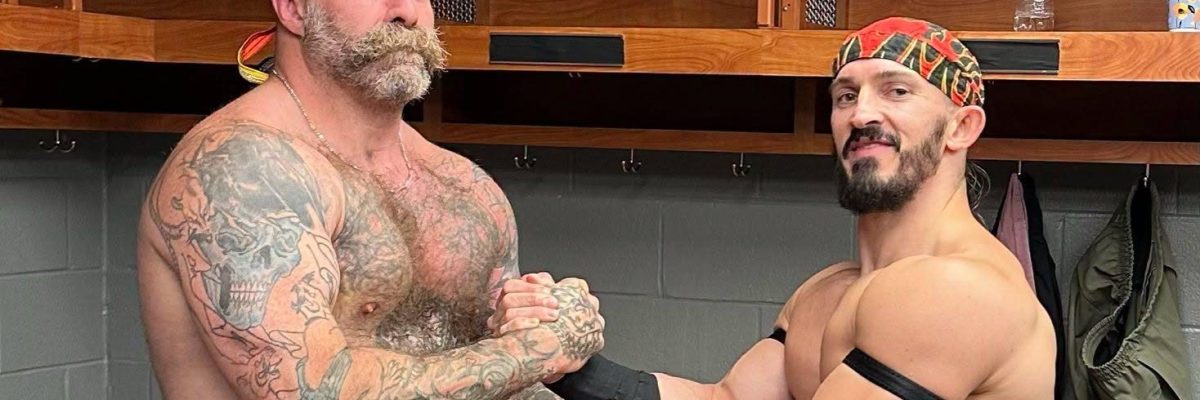
The past month or so in AEW – September mostly – was unfortunately defined by two events, and neither of them were of the thrilling, edge-of-your-seat pay per view sort that they usually are. The first was the sudden and untimely death of Andy Williams, who performed as The Butcher in AEW’s early days. His death at only 46 years old shocked everyone that both knew him personally and who watched him onscreen. Shortly after that was the equally untimely passing of one of my favourites in the company, Benjamin Satterley. Benjamin, who was known in wrestling as Pac, passed away suddenly at only 40 years old, only 24 hours after having his last match on AEW’s All Out pay per view.
Andy Williams was the sort of guy that didn’t need wrestling, exactly. Or at least didn’t need it for money or fame in the way that most wrestlers need it. By the time he became The Butcher in AEW, Williams had already been a successful musician in the metal band Every Time I Die and had achieved a decent amount of fame from that. But the siren song of the squared circle is seductive, and sometimes being a person that, upon looking at them, you just know they’re made to step between the ropes is enough. Butcher/Andy and his tag partner Jesse “The Blade” Guilmette and Laura “The Bunny” Dennis were an integral part of early AEW and one of the acts I always looked forward to seeing. The Butcher, The Blade, and The Bunny as they were known as a collective act in AEW, were not performing together at the time of Williams’ death, but it still hit hard when people from all over the industry gave their thoughts on the man all over social media and onscreen in a special tribute episode of Collision.
Pac’s death hit the wrestling world really hard as well, as Pac at only 40 years old had wrestled in nearly every region of the world – including the UK (his home), Japan, Mexico, and the United States – where wrestling is popular. Benjamin/Pac, or known affectionately as ‘Benji’ to his closest friends, was remembered publicly as one of the best and most influential in-ring performers to ever do it. People that worked extensively with him in Japanese promotion Dragon Gate, in American promotions AEW, Ring of Honor, and WWE, and in several small but close-knit independent promotions in the UK (and many wrestlers knew him from all of the above) describe him as one of the most thoughtful and meticulous wrestlers to step through the ropes.
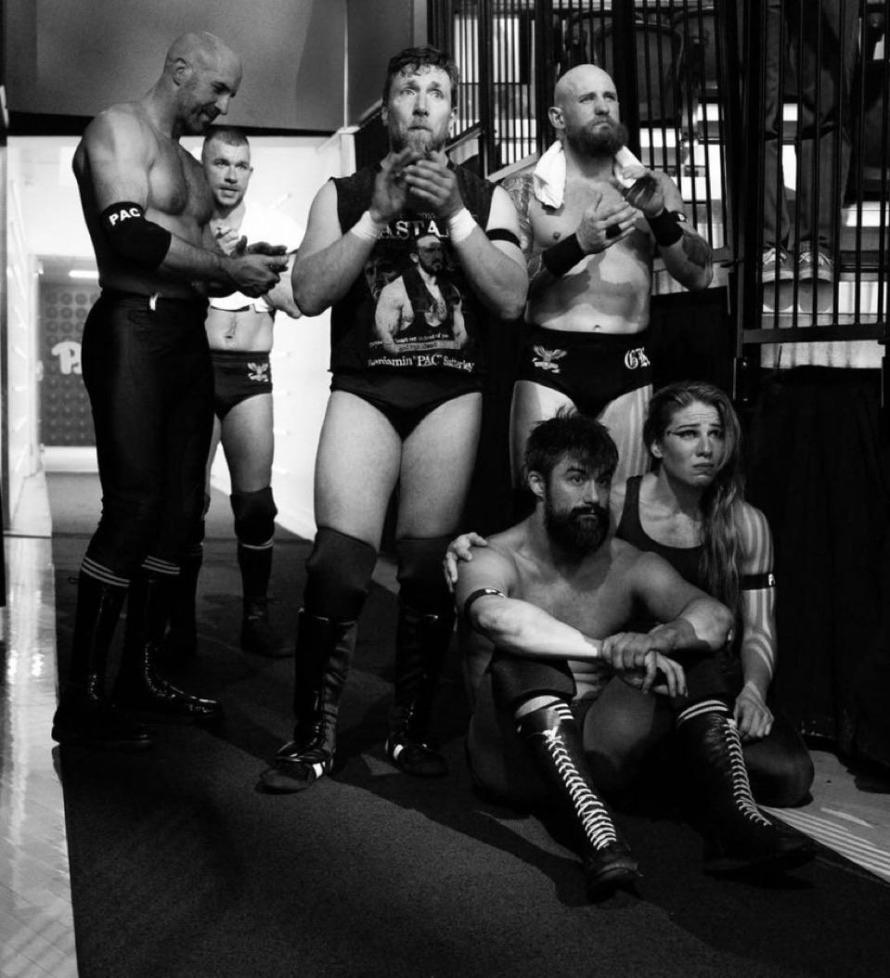
I never thought much about the name of the Death Riders, Jon Moxley’s violence cult of which Pac was a charter member. They have a bit of a motorcycle gang aesthetic even though none of them ride motorcycles as far as I know, so the name sort of fits. But, ascribing ill-earned subtext like I tend to do, all wrestlers ride along the razor-thin blade of death each time they walk through the curtain out to the ring and back from it. While they’re out there, they (or at least the good ones) create and nurture a connection to the audience both live and on tv using their bodies. They rip and tear and leave pieces of themselves and each other for our entertainment and our reactions. For me, both Pac and Butcher’s deaths hit me almost as hard – harder, even, in some cases – as those of people I know in real life. As fans we spend hours with these people, week in and week out, and even when they’re temporarily off TV for injuries or other reasons we pine for them privately or in our group chats or wherever we discuss the happenings in wrestling. When I think of both performers I can’t help thinking that I won’t ever get to joke about Butcher’s magnificent mustache, or how inexplicably wet Pac would be as he walked out of the locker room. I won’t ever again hear Pac’s theme (‘Out of Time’ by Mikey Rukus) ring through an arena where I’m watching him live, knowing that I’m about to see a spectacular match capped off by his incomparable Black Arrow finishing move from the top rope.
One other situation involving an AEW performer in that very same week was an uncommon but beautiful and special tribute show called Rebel Heart for Tanea Brooks, known to the wrestling world as Rebel. Rebel was tragically diagnosed with terminal ALS, a debilitating disease that erodes nearly every physical aspect of a person’s body. For someone whose body was so integral to their livelihood and perception, that must be even more tragic. Brooks is still alive, and her version of a tribute show was an ALS fundraiser meant to bring awareness to the disease and to raise money for the I AM ALS charity. This is also why having a tribute show of this kind – a pre-planned one with such unfortunate timing to happen right before the deaths of Williams and Satterley – provided an unexpected contrast and a third opportunity to honour a wrestler who was the source of sadness.
So AEW was put in the difficult situation of needing and wanting to show reverence for three of their performers in a very short period of time, while also doing the balancing act of consoling both their locker room of performers who knew all three as people and the fans that knew and loved their onscreen characters. Their chosen approach for all three, which I questioned at the time even though there’s precedent for it on wrestling ‘tribute’ shows going back decades, was to produce special episodes of their Dynamite and Collision shows to honour their friends. The shows for Butcher and Pac were formatted in such a way that matches were interspersed with filmed comments from onscreen talent (wrestlers, referees, and commentators) that had connections with Andy and Ben. Though there are emotions on display in so many aspects of wrestling all the time, seeing the performers stripped of, well, performance in this way is fairly rare.
My pal X wrote about the nature and importance of tribute shows in the days after Pac’s death, and he correctly states that while having them means that someone has experienced some kind of tragedy, they’re “necessary for the whole pro wrestling community. It doesn’t matter if you’re at home by yourself watching the show on television, sitting in the crowd at the live event, or watching from a distance at a noisy bar. We hear the ten-bell salute*, we watch the matches and vignettes, and we know that even in the face of tragedy, we aren’t alone in our grief.” As I watched all three shows, I came to a similar realization. That for the performers, the Will Ospreays, the Ricochets, the Marina Shafirs, and the Jon Moxleys, baring their souls in those backstage speeches and then taking their bodies to the limit in the ring is their way of working through their grief. And just as much as that’s true, us as fans work through ours by watching them. In the tribute shows I’ve mentioned and AEW’s approach to these types of shows in general, wrestlers will include little mini-homages to their friends in the matches themselves. Will Ospreay doing Pac’s signature Black Arrow (and immediately breaking down crying), or the Death Riders bringing out his iconic signature steel chair.
I’ve been talking a lot with my fellow wrestling fans about how wrestlers, for better or worse, have taught me about “working through it” and whatever that means to them and myself personally. When not in the context of working through either a physical or mental trauma that they (or I) probably shouldn’t, which is too often the case, it can be cathartic. For a wrestler, this type of mourning means honouring their friends by doing exactly the thing they love, week in and week out. It means pouring out their heart in a backstage interview and then going out to the ring and using their bodies to tell a story in front of thousands of screaming fans. For me, it might be writing an essay just like this one, pouring out my thoughts and emotions about these performers with whom I spend hours every week. So whether through tribute shows or long diatribes about the subtext of a finishing move or a character, we work through it. We “make the towns,” as wrestlers often say. And, all too often, that’s how we ride the edge of death itself.
*the traditional way of honouring a wrestler that has recently died is to start the show with a ceremonial ringing of the ring bell ten times, followed by a moment of silence.
Categories: Wrestling



A lovely piece, Sachin.
LikeLike