
Please enjoy this extra-large article in celebration of the spooky season here at the Gutter. It was originally written for a magazine that took longer entries, but things happen. Hopefully it’s like getting a full-sized candy bar from the house with the dad that uses a radio controlled Jigsaw puppet to hand out candy in his quest to defeat everyone else in the spooky decorating arts!
~~~
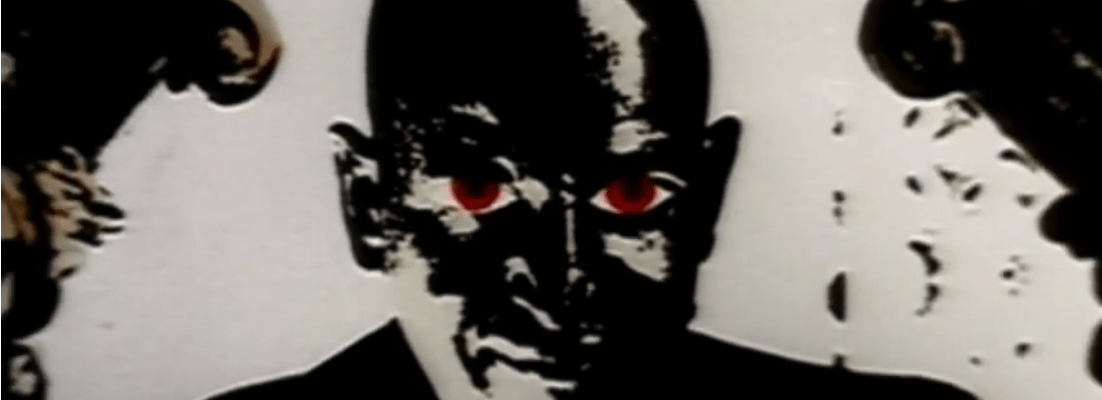
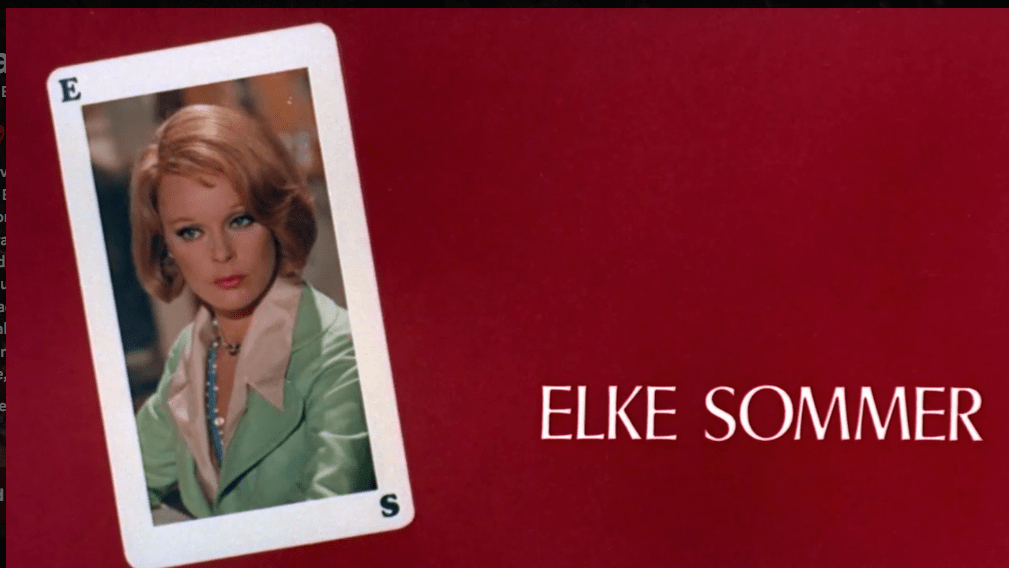
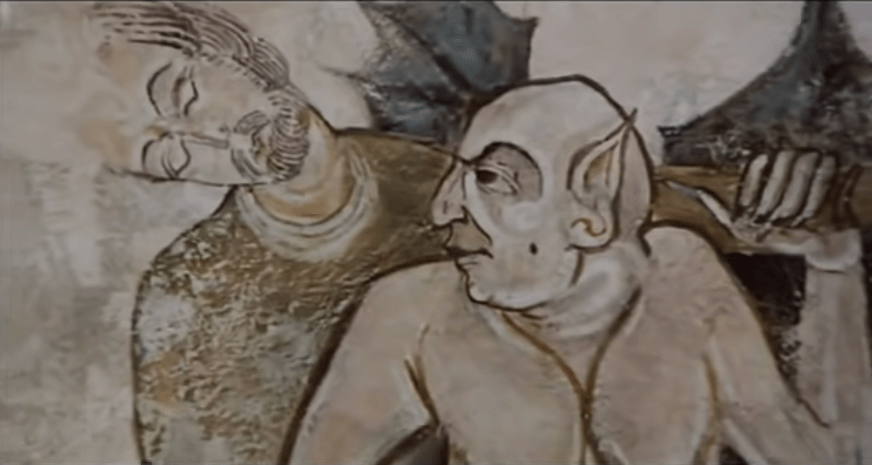
In the opening credits of Lisa and the Devil (1973), white-gloved hands select and turn over cards on red velvet. The cards are a mix of mundane playing cards and major arcana cards from the Tarot. The film’s actors are introduced as face cards, mostly spades and clubs. Director Mario Bava himself is associated with hearts or cups. Elke Sommer’s initials appear in black where her card’s suit and number would normally be. Telly Savalas is introduced with a major arcana card, il Demonio—the Devil. And then the credits give us a good long look at a painting of a devil with some resemblance to Savalas. It is diabolically appropriate: Telly Savalas makes an excellent Devil.

Lisa and the Devil was director and screenwriter Mario Bava’s most personal, most conflicted, and arguably most art house film. It was also the film he had the most control over. Theoretically, Bava had little to worry about in making the film. He consistently made solid films that did well financially and was famously frugal. He even came in well under budget with his highest-profile film up to that point, Danger: Diabolik (1968), an adaptation of Angela and Luciana Giussani’s Diabolik comic. In fact, Bava’s films were so dependable that American International Pictures’ Samuel Z. Arkoff offered to buy Lisa and the Devil sight unseen. With that deal practically sealed, producer Alfredo Leone gave Bava free rein. A number of people credited and uncredited were involved in writing Lisa and The Devil, including Bava, Leone, Giorgio Maulini, Romano Migliorini, Roberto Natale, and Francesca Rusicka, who conceived of the original idea but did not want screen credit according an interview with Tim Lucas in Lucas’ Mario Bava: All The Colors of the Dark (2007). Bava hoped that Lisa and the Devil would be a break-out, critically admired art film. He thought it might even win an Academy Award for Best Foreign Film, again according to Lucas’ book. After seeing the finished film, Leone thought it might, too. It is a gorgeous, color-saturated Gothic film. Unfortunately, Leone was so sure the film would be a success that he haggled with Arkoff, leading Arkoff to watch the film and, well, Arkoff hated it. Lisa and the Devil, Bava’s most personal film was subsequently renamed House of the Devil, and hacked up into a possession thriller à la William Friedkin’s recent box office hit, The Exorcist (1973). House of the Devil included new footage shot with Robert Alda, the star of Rhapsody In Blue (1945) and a stalwart television character actor during the 1970s and 1980s. Oh, and he was Alan Alda’s father. Sadly, as a result of Arkoff’s panicked re-editing, the original version of Lisa And The Devil was never screened theatrically in Bava’s lifetime. Happily, we can see it now.
Out of Touch, Out of Time
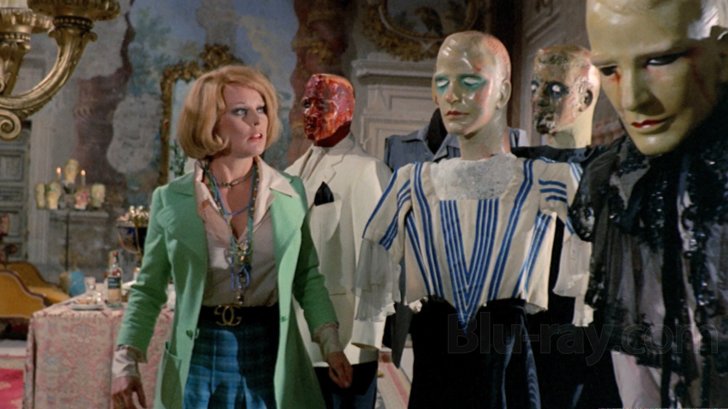
Lisa and the Devil embraces classic horror elements we now consider giallo, some of which Mario Bava invented himself. There are mannequins, dreams, a music box, the inescapability of the past, necrophilia, doubles, mistaken identity, impotence, mother issues, a scarlet-robed killer, step-parents, hauntings, forbidding mansions, supernatural forces, mustaches, and a cake “with chocolate sprinkles.” Lisa and the Devil is reminiscent of movies where Vincent Price has an ancestral portrait in his parlor that possesses either him or some unfortunate young woman who resembles his lost wife. Elke Sommer, fresh from Bava’s Baron Blood (1972), stars as Lisa, a woman who bears an alarming, to her at least, resemblance to a woman in an old photograph. Continuing a run of villainous performances in Italian and British film, Telly Savalas stars as Leandro, perhaps merely an unjustly maligned manservant, perhaps the Devil. A connoisseur of the diabolical in film might be forgiven for overlooking Savalas’ Leandro in favor of any of a number of screen sons of the morning star: Benjamin Christensen’s Satan (Haxan, 1922), the adorable Goat of Mendes in The Devil Rides Out (1968), Emil Janning’s Mephistopheles (Faust, 1926), Peter Cook’s George Spiggot (Bedazzled, 1967), Mercedes McCambridge’s briefly-glimpsed Pazuzu (The Exorcist (1973), Tim Curry’s Darkness (Legend, 1985), or Peter Stormare’s barefoot Lucifer (Constantine, 2005). But Savalas’s delightfully dapper Devil shouldn’t be overlooked. It’s easy to see why Elke Sommer’s Lisa is frightened by him, despite his pleasant and polite manner. Lisa does battle for her identity and possibly her soul, but the portrait that sets her misfortune in motion is one of the devil.

We join Lisa as she stands with her tour group listening to a docent discuss a medieval church fresco in Toledo, Spain. The group is not admiring the work of Toledo’s own El Greco, or the massive fresco of St. Christopher and Jesus in the Primate Cathedral of Saint Mary. The painting the tour group admires is on an unnamed church and is the very same fresco we saw during the opening credits. It depicts the Devil bearing away the dead during a time of plague. Though it has been exposed to the elements for centuries, the fresco looks… fresh. Lisa, however, is distracted and goes to explore an antique store. She stops to admire a music box playing a haunting tune, as music boxes always do. Carved and painted wooden figures parade the Medieval Great Chain of Being before her—a procession of clergy, gentry, and peasantry pass by her on their way to death. Lisa interrupts the proprietor’s conversation with a customer to inquire about the music box. The proprietor (Franz von Treuberg) tells her that it belongs to the very gentleman with whom he is discussing the dressing of a life-sized wax mannequin. The customer, Leandro, asks Lisa if she thinks a black suit would be “too severe.” Looking dazed, Lisa leaves without responding. It’s not surprising that seeing that same devilish face in the shop alarms Lisa, even if he is a pleasant Telly Savalas wearing a jaunty beret. Is it because Leandro so closely resembles the Devil in the fresco? Or is it just because he is a dead ringer for Telly Savalas? Lisa loses the path back to the church in the labyrinth of narrow streets. She knocks on doors seeking help, but no one responds. She hears laughter, but sees no one. Lost, she encounters Leandro again, carrying the music box and mannequin. As they talk, the dummy—switching between wax mannequin and living mustachio’d man—seems to lunge for Lisa, frightening her off again. In leaving the group gathered around the diabolical fresco and entering the shop, she has moved between worlds somehow, and the film becomes more hallucinatory and Lisa more untethered.

As she flees, she encounters the man who resembles the mannequin again. “Elena,” he calls, running up to Lisa. “Elena, darling!” He falls, apparently injured or dead, and Lisa tries to find help. As she runs the camera reveals there is something strange about his pocket watch–the hands are askew on the watch’s face. The man and Lisa are outside normal time. After dark Lisa encounters a car carrying Frank (Eduardo Fajardo) and Sophia Lehar (Sylva Koscina), and their uniformed chauffeur, George (Gabriele Tinti). Frank and Sophia have anglicized versions of the names of composer Franz Lehár (Lehár Ferencz, 1870-1948) and his wife, Sophie Lehár. Lehár is probably most famous for composing “The Merry Widow”—which is certainly appropriate to the film. Frank looks like he is in his 50s, the same age the composer would be in the 1920s. Are they merely namesakes? The Lehars invite Lisa to ride with them to find a telephone, ideally rejoin her group, and definitely escape wherever she has wandered into. They don’t seem to be in Toledo anymore As they drive down a rural road, they’re silent, perhaps because of the awkwardness of meeting new people, or the strangeness of sharing the front seat with a chauffeur…or perhaps because they are not in the mundane world anymore.
The Lehars appear wealthy. George drives a pristine 1925 or 1926 Packard limousine. It could be a valued antique or an eccentricity in 1973. The couple and their chauffeur wear what might be a 1970s version of 1920s clothing. George wears an old jodhpured chauffeur uniform and cap. Frank wears a light gray suit and homburg. It’s not a fashionable 1973 suit, but it also wouldn’t be out of place in nearly any time in the last hundred years. Sophia’s cloche hat and drop-waisted dress is also fashionably 1920s, but it could easily be a 1973 take on 1920s clothing. These items create an eerie sense of timelessness in much the same way that place has lost any specificity as Lisa wanders from a church in Toledo, through a labyrinth of daytime streets to a dark road at night near the woods.
The Devil and the Old Dark House
Lost in time and space, they drive right into an old dark house movie as they seek help at, well, an old dark house. Lisa And The Devil is as much an old dark house film as one about infernal forces. In old dark house movies, a group of travelers—sometimes people contesting or fulfilling the stipulations of a will or paranormal investigators and usually including a young, attractive couple—spend the night in a spooky mansion. A young woman who is drawn into the house is often considered ill, possibly mad. Old dark house movies often include the mundane horrors of staying in someone else’s house; eating dinner with strangers; eating unpleasant meals; sleeping in strange beds; and urban anxieties about rural folk. But they also include: foreboding mansions; secret passages; hairy hands emerging from behind curtains; gloved hands wielding wicked daggers; wealthy eccentrics; families with “old blood”; somnambulism; suspicious and/or creepy servants; maniacs; sexual menace; fancy lingerie; ailing recluses; and locked rooms of mystery. In one of the earliest old dark house features, Paul Leni’s The Cat And The Canary (1927), an adaptation of Jack Willard’s 1922 Broadway play and remade many times subsequently, eccentric millionaire Cyrus West’s surviving family arrives to hear the reading of his will at precisely midnight. Afterwards, West’s heir, Annabelle, must survive the night sanity intact or forfeit the estate to a mysterious person named in a second, sealed will. Meanwhile, a maniac called “The Cat” has escaped from an asylum. The Cat’s trademark is a spooky monster hand that pulls the unwary into secret passages. While Lisa and the Devil takes more after subsequent old dark house films, there is the issue of Lisa’s sanity, the madman on the loose, and the odd family. Of course, in The Cat and The Canary, Annabelle’s stay is intentional. Her tour bus has not left her behind after she wandered away from the tour group. Her mid-1920s Packard limousine has not broken down.
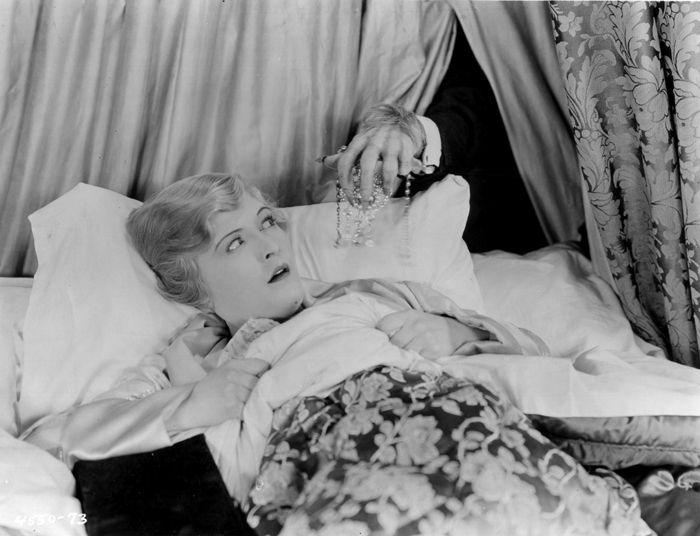


Lisa and the Devil takes most after the film that gave the genre its name, James Whale’s knowingly campy and far more Queer-coded horror comedy, The Old Dark House (1932), released five years after The Cat and the Canary. In The Old Dark House, travelers caught in a storm seek shelter in a spooky mansion. The familial mansion is almost as eccentric as the family dwelling inside, and there is even someone hidden away upstairs in a locked room. The exceptionally modern travelers are faced with a living situation that is not modern at all. The house is not wired for electricity, the Femm family—fantastically portrayed by Ernest Thesiger, Eva Moore, Brember Wills, and Elspeth Dudgeon (as the ailing 102-year-old Femm family patriarch, Sir Roderick Femm)—not holding with such things. Margaret Waverton (Gloria Stuart, now best known for Titanic (1997)) and her husband Philip (Raymond Massey in an unusually heroic role for him) join Roger Penderel (Melvyn Douglas), Sir William Porterhouse (Charles Laughton) and Sir William’s special lady, Gladys DuCane Perkins (Lilian Bond) as guests in the house. The Femm family find Margaret titillatingly modern with her pre-Code camisoles and French knickers. Eva Moore’s Rebecca Femm is conflictedly attracted to Margaret and the Femm’s frightening servant, Morgan (Boris Karloff) takes a menacing shine to her. Traveling companions Sir William and Gladys are not married. In fact, Gladys is a music hall chorus girl, and this is all quite shocking to Rebecca and a source of delight to Ernest Thesiger’s gleefully fey, Horace Femm. The irreverent Penderel is a veteran of World War I and a member of the Lost Generation. He’d carry a membership card, if the Lost Generation didn’t repudiate such things. Despite his unwillingness to take much seriously after what he saw in the Great War, Penderel takes to Gladys and starts to care about at least one thing again. Of course, the Femms are just as shocking to the travelers, with their eccentricity, their 19th Century morals and fashions, their unpleasant meals, and their murderous family secret locked away upstairs.
Boris Karloff also starred in Edgar Ulmer’s The Black Cat (1934), which is like an old dark house movie and obliquely discusses PTSD as The Old Dark House does. Set in an extremely Modern mansion built on the site of a World War I fort and a bloody betrayal reveals the wartime horrors that early Twentieth Century Modernity conceals. The Black Cat also features incest, and like Lisa & The Devil, devilish doings, necrophilia, and the inescapability of past sins. An American newly-wed couple, Peter (David Manners) and Joan Alison (Julie Bishop), travel by train through Hungary on their honeymoon. They make the acquaintance of Dr. Vitus Wertergast (Bela Lugosi). On discovering they are all disembarking at the same station, Vitus invites them to share his car. There is a storm, of course. Vitus’ car tumbles off the road, of course. Joan is injured. Vitus tells them they are not far from his destination, the home of Hjalmar Poelzig (Karloff again). Poelzig’s house is designed by the thoroughly Modern Hjalmar himself, who seems to share a design sensibility with Bauhaus architect Walter Gropius. The electricity works fine, but the phone is most unfortunately out. Poelzig’s house is a home filled with awful secrets. In its depths, Poelzig keeps a Satanic chapel and tanks holding the perfectly preserved dead bodies of his previous wives, including Vitus’ beloved Karen (Lucille Lund). Poelzig’s house is haunted by the past—World War I, in particular—and contains not one, but two maniacs: the Satanic Poelzig and the conflicted, vengeful, shell-shocked Wertegast. Poelzig built his home on top of an Austro-Hungarian fort, the same fort in which Poelzig betrayed his command to the enemy. While Wertergast languished in a prisoner of war camp, Poelzig married Karen (Lucille Lund) and raised Vitus’ daughter, also named Karen (also played by Lucille Lund), as his own. When Karen died, Poelzig married her / their daughter. Poelzig keeps Karen confined in his bedroom while the Alisons are there. Both Poelzig and Vitus take an unhealthy shine to Joan, who has been given a tranquilizer and is inclined towards somnambulism.
The Black Cat is a beautifully shot, positively perverse film—just the kind of thing Mario Bava would do so well a few decades later. Lisa and the Devil isn’t concerned with PTSD or the cost of war as The Old Dark House and The Black Cat, but young romantic lead Maximillian does suffer ennui, some damage to his masculinity, has his wife concealed in a bedroom, drugs women, and has a sexual attraction to a dead woman. Maximilian’s mansion also contains a poorly preserved bride and a questionably preserved Carlos. And there is a definite infernal influence in the form of Leandro, the butler.

The Butler Did It
When the butler Leandro opens the door to an old mansion and tells the disappointed travelers that, alas, there is no phone, it is as if Mario Bava made The Old Dark House, The Cat And The Canary, or The Black Cat. Leandro’s mistress, the Countess (Alida Valli), does not want them to stay. Leandro directs the party to other accommodations, but the Countess’ son, Maximilian (Alessio Orano) surprises Lisa, who has been trying to avoid Leandro’s notice. Maximilian is immediately attracted to Lisa. He pleads with his mother to let the travelers stay for the night. The Countess relents, but refuses to let them stay in the main house, telling them to stay in the nearby villa.
The villa’s lack of electricity or telephone make time seem even more nebulous. Where Cyrus West makes his inheritors pass one night in a mansion, the Femms are contemporary to the travelers but resist modern times, and Poelzig is a Modernist literally burying the past, the Countess, Maximilian and Leandro are more unfixed in time. Maximilian’s wide lapels and crushed velvet jacket reveal that it is indeed the 1970s—or then again, possibly the 1870s. The Countess is in mourning, wearing a purple gown with a white lace collar. The purple is consistent with late 19th century or early 20th century European mourning dress. She mentions mourning her husband, Carlos (Espartaco Santoni), but her white collar indicates that she might be mourning a child, perhaps even her son, Maximilian.
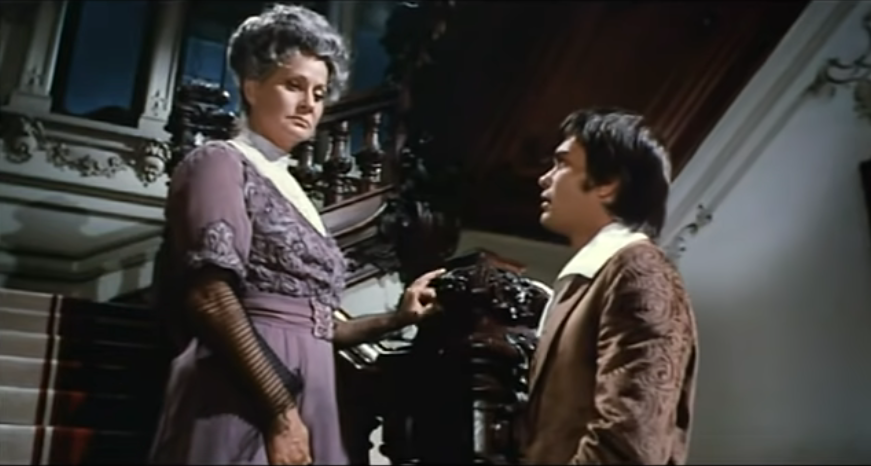
For his part, Leandro is an ideal butler, eternal himself and recognizable in any time over the last hundred years or so, down to his white gloves and spats. As Leandro enjoys a lollipop* and walks the guests to the guest house, he remarks to Lisa about the coincidence of their meeting once again. Then adds, “And very little escapes me, if you know what I mean.”
Lisa thinks she does know what he means, but Leandro, like all devils, is well-practiced in irony. Once Lisa, the Lehars, and George are on the grounds, they have little chance of escaping. Lisa, however, denies recognizing Leandro. Once in the guest house, Lisa sets about relaxing, only to see Carlos and his mustache creeping on her from the window, in a shot very reminiscent of Peter Wyngarde leering at Deborah Kerr through a rain glazed window in The Innocents (1961), another film that blends the supernatural and the psychological in an old dark house. Lisa flees the guest house only to encounter Maximilian in the garden. He is still passionate about her. and tells her, “Everything’s so different with you here. It feels more alive.” But Lisa seems less alive since she’s been in the house. She is not quite somnambulant—she sure can run from Carlos—but not fully present either. She is passive, drifting, as if she is living a dream or caught in a grim fairy tale. She wanders the mansions halls and it’s hard to say if she is drifting between times or if the more damaged wallpaper and walls is a result of the family’s failing fortunes. But, as Lisa discovers, the people in this house are trapped in a story. The Countess would like to leave her out of it, but Maximilian very much wants her to become a character. Maximilian and Carlos try to make Lisa a part of their story by treating her as if she were Elena while Leandro is just doing his job.
As everyone gathers for dinner in the main house, Sophia begins a conversation appropriate to an old dark house. She remarks that the “setting is so right for a tale of darkness and perdition.” She tells the assembled party, “I prefer ghosts to vampires, don’t you? Somehow they manage to keep all the horror in without spilling any blood.” There is blood spilled in Lisa And The Devil. There are bloody murders and rape. It is a giallo after all. But, as Frank points out, this is also a story of a haunted house; one that mixes ghosts, the Devil, and the poor souls who blunder into their story. We are introduced to the first murder victim at dinner, who the Countess calls their fifth guest. Lisa and the Lehars are surprised. No one else is seated at the table. George is fixing the limousine. Maximilian denies anyone else is in the house, but still takes a slice of Leandro’s chocolate cake upstairs to the other guest, his dead bride, Elena. Dressed for her wedding, Elena’s skeleton lies in bed surrounded by withered flowers and plates of decaying cake. Shortly after, the newly dead begin to be discovered as well as a hooded and cloaked figure bearing a club that resembles one from the opening credits’ deck of cards. Leandro bears away the dead on his tea cart.
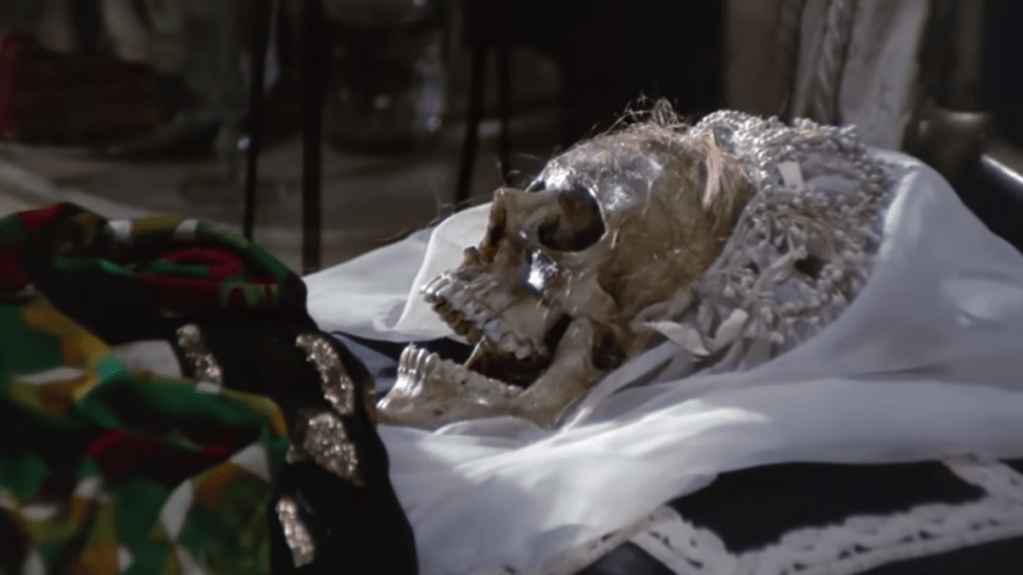
But the dead themselves are flexible in more ways than one. Expecting to see Leandro preparing one of the victims in the family chapel, Lisa instead sees him trying to fit Carlos into a too short coffin. The dead also flicker between states. Carlos first appears as a mannequin, then a living man, then a corpse and then a mannequin once more. To Maximillian and Carlos, Lisa flickers between herself and their long dead beloved Elena. After attempting to make love to a fully conscious, passionately responsive Lisa, Maximilian prefers to chloroform her on the bed next to his dead bride. Frustrated with his inability to perform and haunted by Elena’s mocking laughter, he dresses for a wedding and destroys his mothers funeral arrangements for Carlos in the family chapel, but Maximilian still prefers death to life.
“You wouldn’t listen when I told you to stay away. Now it’s too late,” the Countess tells Lisa earlier in the film. And she is right, though it’s hard to say exactly how Lisa could have escaped once she left the tour group–perhaps even once she viewed the fresco. Lisa is gradually blending into the story of the house. It is also too late for Lisa as far as Leandro is concerned. It doesn’t matter what he tells her or what she knows now, so Leandro is open with Lisa about stage managing the family story with his mannequins and his music box depicting a medieval social order in carved wood. Lisa is surprised to see Leandro place a contemporary tape recorder in the box to provide its music. The modern technology is jarring, but also evokes a sense of the mysteries of the theater.

Charming, long-suffering and strangely humane, Leandro is a supercilious servant who invites everyone to share his amusement. He serves dinner with perfect manners. Over and over again, Leandro bakes and decorates cakes. He acquires, prepares and even repairs the actors in the family’s timeless drama. But Leandro feels unappreciated in his work both as servant and stage manager. As Lisa lies unconscious in after an encounter with Carlos in Leandro’s workroom, Leandro begins a soliloquy that I suspect involved improvisation by Savalas. Leandro complains, “But what does tradition mean to a poor devil like me? Work and fatigue, that’s my heritage.” Leandro takes the unconscious Lisa’s measurements and continues, mixing cereal commercial and nursery rhyme. “They break. They snap. They pop. They crackle. And I’m the one who puts their tradition back together again. And now I’ve another puppet to make. And lucky for me, you look like her because you won’t be here tomorrow.”
Oh, how Leandro makes me wish Savalas played the Devil more often. Savalas’s career was long and complicated. He had a BA in psychology from Columbia University and started a Master’s degree in Medicine. He studied radio and television production at the Armed Forces Institute. He worked in radio for “Your Voice of America” and in 1950, he also had his own NYC radio show, “The Coffeehouse.” Savalas produced and directed television and hired the iconic television sports reporter Howard Cossell for his first job. Savalas began acting in his mid-thirties and played a lot of cops on television. He broke into film when Burt Lancaster got him cast in The Young Savages (1961) and played opposite him in The Birdman of Alcatraz (1962), in which one can see Savalas with hair. Savalas was nominated for a Golden Globe and an Academy Award for Best Supporting Actor in The Birdman of Alcatraz. Savalas shaved his head for the role of Pontius Pilate in The Greatest Story Ever Told (1965) and kept it that way ever after. In 1963, Savalas played a concerned stepfather battling the terrifying Talky Tina in the 1963 “Living Doll” episode of The Twilight Zone. In Italy, he starred in crime films such as Violent City / Citte Violenta (1970) and Crime Boss / I familiari delle vittime non saranno avvertiti (1972), in which he plays the crime boss. He starred in several Westerns and the giallo, The Killer Is On Telephone / Asesino e… il Telefono (1972) and also starred in a couple of American movies that were giallo-esque. One, Beyond Reason, he wrote and directed himself. It was intended for theatrical release in the 1970s but ended up airing as a tv movie in the 1980s. And with the Airing of the television movie, The Marcus-Nelson Murders (1973), shot after Lisa and the Devil, Savalas started his career as a hero, the New York police detective, Lt. Theo Kojak. And there was, of course, his singing career after the success of Kojak.
Savalas is one of those actors who might have had a different career in a different time. As it was, he was limited by Hollywood’s idea of what a hero or leading man looked like, which is part of why I think he took to Kojak so strongly. Savalas also brought such a playful sensibility to his villainous roles that it is hard not to like them. His Ernst Stavro Blofeld is the most charming of the Blofelds. His brief cameo as a Cossack officer in Horror Express (1972) almost steals the movie in a film featuring both Peter Cushing and Christopher Lee. Savalas is just plain fun in The Assassination Bureau (1969) as he obviously delights in his outfits, disguises, subterfuges, and tiny mustache. Savalas’ characters are often charming no matter how sinister, saturnine, or Satanic. This charm comes through in Leandro. Leandro is liminal and seems both truly resentful of and immensely amused by his job and his awareness that they are all trapped in an eternally repeating story. His job is two-fold: to play the faithful family servant; and also, to stage manage their hell, or, at least, their eternity. Initially, Leandro doesn’t seem too set on Lisa remaining with the family. In his honest devilry, he does warn her and the Lehars not to stay at the house. He warns Lisa specifically, “It is not wise to dig up the past. We all have some unforgivable secret.” But Lisa has become entangled in the family story and she might make his job easier.

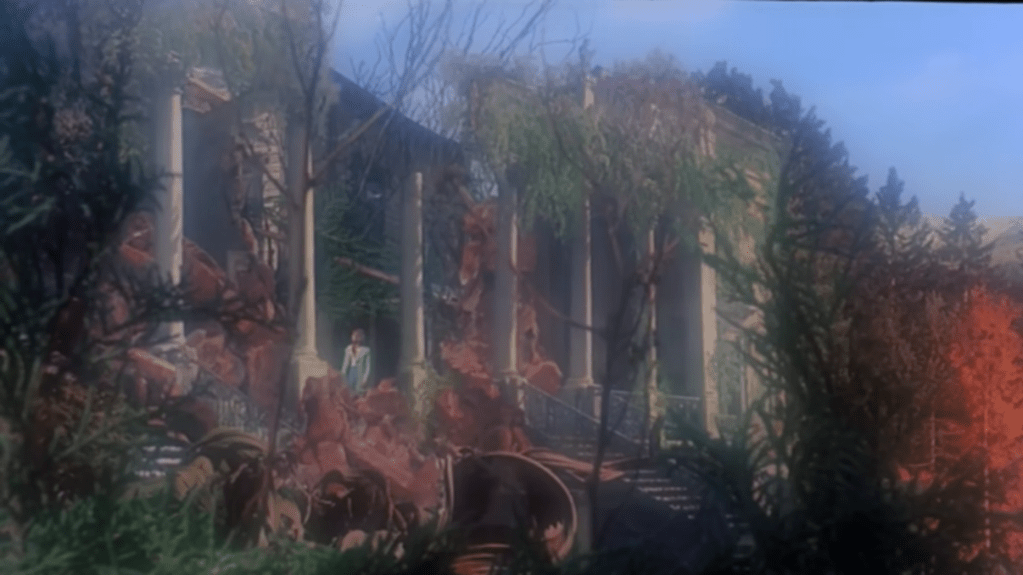
Lisa does escape, briefly. She awakens naked in Elena’s bed, then emerges an eerie and beautiful optical effect, she emerges from the mansion. The familial manor is an overgrown ruin well within the city now. Children play outside. Lisa is back in modern Toledo. She even manages to get to the airport. But as she sits in her seat, she discovers all the other of seats on the plane and that the pilot with the sketchy “Southern” accent is Leandro. He carries away Lisa, as he has carried away the dead before, but with a 727 instead of a tea cart or bat wings. Such a devilish act.
*Savalas would do the same in Kojak, which debuted later in 1973.
~~~
Carol Borden would like some cake with chocolate sprinkles, thank you. She would also like to thank Editor Emeritus Keith Allison for all his help editing this essay.




 The Cultural Gutter
1 reply »