
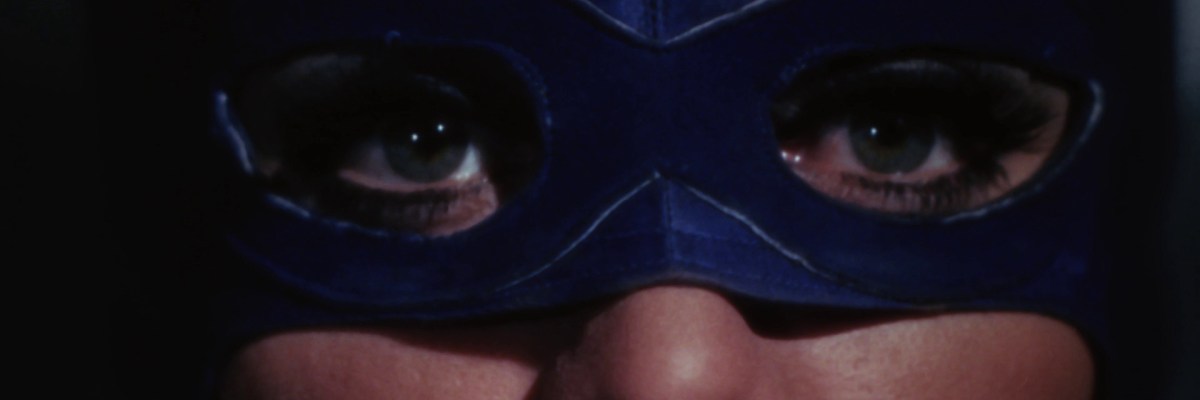
It is genuinely pleasing to me that there is room in our collective imagination for more than one Batwoman. There are and have been many Batmen – some funny, some scary, some brooding, some goofy, Michael Keaton who is all of the above – and other duplicates and avatars for other heroes (the Spider Men even acknowledge it in their movies these days) but Batwomen are rarer. You might know of the comic book Batwoman, and if you don’t, you’d do well to read about her from someone like Carol who knows her far better than I do. That version features the compellingly-flawed cousin of Bruce Wayne, Kate Kane who is very much grown-up and complicated and, to borrow Carol’s phrasing “difficult, rigid, wounded, loyal and probably oh-so-secretly romantic” character. There’s also the now-canceled (by the network, not by the court of public opinion) television Batwoman of the CW, portrayed by Ruby Rose as Kate and then Javicia Leslie as a new Batwoman named Ryan Wilder.
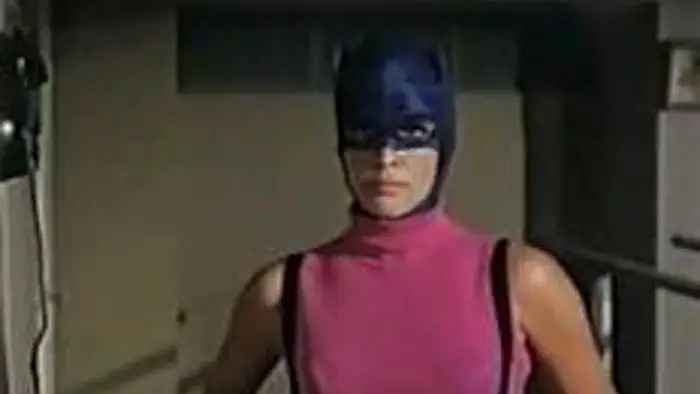
It’s the Batwoman of Rene Cardona’s Batwoman (1968) that I’m fascinated with, though. I’m not much of a comic guy, but I am extremely a lucha libre and horror guy, and Cardona’s depiction of Batwoman has a wrestling boot planted firmly in both worlds.
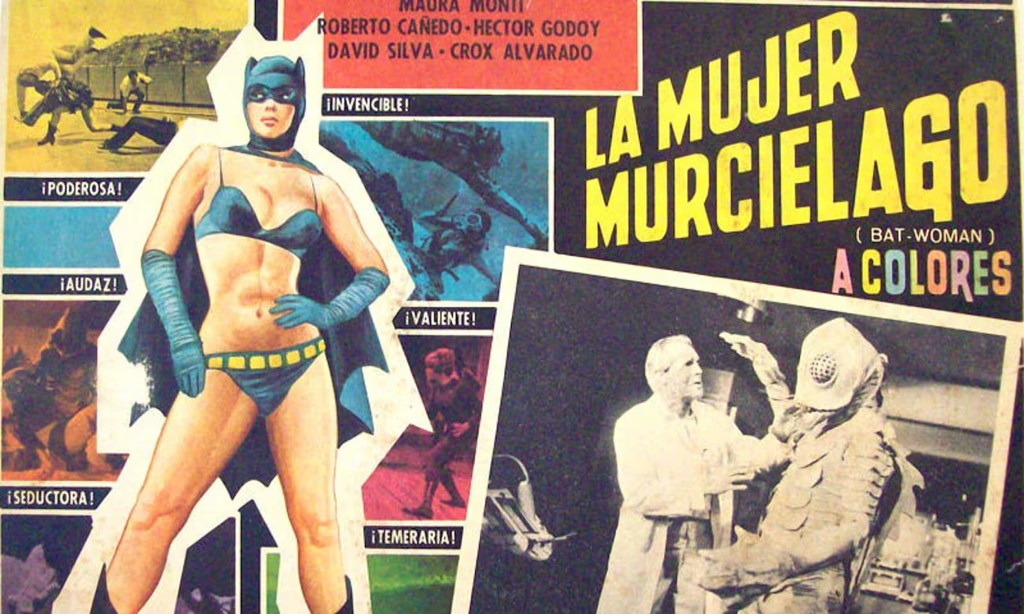
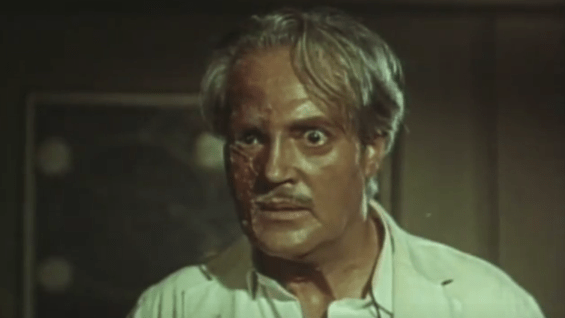
Portrayed by the incredible Maura Monti, 1968’s Batwoman isn’t like Kate Kane or Ryan Wilder in very many ways besides enjoying wearing cowls. What she is is a super-athlete, a deep-sea hunter, ace detective, and gunfighter all rolled into one. It’s no surprise, then, that she’s called in to investigate the kidnapping and murder of several of her fellow wrestlers, many of whom have washed up on a beach with barely-perceptible incisions in the back of their necks. It turns out that the kidnapper is the dastardly and (putting it mildly) eccentric Dr Eric Williams, who is draining the spinal fluids of the wrestlers to develop an army of fish soldiers or ‘Gill Men’. It’s a solid plan, but for the caped crusader, who stages a raid on Dr Williams’ island. As a result, our villain is left disfigured and bent on revenge. It’s a simple story, but one that wouldn’t be out of place in the pages of a comic book or on AEW Dynamite*.
As with Bruce Wayne, Gloria is a rich and elegant woman-about-town when she’s not Batwomaning or punishing her opponents in the wrestling ring. Also similarly to Bruce Wayne in only the best Batman stories, she is inexplicably clad in a bikini for much of Batwoman’s runtime even though that getup is less than practical and is somehow more revealing than the outfit she wrestles in. This latter choice is even stranger to me when most wrestling attire allows for the barest of coverage for both men and women. Still, it’s the 1960’s and no one really, ahem, bats an eye.
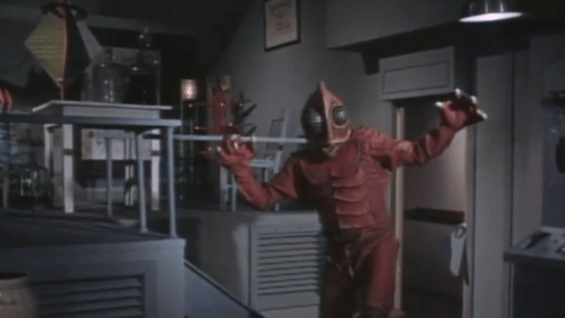
One of the things I love about Batwoman is that, for a film that features a super-capable badass taking on an army of fish soldiers and their maniacal creator, it serves up incredibly chill vibes to go with its strong sense of good and evil. All of that villainy and its foiling by Batwoman is set against a score that I can only describe as jaunty and relaxing. When I write about a movie, I usually try to watch it a couple of times at least, but Batwoman has become something of a bedtime ritual for me over the past month or so. There’s a long, not-exactly-germane to the story spearfishing scene towards the beginning of the film that features Gloria snorkeling through some lovely coral as the score offers something akin to elevator music. It’s perfect for drifting off to, and then waking up to Pisces the Gill Man running amok. That sort of tonal juxtaposition is something that always attracts me to a film, but especially so this week when following wrestling meant delving into some pretty dark places. This has been a tough week to be a wrestling fan, and to Batwoman’s credit, there are no grey areas here (not just because of the film’s lovely and garish colour palette which Monti lovingly calls ‘Mexicolor’) or, in wrestling parlance, ‘cool heels’ where you find yourself identifying with or at least thinking that the bad guys are badass. Trust me, there’s no redemption to be found for the evil doctor that’s using wrestlers’ spinal fluids to make fish warriors and who operates out of a boat-hideout called Reptilicus. He’s even got a hapless assistant named Igor, in case you thought any of the above was too subtle.
There are some things that don’t quite work about Cardona’s film. I won’t pretend that the costuming, setups, or even most of the writing is top-shelf, even for the 1960’s. The portrayal of Monti herself – attire issues aside, there are times where she seems to give the less-than-capable men around her more deference than they warrant – is not perfect. A closing scene where Gloria is terrified of a mouse and jumps into the arms of her male companions is silly, and I’d be lying if I said I wasn’t frustrated that we never actually get a climactic battle between Gloria and Williams or even with Pisces, his head Gill Man. You do get a pretty good boat explosion, but I like my wrestling movies to resolve with – if not wrestling – at least a fight. At least Batwoman comes out on top, though.
Batwoman is also nowhere near the first film to pit luchadoras against monsters and madmen, though in my opinion it’s the best of the bunch. Cardona had quite a few luchadora-themed features throughout the 1960’s that operate on a similar template, as though he was trying to get the formula just right by trial-and-error before landing on Monti and Batwoman. 1963’s Doctor of Doom might as well be the same movie as Batwoman, with fish soldiers replaced with apes and a couple of luchadoras to take them on – Golden Rubi (Elizabeth Campbell) and Gloria Venus (Lorena Velazquez) – who would appear in several subsequent Cardona features. In The Wrestling Women vs The Aztec Mummy (1964), many of the same wrestlers from Doctor of Doom return, this time to fight mummies and other monsters. She -Wolves of the Ring (1965) casts off anything wacky or supernatural (in my opinion to it’s detriment) as it focuses on more ‘realistic’ stories and personal drama that is resolved with wrestling matches, as one does. The Panther Women (1966) seems to have recognized the element that was lacking in She-Wolves, and introduces a trio of Satan-worshipping wrestlers who are faced down by our luchadora heroes. Cardona went back to the well again in 1969 for Las Luchadoras vs El Robot Asesino, in which a mad scientist has seemingly learned from his predecessors mistakes and realizes that killer fish and apes have limited utility. This one decides to counter the women wrestlers with a bloodthirsty robot instead, though with frustratingly similar outcomes.
Luchadors, both men and women, taking down evil scientists and their hideous creations was obviously a winning combination throughout the 60’s and all the way into the early 80’s, led by the Santo and Blue Demon films (all of which are lovingly catalogued by Todd Stadman). Both of these legends, both in and out of the ring, faced off with every manner of monster – from mummies to vampires to three hundred year-old witches in their day, often joined by other lucha legends like Mil Mascaras and Tineblas, among others. As all wrestling followed its example, lucha cultivated the aura of superheroes come to life. Heroes and villains in garish outfits battling the forces of evil.
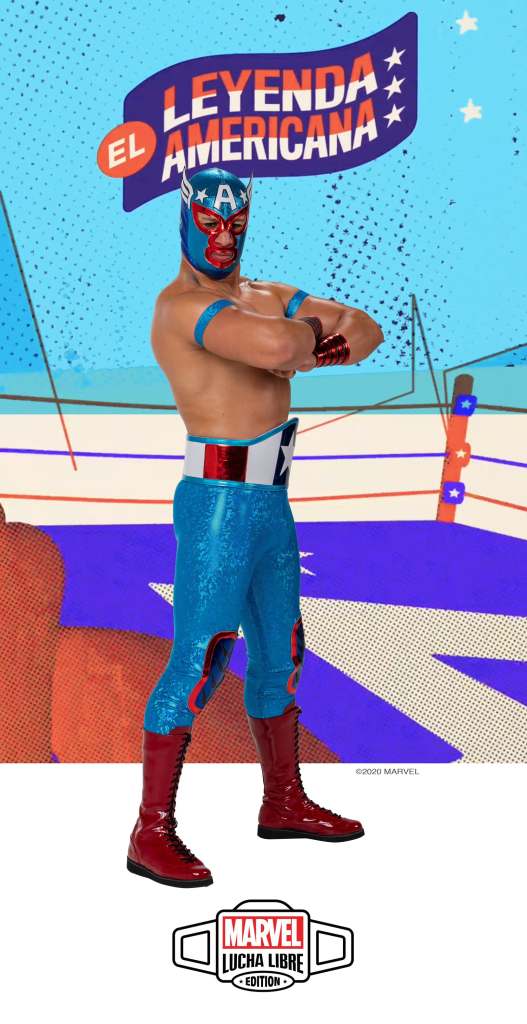
More recently, cross-pollination between wrestling and comic books has gone the other way. Lucha libre promotion AAA has had an official deal with Marvel for years, but it’s anything but a straight-ahead interpretation of the Marvel pantheon or their backstories. Instead, the AAA versions have their own slightly modified looks and backgrounds. For example, Hugo Andrews-Gonzales is not Captain America, he’s El Leyenda Americana:
Hugo is the son of a US Army member and a young army nurse born in Mexico. Given his father’s constant absence, Hugo spent his childhood by his mother side across various cities in the United States, and she taught him everything about the Mexican culture. Mexican music and classic cinema left a mark on him, especially wrestling films.
Living in Mexico has allowed him to practice wrestling, his great passion and his way of showing that justice and honor will always prevail. He is a 100% technical wrestler who seeks to serve as a role model. He is Aracno’s mentor, to whom he offers training, protection and advice.
His nemesis is El Terror Purpura, as both are governed by opposite principles.
While El Leyenda Americana seeks honor and justice, El Terror Purpura seeks power at all costs.
It’s not just a cheap knockoff, though some of the costuming looks like it was hastily thrown together the day before Halloween based on a secondhand account of who Venom or Thanos are.

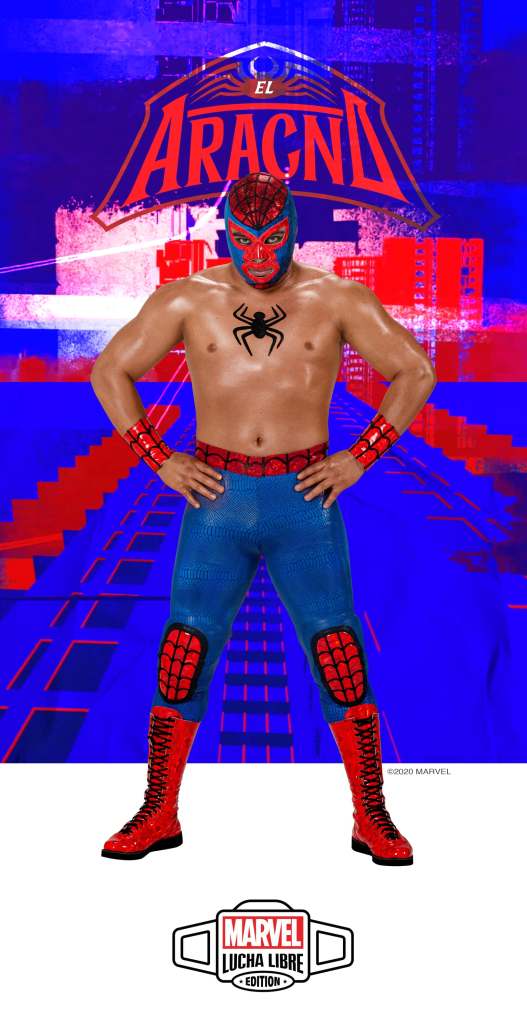
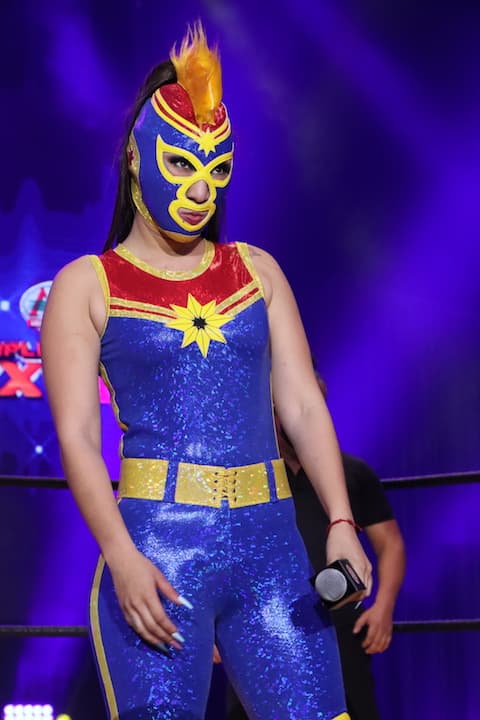
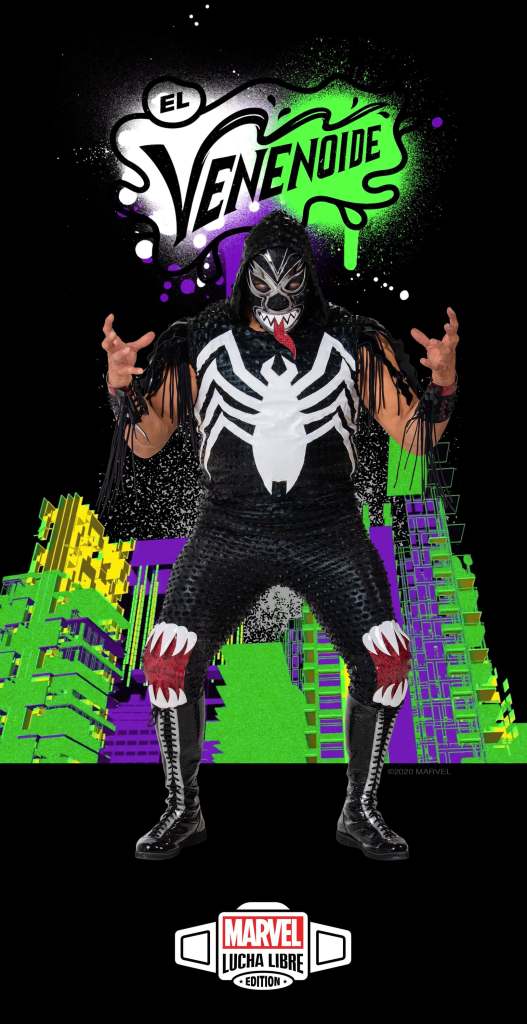
All of these slightly shifted versions of comic book superheroes in lucha have captured the imaginations of wrestling fans for years and, perhaps unknowingly, have Maura Monti and Rene Cardona to thank. It’s a reminder that, especially for characters like Batman and his cadre of allies and enemies, comic books have an important place in our culture and collective mythology. And we would do well to hold onto them a little more loosely, allowing for the kinds of wacky offshoots and interpretations like Batwoman and The People’s Joker, rather than strangling them with copyright laws and the boardroom decisions spurned by the greed of the David Zaslavs of the world. Because when the next villain with a horrific scar and the ability to develop an army of aquatic nightmares comes around, it would be nice to have at least one Batwoman to save us.
Batwoman (1968) is currently streaming on MUBI as part of its ‘Spectacle Every Day: The Many Seasons of Mexican Popular Cinema’ collection
* okay, maybe not Dynamite, but certainly Lucha Underground.
Sachin Hingoo’s army of human-isopod hybrid monsters have been roundly defeated in every encounter to date.



 The Cultural Gutter
1 reply »