
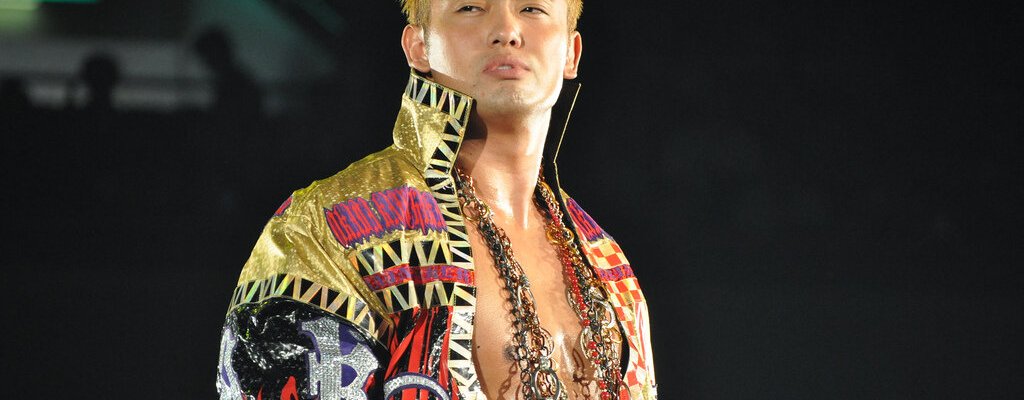
Our evil overlord and editor Carol, when I first met her many years and at least two blogs ago, used to run a wonderful series of articles about martial arts leading men called ‘Gentlemen of Asskickery’. It both sparked and re-ignited my love of the gentlemen’s fighting styles and unique characteristics that made them pivotal figures in their respective disciplines. Lately I’ve been thinking about one of my favourite wrestlers, one of the most critically-acclaimed grapplers to ever do it, Kazuchika Okada, and it seems to me that he belongs in this illustrious gallery of asskickers. It’s also Switcheroo Month, once again, and while writing about wrestling and wrestlers is anything but a switch for me, maybe paying homage to Carol’s articles would be most appropriate this April.

There are people that lament that when a wrestler debuts for a new promotion that they should be accompanied by a video package and an extensive explanation about who they are and what they represent. A sort of setting of the table so that you know what to expect when they walk through the curtain, down the entrance aisle, and through the ropes. While I agree with this in some cases, like when a wrestler drastically changes gimmicks, by and large I believe that the best wrestlers do all the required explaining with their body language, in and out of the ring. “The Rainmaker” Kazuchika Okada is a perfect example. Draped in garish robes, money raining from the ceiling, gesturing magnificently to the sky as if to say “how did I get to be so great,” Okada tells you everything you need to know about him from the very moment he appears.
Okada, clean cut and blond hair meticulously-styled even after a grueling match, is a gentleman among monsters. He exudes a quiet arrogance, but of the particular ‘wrestling’ sort that’s hard not to love, like The Rock or MJF but more subtle. Throughout Okada’s run in New Japan Pro Wrestling (NJPW) he never really came across as a hateable heel, even against the promotion’s perennial clean-cut good guy, Hiroshi Tanahashi. His movements in the ring, fluid and effortless, can (and do) win over any crowd. Like with the other Gentlemen and Ladies of Asskickery – your Tony Jaas, Yayan Ruhians, and Zoe Bells – he makes his particular brand of complex and intricate on-screen violence look easy and graceful. He makes a common wrestling move like a dropkick look like the equivalent of a symphony, if one were to kick you in the face at the end of that symphony.
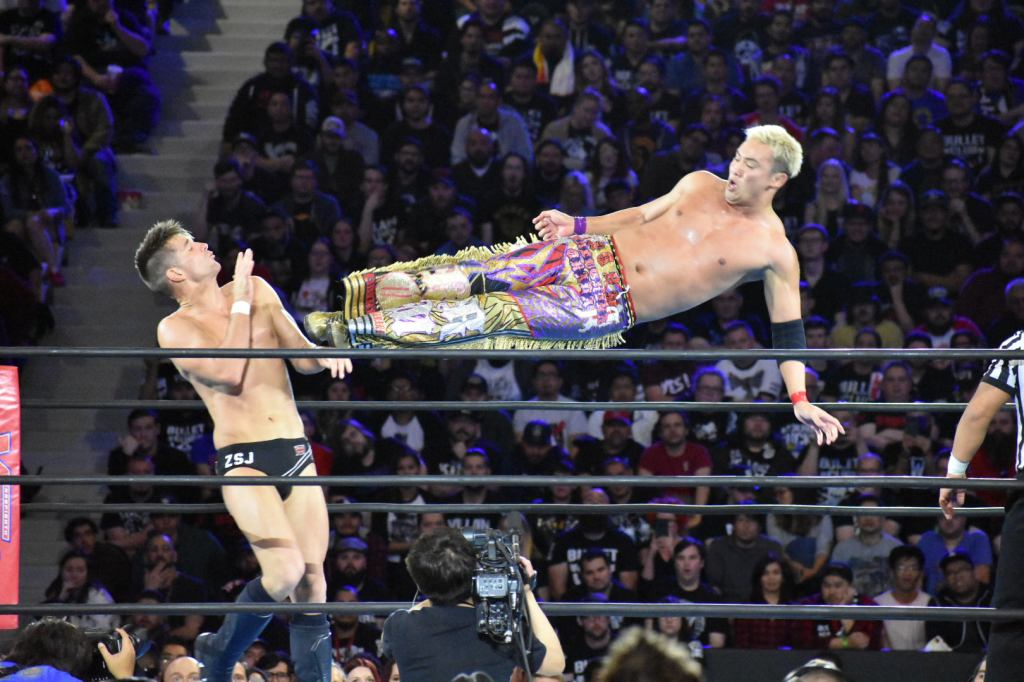
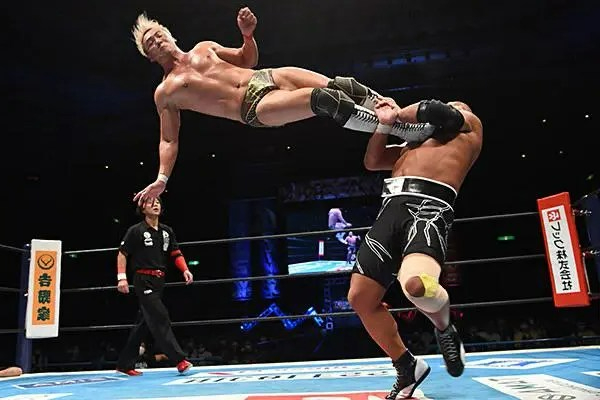
Okada wasn’t always the self-assured, grandiose wrestling savant he is now, though. My first exposure to him was in the Total Nonstop Action (TNA) promotion in 2011, long before I had much access or interest in Japanese wrestling. As many Japanese wrestling companies do, New Japan sent out the then-rookie Okada to an American territory on what’s called an ‘excursion’ in order to gain experience. At this time, the brass in TNA didn’t really know what to do with the Japanese talent and, at first, used him in ‘dark’ (untelevised) matches as an enhancement talent for the stars they actually wanted to push. Okada was seldom featured, rarely won a match, and wasn’t given much opportunity to learn.
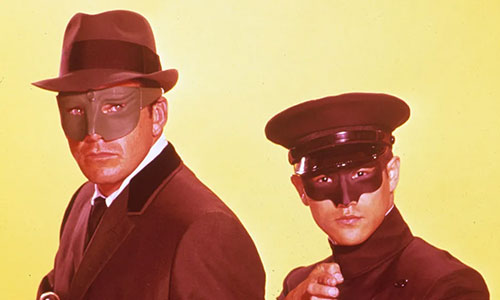
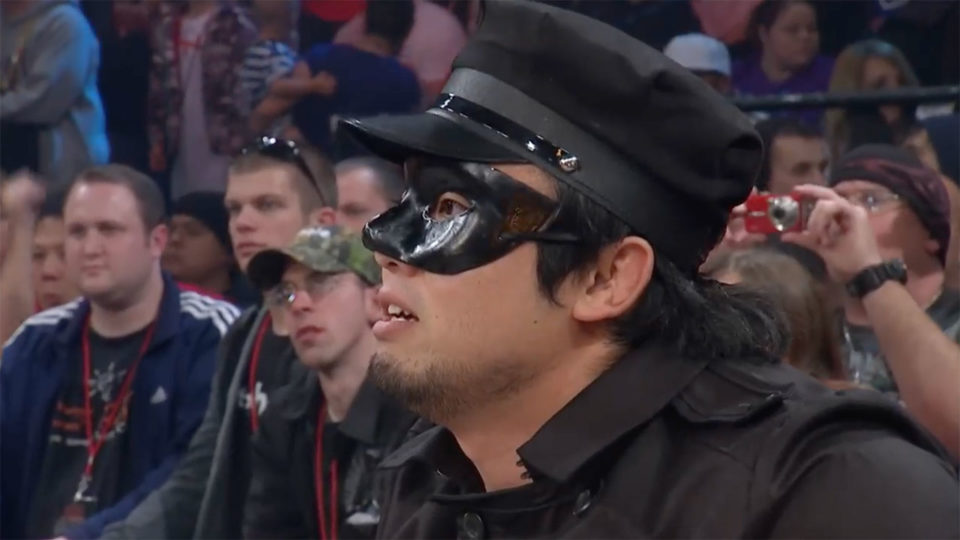
It seemed like Okada’s fortunes were turning around when he was paired with the then-and-still awesome Samoa Joe. Unfortunately, the storyline was a too-on-the-nose ripoff of The Green Hornet (which had just been rebooted as an ill-fated Ryan Reynolds project) in which Okada became ‘Okato’, riffing on the Kato character famously portrayed by Bruce Lee in the 1960’s tv series. The storyline, which featured Joe being attacked by ninjas while his trusty cameraman Okato would save the day, went nowhere and felt both directionless and kind of racist. Because Okada wasn’t gaining much experience or exposure on his excursion, this not only made for less-than-compelling television but also damaged the relationship between New Japan and TNA, which wasn’t reconciled until around 2017 when the new management in the company made amends:
“Scott D’Amore addressed the NJPW locker room and told them Impact would love to work with New Japan again and specifically mentioned Callis was coming to work for Impact. D’Amore also, during that same meeting, specifically apologized to IWGP champion Kazuchika Okada for how he was used in TNA years ago. At the time, Okada was booked to dress like Kato from The Green Hornet and play Samoa Joe’s lackey. It was not good, and it looked even worse when Okada returned to NJPW and exploded into one of the best workers in the world overnight.”
Mike Johnson, Pro Wrestling Insider
When it became clear that TNA wasn’t working out, New Japan brought the burgeoning star back home, but not before Okada made friends with Matt and Nick Jackson, who were working in TNA (and, by their own account, similarly misused) as a team called Generation Me but are better known today as The Young Bucks. The Bucks helped Okada acclimatize to living and working in America, and the bond between the three future stars would end up being impactful on their careers and wrestling as a whole.
Okada, upon returning to Japan, became “one of the best workers in the world overnight” according to Mike Johnson. This isn’t hyperbole. I’ve been watching wrestling for over three decades and I’ve never seen such an extreme change of style, stature, and skill than “Okata” to Kazuchika Okada. Many argued at the time that the young star was getting too much too soon, and was catapulted too quickly into New Japan’s main event scene but The Rainmaker proved them all wrong in short order. Okada’s first match with Tanahashi in 2012 is the kind of match that makes mud of the people who say that stories in wrestling are best told outside the ring, with promos and skits. It weaves the narrative of Tanahashi underestimating the young lion throughout, toying with his young opponent until Okada seizes the opportunity to nearly remove Tanahashi’s head with his (now) trademark Rainmaker lariat and wins his first IWGP World Heavyweight Championship, ending the “Ace’s” 404-day reign. The pair would face off dozens of times over the next few years, culminating in their best match, at 2016’s Wrestle Kingdom, a back and forth struggle that sees Tanahashi pass the torch to Okada to become the promotion’s new top star, and which remains one of the best matches I’ve ever seen.
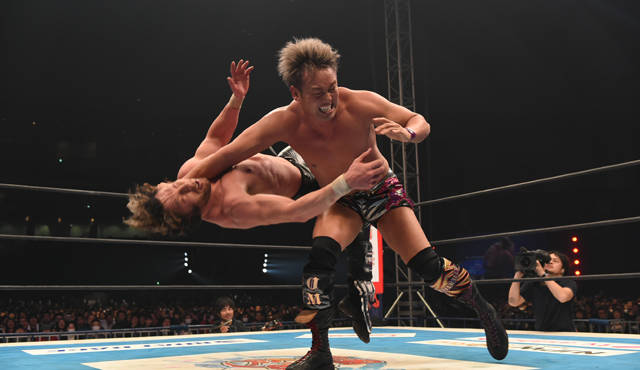
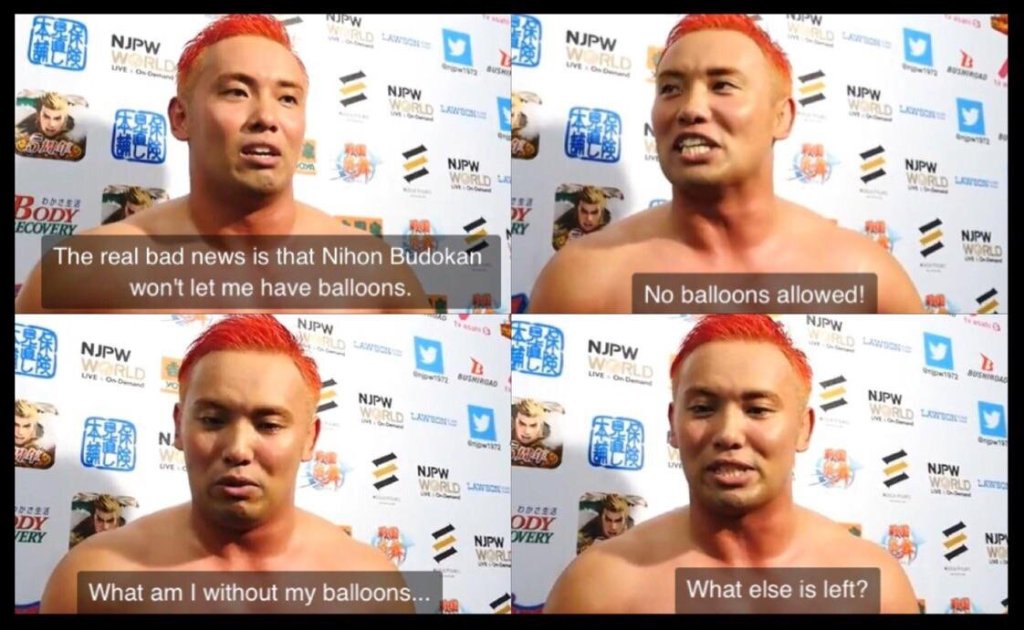
Later, as a dominant world champion, Okada faced off with Kenny Omega in a series of outstanding matches that would make stars of both men and turn New Japan from a national sensation to an international one. This period coincides with New Japan’s (and wrestling in general’s) embrace of online streaming for their shows. No longer did one have to trade tapes through the mail to see the promotion, and that led to an explosion of popularity and many more eyes on the company. Through it all, Okada remained the measuring stick, and faced off with the best of the best, including my favourite, Minoru Suzuki. Sure, there was a brief period where Okada lost the title, dyed his hair fire-engine red, and started carrying around balloons, but I think that just makes him more relatable. Who amongst us hasn’t had a bit of an identity crisis?
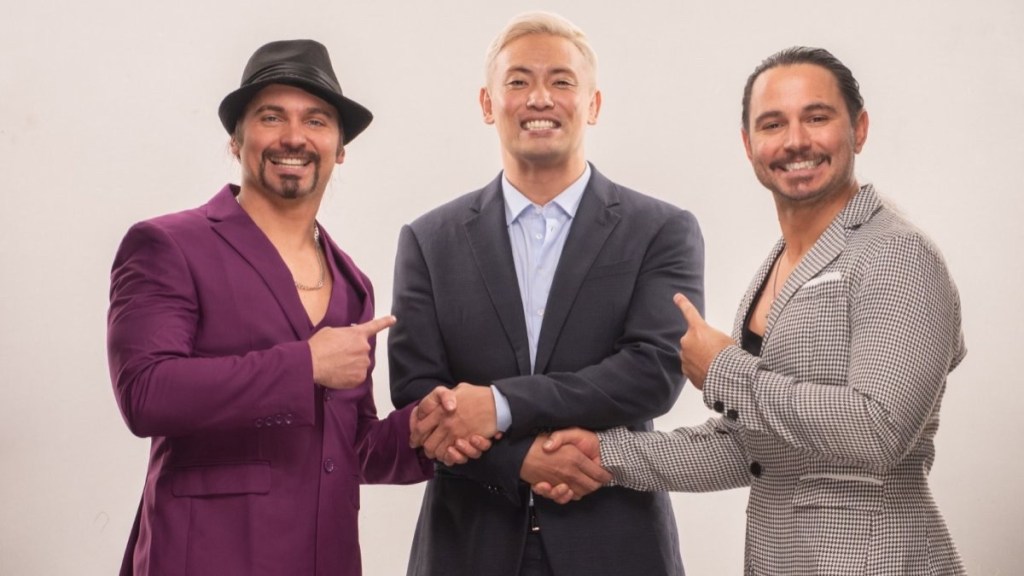
Okada recently wrapped up his all-timer of a run with New Japan Pro Wrestling, after years of rising through and ultimately carrying that company on his back through lean periods and a pandemic. He would do this while working with and elevating young talent that would eventually rise to his level, including Jay White, Will Ospreay, Tetsuya Naito, AJ Styles, Zack Sabre Jr., and so many more. Okada would continue bringing attention and acclaim to the promotion by having some of the greatest matches the world has ever seen. He’s brought his talents back across the ocean to All Elite Wrestling (AEW), where he’s joined back up with his old friends The Young Bucks. But all three aren’t the same wrestlers or people they were in 2011. Now dastardly company executives, Nick and Matt – ahem, Nicholas and Matthew – Jackson are Executive Vice Presidents of AEW and rule over the company with an iron fist full of corporate buzzwords. They’ve abandoned their friends Kenny Omega and Hangman Page, replacing them with Okada as a blue-chip weapon to advance their goals. Ironically, Okada’s former ally in his ill-fated Green Hornet storyline, Samoa Joe is also in the company and is it’s top champion. The more things change, the more they stay the same.
New Japan in the wake of Okada’s departure has a few stars waiting in its wings. Ironically, though, as much as Okada did to lay the groundwork for this new generation, he’s also set the bar almost impossibly high for each and every one of them. To even begin to meet and exceed the standards of Okada’s matches feels like an impossible task, but one might have said the same of Hiroshi Tanahashi in 2012 as Okada made his return to New Japan and shocked the world with his skill and presence. Somewhere, either in the crop of new talent in New Japan or outside it, is a wrestler with the confidence and natural talent to rise to the level of the Rainmaker. But even if that happens, he or she will not be the ‘new’ Okada. There’s only one Rainmaker, only one Okada, a true Gentleman of Asskickery.
If Sachin Hingoo could rain money from the ceiling, he would probably not have to worry about mortgage payments.



1 reply »