
The first article I ever wrote for the Gutter was about an innovative video game called The Indigo Prophecy (Quantic Dream, 2005). It was described as “a breakthrough in interactive narrative”, which may have been an attempt to dissociate it from the short-lived interactive movie genre of the previous decade but also made it a precursor to the wealth of interactive cinematic games that came after it. It combined gameplay and movie sequences from multiple character perspectives with the ability to make choices that changed the next steps and final outcome. I thought The Indigo Prophecy fell short of its potential but it sparked my interest in games that felt like being in a movie, so for Switcheroo Month at the Gutter I’m going to take my lead from CG Editor Carol Borden’s approach in One Movie I Saw & Four I Didn’t at the Overlook Film Festival and write about a mix of games I have and haven’t played where story and design blend to create something exciting.
South of Midnight (Compulsion Games, 2025) Xbox X/S, Windows
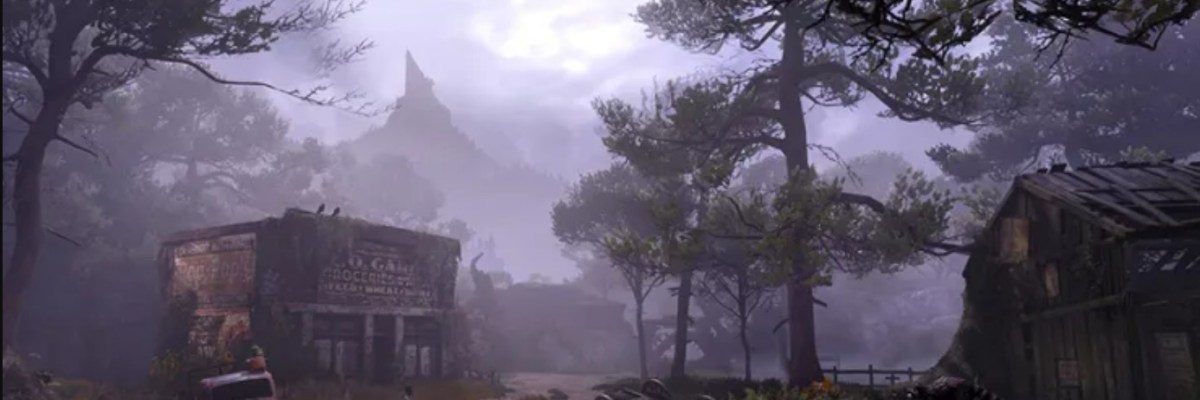
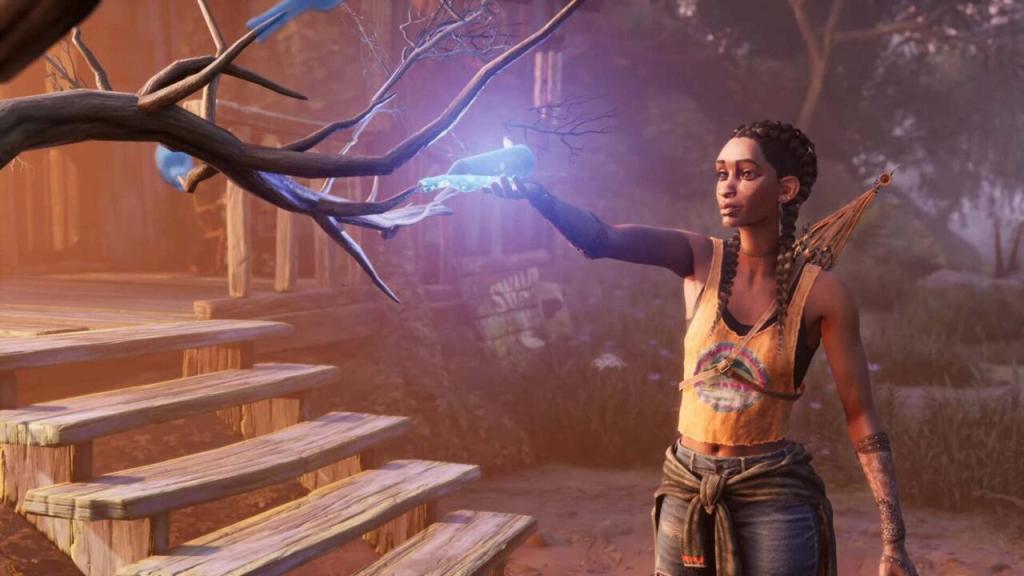
I love cute, spooky creatures, beautiful immersive visual worlds, and diverse perspectives in games, so I was immediately on board when I saw the trailer for the Southern Gothic action adventure, South of Midnight. It is so up my alley that I almost went out and bought an Xbox just so I could play it, and I may yet. It’s a story-driven third person game that follows Hazel, a young Black woman pulled into a folklore version of the American Deep South, as she sets out on a journey to rescue her mother in the wake of a hurricane. Compulsion Games is based out of Montreal, which is very much not the South, so they brought in a bunch of folks to help them get all the details right to create a world rooted in the Southern Black cultural experience, from the folklore and cryptids to the bottle trees and use of Haint Blue paint to denote climbable surfaces, the soundtrack featuring Southern musicians and ambient sounds of the Appalachian swamps, and the design of Hazel’s natural hair. I’m a white transguy raised in Alberta so I lack the cultural context to fully appreciate all the details, but I understand the emotional impact of seeing yourself reflected in the details of art and media when it’s rarely done well, if at all. For an inside take, check out South of Midnight is a game worth hollerin’ about by The Verge Video Games Reporter, Ash Parrish, who does have that context and has actually played the game!
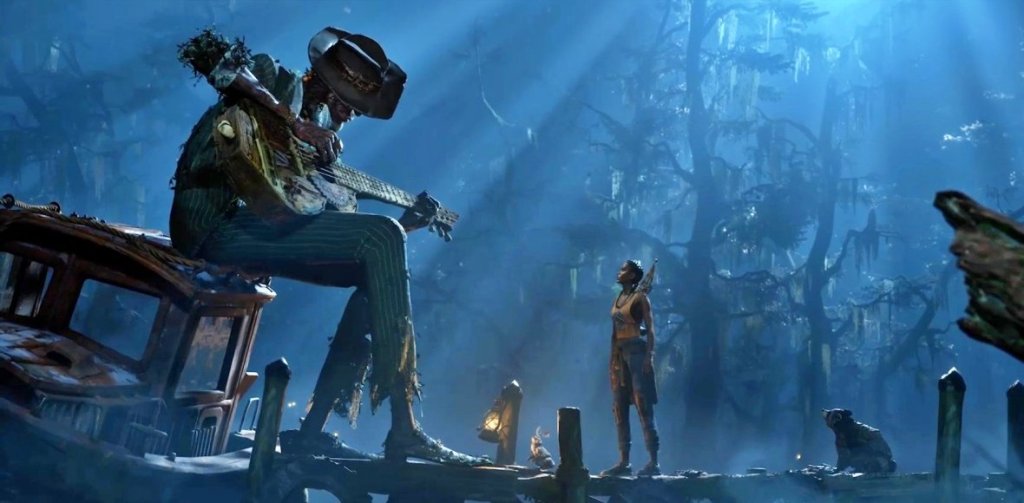
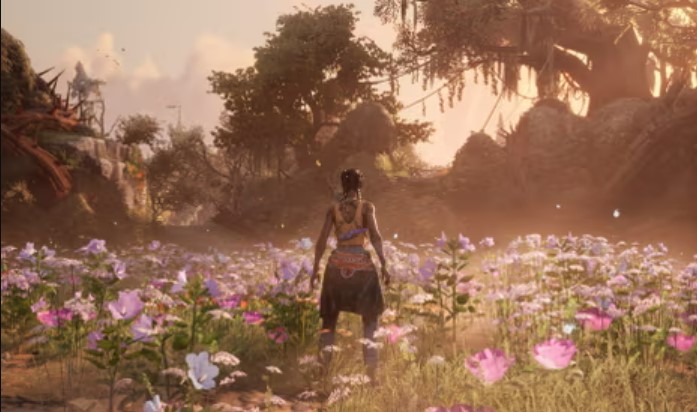
South of Midnight is from the same studio that made We Happy Few, which seems really unique and thought-provoking but everyone looks like mimes, which I do not like, so I did not play it. In contrast, South of Midnight features Hazel’s creepy-cute childhood doll come to life as her quest companion, which I absolutely do like and would play in a heartbeat. The world looks gorgeous and cinematic in a way that cries out for a tv adaptation, and it sounds like the story and soundtrack would lend themselves to that as well. Abandoned, decaying places are another of my favorite things, and what I’ve seen of the environment reminds me of Horizon Zero Dawn, which is slated for a movie version, or the movie Love and Monsters, which I would love to see go the other way and be made into a video game.
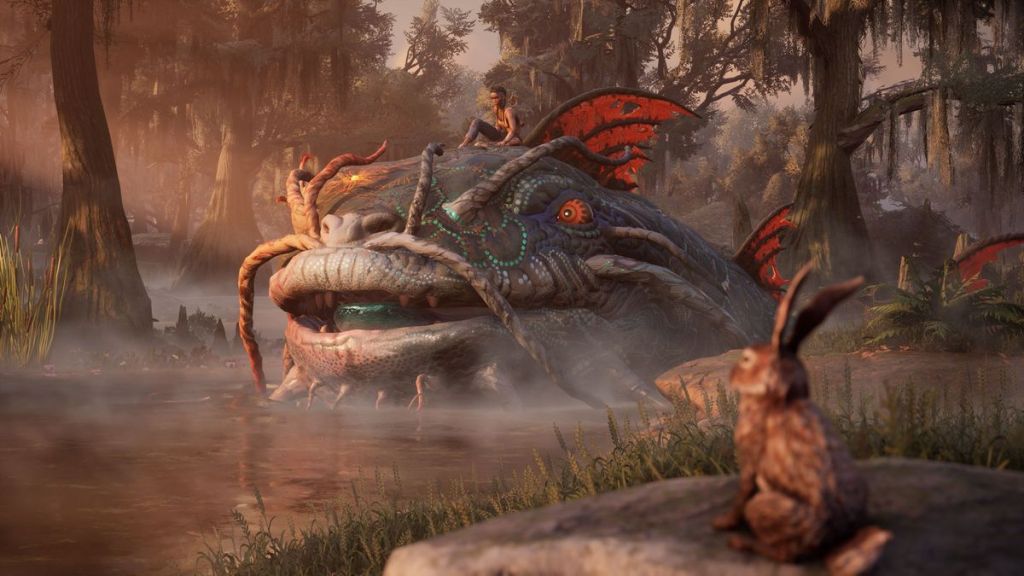
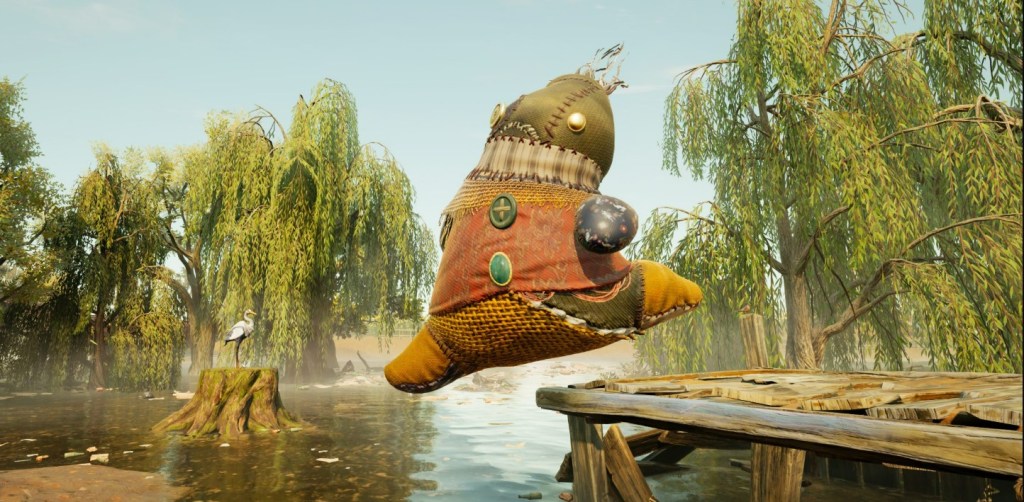
I love monsters, but so often they are there to be hunted, slain, or subdued and it always makes me sad. I wrote about my conflicted feelings about this in Cinematic Narrative and the Ethics of Slaying Monsters, so I was especially excited to see that the interaction with monsters in South of Midnight is described as wielding “an ancient power to restore creatures and uncover the traumas that consume them.” It reminds me of the complex way the giant insect life is treated in Love and Monsters, with the main character sketching and studying everything he encounters with curiosity and an open mind about whether it’s friendly, hostile, just doing its thing, or traumatized and in need of help. It also makes me think of how the Tatarigami (cursed animal gods) who bring destruction in Hayao Miyazaki’s Princess Mononoke are not evil but infected by human corruption and should be helped rather than destroyed in order to restore balance to the world.
What Remains of Edith Finch (Giant Sparrow, 2017) All platforms
Playing this game is sort of like stepping into an Edward Gorey-adjacent universe where Edith, the last remaining Finch, narrates how all of her remarkable and eccentric relatives met their untimely ends due to what may be a family curse. Each family member’s room was sealed after they died, and their stories unfold as you explore the labyrinth of the Finch mansion, complete with secret passageways and beautifully detailed renderings of the accumulated oddities of generations of odd people.
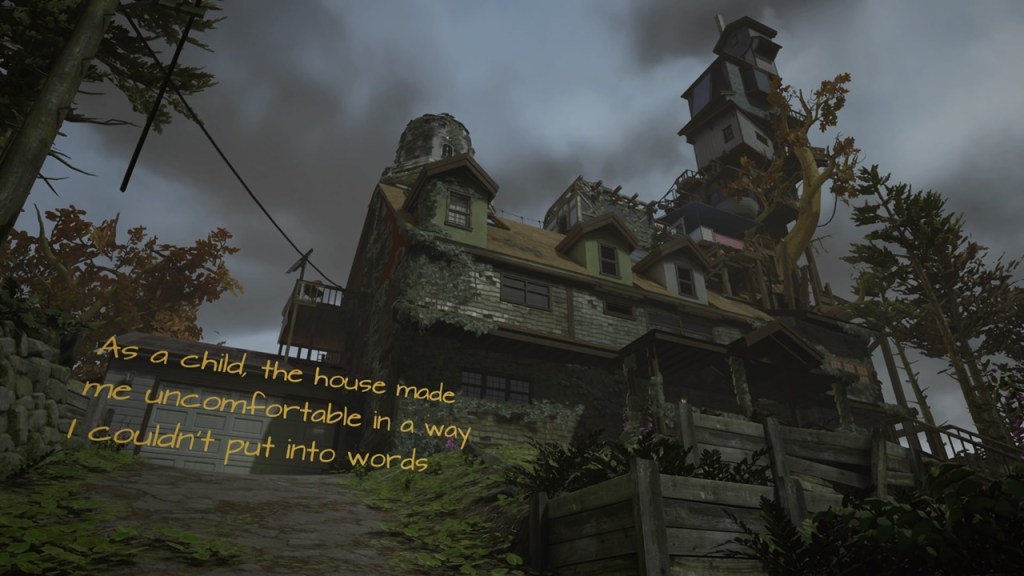
The house itself looks like something out of a popup book, crooked and unexpected, as if new rooms and turrets have accreted over time in an organic response as each dead Finch’s room was locked away like a shrine. It gives the house a living quality, like in Robert Wise’s classic 1963 movie adaptation of Shirley Jackson’s The Haunting of Hill House, but less malevolent. The objects in the house are mostly not interactive, but that makes the experience more like visiting a historical site with a tour guide, which fits well both with the structure of the game and the mausoleum quality of each dead relative’s room. It does feel like the house is interacting with you, though, because of the creative way they handle the text. Words scroll out across the backs of chairs or scatter in the breeze as Edith narrates, sometimes taking the shape of a road leading somewhere or running away from you to be captured.
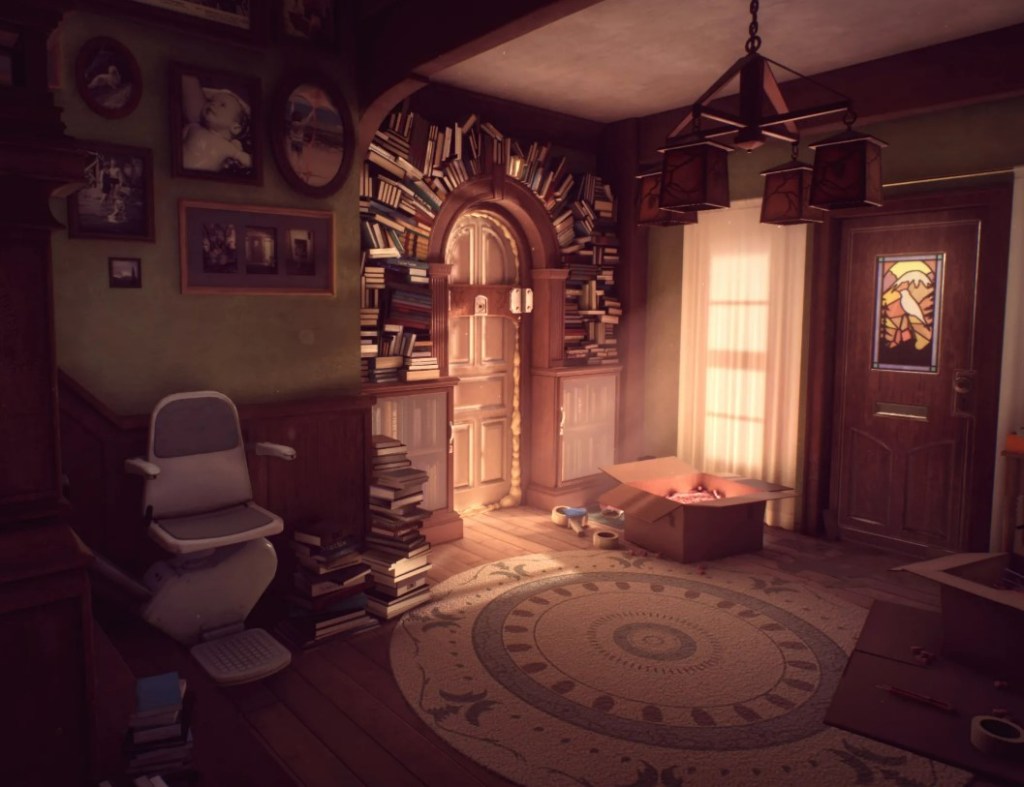
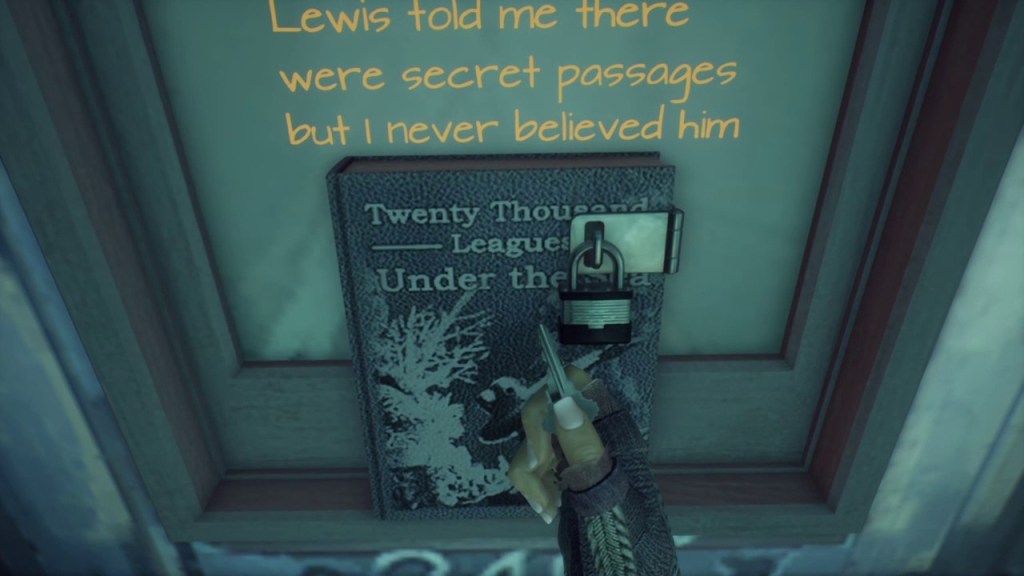
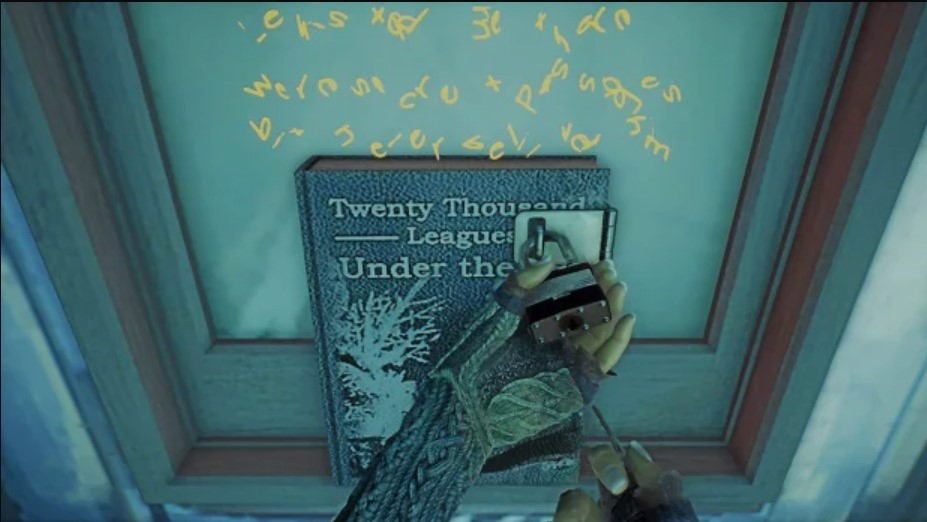
The way the design changes to match the narrative is a constant surprise. Each Finch’s story takes you into a completely different gameplay experience, with shifting art styles, mechanics (some more successful than others), and genres that bring in folk horror, H.P. Lovecraft, fairy tales, and sections that feel like they came off the pages of Weird Tales magazine. It’s often described as having a Wes Anderson feel to it, which seems very apt. Although the end point of each character’s story is, as is the case for us all, the tragedy of their death, Edith Finch explores their lives in a way that is infused with humor and joy, using a quirky collection of unreliable narrators to illustrate how memories become stories and stories become family history.
Split Fiction (Hazelight Studios, 2025) PS5, Xbox X/S, Switch 2, Windows
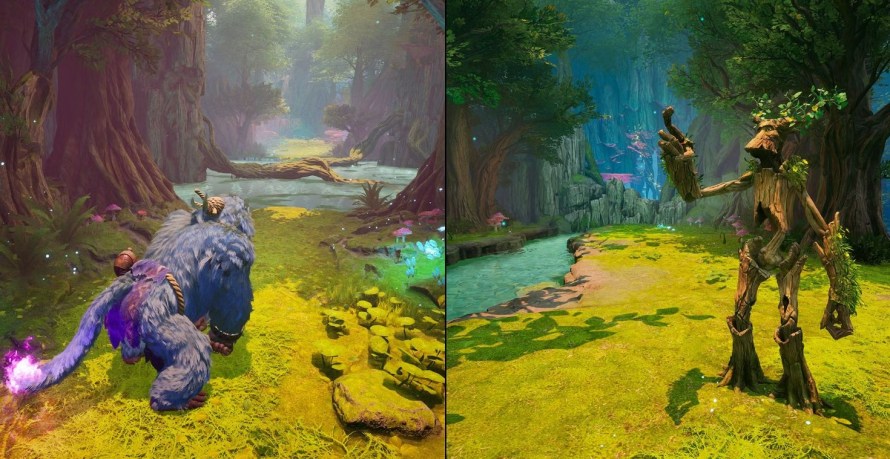
Hazelight Studios set the bar pretty high with the creative co-op platformer It Takes Two (2021), which is kind of like Honey, I Shrunk the Kids if the parents had taken a whole lot of mushrooms and gone through the looking glass with Alice. Split Fiction carries that on, approaching the concept of immersion in a book with multiple character perspectives, genres, and gameplay in a very different way than What Remains of Edith Finch. It’s a co-op action-adventure-platformer-puzzle you name it I’ve seen folks say it’s in there monster cookie of a game. It follows Mio and Zoe, two unpublished authors who get tricked by a tech company into entering a VR world designed to data mine all of their story ideas directly out of their brains. The result sounds like a narrative pinball adventure bouncing between Zoe’s fantasy stories and Mio’s sci-fi ones to create a multitude of entertaining scenarios. Co-op games are hard to get right but the mechanics in this have been described as intuitive and satisfying. And I have to say, the opportunity to play as two young women sticking it to the over-entitled tech-bro world that treats art and creativity like an unaffiliated commodity they can seize and profit from is incredibly appealing to me right now!
Clockwork Revolution (InXile Entertainment, date TBA) Xbox X/S, Windows
I’m an aging punk who owns several pairs of cowboy boots and likes robots, so in theory steampunk should be my thing, but I find that it often is not. I read and was duly impressed with William Gibson’s Neuromancer (1984) but I’ve lost interest in seeing that specific world recreated. I enjoy hard-boiled detective tropes, but I’m tired of mercenary tough guys with weapons out to steal from the megacorps. And I have no space for retrofuturist narratives that don’t account for racism, sexism, homophobia, and all the ways the past is not such a great place to return to for a lot of folks. The trailer for Clockwork Revolution, though, promises a steampunk world that catches my interest.
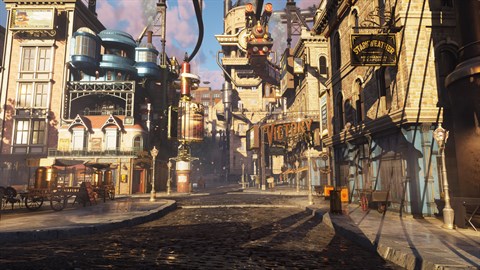
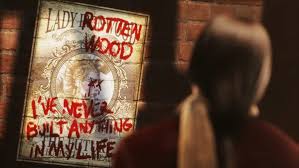
The plot revolves around discovering that the elite rulers of Avalon have been using a time travel device to selectively alter history to tailor the city to their vision, which involves oppression and propaganda, so naturally you decide to rebel and end up causing temporal chaos. It’s a first-person action RPG which InXile says will have full character customization, including dashing moustaches. They have specifically confirmed that there will be dashing moustaches. So far it looks to be less Cyberpunk 2077 and more reminiscent of Philip Pullman’s His Dark Materials series, with its airships, geared machinery, and magical elements. It’s been compared to the first-person shooter Bioshock Infinite (2K/Irrational Games, 2013) to the point of being accused of ripping it off, but since it’s a first look at an RPG with significantly different gameplay I imagine that remains to be seen. InXile founder Brian Fargo was involved with the development of the Wasteland and Fallout series, so I’m also interested to see how those kind of deep dialogue and choice systems facilitate telling a story where the butterfly effect implications of your decisions could have far-reaching consequences to both the narrative and environment. Will it? Who knows, but we can all have dashing moustaches when we find out!
~~~
Alex MacFadyen is not sure he could pull off a dashing moustache in real life, but a 1980s dad moustache…
Categories: Videogames



 The Cultural Gutter
I am ready for my dashing mustache!
LikeLike