Ten years ago, my city of Toronto was rocked by shocking news. Two capybaras from the free zoo in the city’s largest park, High Park, had escaped. Appropriately named Bonnie and Clyde, the six-month-old rodents slipped through an unsecured gate and instantly became international celebrities. The pair were on the run for nearly three weeks, during which citizens came together and reported alleged sightings before they were found and returned home.
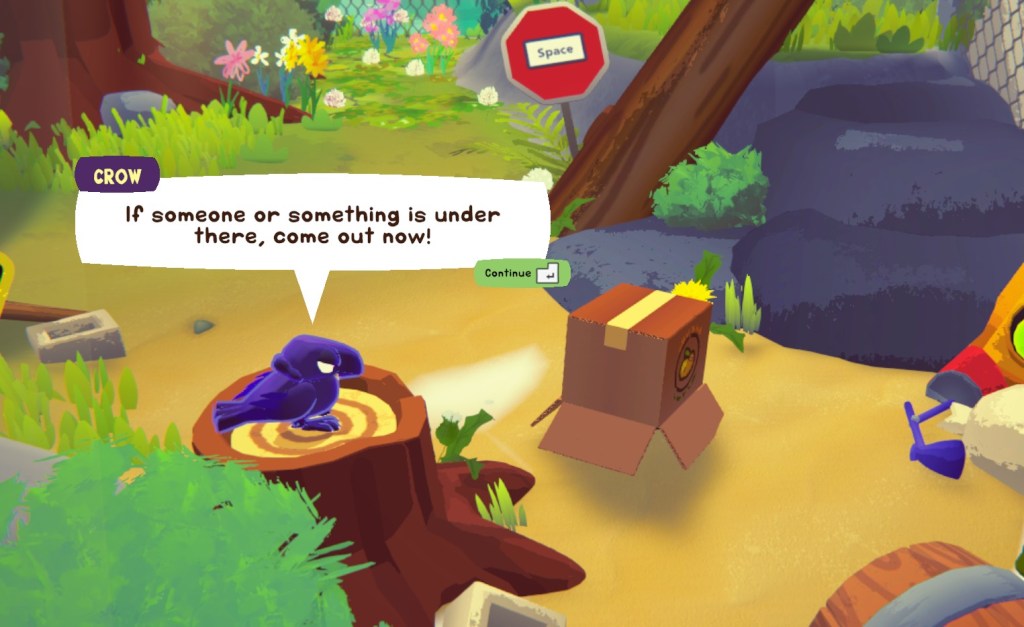
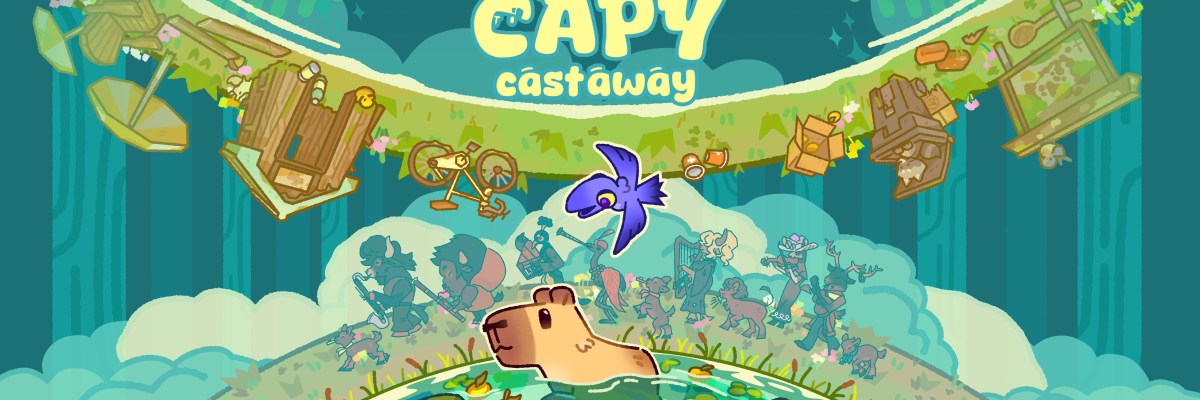
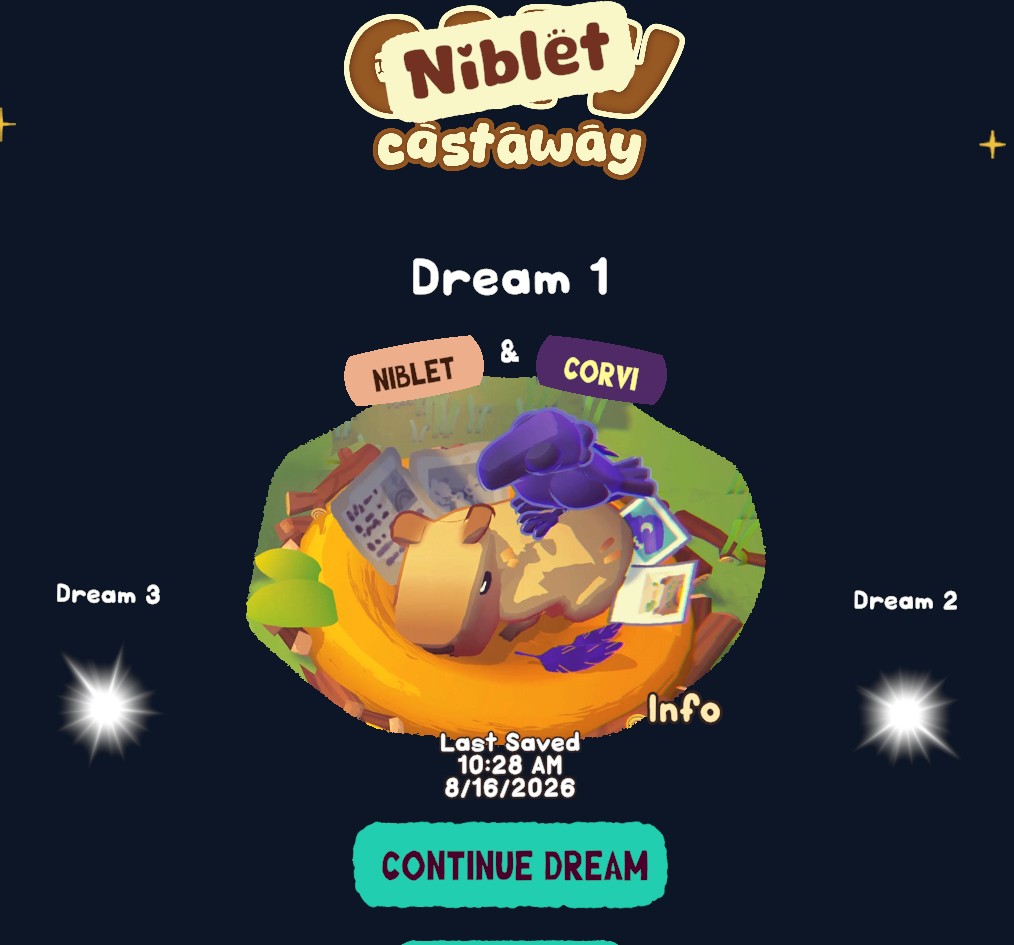
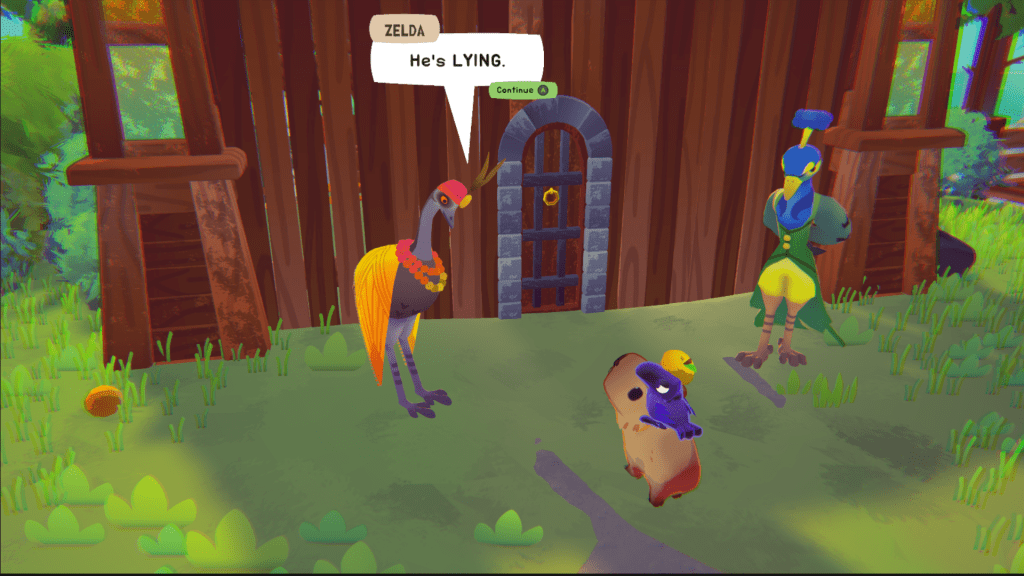
From the main menu and the opening moments, Capy Castaway, a new indie game from Kitten Cup Studios inspired by the two ungovernable creatures, asks you to “Start a new Dream.” That’s appropriate for a game that feels so outside time and space as this one. The game picks up in a period following a catastrophic flood, opening on a crow named Corvi who discovers a mysteriously moving overturned box in a pile of trash. This turns out to be (at first) Capy, a capybara that Corvi immediately deems to be an “oversized gerbil.” Capy has washed in with the flood along with a bunch of other detritus, and communicates non-verbally with facial expressions, and head nods. You’ll be able to control Capy’s responses by choosing their expressions, though, and you might be as surprised as I was to find out how naturally communicating in this way starts to feel after a short learning curve. Corvi, ever-talkative and more than a little self-centred, volunteers to be Capy’s surrogate voice and even offers to rename Capy from a bevy of options. I chose Niblet, because it was both appropriately cute and appropriately corny. A fun detail is that if you rename your own Capy, the title screen will change to match your choice. My game’s called Niblet Castaway now, but for everyone’s sanity I’ll still call the game by its original title.
Niblet and Corvi are situated on an isolated island called Castaway Island, named for the lost items that seem to wash up there. Like every great game, controls start out simple with just movement, jumps (despite your “stubby legs” according to the ever-snarky Corvi) and an action button, but become somewhat more complex as you pick up new skills. If you’re playing alone, you’ll be able to have Corvi pick you up and carry you with a separate set of controls and there’s an intuitive set of abilities you can unlock as you go along. The usual tutorial and orientation involves moving around a small space and getting acquainted with the landscape. During this orientation, Corvi calls Niblet’s attention to a distant lighthouse and the Dragon that entwines itself around it. According to Corvi, it’s “super big” and “super powerful” and some even say that it grants wishes. Like, say, for Niblet to be returned to their home dimension and the parents from whom they were separated by the flood. But in order to get there, Niblet and Corvi will have to work together to cross over to the main part of the island.
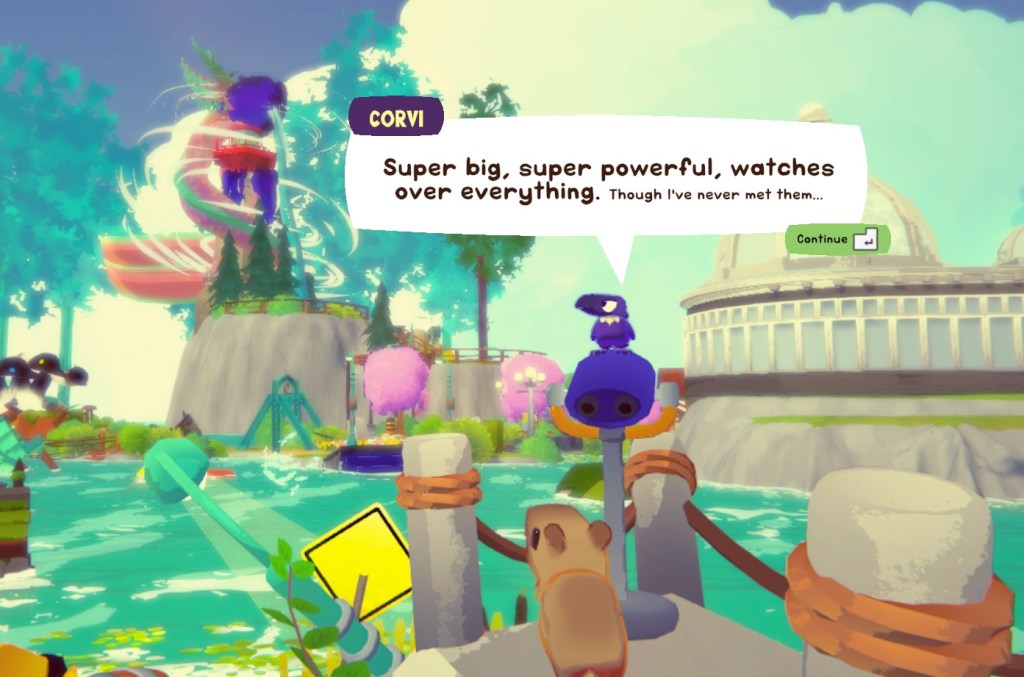
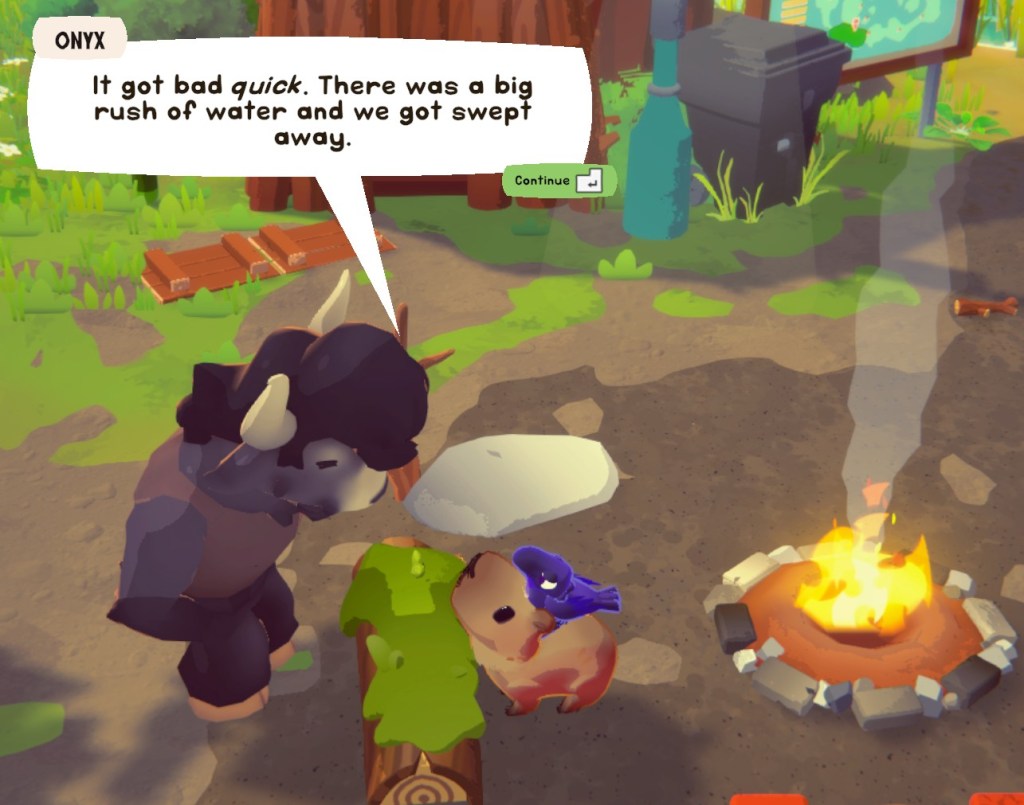
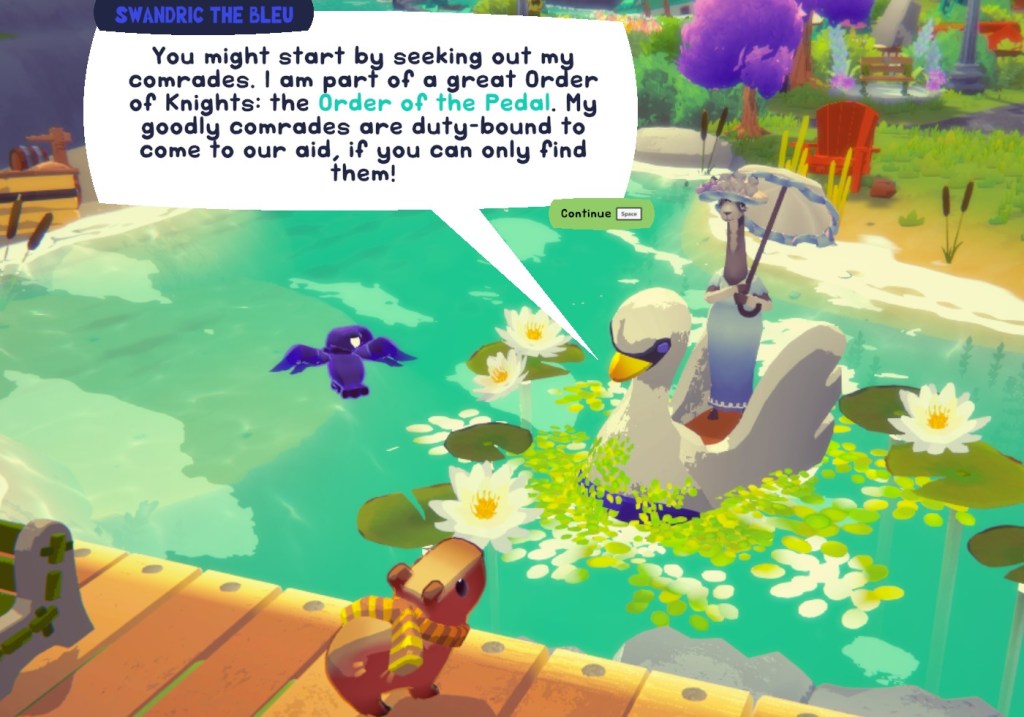
Beyond just getting home, or as a means to do so, the main thrust of Capy Castaway is befriending and doing reasonably simple tasks for other lost creatures in a similar way to Animal Crossing, and these creatures are anthropomorphized versions of the very real animals that inhabit the Zoo. Very early on, Niblet and Corvi discover Onyx, a yak whose entire enclosure washed up on Castaway Island. They’re looking for their boyfriend Benny the Bison and your task is to help them reconcile (or, possibly, to break them up which is an alternate option that I did not take). Once you complete that task, you’ll find that several other creatures from the Zoo are strewn about the island and need your help as well like the philosophizing Bread (short for Gingerbread) the Reindeer, Barry and his gang of Barbary goats, and the snooty and fashion-focused Luna the Llama who rides her faithful anthropomorphic floating swan, Swandric The Bleu who is a member of a group of knights known as The Order of the Pedal.
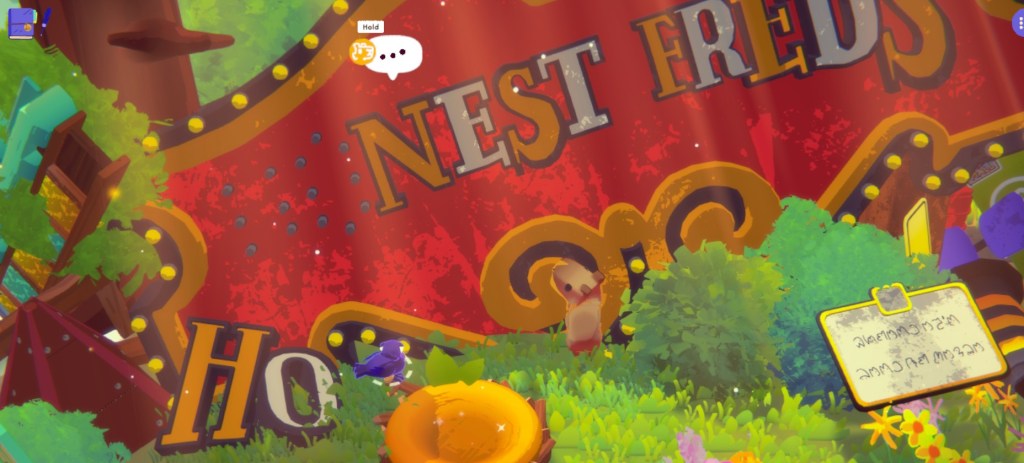
The visuals in Capy Castaway are garish, charming, and vibrant and have a level of attention that I really appreciate. Though the game isn’t explicitly set in Toronto, little “if you know, you know” details like the design of Toronto’s bike lock rings, bus stops, and our garbage cans appear throughout Castaway Island. There’s even a riff on the iconic sign belonging to the unfortunately-closed discount store, Honest Ed’s, and the neon palm tree sign from the El Mocambo music venue is a character unto itself.
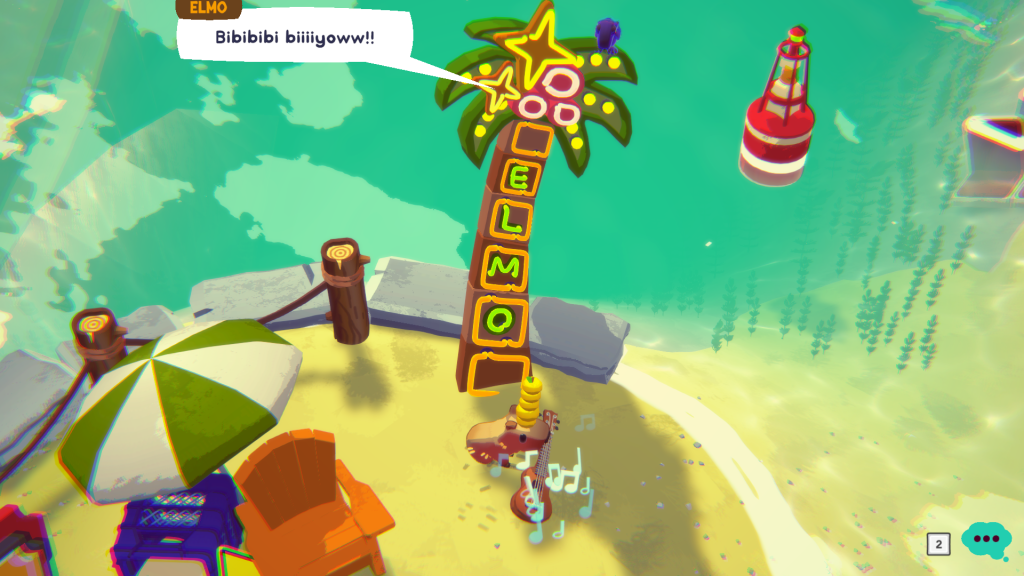
The attention to detail carries over to the very extensive dialogue options, which allow you to choose which of Niblet or Corvi speaks to the other characters in a conversation and which usually dictates the direction that conversation takes. Niblet is silent but charming and beloved by his fellow Zoo residents while Corvi is a little abrasive and a lot arrogant. I haven’t played all the way through the game, but there are some subtle hints that Corvi might be a little jealous of Niblet’s likeability which could play out later on. The dialogue itself is well-written and often laugh-out-loud funny while retaining distinct voices for each character in much the same way that Animal Crossing excels. Backing this all up is also the coziest, most relaxing original score from Mark Sparling, who scored the equally-calming and critically acclaimed A Short Hike. All of this adds up to a comfortable but compelling experience where just chatting and hanging out take centre stage.
Capy Castaway falls neatly in a fairly new, or at least newly-defined genre of video game called “friendslop” (not to disparage it or any other game it describes as slop or sloppy, that’s just the vernacular) that might include games like Big Walk or Webfishing. These are an extension of cozy games that are very focused on a social aspect while retaining the cozy feeling of not having to deal with combat or heavy conflict or even much of a challenge. That’s not to say there isn’t deep drama and character work happening in Capy Castaway, though. Beneath the surface level cuteness you’ll be grappling with some very elaborate and convoluted relationships, even if you have to do some rudimentary platforming to get to it. But that’s what’s really important here: forging relationships with both your fellow animals and, if you choose to play with a friend, the people outside the game as well. Just the core game mechanic of having Corvi fly off and pick something up or carry Niblet across a difficult obstacle along with the ability to swap back and forth during a dialogue exchange and literally play good cop, bad cop to get the outcome you’re after encourages real cooperation and communication.
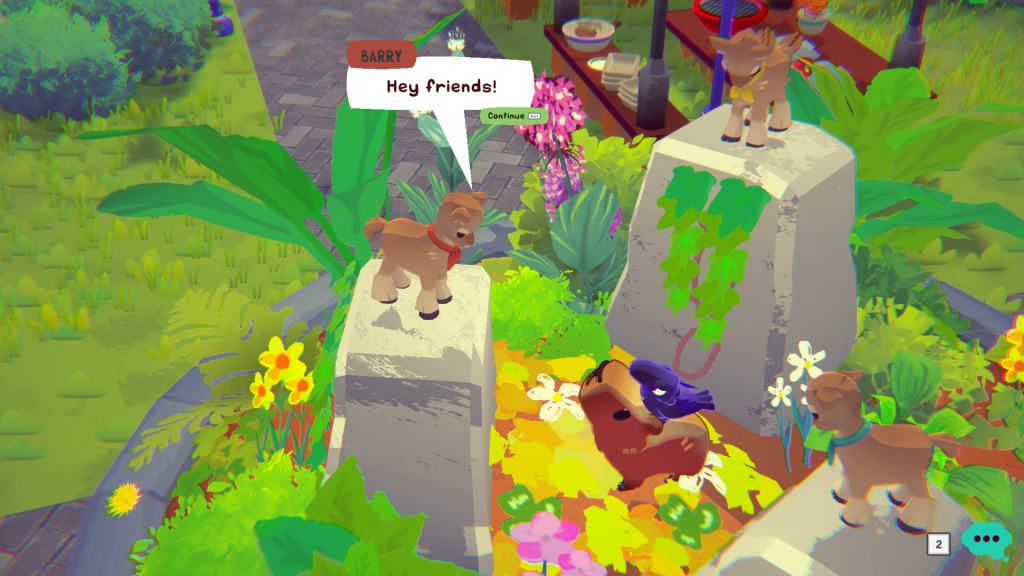
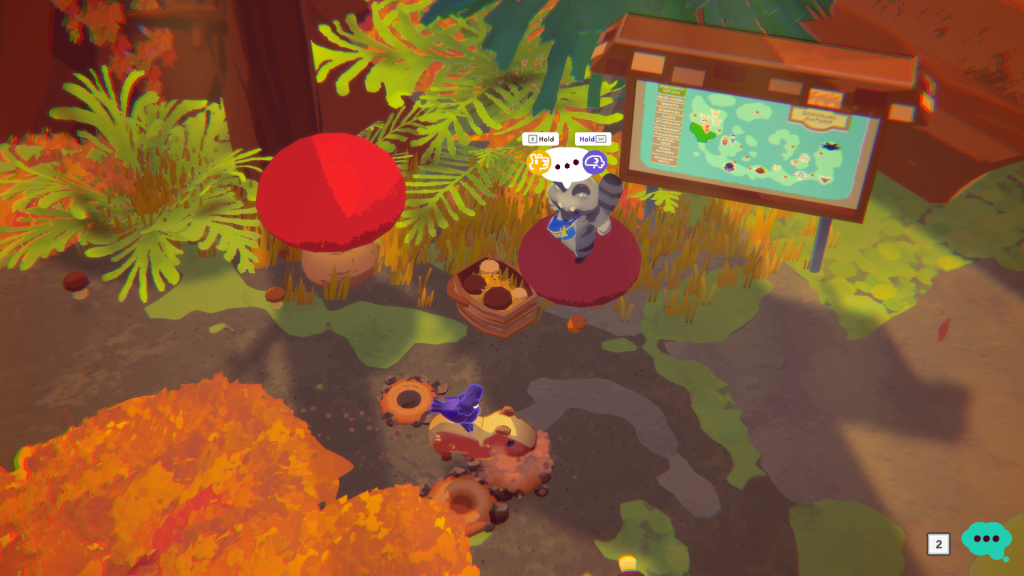
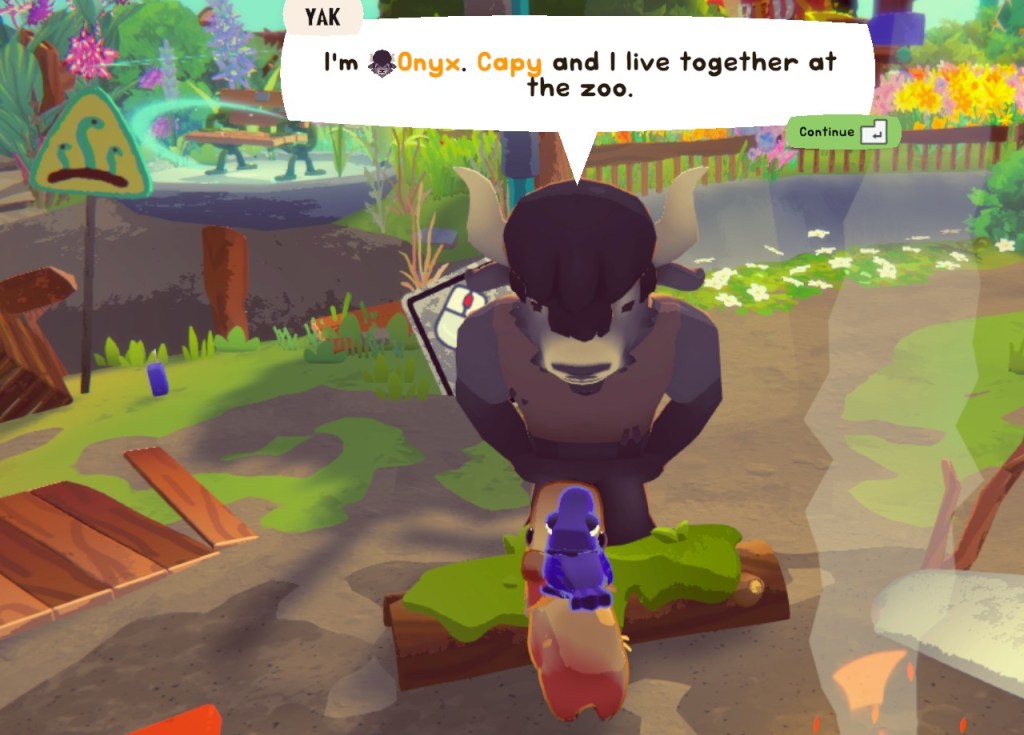
I didn’t at the time of their daring escape, but I’m immensely privileged enough to currently live a few blocks away from Bonnie and Clyde’s home, the Zoo, and High Park. I can go and visit them, and possibly Niblet, Onyx, Barry, Luna, and all the rest whenever the mood strikes. But going alone seems to miss the point a little. In much of the same way, playing Capy Castaway alone is certainly possible, but feels like it’s eschewing a key aspect of the game. It might be only barely a challenge, but that makes it accessible to anyone and a gateway to making connections inside and outside the virtual world. After all, if a snarky crow and an oversized gerbil can forge a bond like this, almost anyone can.
Capy Castaway launched on August 6, 2026 on Steam and is available for Windows and Mac from developer Kitten Cup Studio and publisher Big Blue Sky Games.
Sachin Hingoo has escaped his cage and can be found frolicking in Grenadier Pond.
Categories: Videogames