

Being a Whovian was one of my principal personality traits from 1985 until about 2020, and though I have a very casual relationship with the show now–which is truly about me, not it, I am old and busy, guys–people still come to me with little offerings and thoughts and questions. Most commonly: Hey, Angela! There’s sixty years of this show! Where, oh, where do I begin? And my answer is simple. If you didn’t grow up with the yikes yellowface and sexism and midi keyboard score and Tom Baker’s cold sores and John Pertwee fighting alien trashbags of the Classic era, it’s not the place to start now. You probably want to start with the first Russell T. Davies-helmed revival from 2005.* And if 2005 is not current enough for you, jump in with a regeneration, a new Doctor–regeneration being the process by which our immortal hero suffers a mortal injury and has to swap into a new corporeal form in order to survive. Every regeneration is a soft reboot.
Except for the Twelfth Doctor, played by Peter Capaldi. Don’t start with him. Please, please, please don’t start with him.
Don’t start with the grey old man doesn’t often inspire much curiosity. Instead, I usually get the follow-up question: “Well, which is your favorite then?”
The Twelfth Doctor, I will reply, am privately dying to reply, flashing all my messy bitch energy. Twelve is my Doctor.

I may have started with Tom Baker reruns, but Twelve is my Doctor, which any Whovian will tell you is somewhere between declaring your faith and your star sign–it is at once who you are, what you want, what you want to be. And to me, that is Twelve. But it’s no place to begin. Twelve’s entire three-series run was head writer and showrunner Steven Moffat’s own messy bitch energy manifest, a long, painful reconciliation of fanboy ideals of the Doctor from the Classic era with the show’s modern audience and the version of Doctor Who they had come to expect–not a cosmic hobo or a cheerfully eccentric space wizard, but a desirable, geek chic hero, full stop. Doctor Who post-2005 was less Classic Who and more Buffy or Supernatural, with monsters of the week only slightly more important than one true loves. And yet, as hostile as Moffat seemed to be to the idea of the Doctor falling in love with a companion, especially when he was writing him in romantic stories, and as against overt squishiness as his star Capaldi was, the Twelfth Doctor scaled a character arc that remains unparalleled in the history of the show. In so doing, the brusque, sarcastic, icy old man became the most shipped of Doctors with not one but two heartbreaking canon love stories during his time. (And also whatever was going on with Missy in series 10.) But all this only after the show had litigated and rejected the idea of love in Doctor Who at all.
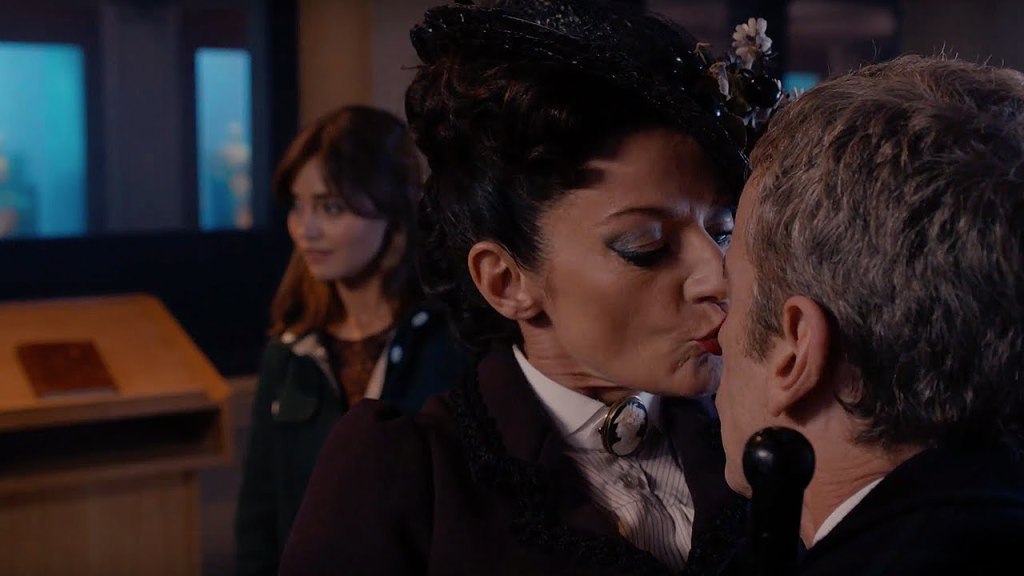
So let’s talk about love in the age of Doctor Who. Jokes about what the Doctor got up to with his lovely assistants in the TARDIS had been around since the Classic era, and Moffat first had fun with this–as well as the idea of a female Doctor–in a Red Nose Day charity program called Doctor Who and the Curse of Fatal Death in 1999. But the jokes were not just jokes. It’s not insignificant that a few years earlier, when an American TV movie starring Paul McGann first attempted to revive the franchise from hiatus, McGann’s Doctor ended up smooching his first companion like a common Captain Kirk. But the TV movie fizzled, and absent Moffat’s Red Nose frivolity, the franchise lay fallow until Russell T. Davies brought it back to life in 2005. Without forsaking decades of lore, Davies lured a new generation to Doctor Who by focusing on the personal dynamics of the Doctor (Christopher Eccleston) and his companion (Billie Piper as Rose) first and foremost. The Doctor grabs the pretty, sympathetic girl’s hand and tells her to run. And they run and they don’t stop running after the Doctor saves the day, having lots of fun stopping monsters and fleeing for their lives, even when her boyfriend and mother get involved, and it seems like everywhere they go in the universe, people assume they’re a couple. Which they aren’t! Or are they? …Could they? Maybe? And certainly Davies, who created series like Queer As Folk and Bob & Rose, was very comfortable exploring the unsaid, complicated attachments between the Doctor and his companion. The show remained family fare, but nevertheless the love story between the Doctor and Rose was as explicit as one can be without ever being plainly discussed, and the Doctor would never really move on from losing Rose while RTD was at the show’s helm.

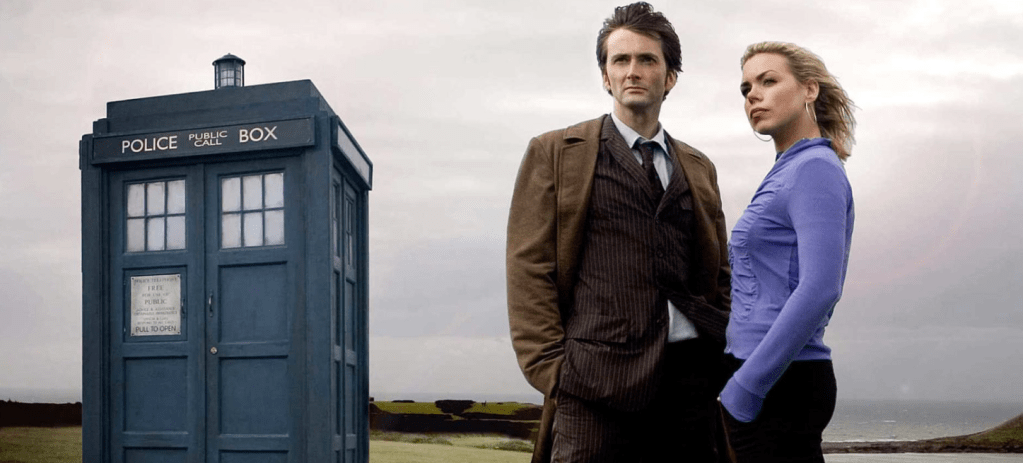
After Rose, every new companion would in some way be measured as a potential love interest for the Doctor. Rose’s successor Martha, after being innocently kissed by the Doctor to confuse sensors with his “genetic imprint” [rolls eyes], spent her time with the Last of the Time Lords nursing an unrequited crush. After Martha, Donna Noble comically rejected the Doctor after assuming he was hitting on her (he wasn’t). Amy Pond–the first companion of Steven Moffat’s tenure as showrunner–tried to seduce the Doctor and harbored big feelings until she realized her true love for fellow companion Rory–not that Rory didn’t still feel himself in competition with the Doctor. After Amy, Clara Oswald explicitly fell in love with the Doctor at the end of the Eleventh Doctor’s life. And this time it was not unrequited. Even after Clara’s painful experience with the Doctor was over–and I will return to this as it makes for the majority of Twelve’s era–her successor Bill Potts, a lesbian, referenced her unavailability to the male-appearing Doctor more than once,** and of course, the Thirteenth Doctor, played by Jodie Whittaker, had her own tacit love story with companion Yaz. And I haven’t even mentioned sometime companion and the Doctor’s actual wife, River Song, also a Steven Moffat creation from RTD’s era. We’ll get to her, too.
And damn, the Fifteenth Doctor had so much chemistry with Jonathan Groff…

Focus. Okay.
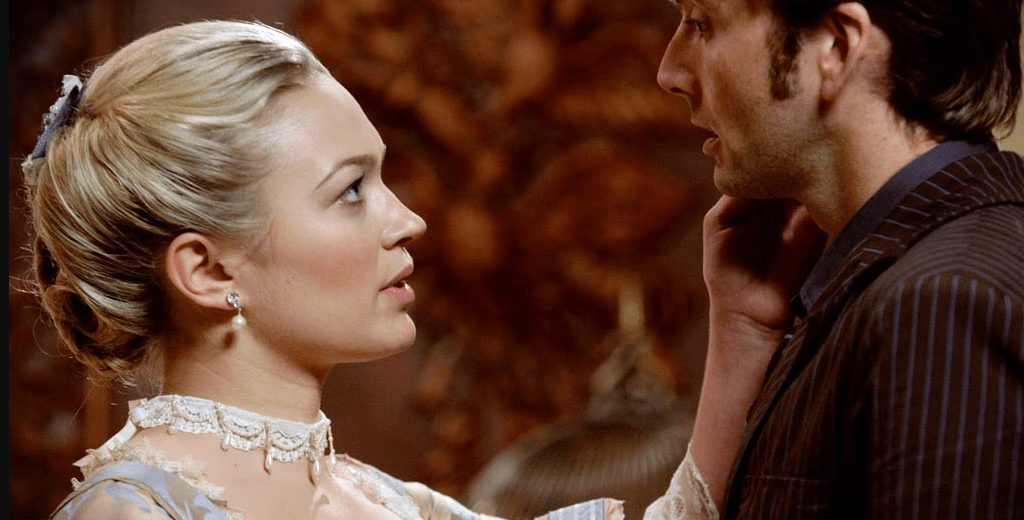
Moffat wrote many of the best received episodes during Russell T. Davies’ era, including the Hugo-winning two-parter “The Empty Child” and “The Doctor Dances,” Hugo-winning “The Girl in the Fireplace,” and BAFTA and Hugo-winning fan favorite episode “Blink.” As a major contributor and friend to Davies, Moffat was well aware of the Doctor/Rose romance. Still again, what these episodes share in common with plaudits and tight plots are challenges to the idea that the Doctor could romantically love his companion, even as the show itself suggested such connections were valid, inevitable, and very much canon. Particularly in “The Girl in the Fireplace,” which sees David Tennant’s Tenth Doctor sideline Rose for the excitement of Madame de Pompadour’s affections only to lose the brilliant noblewoman to age and bad timing, Moffat seems to be arguing that the Doctor cannot connect as equals with any mortal being, but particularly not a mortal being lacking intellectual gifts like Madame de Pompadour’s. And this after Rose had looked into the heart of the TARDIS and absorbed its energy to destroy the Daleks. Girl. If I were her, I would have taken the TARDIS and let him walk back to 2005.
Professor River Song (Alex Kingston), who the Doctor first meets the last time she will ever see him–their time-splintered love story requires a flow chart is the joke–seemed to be Moffat’s way of avoiding romantic entanglements in Doctor Who by taking the Doctor’s hearts off the market and making that romance almost entirely off-screen and out of time. Like Madame de Pompadour, River is every inch a Steven Moffat heroine–brilliant, bold, and more than a match for the erratic genius of the Doctor, inserting herself into his adventures with a winking “Hello, Sweetie.” As a special bonus, introducing River at the time of her effective death means Moffat assures himself of a tragic ending to this canon romance, over before it’s begun, quite literally. During his first few series as showrunner with Matt Smith’s Eleventh Doctor, Moffat brought River back periodically, seeming to enjoy the juxtaposition of the much younger appearing Doctor with the older appearing love interest, and further developing River as more and more of a rogue in the mold of the Doctor’s best friend and greatest enemy, the Master. It is telling that this is how Moffat envisioned the Doctor’s true love, not a companion and certainly not an audience proxy, but an unknowable, teasing, often amoral super thief.
And so, back to Twelve and back to Clara and why no one should ever start there. Where most regenerations invite the audience in with a reintroduction to the show through a new Doctor’s eyes, after years with the youthful and convivial Eleventh Doctor,*** Moffat begins Capaldi’s era as a referendum on the Doctor’s burgeoning relationship with Clara Oswald. Introduced as the “impossible girl,” Clara became the Doctor’s companion after literally dying for him, and in her travels with the Eleventh Doctor, she quickly became one of the most consequential companions since Rose Tyler. Unlike other Moffat-penned love interests, Clara still remains relatable and human, with only her actions making her special, like Rose. Perhaps inevitably, she also gets squishy for the Doctor, and there are more than passing indications he loves her back. All this angst culminates in the Eleventh Doctor’s regeneration, where a heartbroken Clara pleads with him not to change.
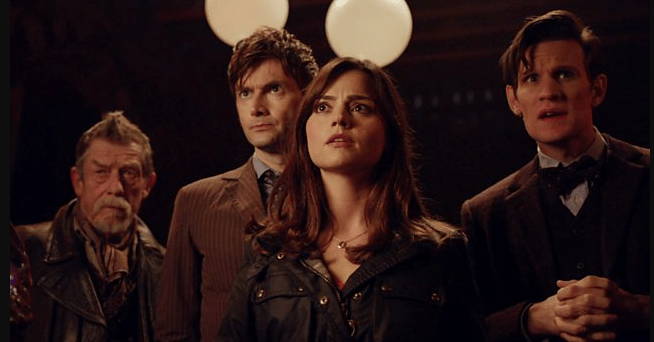

Twelve’s first episode, “Deep Breath,” features a T-Rex in Victorian London and a reappearance of the murderous clockwork cyborgs that harried Madame de Pompadour way back when the Doctor was David Tennant,*** but most of the story is about Clara coping with the Doctor’s new look. This Moffat-penned episode is absolutely packed with loaded lines, double meanings, and long-simmered hostility to the Doctor as a romantic lead, finally here after years of hamstringing and half-measuring, finally out with it. I could quote the whole thing and annotate every line, but there are three key scenes. First, where Madame Vastra, a Silurian (lizard person) not unlike the Doctor and even less unlike Sherlock Holmes, interrogates Clara about what happened when the newly-regenerated Doctor and Clara crash landed the TARDIS alongside Vastra’s wife Jenny.
JENNY: How did it happen?
CLARA: I don’t know. I don’t know. We were crashing about everywhere. The Doctor was gone. The Tardis went haywire.
JENNY: He’s not gone. He’s upstairs.
CLARA: Okay, he changed.
VASTRA: He regenerated. Renewed himself.
CLARA: Renewed. Fine.
VASTRA: Such a cynical smile.
CLARA: I’m not smiling.
VASTRA: Not outwardly. But I’m accustomed to seeing through a veil. How have I amused you?
CLARA: You said renewed. He doesn’t. He doesn’t look renewed. He looks older.
VASTRA: You thought he was young?
CLARA: He looked young.
VASTRA: He looked like your dashing young gentleman friend. Your lover, even.
CLARA: Shut up.
VASTRA: But he is the Doctor. He has walked this universe for centuries untold, he has seen stars fall to dust. You might as well flirt with a mountain range.
CLARA: I did not flirt with him.
VASTRA: He flirted with you.
CLARA: How?
VASTRA: He looked young. Who do you think that was for?
CLARA: Me?
VASTRA: Everyone. I wear a veil as he wore a face for the same reason.
CLARA: What reason?
VASTRA: The oldest reason there is for anything. To be accepted.
Jenny and I are married. Yet for appearance’s sake, we maintain a pretence, in public, that she is my maid.
JENNY: Doesn’t exactly explain why I’m pouring tea in private.
VASTRA: Hush now.
JENNY: Good pretence, isn’t it?
VASTRA: I wear a veil to keep from view what many are pleased to call my disfigurement. I do not wear it as a courtesy to such people, but as a judgment on the quality of their hearts.
CLARA: Are you judging me?
VASTRA: The Doctor regenerated in your presence. The young man disappeared, the veil lifted. He trusted you. Are you judging him?
CLARA: How dare you? How dare you?
Got it, fangirls? THIS IS NOT A LOVE STORY AND YOU ARE SUPERFICIAL IF YOU REJECT THIS SHOW FOR NOT BEING ONE OR FOR THE DOCTOR NO LONGER BEING YOUNG AND HOT. I will say this scene ends with Clara giving as good as she got in refuting Vastra’s charges, but throughout the episode Moffat is at pains to put the Doctor and Clara at pains, too, showing them bicker and snipe, showing Clara mistrust. She loves the Doctor, but she dislikes this Doctor, and as she doubts him, he does not comfort her. At a critical moment, the Doctor seemingly abandons Clara to the clockwork monsters, forcing Clara to choose to trust him. Of course in the end he saves Clara after shucking off a disguise that not so subtly resembles Matt Smith’s face, but the fact that this Doctor would even pretend to abandon her as a gambit is a big change itself. “Am I good man?” is the question that haunts the Twelfth Doctor through this series, a bold, dark choice for a family show where the one actual rule of time and space you could depend on is the Doctor’s innate goodness. And then finally, once the T-Rex and the rubbish robots from the dawn of time are dealt with, the Doctor confronts Clara in the second big scene of the episode.
DOCTOR: I’m the Doctor. I’ve lived for over two thousand years, and not all of them were good. I’ve made many mistakes, and it’s about time that I did something about that. Clara, I’m not your boyfriend.
CLARA: I never thought you were.
DOCTOR: I never said it was your mistake.
They talk more about whether they will continue traveling together, and Clara’s rejection is already out of her mouth when she gets a phone call.
DOCTOR: You’d better get that. It might be your boyfriend.
CLARA: Shut up. I don’t have a boyfriend.
But it is, sort of. At the end of an episode in which Moffat has lectured and dared a romantasy-primed fanbase to challenge their preconceptions of what Doctor Who and the Doctor are, the Eleventh Doctor calls Clara from the past to plead for the show’s future.
DOCTOR 11: He sounds old. Please tell me I didn’t get old. Anything but old. I was young. Oh, is he grey?
CLARA: Yes.
DOCTOR 11: Clara, please, hey, for me, help him. Go on. And don’t be afraid. Goodbye, Clara. Miss ya.
For the Eleventh Doctor’s sake, Clara stays with Twelve, and the entirety of the first series sees the relationship between Clara and the Doctor change as they get to know each other better, again. Clara gets a boyfriend back on earth, Twelve gets jealous, Twelve’s apparent age is a frequent gag line, and more episodes than not, the pair seem to be gravitating toward a breakup, while still generating enough genuine frustrated longing to power all the fanfic Steven Moffat and Peter Capaldi could deplore. At the end of the first series, the reaffirmation of the Doctor’s goodness goes hand in hand with a finale and a second series devoted to exploring the depth of his unconditional love for Clara, love that makes the Tenth Doctor burning up a sun to say goodbye to Rose pale in comparison. When Clara finally does say goodbye to the Doctor–because they must, because their love for each other has made him break the laws of time and the only way for him to move on from her is to be made to forget her entirely–Clara tells him that people like them should say things to each other. And then the camera zooms out, leaving the Doctor and Clara to their privacy, almost certainly not kissing or at least confessing their explicitly romantic love. Almost definitely not that. And in pursuing this torturous arc that would have seemed to be the ultimate argument against the Doctor falling in love at the beginning, Moffat instead makes his own version of Ten and Rose Tyler.
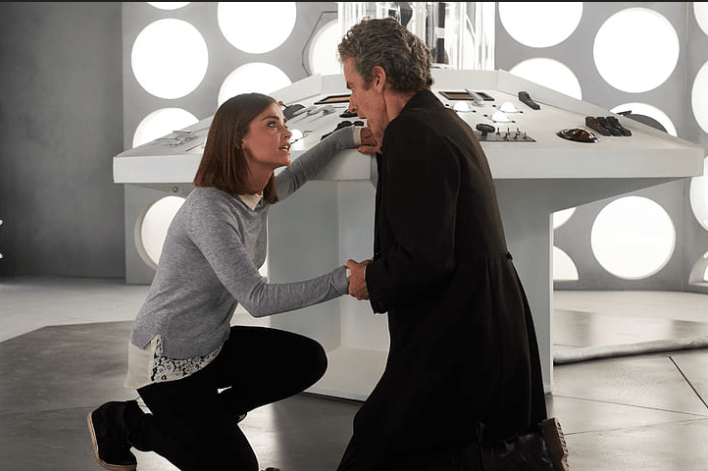

But there’s more. Freed from memories of Clara, the Twelfth Doctor warms up in his final series, still blunt and sarcastic, but no longer hiding how much he cares about the people around him. Just as the Tenth Doctor briefly tried to reconcile with the Master, Twelve finds himself trying to rehabilitate the Master’s current female incarnation Missy (Michelle Gomez). Missy actually taunts Clara with their ancient friendship in Twelve’s second series, insinuating that the Doctor could never feel for Clara as an equal and comparing her to a pet. By their third series together, the Doctor has probably shown that he does love his companions as deeply as his oldest frenemy, but still the Doctor/Missy fanfic writes itself. And then, of course, there is River.
Moffat finishes what he began (or begins what he ended? I don’t know) with River Song during the Twelfth Doctor’s run, reintroducing her only after Clara’s arc had finished, though a Clara vs. River episode would have been fire. I suppose the Clara/Missy episodes were close enough. Anyway, in “The Husbands of River Song” Twelve spends most of the episode unrecognized by his wife in this latest incarnation–a familiar theme from Moffat by now–but comically tagging along as she flees her ex, a despot cyborg king she only married as part of a daring heist. When River finally does recognize the Doctor, the scene proves a kind of capstone on Steven Moffat’s treatment of the Doctor as a romantic character over the years, working through to a place where he can admit to genuine sentiment in the mad genius hero’s heart.
Just watch this, okay? It gets good at the :51 mark.
RIVER: He’s the Doctor. He doesn’t go around falling in love with people. And if you think he’s anything that small or that ordinary, then you haven’t the first idea of what you’re dealing with.
That’s River’s voice, she’s echoing a little bit of Madame Vastra lecturing Clara in “Deep Breath,” but it’s Moffat talking. That is his sneaky thesis underlying ten years of his work on the show. The idea of falling in love as a small, ordinary thing is a tragic take, but as a Whovian from back in the day of trashbags and cringe caucasian mores, I do sympathize. Part of me has never been okay with the Doctor falling in love with Rose Tyler, who was brave and beautiful but so, so human–still less because she was so, so human. I think Moffat tried to have it both ways dramatically for a while, only to lash out with the second Doctor of his time as showrunner in what seemed a calculated deconstruction of the show Doctor Who had become in the modern era. But in the end, intentionally or not, he wrote himself into a corner with Twelve and Clara, and he could make the camera pan off, but he couldn’t wipe the audience’s memory like his protagonist’s. It was a love story. It took three series for Capaldi’s Doctor to hit a comfortable stride in a show that was again purely a joy to watch, but this was the cost of Moffat purging the argument against the Doctor as a leading man. And once he gave it up, the Doctor was the Doctoriest he had been in years, almost as if falling in love didn’t make him smaller or more ordinary at all.
Hello, Sweetie indeed.
*DON’T SKIP NINE.
**Moffat likes to make jokes of questionable taste, and while Bill’s love story within her series is genuinely beautiful and a stunning refutation of the Bury Your Gays trope, these jokes seem clumsy and unfunny to me. If you place any credence in the idea that the Doctor’s relationship with their last companion influences their regeneration, you might rationalize these as prompting the Doctor to regenerate as a woman. But that probably assumes an idealistic level of coordination between Moffat and Chris Chibnall, his successor as showrunner.
***Possibly not a coincidence that Moffat hearkens back to an episode that also drove a wedge in the Doctor and his companion’s mutual squishiness.
~~~
Angela is also fragmented into dozens of versions of herself throughout a Time Lord’s personal timeline, but in this case, they’re just friends.
Categories: Screen



 The Cultural Gutter