
There were a lot of things I did not like in 2025. Here’s ten things I did, or at least ten things I haven’t written about at the Gutter yet. Gotta remember what we’re living for while we fight. Usually, I’d writes something about how these books, games, people and movies tied together, but frankly 2025 has beaten me down to single words. Drag! Music! Horror! Queerness! Barbarians! Masterpieces! Capitalism! More Drag!
So let’s get right to it.
~~~
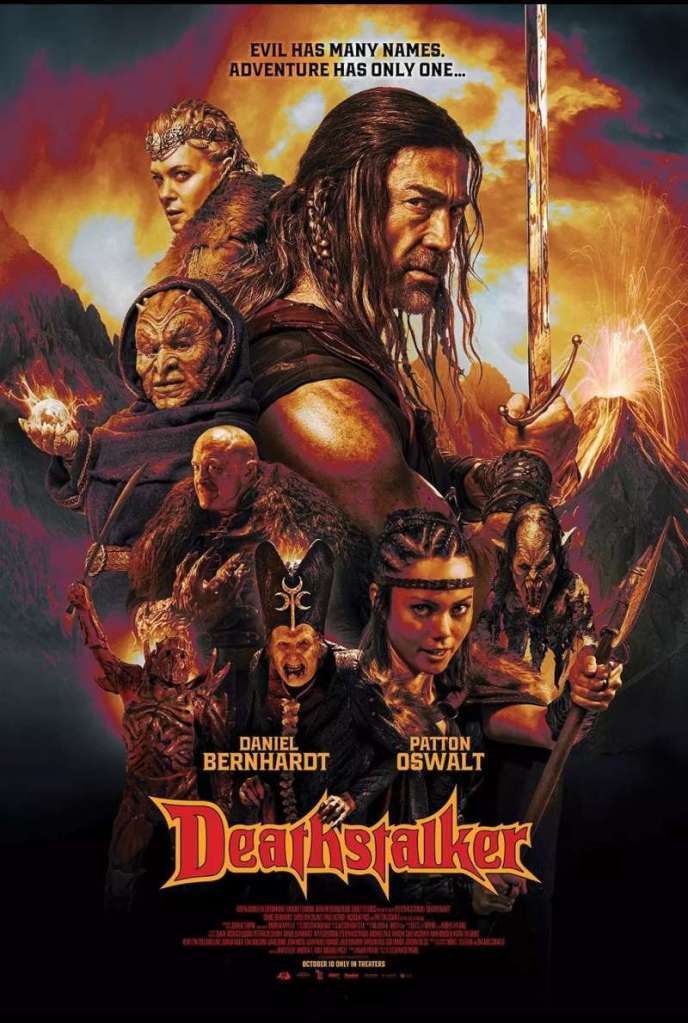
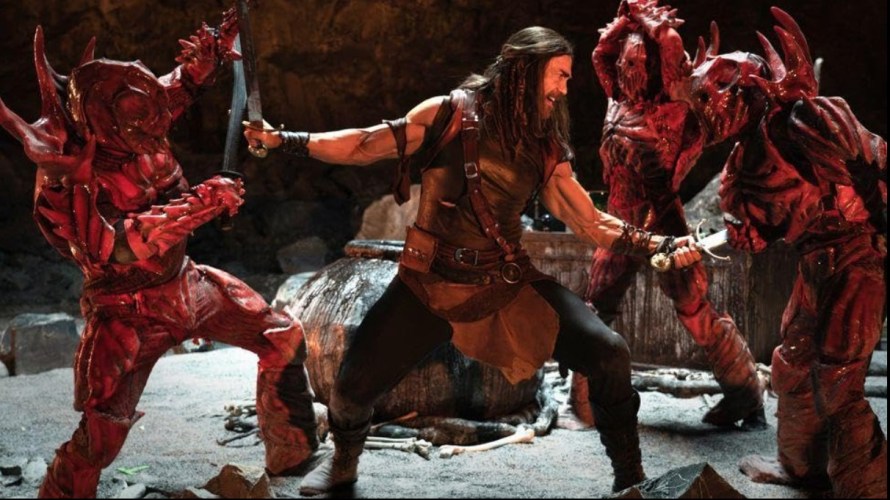
Deathstalker (Canada, 2025) written and directed by Steven Kostanski
Deathstalker is one of my favorite films of 2025—up there in its way with Sinners (USA, 2025) and No Other Choice (South Korea, 2025). It hearkens back to a glorious age of heroes, sorcerers and 1980s/1990s straight-to-video movies about their glorious exploits. Movies replete with crazy swords, oily muscles, slick lady thieves who cut deep with their words and their blades, wily wizards in wondrous hats, giants battling before majestic peaks, angry mummies with jewel eyes, undead minions and perfect, rubbery practical effects. Steven Kostanksi was born to—fated to—revivify barbarian movies full of gloriously gloopy special effects. There is also an infectious new version of the Deathstalker II theme song arranged and performed by Bear McCreary, Deathstalker executive producer Slash, composer Chuck Cirino, and Brendan McCreary. Daniel Bernhardt is perfect as Deathstalker,* a warrior fated to destroy an ancient evil. Bernhardt’s wig is also excellent. Step up your wig game, Geralt and all you Targaryens.
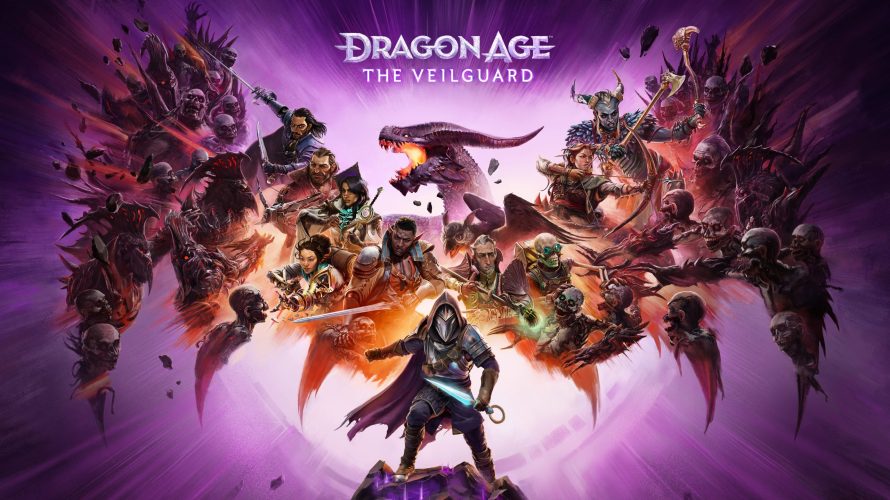
Dragon Age: The Veilguard (BioWare, 2025)**
Dragon Age: The Veilguard picks up not long after the events of Dragon Age: Insurrection. In fact, Veilguard starts with an attempt to clean up some of those events before everything goes boom. Initially, I was put off by the character design and art, but it grew on me. After so much high fantasy art based on Art Nouveau and the European Renaissance, I loved the Art Deco and Art Moderne take on fantasy settings and art—especially in Veilguard‘s expository animation. I loved the color palette. And I enjoyed the synthwave heavy soundtrack. Again, it’s a refreshing take on music for a fantasy role-playing game. I also liked the skill tree that allowed you to mix and match your skills without making your job, your species or your in-game organizational alignment your destiny and whole personality, as so much fantasy gaming does. My rook was throwing bombs and daggers, boobs out in an Antivan assassin’s coat while being a member of the Mourn Watch, a guardian and keeper of a Grand Necropolis associated with benevolent necromancers.
I don’t want to reveal too much, but I will emphasize that Emmerich has the most refreshing and fun companion quest. I cannot emphasize enough that Johanna Hezzenkoss is what more nemeses should be. And Lucanis’ story and companion quest could have been more fleshed out. I assume a lot was cut. As it is, his romance might disappoint you. The creation suite is excellent and available as a free download for everyone out there who loves creating characters.
I highly recommend reading CG Editor Emeritus Angela Englert’s piece on Veilguard and the Dragon Age series for much more in-depth thoughts and analysis.
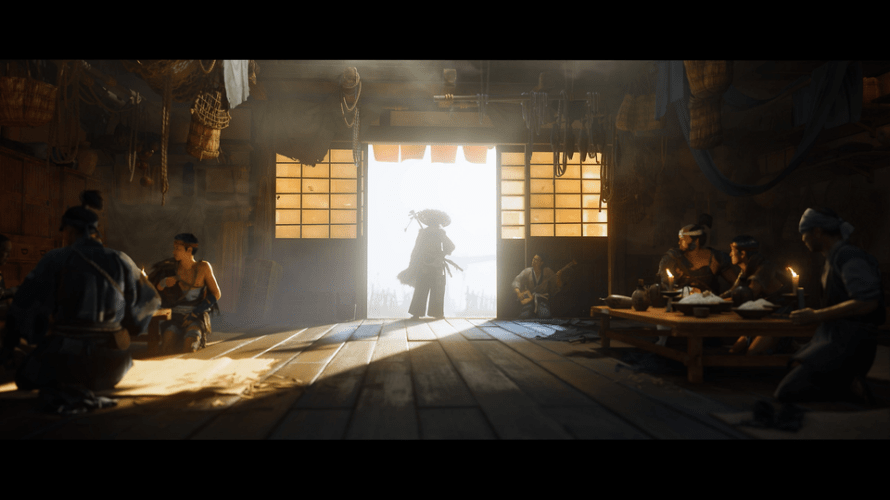
Ghost of Yotei (Sucker Punch, 2025)
I have been waiting for Ghost of Yotei with much impatience and the game did not disappoint. Its story is fairly simple and follows the long tradition of chambara movies and the Westerns that influenced them. Atsu’s family has fled the violence at the end of the Sengoku Era to Hokkaido, but that violence follows and engulfs them. Atsu watches as her family is killed and she escapes, learning all the skills she needs for revenge. And that means as a player, you learn a variety of skills you can use to play the game in a variety of ways. I’ve realized I don’t enjoy most boss fights and there are boss fights in the game, but they are balanced with other kinds of fights against groups of enemies with different strengths and weaknesses allowing players to use all their skills and weapons if they want. Camps of enemies can be cleared out in a variety of ways—or simply snuck around in, if stealth is your style. Atsu’s story is well-constructed and I liked Atsu herself and playing as her. It’s always fun for me to play a rad woman. Her mission jibed with my preferred play styles in open world games—probably more than Jin Sakai’s did in Ghost of Tsushima. Don’t get me wrong, Jin is righteous and I enjoyed Ghost of Tsushima immensely. I just made it rain all the time and made Jin’s uncle disapprove of him with my tactics. Ghost of Yotei keeps much of what worked well in Ghost of Tsushima, and builds on it. It still has a black & white Kurosawa mode, and adds Miike and Watanabe modes if you’d like more gore or more groove. And it includes many more animals to pet.
Incidentally, word is that Ghost of Yotei and Dragon Age: The Veilguard shared writers.
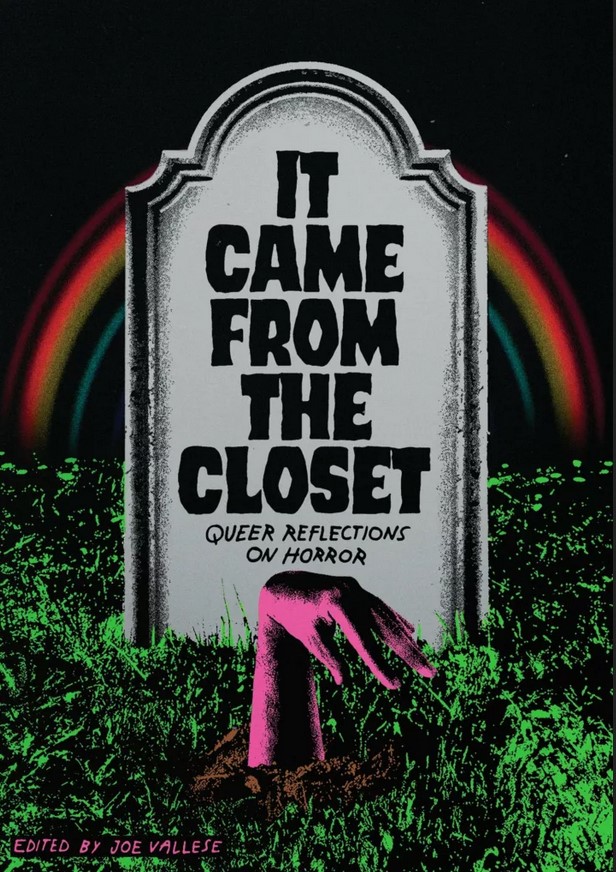
It Came From The Closet: Queer Reflections on Horror (The Feminist Press, 2022) ed. by Joe Vallese.
It Came From The Closet has so many essays and so many perspectives on Queerness, gender and horror. I especially appreciate the inclusion of experiences that are not my own and positions that I am not inclined to agree with that allow me expand my own understanding of both horror and humanity. There’s even an essay rarely included in anthologies about horror—one by a person whose experience with horror movies has been personally harmful. Nothing is ever one thing and we are enriched by considering all the possibilities of horror as a genre. I won’t list every essay in this excellent book, but I’ll note some of the ones that stood out for me: Carmen Machado’s essay “Both Ways” about Jennifer’s Body (USA, 2009) and bisexuality is wonderful; Carrow Narby’s “Indescribable” essay about their experience with the confinement of gender categories and their experience of The Blob (USA, 1988) and Society (USA, 1989); Addie Tsai’s “Twin / Skin” on watching Dead Ringers (Canada, 1988) as an identical twin—a mirror twin—whose sister was estranged and—for lack of a better word—malicious; Jen Corrigan’s gay reading of Jaws (USA, 1975), “Three Men On A Boat,” was delightful; and “Centered and Seen” by Sumiko Saulson on the centering of Black pain, the history of the projects, and Queerness in Nia Da Costa’s Candyman (USA, 2021) as well as the 1992 Candyman. I can’t stress enough, though, that the whole book is excellent and worth reading. Peruse the book’s contents here.
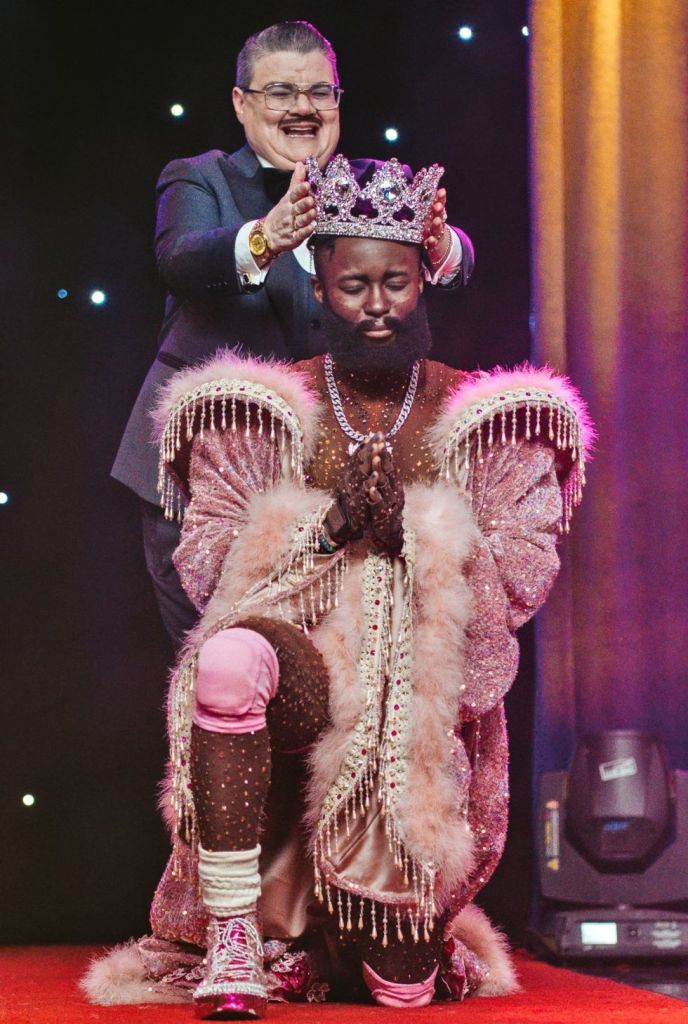
King Molasses, winner of Revry TV’s King Of Drag (Revry, 2025)
King Molasses is an awe-inspiring drag talent. I first saw them on a new drag competition show hosted by the legendary Murray Hill, King Of Drag. It’s the first drag competition show to focus exclusively on drag kings, and while it has some shaky points, it was likely to show up on this list. The show is refreshing in its focus on not only kings, but the history of drag. And because so many of the performers have spent time in or very closely adjacent to the Queer women’s community rather than the gay male community it has a different tone than drag queen-focused shows. The kings are still competitive for sure. And they have a variety of identities: cis women, Trans men, nonbinary and genderqueer, but the competition feels like a healthy drag king collective with little shade or reading. So many of the kings are tremendously talented and entertaining with expansive visions of drag, but then there is King Molasses. And King Molasses’s charisma, talent and utter focus on the art they want to achieve is impressive.
In retrospect, it feels like so much of King Of Drag‘s challenges are a distraction from the fact that King Molasses is a generational talent—and who can compete with that? So the challenges offer a chance for other competitors to shine with their strengths. But even then, it often gives Molasses a chance to take new risks with areas of drag they are less comfortable in, like this performance of Sexy Ira Glass. Molasses’s final performance, fully in control of how they present themself and what they want to perform, is incredible. And Molasses takes their public role so seriously. They are an inspiration not only to nonbinary people, but I think honestly every artist everywhere. It got me in my heart when they answered, after being asked their pronouns, that they would like to “unsubscribe.” And later when they said, “I am my father’s daughter,” embracing all their history and their complicated relationship with their father. I still recommend watching the show and discovering all the talented kings, but King Molasses in particular brought me so much joy this year.
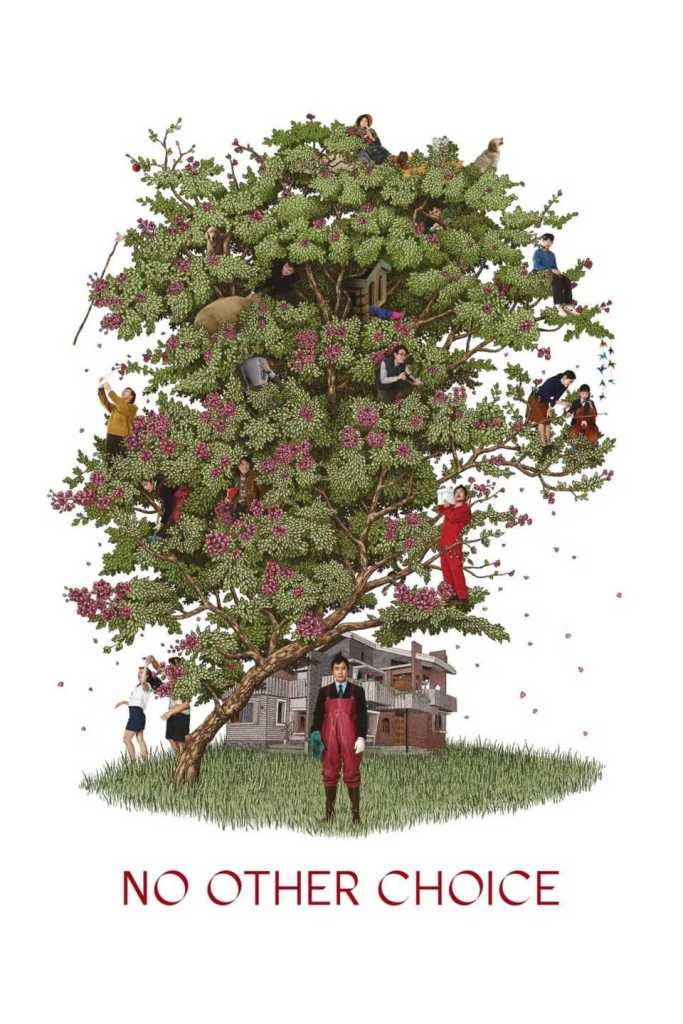
No Other Choice (South Korea, 2025) dir. Park Chan-wook. Written by Park Chan-wook, Lee Kyoung-mi, Lee Ja-hye, and, hey, Toronto’s own Don McKeller is in there.
I don’t particularly like Donald Westlake’s books. Maybe I will someday. But I do like adaptations of his work—everything from Darwyn Cooke’s Parker series of comics to Park Chan-wook’s new tour-de-force, No Other Choice, based on Westlake’s 1997 novel, The Ax. I definitely like Park Chan-wook. In No Other Choice, Yoo Man-su (the ever handsome Lee Byung-hun) has a beautiful life. He can’t wait for the future. But when an American company buys his paper company, Man-su loses his job and fears losing everything. After an interview for a job that would get him back into the industry, Man-su comes to the conclusion that the only solution is murdering rival candidates.
No Other Choice is funny and tragic. It humanizes everyone involved and feels equally for Man-su, his family and his victims. Man-su and his victims are equally pitiable and absurd. I never knew Lee Byung-hun had that much Jack Lemmon in him. And I certainly never knew he had that scraggly mustache in him. Magnificently acted. Magnificently directed. Magnificently shot by cinematographer Kim Woo-hyung. No Other Choice is a masterpiece.
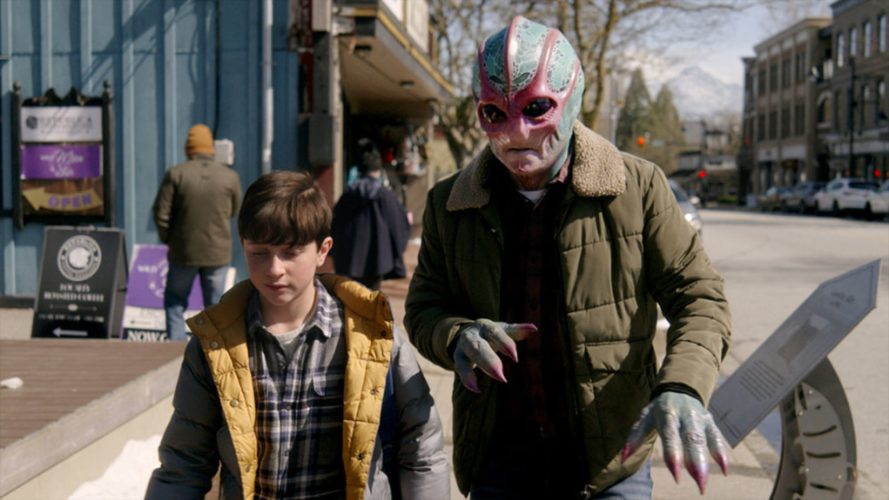
Resident Alien (Syfy, 2021-5)
Resident Alien has a rough start, but I think the writers decided they just needed to get the characters in position and then get to work. So give the show some time to cook. It has incredibly well-written characters—especially a variety of believable, fully formed female characters. In Resident Alien, an alien (Alan Tudyk, voice; Keith Arbuthnot, body in alien form) crash lands in Colorado and takes over the life of Harry Vanderspiegel (Alan Tudyk), a doctor vacationing in the area. The alien’s mission is to destroy the Earth, but he needs help. Not so much help destroying the planet, but help living among humans until he can destroy the Earth. When the local town doctor dies, Harry is asked to perform the autopsy and ultimately take on the man’s practice. Asta Twelvetrees (Sara Tomko), a medical assistant and member of the local Ute tribe, takes on Harry, who clearly needs someone. Over time, Harry develops something more than a fondness for pie, pizza and Asta.
The show is a science fiction comedy and never stops being one, but it is also a reflection on settler colonialism, humanizing colonizers and becoming part of a community. Resident Alien embraces a Native perspective on the colonial experience and it helps white people identify with that. And a gradual transformation, like Harry’s transformation, and acceptance of community can save the world. And if you want more Gary Farmer in your life, it has Gary Farmer in it.
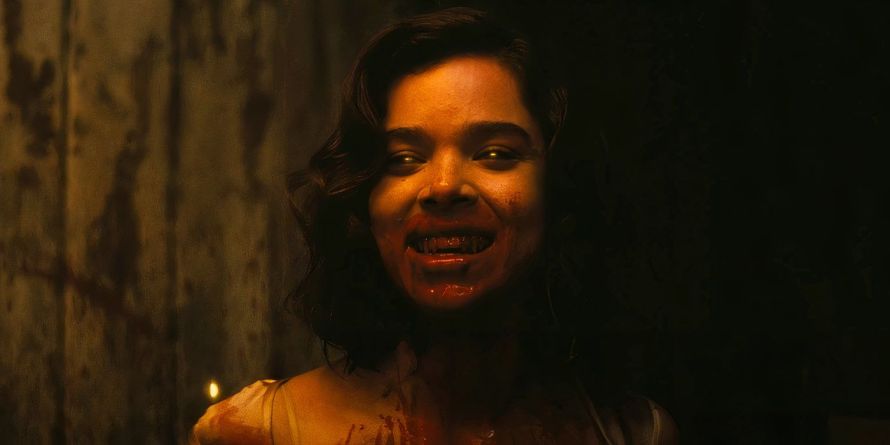
Sinners (USA, 2025) written / directed by Ryan Coogler
Ever since I saw Sinners in the theater, I want to go to the theater and watch it again. Michael B. Jordan playing Smoke and Stack? The music? Wunmi Mosaku? The history? The real evil in the end? Good God. What a film.
Friend of the Gutter Michelle Kisner has a much better piece on Sinners here. And I talk a little bit about Sinners and spirits in my piece onFréwaka (Ireland, 2024).
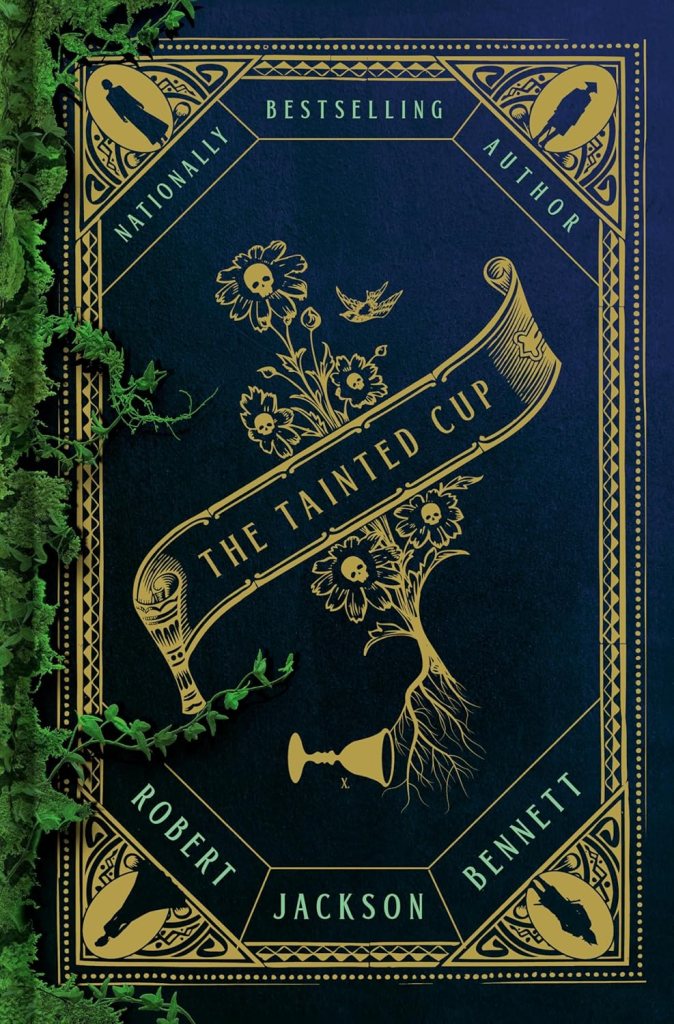
The Tainted Cup (Del Rey, 2024) by Robert Jackson Bennet***
The Tainted Cup is filled with a perfect blend of drawing room mystery, fantasy and horror. Anagosa Dolabra is an excellently eccentric detective in the grand tradition of eccentric detectives. But she serves an Empire whose primary purpose has been protecting its people from encroaching leviathans. It sounds very kaiju, and it is, but the monsters are a background to the ghastly murder of an engineer tasked with maintaining the walls that keep the leviathans out. Like many an eccentric detective, Ana requires the aid of a less eccentric assistant, Dinios Kol. He is a young man who has been modified by the Empire’s apothetikal science to have perfect recollection of all he observes.
In The Tainted Cup and the recently released sequel, A Drop Of Corruption (Del Rey, 2025), Ana and Din enter the annals of many a delightful detective pairing solving seemingly insoluble crimes. The characterization and pacing are excellent. The world building is unique and interesting. And while I am not a big one for solving the crime along with the detectives, there are clues throughout the books making the solutions satisfying, I hope, even to those who do like to solve the crime along with the detectives.

Timeless Toni Storm, All Elite Wrestling
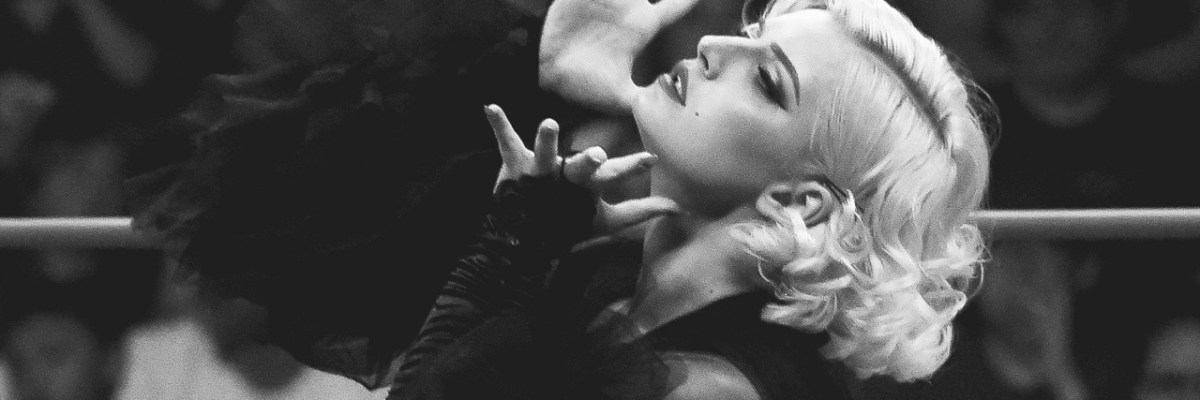
Timeless Toni Storm is an awe-inspiring drag talent and, like King Molasses, she has brought me much joy. WWE has long called its roster of female wrestlers, “Divas.” But Timeless Toni Storm is the true diva. She has combined wrestling with Classic Hollywood, and by God it works. When so many wrestling gimmicks for women have been unimaginative and bland, Toni Storm has embraced divas like Bette Davis, Gloria Swanson, and even Isabella Rossellini. She is a star, darling, and we all know it. She is often shot in glorious black and white, though more recently in grainy, lurid technicolor. Toni Storm is also loudly, proudly Queer and has embraced the drag and homoeroticism of wrestling in creating herself as a mad, glamorous star that desires some of her opponents as much as she wants to defeat them. We see it first in a polymorphously perverse storyline with Mariah May right out of All About Eve (USA, 1950) and Sunset Boulevard (USA, 1950). After the inevitable betrayal by May, Storm gave the performance of a lifetime, overcame her protegé and made a comeback as the AEW Women’s World Champion and gave an incredible acceptance speech. Since losing that championship to Kris Statlander—of whom Storm says, “My God, what a woman!“—Storm has donned gear reminiscent of both noir detectives and giallo murderers. She has joined forces with her beloved Mina Shirakawa as the Timeless Love Bombs tag team. And through it all, Storm raises up her competition and seems to have inspired or enabled the AEW women’s roster to feel more comfortable in being themselves rather than trying to fit into the tired tropes expected of women wrestlers.
If you don’t enjoy wrestling, and I completely understand if you don’t, I still recommend watching Toni Storm’s promos and short films. Even her interviews with Turner Classic Movies host Ben Mankiewicz. Toni Storm is truly timeless.
*Daniel Bernhardt’s Deathstalker looks a bit like if Jon Hamm became a Hulk. Especially if he became a Hulk in Planet Hulk.
**Thanks for the recommendation and the gift of the game, CG Editor Emeritus Angela Englert!
***Thanks for the recommendation to the Gutter’s own Alex MacFadyen!
~~~
Squatting beneath a mighty oak, Carol Borden cleans the gore from her ebon blade. She is weary. She did not choose a life of adventure and heroics, but the Dreadites and their foul wizard Nekromemnon dog her steps from the Desert of Sighs to the impassable Ghost Forest.
Categories: Horror, Science-Fiction, Screen, Videogames, Wrestling



 The Cultural Gutter
2 replies »