
Vampire’s Embrace (1991) starts like many horror films: with teenagers mucking about somewhere they shouldn’t be. In this case, it’s a night party at a local crypt with a side of Spin the Bottle. After they get bored with the game, they decide to explore and come upon a coffin with a chain around it. As is required, they break the chain open and discover a skeleton with a head of garlic stuffed into its mouth. Removing the bulb causes the skeleton to come to life, all covered in sticky goop, which then proceeds to murder the helpless youngsters. Now that’s an opening!
The scene then switches to Bob (played by character actor Paul Borghese), a stockbroker who, unfortunately, discovers his car has a flat tire after a long day at work. Luckily for him, a passerby named Angela (Sarah Watchman) has a spare tire jack in her car nearby, and he can change to the spare and go on his way. Angela has an air of mystery and innocence and seems to melt into the woods after their meeting. After returning home, exhausted after his troubles, Bob’s cheating girlfriend, Roxy (Mimi Stuart), informs him that there’s no dinner and she’s going out drinking with her friends. Bob can’t seem to catch a break.
Roxy is portrayed as a gold digger who uses Bob only for his money, which she then spends galavanting all over town with her various lovers. Angela crosses paths with Bob again at the local movie theater, and he asks her out on a date, having grown tired of Roxy’s trysts with other men. The couple has a deeper connection, but Angela appears to be hiding something from Bob. The dark secret is that Angela is a full-fledged, blood-sucking vampire, though she tries to control her urges as much as possible. She and her sister Cassandra (Edna Boyle) were the creatures awakened in the crypt at the beginning of the film. Cassandra is the most savage of the two sisters and has no qualms about killing the locals and feasting upon them.
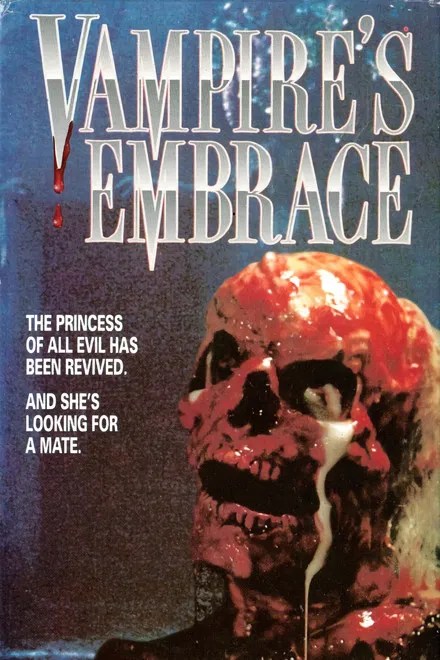
Vampire’s Embrace feels like a traditional old-school romance film at times as we watch Bob and Angela slowly fall in love with each other. Although he becomes increasingly suspicious of her strange habits, like only going out at night and her reluctance to eat in front of him, he doesn’t pry into her business much. That is, until one evening when he wakes up in the middle of the night and spots her sneaking out in a racy S&M-inspired outfit, complete with handcuffs. It turns out she has been using her sexuality to lure strange men back to the crypt for her and Cassandra to bleed them dry. All of the vampires in this story are female, reinforcing the trope of the evil seductress. Ironically, in Bob’s case, his ex-girlfriend was a vampire of sorts herself, but instead of blood, she was sucking money from him. While Bob might put out an air of self-assured masculinity, he is looking for affection and love on the inside.
Andreiev plays around with vampire concepts; in this iteration, they can go out in the sun, but only in short doses, and if a vampire kills another of their kind, it will take away the majority of their bloodlust. The last act veers into horror as Cassandra’s voracious hunger also drives her to want Bob, and Angela must protect him and their love. The ending comes full circle, with Cassandra being staked and returning to the sticky skeleton she had at the beginning of the film. With her hunger finally slaked, Bob can return to his vampire’s embrace in peace.
Fast forward to 1996, and Andreiev returns to his exploration of vampires, this time with the urban-tinged Night. The beginning of this film parallels the opening of Vampire’s Embrace, with self-proclaimed vampire hunter Margot Etting (Jillanne Smith) trying to pry open a coffin to access the creature inside. Unfortunately, Margot’s operation is interrupted by the police, and she’s taken in for questioning. There has been a rash of killings in New York City, and it seems there is a vampire coven nearby that could be contributing to the murders.
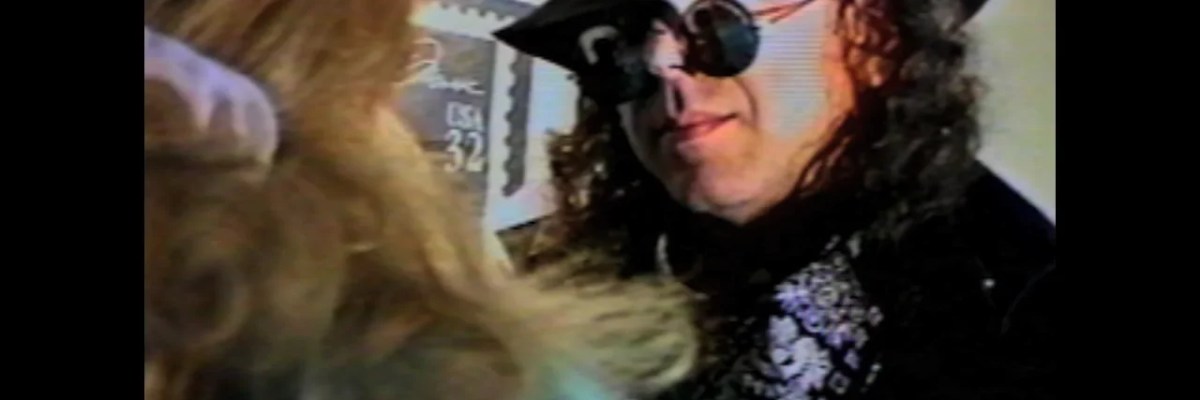
The coven is led by Anthony Garring (Richard Cutler), a tall man who wears a long black duster coat and a weathered fedora, and someone who cuts a peculiar figure against the shadows of the night. Before he was turned into a creature of the night, he was an alcohol bootlegger during the prohibition era, and he has continued his profession in modern times as a drug dealer. Vampirism as a metaphor for drug addiction is a somewhat common trope, but usually, it’s portrayed as the vampires having a dependency on blood. In Night, Anthony is doling out the addiction to others, replacing the supernatural version of a vampire’s beguiling powers with trading cocaine to women to let him feed on their blood. Where Vampire’s Embrace was comparatively wholesome and romanticized, Night is gritty and noir-tinged.
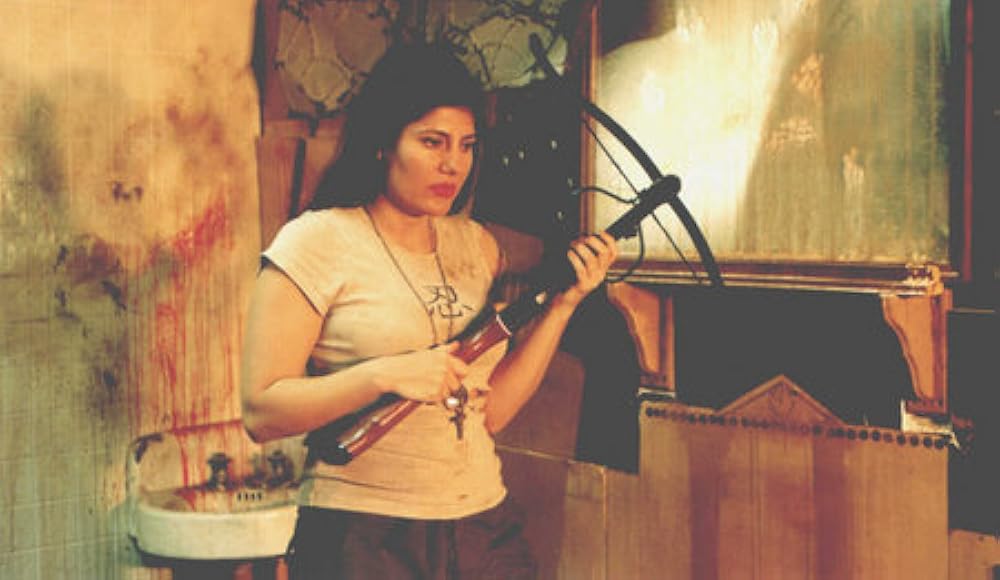
Women are much more prominent in the narrative, with Margot taking the lead as the head vampire killer. Andreiev avoids sexualizing her as well, and she spends much of the film in an oversized baggy t-shirt and jeans, getting herself dirty and bloodied up for her mission. The hunting group includes three additional members who each have their own agendas regarding the vampires. Father Donlevy (Richard Breitfeller) is a holy man with a drinking problem who thinks it’s his religious duty to destroy demons, David (Michael Riccio) is haunted by his dead wife, who Garring murdered, and Douglas (Glenn Andreiev) is trying to play both sides between the humans and the vampires, not unlike a familiar. When asked about his tendency to star in his films, Andreiev replied that it saves money not to hire an additional actor, which is genius when operating on a small budget.

Night is much more action-packed and bloody than Vampire’s Embrace, and the entire third act consists of an extended sequence in the vampires’ lair, where the four vampire hunters go to take them out. One scene, featuring a huge, muscular vampire named Terrance (James Aronsen), is ruthless as he proceeds to beat the living hell out of the group, with Margot barely escaping with her life. Although much of the film is earnest, Andreiev isn’t afraid to insert absurdity as a palate cleanser. While escaping the vampires, Margot hitches a ride with a man who inexplicably has filled his car with colorful balloons, constantly obscuring the camera and popping occasionally. The audience is treated to his backstory, which involves his mother cheating on his father with a clown at his balloon-filled birthday party, which has traumatized him for life. These types of non-sequitur scenes are what make outsider art so much fun to watch.
Silver Night (2005) is a remake of Night with the same basic story and characters, but different interpretations of the material. Margot (Shawna Bermender) is still an aggressive vampire hunter who is out to break up a vampire coven in New York City, and she again rounds up a few locals to help her with the job. As this film was made in the ’00s, the internet and cell phones have made their appearance, and there is a bit of a tech aesthetic as the hunter group tries to crack a password to access data on the vampires. Andreiev reprises his role as Douglas, and he is much more prominent in this version, and increases his double-crossing tenfold.
The most significant difference is how Anthony Garring (Frank Franconeri) is portrayed throughout the film. In the original movie, Garring was more of a thug, a petty drug dealer who prowled the streets looking for victims to get hooked on narcotics. The “Just Say No” campaign was still hot in popular culture, and in movies from this era, a drug dealer was among the worst things a villain could represent. In Silver Night, Garring is much more refined, wearing a tailored suit and channeling classic vampire style, complete with superhuman powers, such as super speed. His persona is more of a mob boss, and he has a hands-off approach to fighting the main characters, whereas the version in Night likes to get up close and personal.
In all three of these films, the vampires are reinterpreted through the lens of the era in which each was made and the point in Andreiev’s artistic career. Vampire’s Embrace is an optimistic early film that draws on his love of classic cinema, offering a romanticized view of love. Night is edgier and darker, pulling from the rising tide of nihilism, violence, and indifference that started to permeate media in the early ’90s. Silver Night is cold and calculated, examining the terror of capitalism through the concept of immortality, in a time when a vampire must exist forever, trapped in the prison of amassing wealth to survive. Similarly, Andreiev has been in the business for decades, and his craft has been honed and refined. Throughout all this time, however, he manages to put his stamp on the vampire myth and recontextualize it, keeping it fresh and exciting.
~~~
Michelle Kisner is a film critic, freelance writer, and advocate for physical media.




 The Cultural Gutter
Sounds amazing! I love that he is not afraid to just retread things while also giving special creative flair that you only see in home grown productions like these. Time to track them down
LikeLiked by 1 person