
“Whoso danceth not, knoweth not what cometh to pass.”
I reveal secrets about both the Gothic folk horror film, Eye of the Devil, and the novel it’s based on in this essay. If you would like to continue to knoweth not, continueth no further for now.
~~~
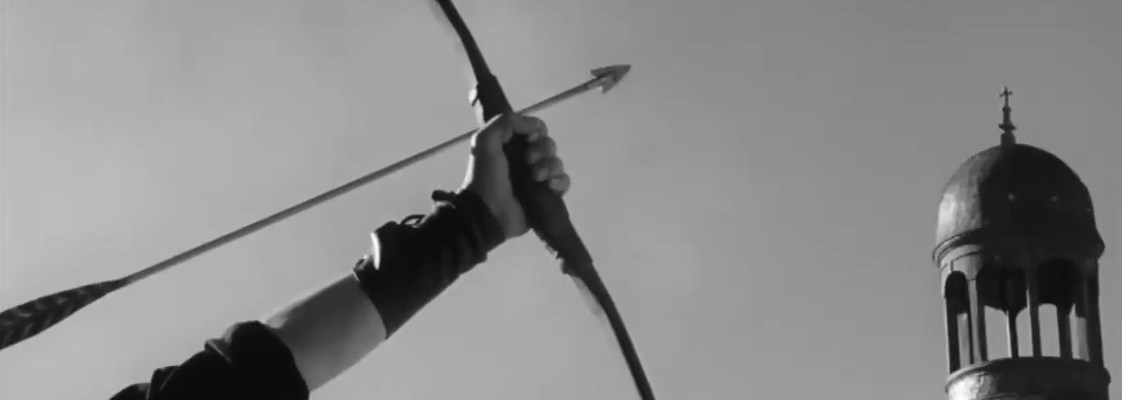
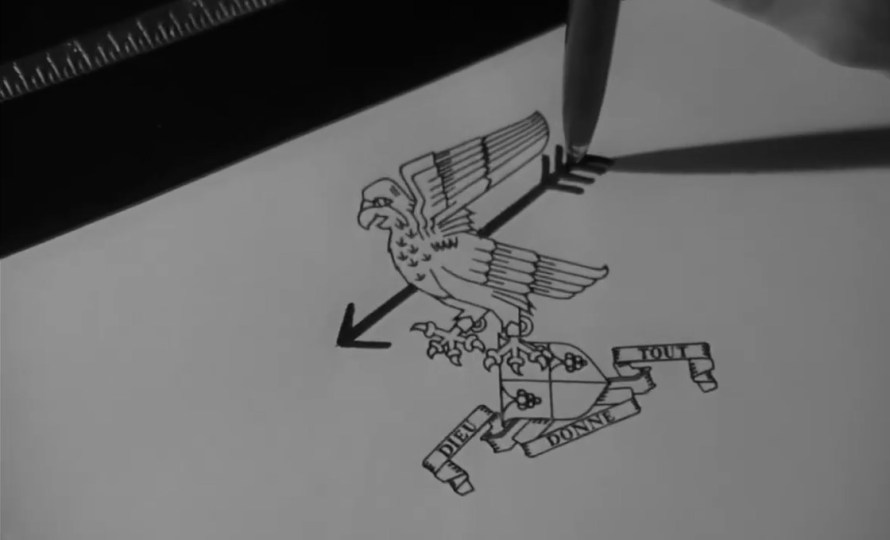
Eye of the Devil (UK/USA, 1966) opens with with a train hurtling down the track like an arrow to its mark. Intercut with the tracks are images of an arrow drawn and ready to fly from a bow, a dove, an amulet, hooded figures in the forest, a familial crest, scenes from a black tie party, and other curious images. On the train, a bearded man (Michael Miller) travels to Paris to see Philippe de Montfaucon, Marquis of Bellenac. He tells Philippe that it is time to come home to his rural ancestral estate. Bellenac’s vineyards are failing and the solution will not be a new strain or a scientific intervention. The farmers seek an older solution: a willing sacrifice.
This plot is, of course, appealing to me. I enjoy an occult mystery and sinister shenanigans. But one of the great unexpected pleasures of Eye of the Devil is that the protagonist is a middle-aged woman who investigates an occult mystery to save the husband she loves. That’s not the case in the novel the film is based on. Eye of the Devil was adapted from British writer Philip Loraine’s Day of the Arrow (1964) by Robin Estridge*, which is convenient since Philip Loraine was one of Estridge’s noms de plume. Day of the Arrow is more akin to the occult thrillers of Dennis Wheatley, with a man battling occult threats presented by powerful, seemingly civilized men. But while Philippe de Montfaucon (David Niven) is the focus of the film’s action, the protagonist is Catherine (Deborah Kerr), Philippe’s wife. That change highlights so many gendered elements in the film, especially ones around what it means for Philippe to be a man in Bellenac. For Catherine’s part, unlike so many Gothic heroines, she fears for her husband’s safety and sanity, not her own. She never doubts her perception. And she is nearly impossible to imprison in a shadowy Gothic manor.
Catherine, Philippe, and their children Jacques (Robert Duncan) and Antoinette (Suky Appleby) live in the sophisticated world of Paris, 1966. Philippe prefers modern city life to the oppressive, almost medieval atmosphere of Bellenac. When summoned to deal with the crisis, Philippe tells Catherine to stay in Paris with the children because crop failures are “unpleasant” in Bellenac. The night after Philippe leaves, a somnambulant Jacques asks Catherine and family friend Jean-Claude (Edward Mulhare) for his “motor car” so he can go to Philippe. The next morning, Catherine drives to the Montfaucon chateau and becomes enmeshed in a Gothic folk horror mystery.
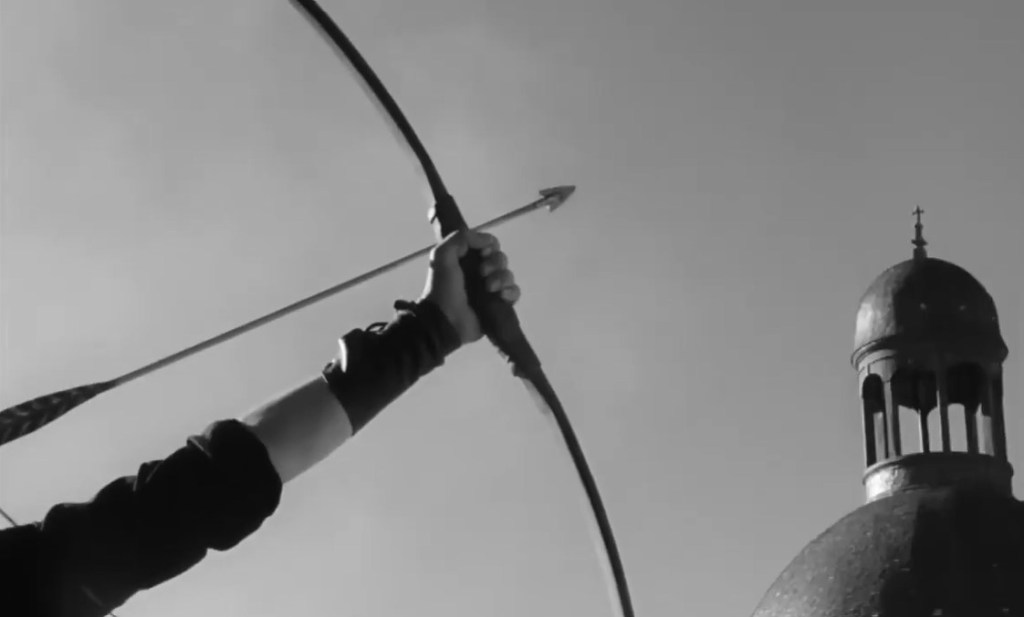
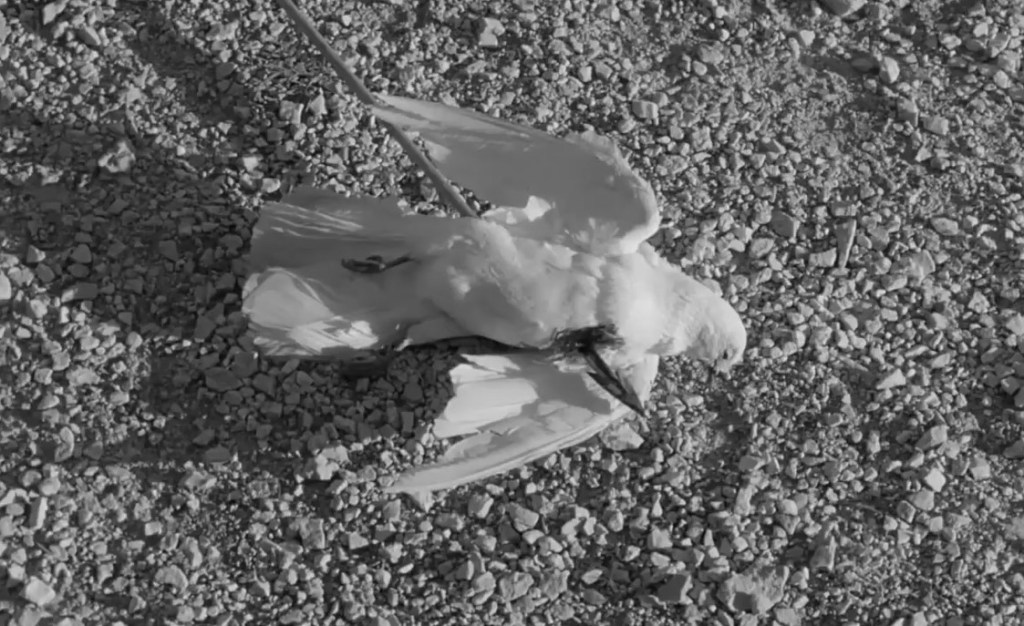
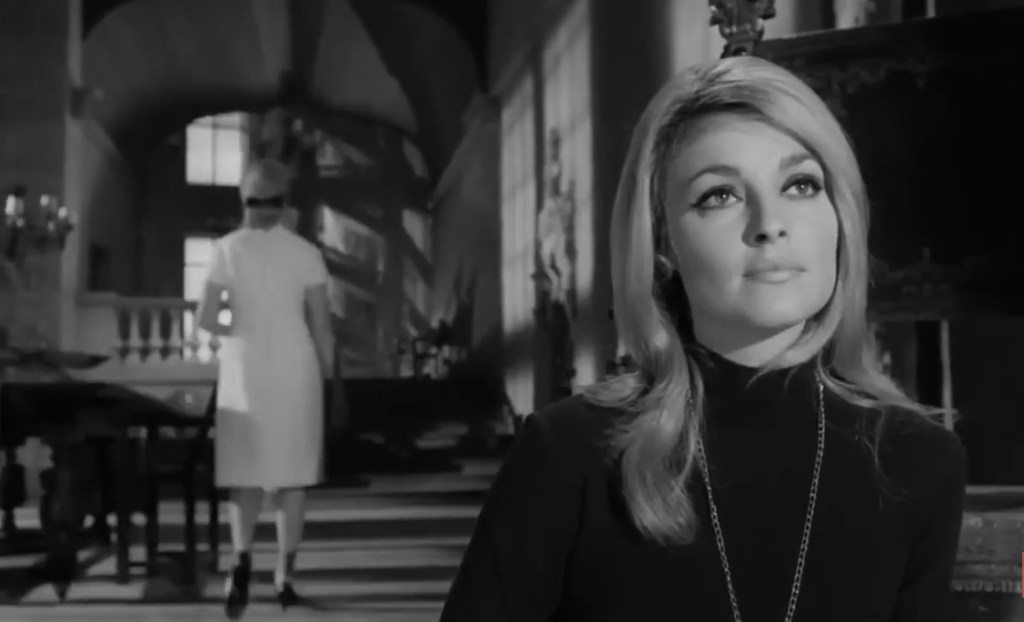
Catherine is puzzled by Philippe’s demeanor and the strange people surrounding him in Bellenac. Siblings Christian (David Hemmings) and Odile de Caray are both pale, platinum blond, beautiful and clad in black. Christian carries a bow and, on Catherine’s arrival, shoots a dove that falls before her. Philippe’s aunt Estelle (Flora Robson) considers Christian to be “a very wicked boy and his sister is no better.” Odile (a dubbed Sharon Tate) wears an amulet reminiscent of one that protects against the Evil Eye, but its meaning goes far beyond that to Philippe, the local people and even Père Dominic (Donald Pleasance), the soft-spoken local parish priest. Odile seems especially interested in Jacques. Asking if he believes in magic, she seems transform a frog into a dove for him. Antoinette is not fooled, but Jacques ignores her protestations because in this story, men and boys are the ones entranced and enthralled by ancient beliefs. Though Odile does hypnotize Catherine and nearly convinces her to walk off a parapet to her death. Philippe beats Odile in retaliation—once a refined Parisian gentleman, suddenly every inch Bellenac’s brutal feudal lord.
There are other strange happenings at the chateau, Catherine sees hooded figures gathered at a V-shaped table as Christian and Odile present them with the fallen dove on a silver platter. A man warns Catherine to take the children and leave, then disappears. Estelle avoids Catherine, tellig her maid, “This time I can’t—I can’t—be involved.” As in so many Gothic stories, Philippe will neither leave nor explain when Catherine asks him to. As she is repeatedly refused answers, Catherine becomes increasingly determined to save Philippe from whatever threatens him.
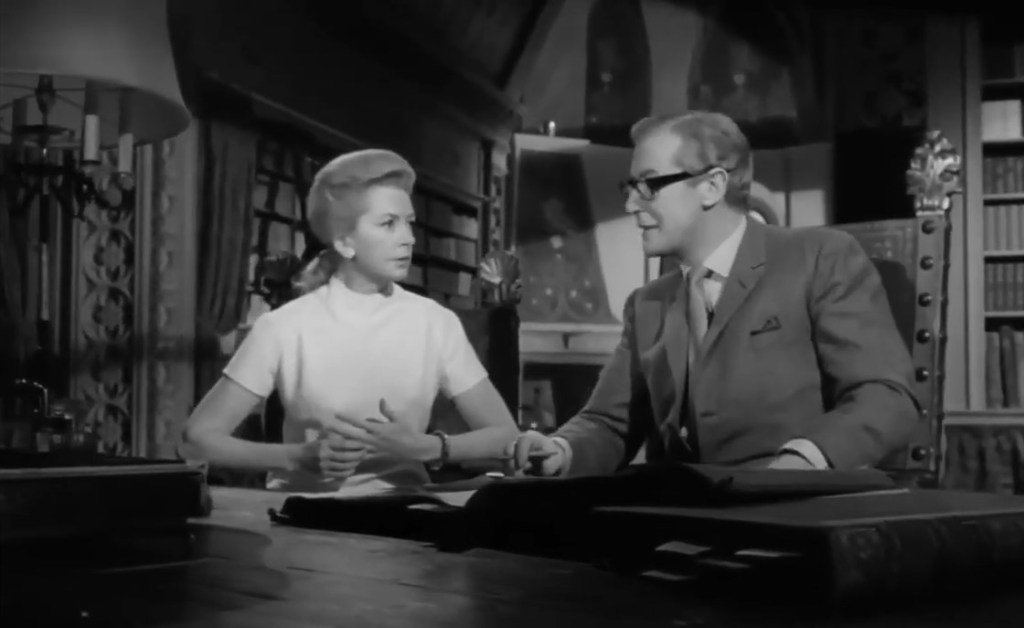
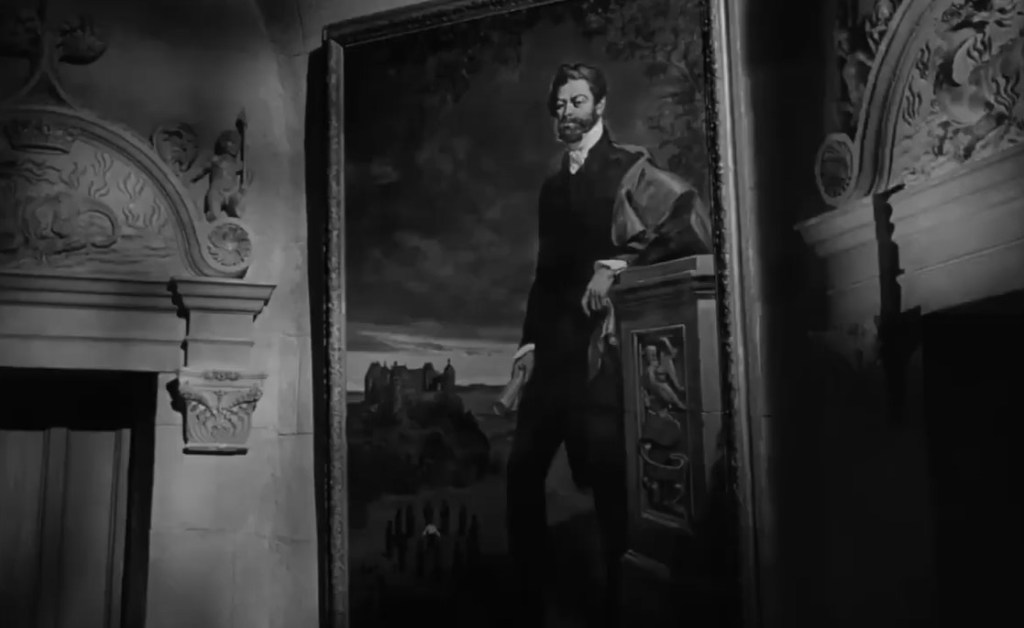
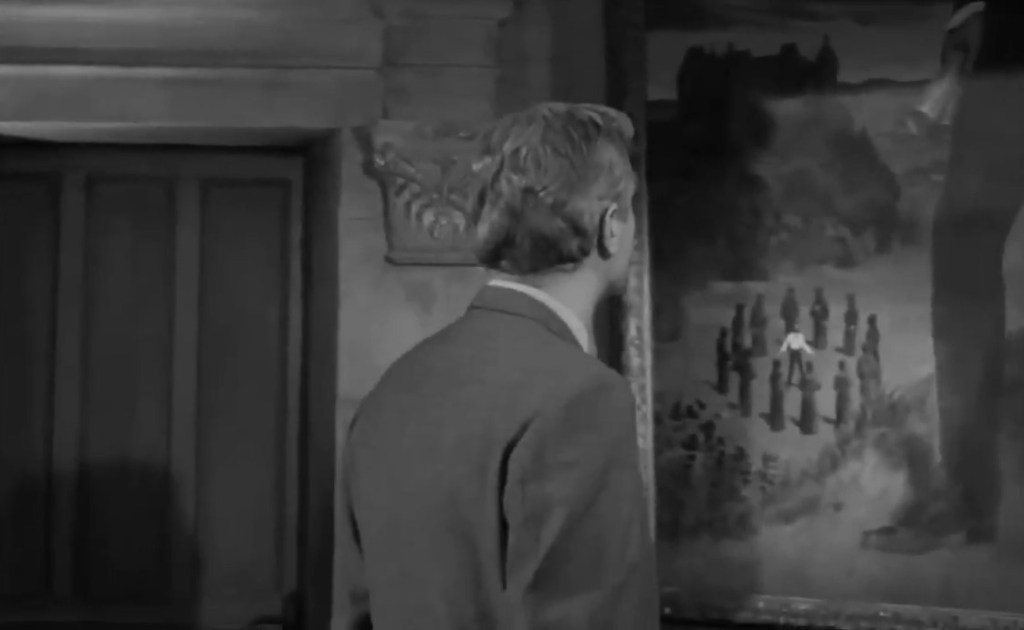
Catherine shares her concerns about Philippe with Jean-Claude, who is a vestigial remnant of the protagonist of Day of the Arrow. He helps piece together some of the history of the Montfaucon men’s seemingly accidental deaths, including Philippe’s father’s death by drowning and his grandfather Edouard’s hunting accident. This research involves not only books, but also one of my favorite conventions—an examination of familial portraits including one that includes a detail of twelve men dancing around a thirteenth. Jean-Claude cannot stay, though, leaving Catherine to solve this mystery and save her husband on her own.
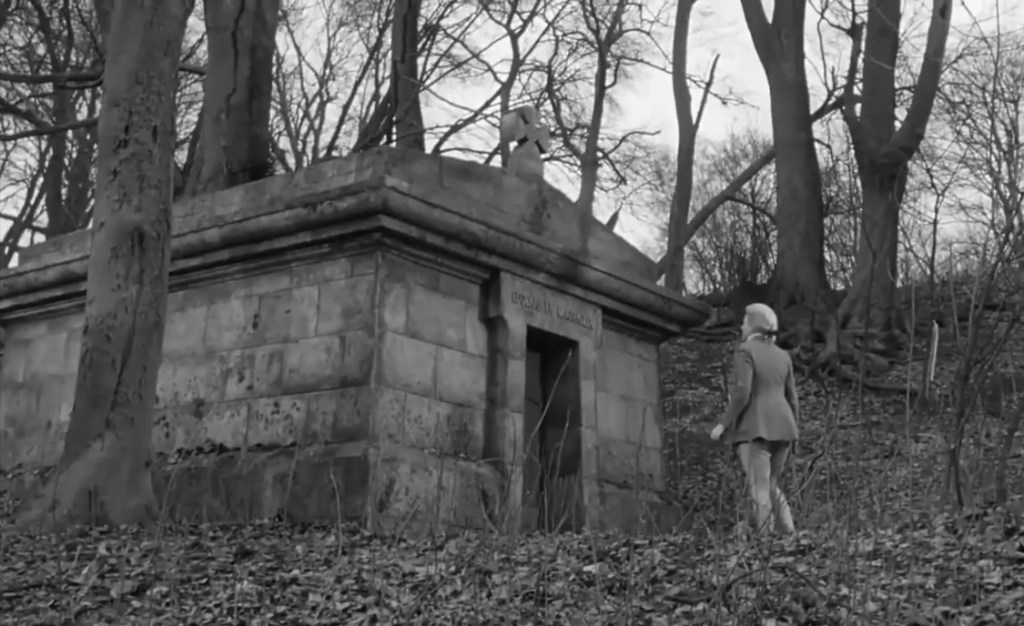
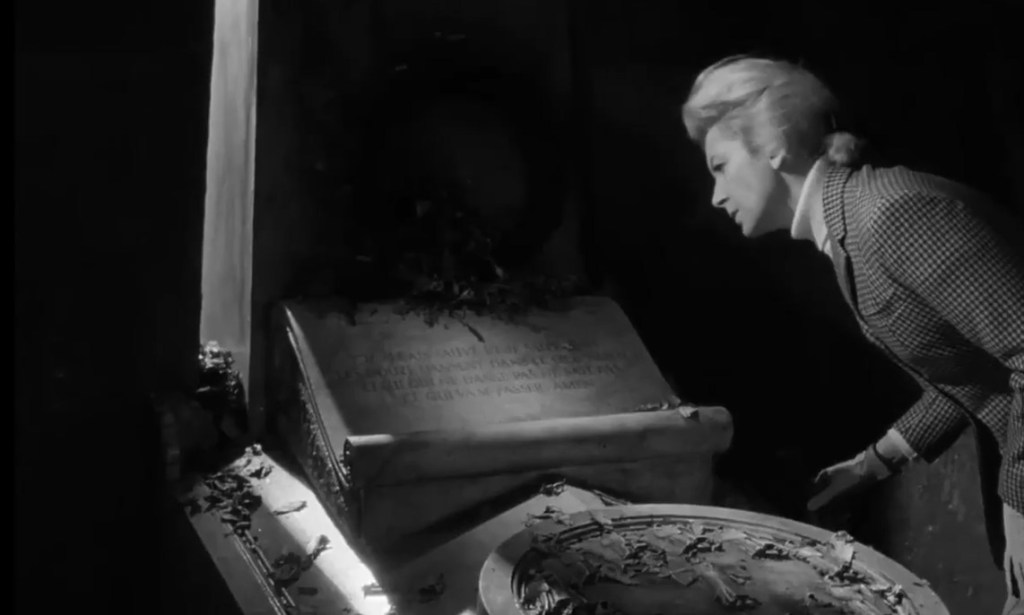
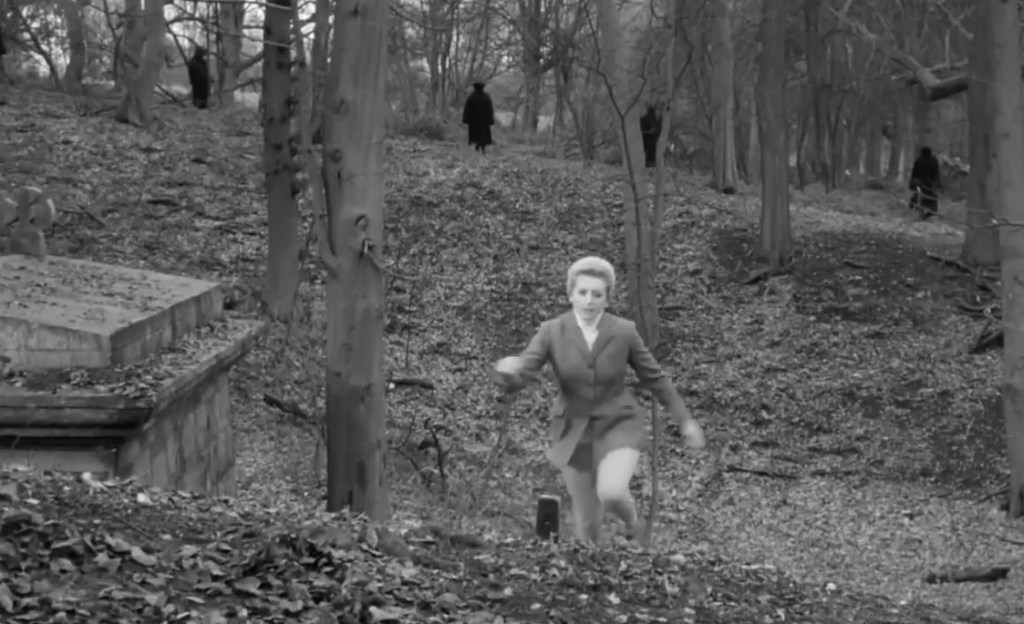
Catherine rides into the forest —in an excellently practical outfit—to examine Edouard de Montfaucon’s crypt and discovers an inscription. Exiting the crypt, Catherine is surrounded and menaced by robed figures. She refuses to give in, pushing into thick brush as the screen fades to black. Catherine awakens in her bed, with Philippe attending her. When she groggily tries to persuade him once again to tell her what’s happening so she can help him, Philippe says, “No one can help me.” She is sedated, but not even sedatives will stop Catherine for long. With great ingenuity, she uses a mirror to signal to Estelle across the courtyard. And Estelle helps her.
Catherine attends a special church service for the annual village fête held every year on July 31st: Le Trieze Jours, the Thirteen Days. It’s a strange name for a celebration lasting a single day. When Philippe picks up and pointedly kisses Jacques outside the church, the crowd gasps and Estelle cries out. Having lost her brother to Bellenac’s ways and fearing losing Jacques, too, Estelle finally shares her secret—her brother, Alain (Emlyn Williams), is alive, hiding in the room above her own in what was once his castle. It’s a nice inversion of the Gothic convention of a woman hidden or sequestered inside a tower room. Philippe confronts Estelle and she admits she has told Catherine that Alain is alive. Philippe is contemptuous of his father, saying, “He is not one of the men of this family.” It hearkens back to a conversation right after Philippe’s arrival when Estelle said that the chateau “is not place for a woman. It never has been. I sometimes believe you’re all mad—every man of this family from the very beginning.” She pleads with Philippe to leave with Catherine and their children, but he will not. Despite Estelle’s entreaties, Philippe is determined not only to embrace his fate, but to include Jacques. He brings Jacques to the service consecrating him. Led by Père Dominic, and with Jacques watching, Philippe kneels on the center of a star worked into the chapel floor. Hooded men surround him as together they recite the words Catherine read in Edouard’s crypt.
The Twelve dance on high.
Amen.
The Whole on high hath part in our dancing.
Amen.
Whoso danceth not, knoweth not what cometh to pass.
Amen.
I would be saved and I would save.
Amen
And once again, in Bellenac, masculinity is tied to doom.
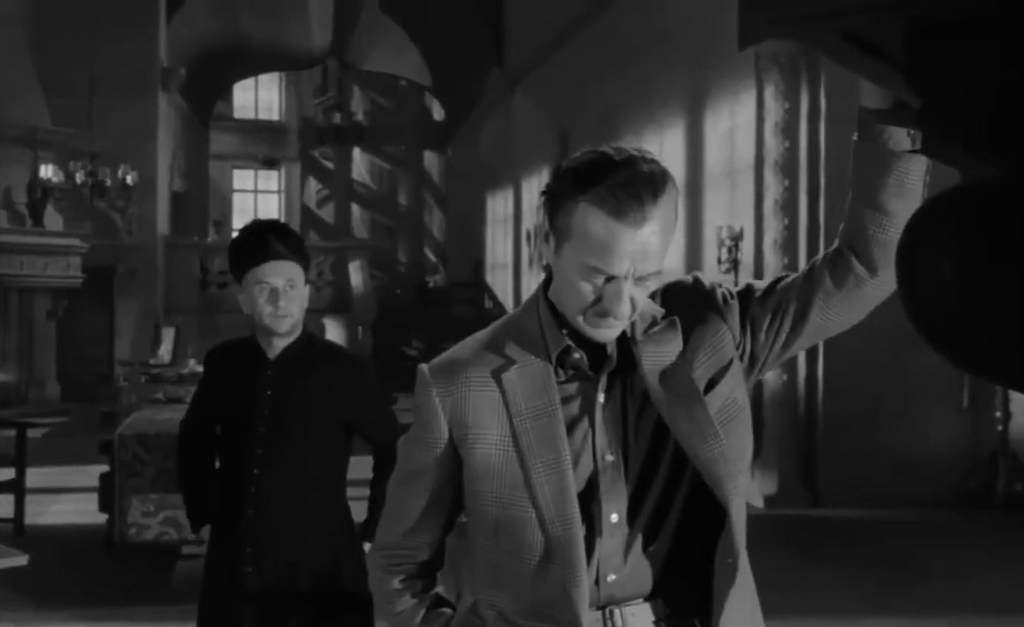
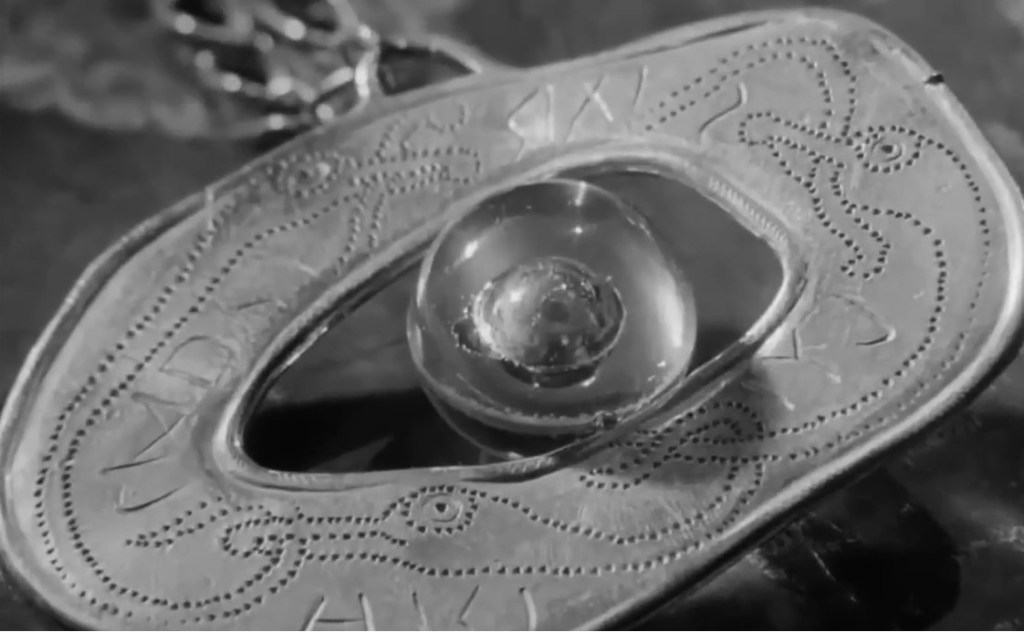
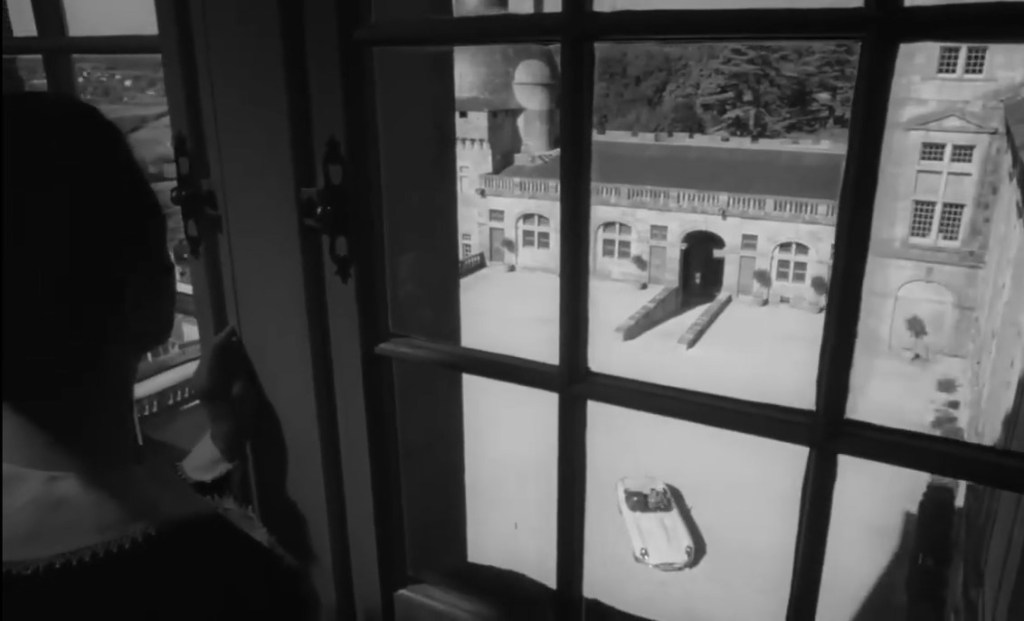
Alain tells Catherine that Le Trieze Jours is also Le Trieze Joueurs or “The Thirteen Dancers.” He reveals that what appears to be a Christian holiday is a Pagan celebration of twelve dancers and their god who dies for them. In Bellenac, that god is Philippe. His death is necessary to renew the fields. “The earth has to have sacrifice,” Alain explains. “There has to be blood.” Catherine seeks help from the authorities and is implicitly threatened by the gendarmerie captain and the local doctor. They note blandly that she has taken a blow to the head and must rest. Pére Dominic brings her before Philippe, who sits on a throne. With a beatific look on his face, he tells Catherine that he believes in the ritual and then warns her not to tell anyone what happened because no one will come forward to support her and no one will believe her. He refuses to be saved by her. Locked into a room once again, she watches from a window as Philippe rides out with his twelve dancers. Catherine once again escapes, but she fails to save Philippe. She only arrives in time to see Philippe shot with an arrow by an entranced Christian, giving his life to renew the vineyards of Bellenac. In the book, Philippe’s bleeding body is carried through the fields.
Day of the Arrow has a better title and covers elements of the story more explicitly and in depth than Eye of the Devil. The central mystery is the same as in the film. Scottish painter James Lindsay is told by Philippe’s wife Françoise that Philippe believes that he is going to die soon. She asks him to come to the Montfaucon estate and investigate for himself. Philippe no longer seems to love Françoise, but James does. Though James is angry about it and takes it out on her sometimes. Still he travels to the chateau. There he discovers ”men’s mysteries” that can only be learned about and solved by men. And, he learns, as Catherine does, that men might control and orchestrate these mysteries, but they also suffer from them most directly.
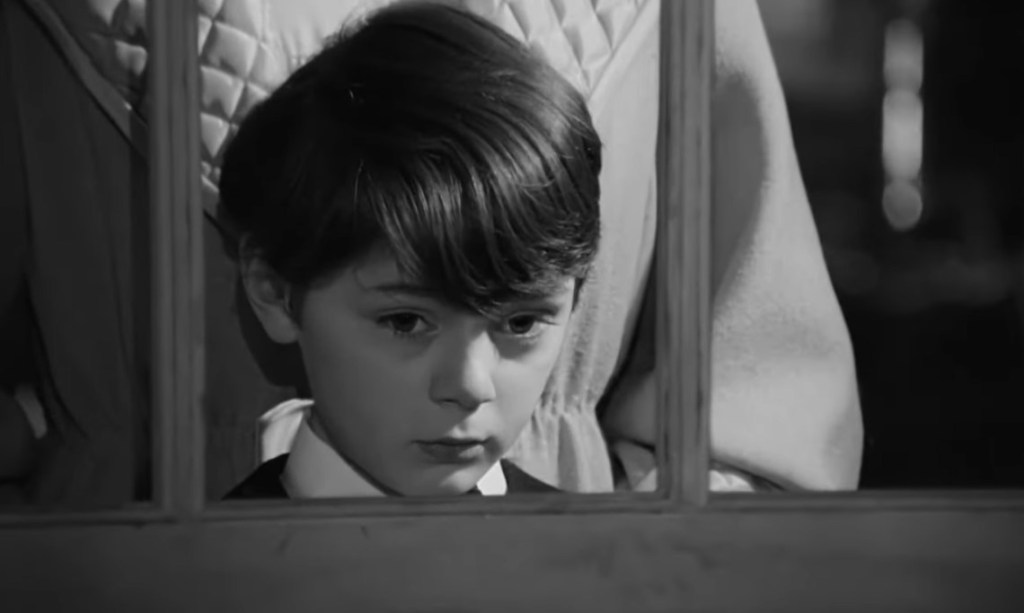
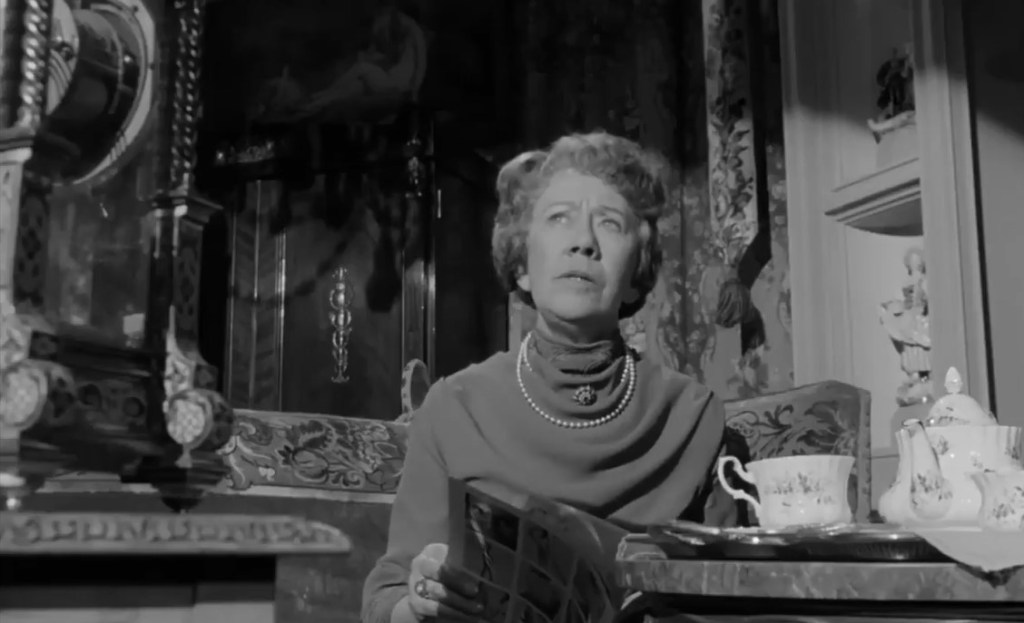
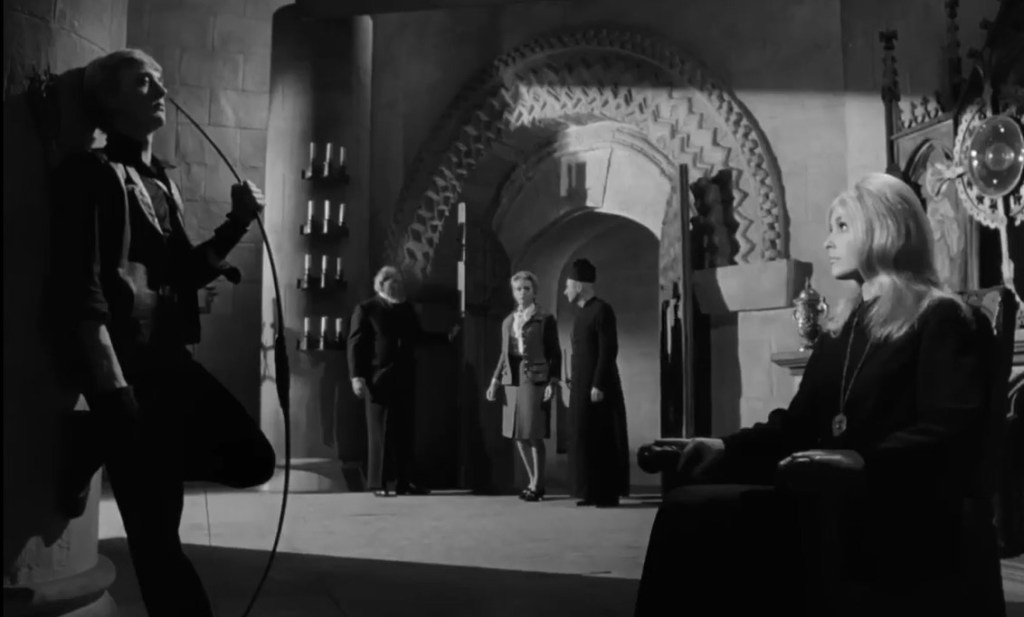
In the book, the local religion leans more heavily on James Frazer’s The Golden Bough and Margaret Murray’s The Witch-Cult in Western Europe (1921) and The God of the Witches (1933) than the film does.** Whether Estridge explicitly researched these books or just used elements from them commonly encountered in the wild—a dying god predating Christ and a prehistoric cult that sometimes called for the sacrifice of a lord or king to renew the fields—these books are the root of so much British folk horror.
In Day of the Arrow, Lindsey listens as Alain shares far more than he does in the film:
“He told of how the Romans had brought the god Mithra into France: the god who was a god of soldiers, a god of men—of men without women; and he spoke also of the ancients, to whom the love of man for man was pure love, while the love of man for woman was not….He began now to tell of Christ, and of how, to the men of His time and of the centuries immediately after Him, there was little difference between His teaching and the teaching of the prophets who had preceded Him…..‘Do you begin to see?’ said the old man at last. ‘The ancient religion did not die with the coming of Christ; His teaching only strengthened it, as had the teaching of many other prophets. The old beliefs only died when the Christian Church killed them—because it would tolerate no rival; and even then they still survived in what you would now call an underground movement. Witchcraft was not evil until the Christians named it so; it had not been evil for thousand upon thousand of years; it was only the most primitive belief—the dance round the standing stone that would make the earth fertile; it still exists, everywhere; it must, because that is how life is created….They have never been true Christians in the valley of Bellac; when Père Dominique celebrates Mass, the words that the people hear are not the same words that you hear.’”
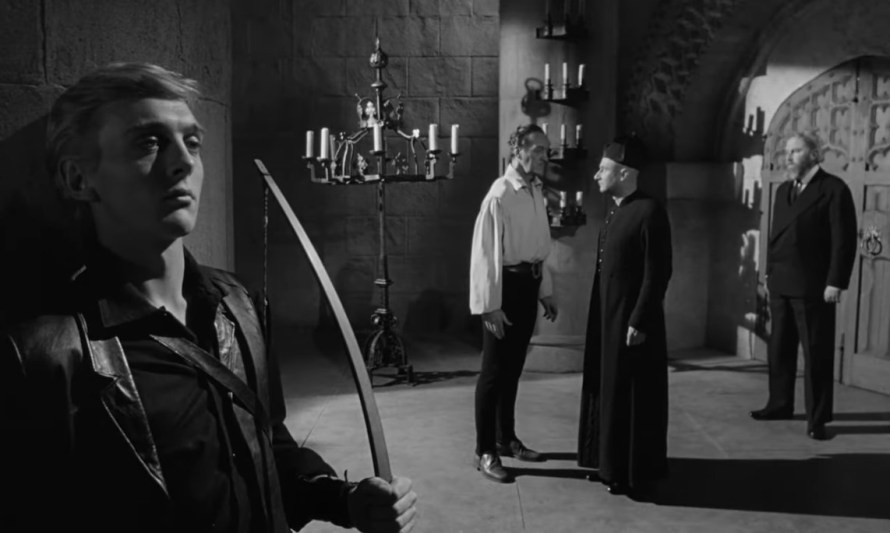
In the book, Christian is not Odile’s brother. He is Philippe’s lover. As Alain says, his faith sees bringing more life into a tainted world as sinful. Heterosexuality becomes a sin—at least for a man about to die so his people can live. And Christian, while in a trance, slays his beloved with an arrow. His act of sacrifice theoretically becomes an act of love. There is no clear sign Christian is Philippe’s lover in Eye of the Devil. Philippe does spend time with Christian and puts an arm around his shoulders. They could be, but then again they might not. But homosexuality might not have been completely excised from Eye Of The Devil. Odile tells Catherine bluntly, “I have no use for men except my brother.” And it seems plausible to me that she means it in a sapphic way. It’s also possible that it is a statement of asexuality and a very appropriately witchy disinterest in the affairs of the world. Or perhaps a statement of fact—that she has a use for Christian and will hypnotize her brother so he is able to sacrifice a man. But regardless something is transgressive about Odile de Caray’s sexuality and there is something about Odile’s knowing look to Catherine.
While film doesn’t have time in the same way books do, it has spectacle—including promotional spectacle. According to Daily Mirror photographs from 1966, the filmmakers “signed” Alexandrian Wiccan High Priest Alex Sanders and High Priestess Maxine Morris to consult on Eye of the Devil with the intention of making its ritual more realistic. According to Morris, the extant of their consultation was a set visit and photos with Sharon Tate and J. Lee Thompson.
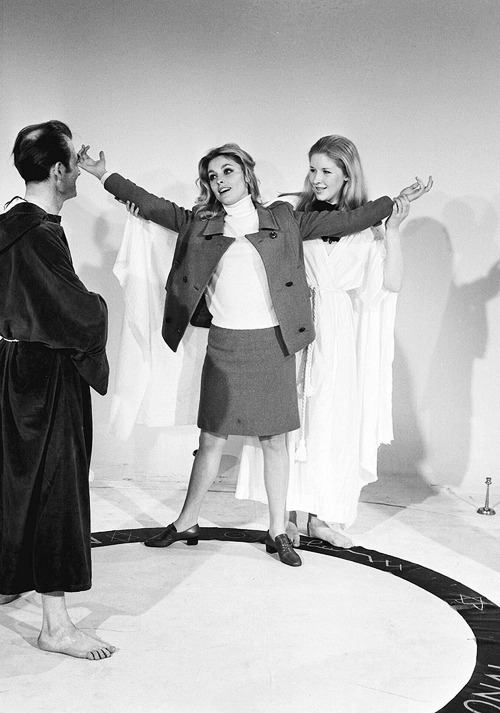
It makes sense to me that Sanders and Morris were not extensively consulted given the ritual represented. The god is male. The sacrifice is male. The hunter who kills his beloved is male. The twelve dancers and the priest are male. There are Wiccan traditions that focus on sacred masculinity and the dying god, but never to the exclusion of the Goddess and priestesses. Bellenac’s religion is a melding of Frazer, Murray, Catholicism and, most of all, Estridge’s imagination.
Estridge created a pagan tradition for Bellenac, a patriarchal one. And in choosing a female protagonist—an outsider to its mysteries in every way—the film emphasizes the ways in which patriarchal traditions can convince men—even ostensibly powerful men—that they and their sons are disposable. And these same patriarchal traditions can teach them to ignore the warnings of women—even women they love—in favor of maintaining a model of masculinity that will use them and dispose of them as Philippe does and Jacques very likely will.
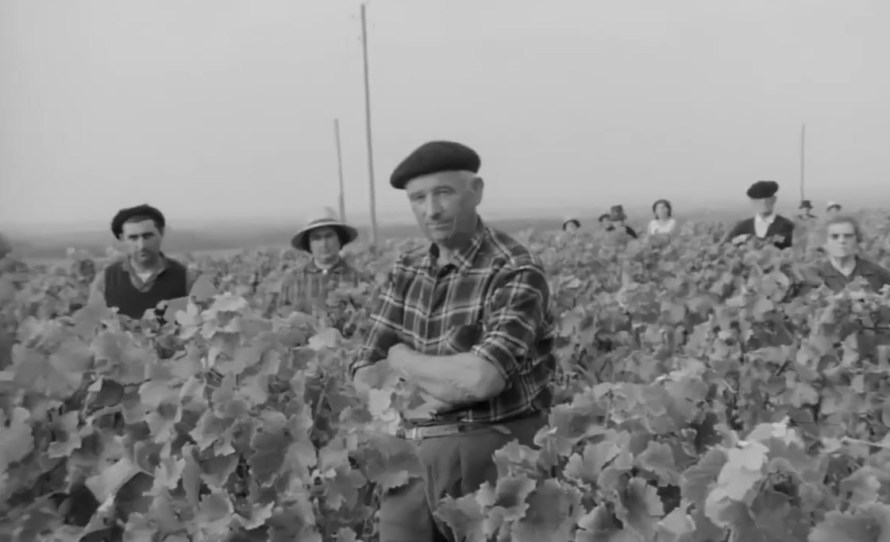
Eye of the Devil is beautiful. It is a late black and white film, but it uses the black and white so well—in lighting, composition, and Erwin Hillier’s cinematography. It’s supported in costuming, styling, and choices like Philippe’s white sports car and Christian’s parallel white stallion. Director J. Lee Thompson’s early social realist background is evident in the blocking and composition, especially in the scenes of the people of Bellenac in the vineyards or doffing their caps as Philippe drives by them in town.
Eye of the Devil leans on the white for the horror. There are ominous scenes of shadow, but much of Catherine’s investigation is enclosed indoors in darkness as she struggles to piece together what is happening. But the horror? The horror is in broad daylight. The choice to film so much in the daytime, in the daylight itself underscores how much of what Bellenac hides in plain sight. It is all concealed in apparent orthodoxy and a dual understanding. It bends reality. The breathtaking sequence of Philippe riding out to his death, leading a procession of his killers from the chateau’s white stone courtyard into the forest is more powerful for the choice to shoot it in the daytime, brightly lit, and in the open.
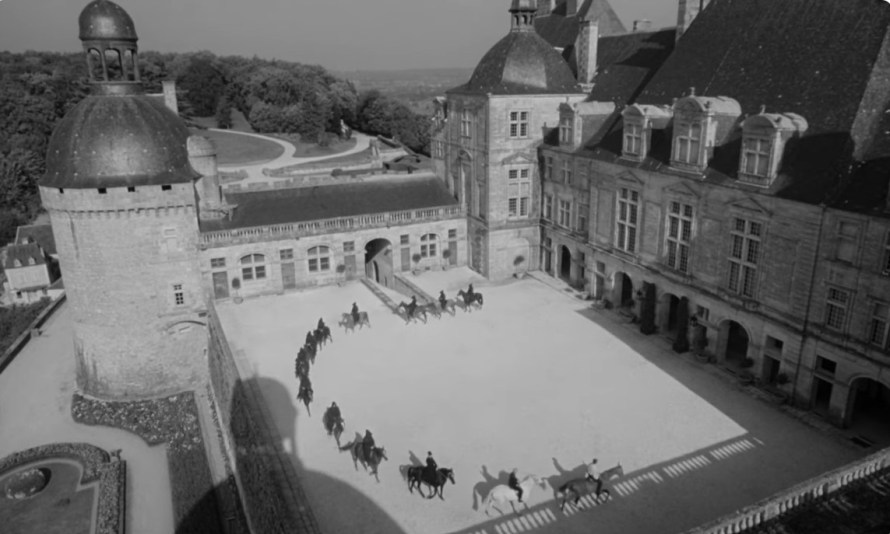
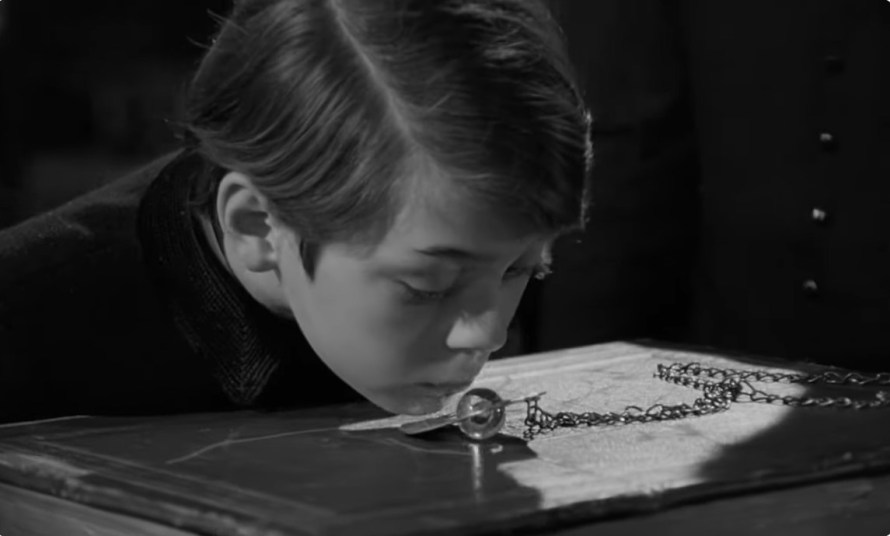
And the final horrors, the assertion of men with authority and Catherine’s own husband that no one will believe her happen so straightforwardly. They leverage Gothic and realistic fears that she will be dismissed as hysterical, as a woman suffering from a recent head injury, and an upset widow who has received a terrible shock. Catherine knows she could suffer the fate of women considered crazy and hysterical, women who won’t accept reality. Even Jacques’ deception as he returns to Père Dominic to kiss the amulet before leaving Bellenac—indicating that one day he, too, will return as has father and great grandfather did—plays out in the form of a little white lie in the daytime, right in front of his mother as she waits in the car to escape Bellenac with what remains of her family.
*Others have covered the various problems that plagued the film.
**I write more more about Frazer, Murray and folk horror in a piece on The Wicker Man (UK, 1973) here.
~~~
Carol Borden would stay in Summerisle, but would get the hell out of Bellenac.




 The Cultural Gutter