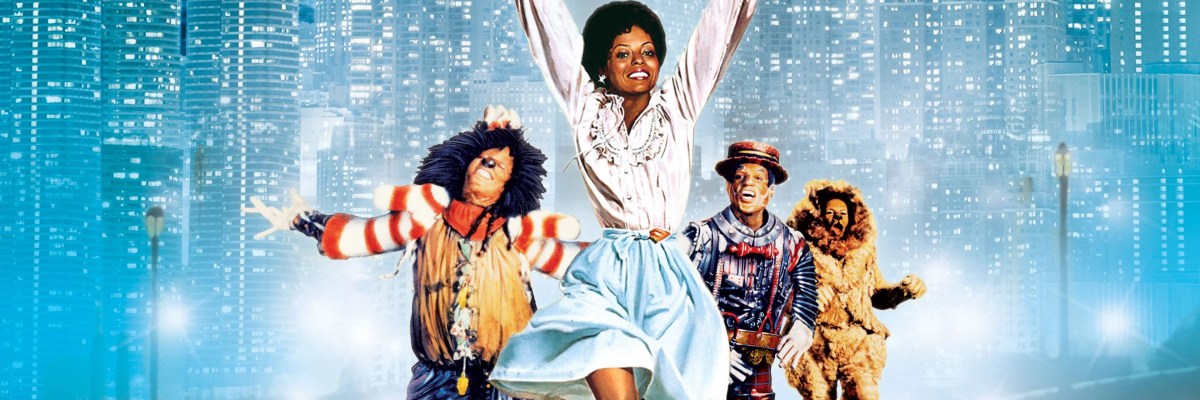
Through its various iterations, The Wiz has stood the test of time as both a fun, epic fantasy adventure and a rousing exploration of the tenacity and passion of Black folks in the face of adversity. The original musical premiered in 1974 at the Morris A. Mechanic Theatre in Baltimore, and in 1975, it started on Broadway, where it ran for four years. It won numerous Tony Awards, including two for director Geoffrey Holder, Outstanding Costume Design, and Best Direction of a Musical. Holder was the first Black man ever nominated in both categories. The Wiz paved the way for extravagant musical productions featuring an all-black cast and was a mainstay in many audiences’ lives during that era. The Wizard of Oz is one of those cultural touchstones that lends itself well to reinterpretation across cultures, and its fantastical elements easily blend with modern touches.
During its successful 1977 Broadway run, Motown Productions purchased the movie rights to The Wiz. Diana Ross picked up Dorothy’s lead role, although she was much older than Stephanie Mills, the actress who played her in the stage version. Ultimately, despite the age difference, she imbued the role with wide-eyed wonder and quiet strength. With the backing of Motown, the cast was stacked with black royalty: Michael Jackson as the Scarecrow, Nipsey Russel as the Tin Man, Lena Horne as Glinda, the Good Witch of the South, and Richard Pryor as The Wiz himself. The only cast member who returned from the Broadway show was Ted Ross as the Cowardly Lion.
The film starts at a warm Thanksgiving dinner at Aunt Em’s house in Harlem, the small apartment practically bursting with love and chaotic family members. After its release, many families made it a yearly holiday tradition, keeping it relevant for generations. In this adaptation, Dorothy is a 24-year-old schoolteacher who still lives with her Aunt and Uncle and has spent her career teaching young children. Aunt Em chides Dorothy, telling her that she needs to move out independently to find her own way as an adult. Dorothy has a lot of trepidation and fears about going out into the “real world”; although she is physically older, she is mentally much more immature.
Like in the original version, Dorothy’s adorable little dog Toto runs off, with her in hot pursuit. The weather is snowy, and she gets swept up in a magical-tinged snow devil, which transports her swiftly to the realm of Oz. In contrast to the 1939 version, Oz initially isn’t a technicolor assault on the eyes; it’s more subdued and grounded, a dystopian fantasy version of New York City. The buildings are crumbling, and the outskirts of Oz seem to be in disarray, covered in graffiti (which comes to life) and surrounded by rubble. Not surprisingly, director Sidney Lumet set the film in New York City, a standard location in many of his previous works.
In a 2007 interview with Director’s Guild of America Quarterly, Lumet said, “My love of New York had a lot to do with it. I had an idea which was that one of the best ways of doing a fantasy was to use reality. And I wanted to do a picture in which New York City itself became unreal. So it seemed to me that a piece like The Wiz had been sent to answer my prayers.” The big-city setting is an intriguing juxtaposition to the more whimsical elements, making The Wiz stand out among other versions of the story. Although Lumet was better known for gritty, hard-hitting dramas, he brought an organic, down-to-earth aesthetic to the Oz setting, further strengthening the connection to modern urban life.
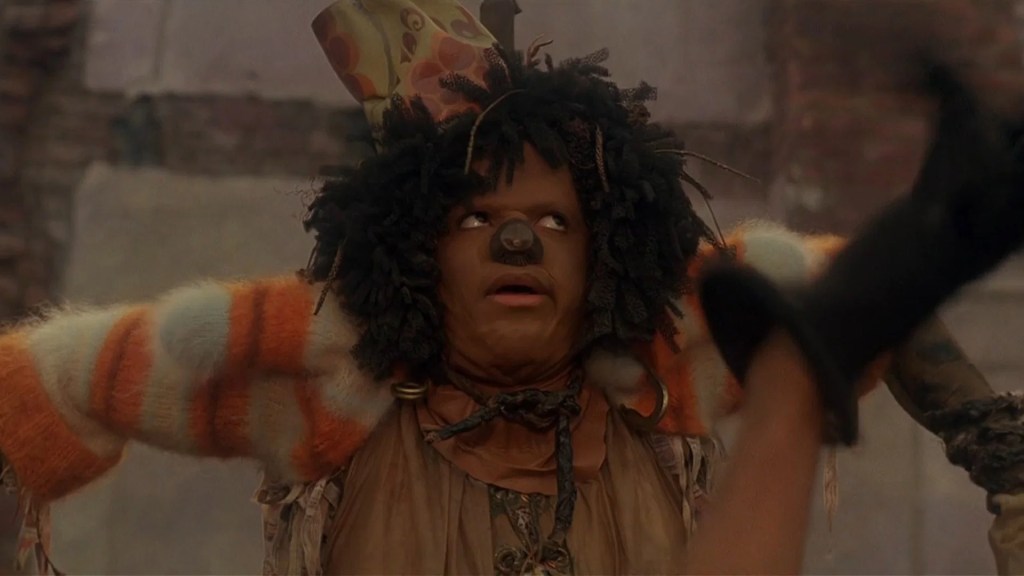
The Scarecrow is introduced in a barren wasteland, hanging precariously from a post as anthropomorphic crows dance wildly around him, mocking him every chance they get. This was Michael Jackson’s first role in a motion picture, and he knocked it out of the park. His physical performance steals every scene he is in, and his limber arms and legs are bouncy and jointless. Jackson studied footage of wild cats and emulated their slinky walk. After receiving vicious heckling from the crows, the Scarecrow sings “You Can’t Win,” a sorrowful song about feeling helpless and humiliated. The symbolism here reflects Black men trying to survive in white America, especially during and after the civil rights movement. No matter how hard he tries to get ahead, he faces derision, hostility, and mockery. Eventually, Dorothy and Toto chase the crows away and help the Scarecrow get down and walk on his own, strengthening the idea that they can overcome any odds by working together.
Once they start traveling down the iconic Yellow Brick Road, they burst into “Ease on Down the Road,” one of the most popular songs from both the Broadway version and the feature film. The Broadway version was a big hit, spending five non-consecutive weeks as a number-one song on the disco charts. Quincy Jones produced the re-recorded film version featuring Diana Ross and Michael Jackson, marking the first time he and Jackson worked together; after that, Jones went on to produce Off the Wall, Thriller, and Bad, some of Jackson’s most successful albums. Jones makes a cameo later in the film as a fancy-dressed piano player in the Emerald City.
The Tin Man is discovered in an abandoned amusement park, stuck under a giant statue of a woman. He is stiff and mechanical, with his limbs and joints rusted from years of abandonment. Nipsy Russell’s casting is engaging in a meta way because he is one of the older members of the cast. The concept behind the Tin Man is someone who is stuck in stasis, an entity who has let themselves become mired in the past. Even the way the Tin Man sings and dances feels old-school and vintage by comparison, and his ennui with modern life makes him seem heartless. His lack of a heart doesn’t stop him from crying; however, watery tears spray from his eyes, rusting his whole body.
Tim Ross reprises his Broadway role as the Cowardly Lion, startling Dorothy, Scarecrow, and Tin Man with his blustery bravado. His growly and slightly pompous song “I’m a Mean Ol’ Lion” is cut short when Toto takes a tiny bite out of one of his paws. His subsequent breakdown shows that, despite his gruff exterior, he is soft and vulnerable on the inside. His insecurities show even more later on in the narrative when he is easily seduced by the “Poppy Girls,” who work as sex workers in a red-light district on the way to the Emerald City. This sequence is one of the few that shows the seedy underbelly of Oz, and it feels aimed at adult audiences.
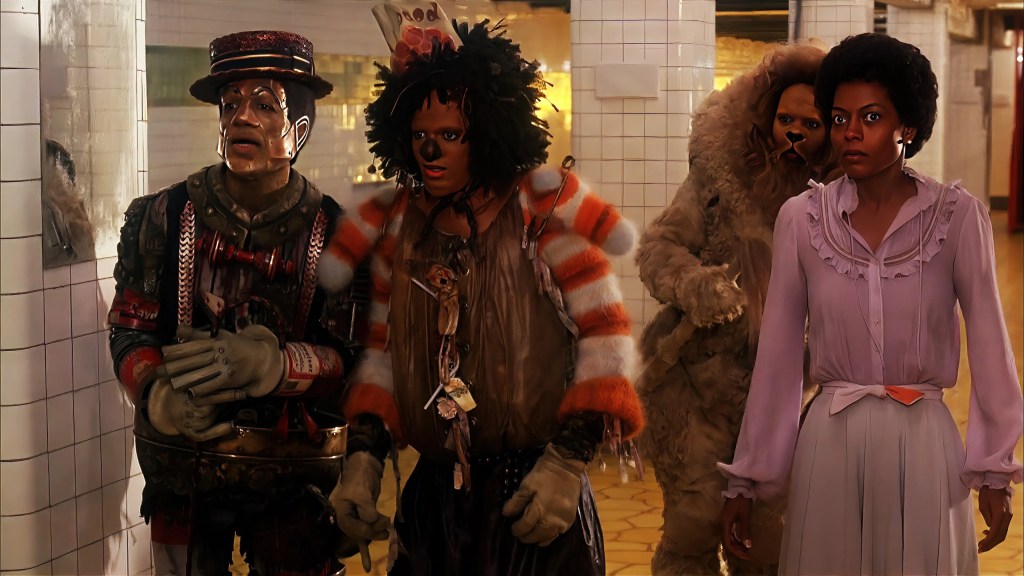
One of the most infamous scenes is the subway sequence, where Dorothy and the gang are chased by monsters in a subway station. I remember this part scaring the hell out of me as a child, and I am not alone in this experience. The station itself is alive with monster trash cans, possessed electrical wiring, and giant, bizarre puppets. The support columns come to life, detaching from the ceiling and dragging themselves by their dangling wires. The New York subway system has always been depicted as a dangerous area full of strange characters, and The Wiz takes it to surreal levels.
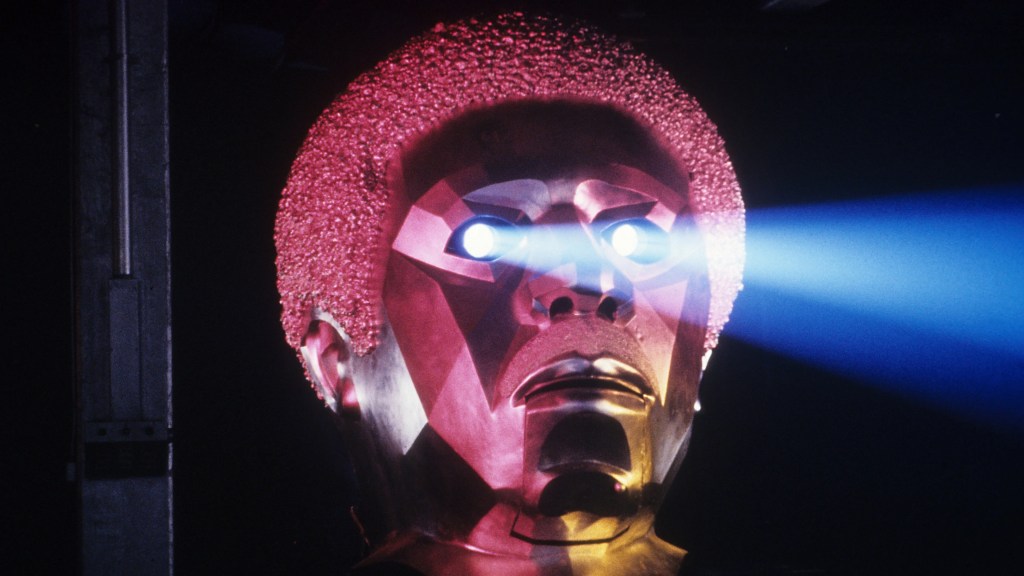
Once the narrative reaches the Emerald City, it becomes clear why The Wiz was one of the most expensive projects ever made in New York City. The dazzling intro sequence features hundreds of dancers in elaborate costumes in an electro-art deco-stylized cityscape. It feels like an Afrofuturism aesthetic, all chrome and reflected neon. A giant colored light shines on the glittery dancers, shifting hues periodically. While the Emerald City is gorgeous, it is capricious, with trends dictated by The Wiz over a loudspeaker. In contrast with the rest of the land of Oz, the Emerald City is flashy and shallow. Nevertheless, Dorothy is dazzled by the city and is excited to meet The Wiz. He appears to them as a giant head, breathing fire, and promises to fulfill their dreams as long as they do him a favor. They must kill Evillene, the Wicked Witch of the West.
Evillene runs a sweatshop in Oz and forces workers to make products day and night. As in real life, capitalism keeps the city running, though the citizens of Emerald City can live their privileged lives only thanks to the sweat and toil of the underground workers. Evillene runs the shop with an iron hand and a whip, barking orders and threatening anyone who dares speak out against her. Dorothy seems no match for her, and it all seems lost. The Scarecrow has been cut in half, the Tin Man’s fragile metal body smashed into a press, and the cowardly lion strung up by his tail. Luckily, the Scarecrow has an idea and has Dorothy activate the fire sprinklers. The resulting shower of water melts all evil, including Evillene and her influence.
The workers wear full-body costumes that have black caricatures on them, and as soon as they are released from their wage slavery, they unzip them, revealing the actual bodies underneath. Wearing very few clothes, they are reborn and joyfully sing that they can now enjoy “A Brand New Day.” The symbolism of black exultant jubilation is infectious, and the African dance-inspired choreography is exhilarating. This song is one of the longest on the soundtrack, running almost eight minutes. It harkens back to church worship songs, which can go on for what feels like an eternity as the gospel choir sings their praises to the heavens.
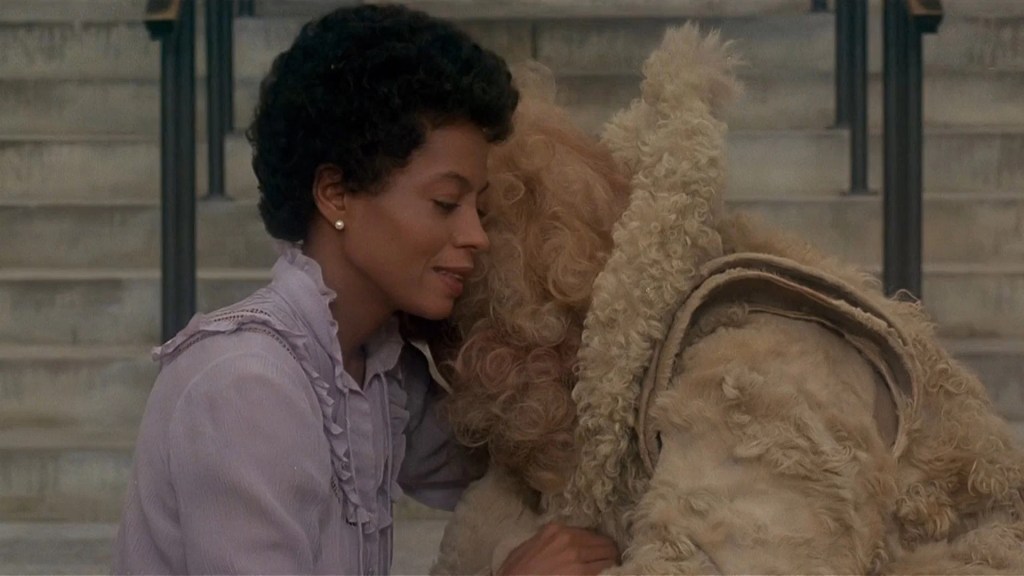
At the end of the film, Dorothy finally meets the man behind The Wiz persona, a jittery failed businessman named Herman Smith, played by Richard Pryor. “The Man” can’t help them, and his politics are nothing but lip service. Through cooperation and camaraderie, they can help themselves. Glinda, the Good Witch of the South, helps them achieve self-actualization, belting out a powerful ballad that reinforces the idea that they should believe in themselves. Dorothy sings “Home”, her face in close-up over a dark, empty background, almost weeping with joy as she discovers the light within herself that has always been there. After a tearful goodbye conversation with her newfound friends and three clicks of her silver heels, Dorothy is whisked back to Harlem, hopefully inspired to finally go south of 125th Street and seize her destiny as an adult on her terms.
Story aside, the look and sound of this film embrace many aspects of African-American culture, as well as its roots in Africa. The costumes incorporate the elaborate robes and headpieces of African tribes and mix them with contemporary evening wear. Dorothy stands out from previous versions by being dressed much more plainly, more relatable, and a change from Diana Ross’ usual glamor. The prevalence of natural hairstyles is refreshing, from Dorothy’s short afro to the Scarecrow’s tiny twists. Both the Scarecrow and the Tin Man’s costumes look as if they are cobbled together from junk and random scrap, their sense of self reconstructed from their environment. The soundtrack blends gospel, jazz, and R&B. Charlie Smalls and Luther Vandross composed the music for the Broadway version, and most of it was used for the film, with arrangement and a few extra songs by Quincy Jones.
Blaxploitation films exploded in the ‘70s, showing Hollywood an audience hungry to see themselves represented on celluloid. Many of these films were made on small budgets, and to maximize profits, they tackled popular themes like action, sex, comedy, and horror. The Wiz, with its lavish budget and Hollywood backing, showed that diversity could apply to all genres and that every corner of the film industry could benefit from it. The Academy recognized The Wiz that year; it was nominated for Best Art Direction, Best Original Music, Best Costumes, and Best Cinematography. The effects are still felt today, with films like Black Panther (2018) and Sinners (2025) breaking box office records.
The Wiz has lived on in so many versions, with each release touching a new audience. On Broadway, it appealed to the musical crowd and changed the face of a predominantly white art space. The film adaptation brought it to a different audience, one that might have never had a chance to see a Broadway musical live, and it could be watched at home any time, over and over again. In 2015, The Wiz Live! aired on NBC and garnered rave reviews. It combined elements from both the 1975 stage version and the 1978 film version, marrying the adaptations and honoring their legacy. It is a timeless story that will always resonate with black culture, both in the past and in the future.
~~~
Michelle Kisner is a film critic, freelance writer, and advocate for physical media.
Categories: Screen