
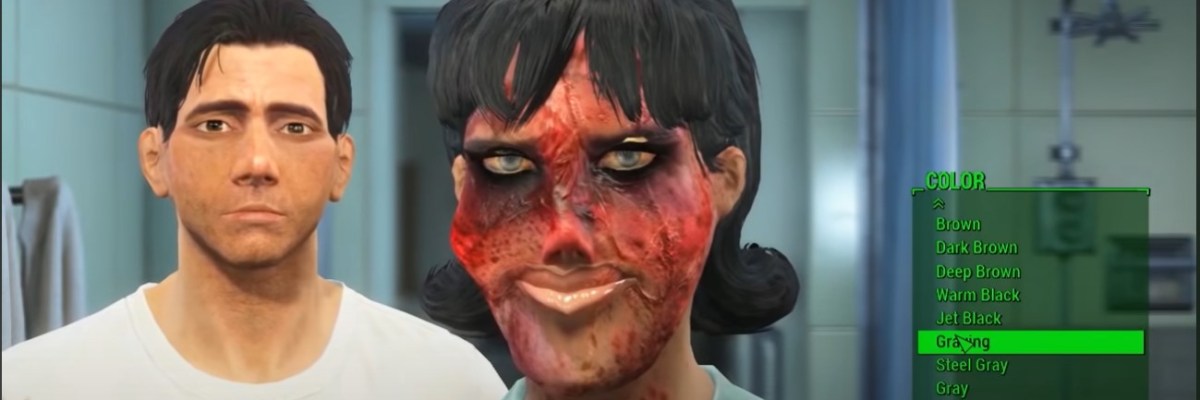
The art of creating characters in video games is neither objectively new, nor even new to me. I’ve been messing around with video game character creation suites for decades, though I certainly never thought of it as art. I think the most common use for these creation tools is the idea that you, the player, will create some approximation of yourself to act as your avatar, but there’s so many possibilities–a near infinite number–beyond just that.
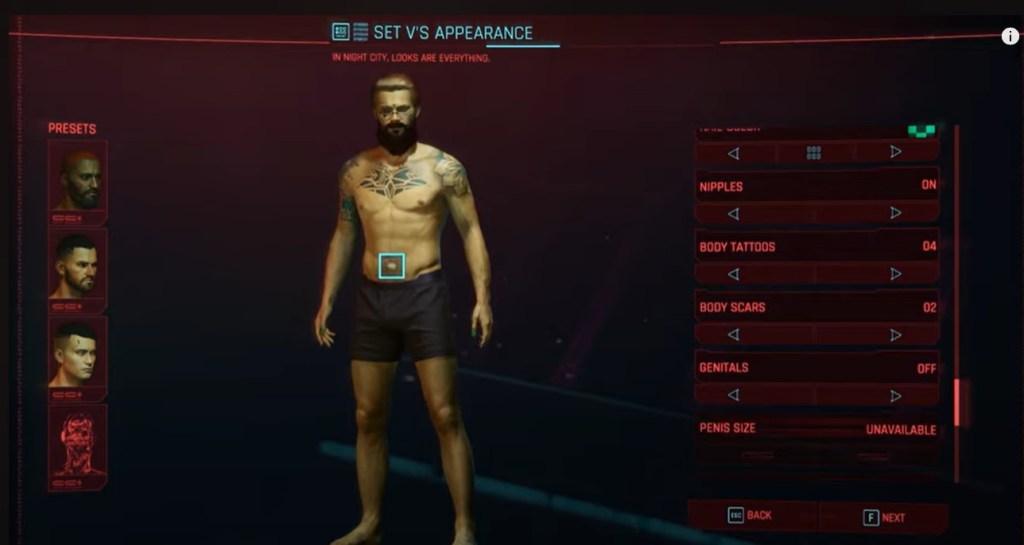
Other than pro wrestling, I was never really a sports fan. So though sports video games which do not involve throwing oneself and others at the ground, like the NBA or NHL 2K series, featured extremely deep character creation experiences, it was the wrestling titles where I discovered the freedom to play digital god. It was just more fun to create your character and send them out to the ring (or, in games like Saints Row, the streets) to wreak havoc instead of to, say, the golf course to hit some balls around like in the Tiger Woods games. In increasingly complex wrestling titles, such as the classic Nintendo 64 games WCW/NWO Revenge (1998), Wrestlemania 2000 (1999), WCW vs The World, and that generation’s (some might say wrestling games, period) peak, WWF No Mercy (2000), all featured the ability to create wrestlers from scratch and put them into matches and even stories with the pre-existing roster. It’s pretty common for a wrestling game ‘story mode’ to start you off by creating a character from scratch and then putting them through the paces of training to become a star on the level of The Rock, John Cena, Kenny Omega, or Cody Rhodes. Character creation has gotten so granular that the creation modes are a bigger draw to me than the actual wrestling parts of these games in recent years, but it’s still hilarious fun to have a guy (or lady) with one long, muscular arm or an improbably-proportioned homunculus out there wrestling a match.
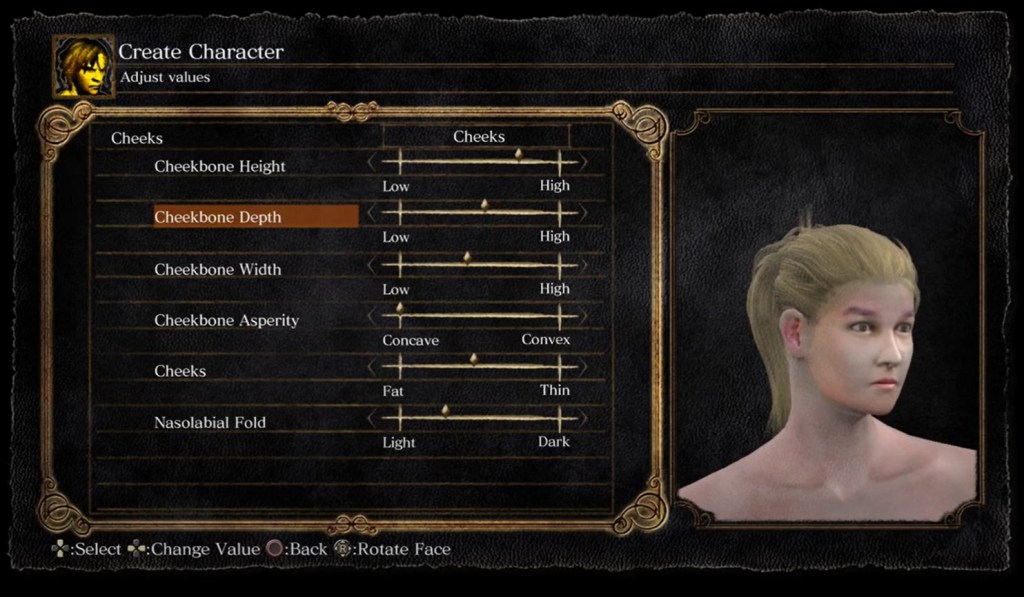
The appeal of character creation can probably be traced all the way back to Dungeons and Dragons, and other tabletop games. Those games, too, start you off by building a character to embody on your various quests. Sure, you can always roll dice to randomly determine certain skills and attributes of that character, but where’s the fun in that? I’m not a big tabletop player these days, but when I did, developing my character at both the outset and throughout the campaign was the best part, even if my GMs balked at my continued insistence on having my character be a snappily-dressed komodo dragon. Dungeon-ish games like Dark Souls, Dragon Age, and Skyrim speak to this appeal too, letting you choose a character class, like elf or orc or mage, and then sculpting them to your heart’s desire before sending them out into the world.
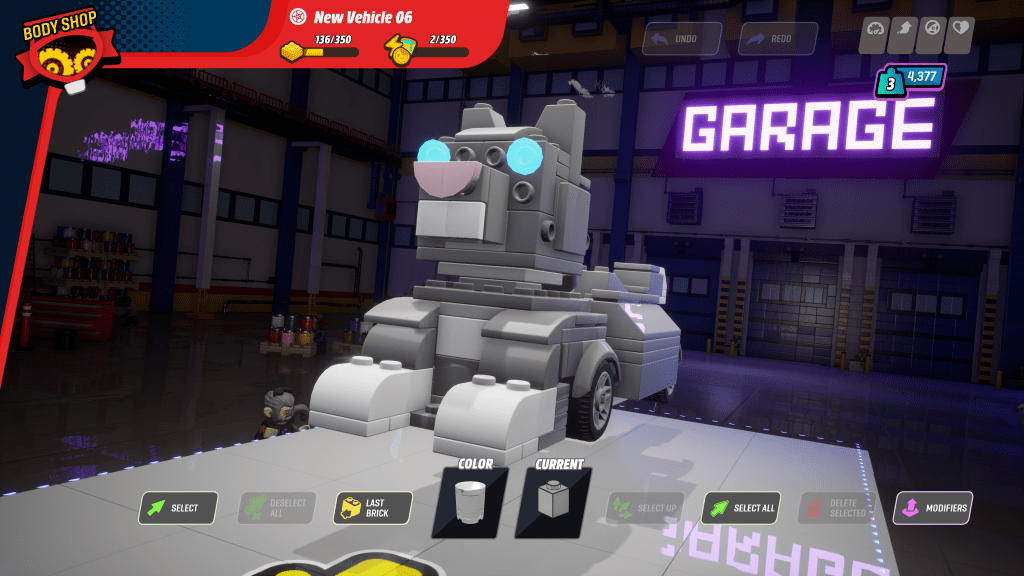
I’ve been playing a lot of Lego 2K Drive lately, and while that doesn’t allow you to create characters per se, you can build your vehicle–which changes on the fly from land, to sea, to off-road depending on the terrain–practically any way you want. Constrained only by size, Lego 2K Drive offers you all the Lego bricks you could possibly want and lets you loose in a sandbox to build to your heart’s content.
I enjoy the racing in Lego 2K Drive quite a bit, but what brings me even more joy in that game is just sitting around in the creation suite and playing with virtual Lego. You might think that this is probably an irrational instinct since my kids have a gigantic bin of real-life Lego right upstairs, but when you realize that that Lego is disorganized and sticky and sometimes I step on it, it starts to make a whole lot of sense. The cars in that game, somewhat like in Mario Kart, are your avatar as you rocket (sometimes literally) around the track. And taking them out on that track is delicious fun, but I’ve found myself spending much more time in the virtual garage, creating wacky stuff out of the many gum-free bricks on offer.
Justin and Griffin McElroy, best known for the My Brother, My Brother, and Me and The Adventure Zone podcasts and ancillary content that they produce with their brother Travis, have a whole ongoing series that celebrates character creation called Monster Factory, in which Justin and Griffin aim to use the tools offered in various games to create horrifying monstrosities. They have an immense capacity to pervert the creation suites in games like Fallout 4 (2015), Skyrim (2011), Saints Row (2006), Second Life (2003), and many others, and are able to bend them to their wills to create characters that the developers almost assuredly never intended to populate their game worlds. These oddities include a twisted Bart Simpson, pro-skater Zeke Teenweed, and Garfield. The McElroys aren’t necessarily creating these characters with a (wonky) eye towards art, but their output almost always dazzles in an artistic way, like their exploits in the game Spore (2008) where the brothers create “a sequel to dogs:”
Originally hosted on Polygon when Justin and Griffin were part of that site, and most recently on their own platforms, Monster Factory couldn’t help but to delve into the depths of the WWE games’ creation suites to plumb them for horror and art. There was the time they created a nightmarish goblin clone of The Rock, or when they introduced the world to Sweet Gene, who may or may not be beloved mascot Gritty’s wrestling persona.
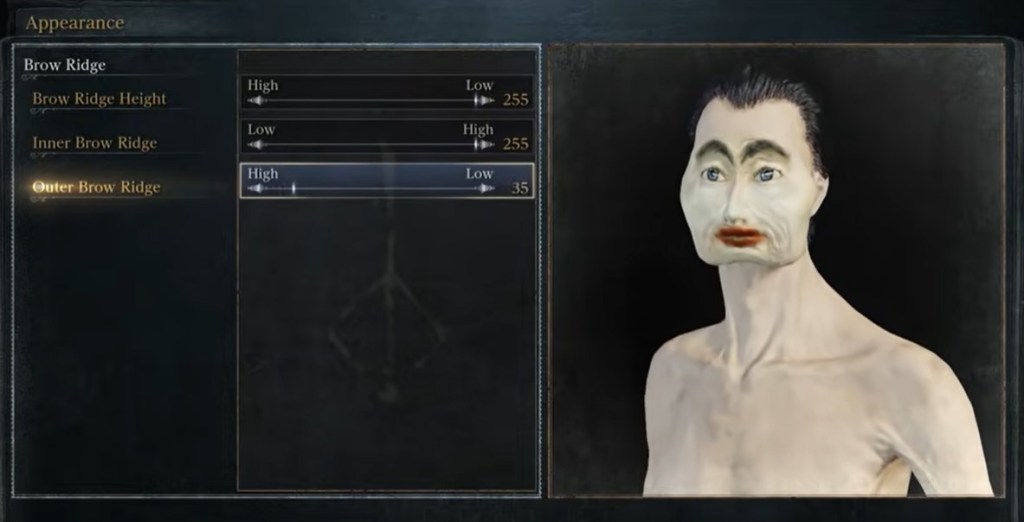
Youtube creators NewLegacyInc might be the biggest success story to come out of the wrestler creation community, having parlayed their creation skills and general love of the more chaotic and mind-bending aspects of wrestling in general into a successful podcast (the Deadlock Podcast) and their own, real-life independent wrestling promotion, Deadlock Pro Wrestling, in their home state of North Carolina which books some of the best wrestlers from around the world.
I can’t exactly say that the NewLegacy folks’ humour is for everyone, but their creations are spectacular, like the Christmas Battle Royal they ran last September which features Scrooge, Frosty the Snowman, Home Alone’s Kevin McAllister, and more tearing it up in the ring:
Whether it’s a wrestling game, a medieval role-playing game, or action titles like Saints Row or Soul Calibur 6, there is a unique joy for me in messing around with various sliders to mold my vaguely human-shaped lump of clay into something beautiful, horrifying, or both. It’s particularly satisfying to see your creation come to life, something like a real sculpture, and then giving it a voice, a personality, and then a steel chair with which they can bash the brains out of a virtual Chris Jericho. The creation suite may not be considered traditional art, but given the opportunity, it can achieve artistic results.
~~~
Sachin Hingoo has pushed the Nasolabial Fold slider so far to the right that he looks like a toucan.
Categories: Videogames



 The Cultural Gutter
2 replies »