

This week’s Guest Star is Michelle Kisner. Keep up with her on Instagram at @robotcookie!
~~~
In the first act of Sinners (2025), a blues singer named Delta Slim (played by Delroy Lindo) recounts a story from his past while being driven through an expansive field of cotton, tended by black sharecroppers. His voice is filled with sorrow as he speaks about his former band, which achieved some popularity and success, and a whole mess of money. Unfortunately, word of their success reached the Ku Klux Klan, leading to various misfortunes befalling these individuals simply for the crime of getting ahead in life while being black.
As he continues his tale, the horrors become too overwhelming to express, and his voice transforms into a mournful song, with his words evolving into a plaintive melody. This captures the true purpose of “the blues”: a way for the oppressed to channel their emotions into art and use the universal language of music to seek understanding from those around them.
Ryan Coogler understands this concept acutely and infuses Sinners with music on a molecular level. The score, composed by Ludwig Göransson, is essentially a separate character, weaving itself in and out of every single scene. It is a powerful thrum of energy that occasionally threatens to overwhelm the visuals but always pulls back just enough never to cross that line. Music as the lifeblood is the central underlying theme, but it coexists with an examination of power dynamics and the tug-of-war between those who have it and those who do not.

Michael B. Jordan plays dual roles as twins Smoke and Stack, brothers who have amassed a substantial amount of money through dubious means while living in Chicago. They return to their hometown in Mississippi and buy an empty barn to open up a saloon/dance hall to try to make a profit from their investment. Since this film takes place in the 1930s, the KKK has a strong and menacing presence, and the area has an impoverished black population that is frightened to celebrate their joys out in the open. The twins enlist the help of various community members, including their musically gifted cousin, Sammie (Miles Canton), a quiet preacher’s son looking to broaden his horizons and escape his father’s watchful eye.
Sinners is a film obsessed with duality, whether exploring the differences between Smoke and Stack’s demeanor, the dual lives that people live to hide skeletons in their closets, or even the construction of the narrative, which starts one way and transforms into a completely different genre. The story takes its time introducing the characters and the lore, building a strong foundation, which it then violently burns down in a bombastic fashion.
Fans of From Dusk Till Dawn (1996) will recognize the setup. Although the premise is similar, the execution is entirely different. The vampires in Sinners are not just bloodthirsty creatures; they are a cult who want to own their victims’ bodies and souls. Remmick (Jack O’Connell), the leader of the vampires, has Jim Jones vibes, promising harmony and salvation, and the vampires under his control pull out their instruments to sing hymns, spreading their “gospel”. Instead of using sexuality to beguile their victims, they offer acceptance and love, which is incredibly tempting to minorities who have been stomped down by racism all their lives. They are essentially gentrification personified, a mockery of intersectionality, literally sucking the soul out of the cultures they assimilate. It’s a haunting and subversive way to depict the vampire mythos, adding much depth to a tired trope.
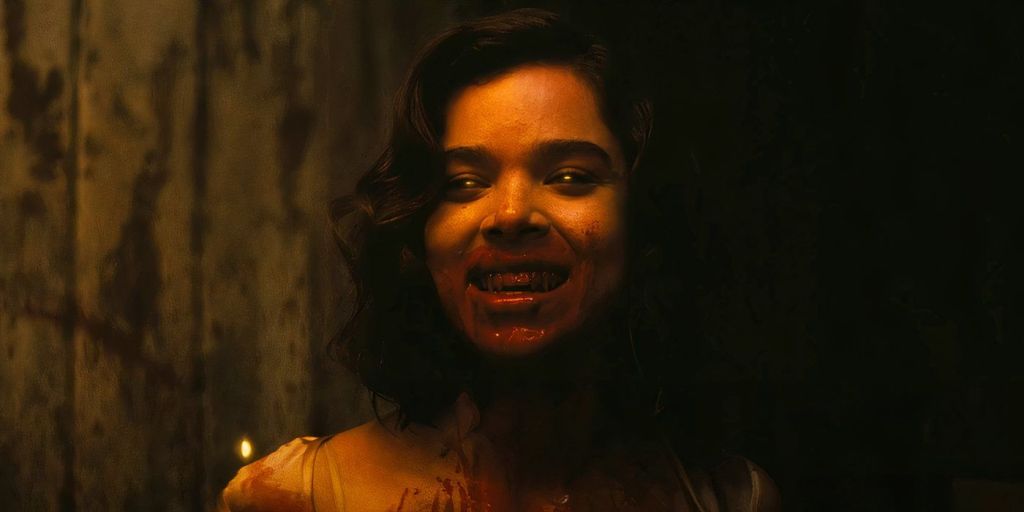
It isn’t accidental that Remmick is Irish either. The plight of the Irish often comes up in discussions about the black experience, sometimes in solidarity, but usually to undermine it. At the end of the day, the vast majority of Irish people still benefited from white privilege and could move in circles that PoC could not. That is why his offers of community ring hollow. The only way to be accepted by society is to become a monster under his influence?
When the vampires engage in the wild dance scene, the contrast between it and the previous sequence, in which Sammy pierces the veil, becomes apparent. Their dance is in complete darkness; it doesn’t resonate spiritually with the past and the future. It’s empty and unsettling despite the lively music, and ends with everyone rushing to adore Remmick. He is the focus of everything, and he is forcing them to do this. It’s a puppet show with Remmick pulling the strings.
Mary (Hailee Steinfeld), the white passing character, has an interesting role because, even though she is part black, she also holds privilege due to her lighter skin. That’s why she ends up as the conduit who eventually connects the vampires to the rest of the group. As a mixed woman myself, I am acutely aware of the challenges of colorism and not being fully accepted in either group, and I think that Coogler did an excellent job exploring her unique position in the narrative without resorting to demonizing her.

Smoke’s estranged wife, Annie (played by Wunmi Mosaku), is a wonderfully complex female character who defies the typical portrayal of love interests in films. She has beautiful dark skin and a full figure, traits often seen as matronly, but in this narrative, she is depicted as sensual and determined, perfectly complementing Smoke’s character. Additionally, her knowledge of Hoodoo adds a spiritual dimension to the story and serves as a cultural contrast to Sammie’s Baptist upbringing.
The cinematography is gorgeous, from the puffy white, cotton-lined fields that seem to stretch on to infinity to the hot and sweaty, orange-tinged juke joint that dominates most of the third act. Each location feels organic and lived in, and one can almost feel the deep South humidity soaking one’s skin. It is worth the effort to seek out an IMAX showing as Coogler uses the different aspect ratios available to him to great effect, and it is awe-inspiring to behold. Although the movie is over two hours, thanks to the excellent editing, it doesn’t feel long.
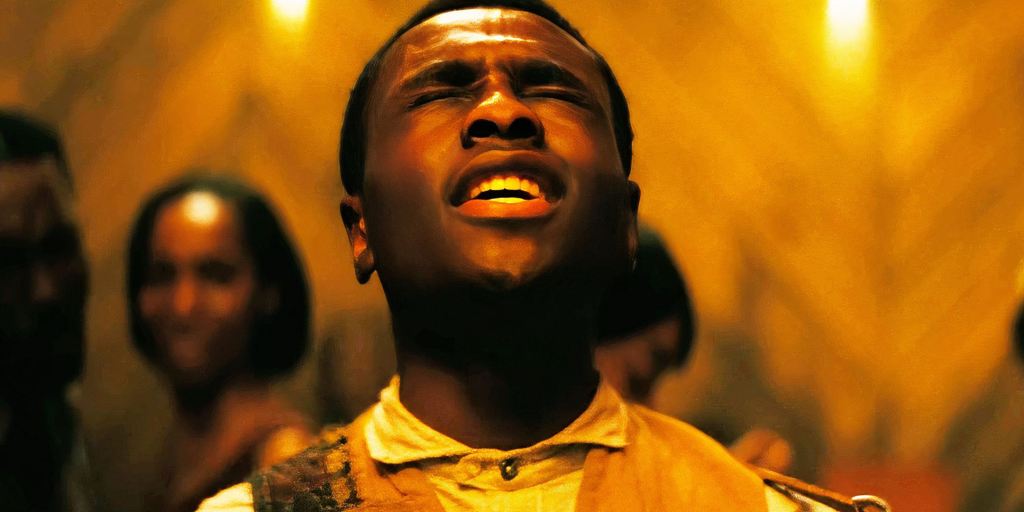
Sammie’s journey from teenager to adult is the central theme of this story. It begins with him discovering his spiritual path through music rather than organized religion. By the end, he comes to understand that the world contains both light and darkness to equal degrees. After living to a ripe old age as a respected jazz musician, he encounters Stack and Mary at a bar after a gig. They appear just as he remembers them, preserved by the curse of vampirism. They mean him no harm; they are simply checking in on him. Reflecting on their meeting, he reminisces wistfully, “You know something? Maybe once a week, I wake up paralyzed, reliving that night. But before the sun went down, I think that was the best day of my life.”
~~~
This week’s Guest Star is Michelle Kisner. Keep up with her on Instagram at @robotcookie! And she has an essay in the new Vinegar Syndrome release of The Iron Angels Trilogy. Make sure to read it!
Categories: Guest Star




 The Cultural Gutter
2 replies »