
I don’t have official permission from everyone at the Gutter to speak on their behalf, but I suspect I’m correct in saying that this publication’s position on a story about a roguish criminal taking the place of a goody-goody police officer of whom he is coincidentally an exact lookalike is: yes, please. And so I bring you Kalicharan, a 1976 Hindi crime film full of the specific treasures of its genre.

First among them: a clue. A malicious criminal has been extorting India’s food supply, and Inspector Khanna (Premnath, last seen on the Gutter as Vito Corleone in a remake of The Godfather) puts his best man DSP Prabhakar (Shatrugan Sinha) on the job. Prabhakar does crack the case, but he is attacked before he can reveal his knowledge. As he lies dying in the hospital, he scribbles NO17 on a clipboard, which becomes a puzzle haunting his survivors. Neither his boss nor his duplicate Kalicharan (also Sinha) has any idea what it means. After Khanna trains him as Prabhakar’s secret replacement, Kalicharan obsesses over this one set of letters and numbers, arresting people whose license plate, address, phone number, etc contain these characters. He’s wrong about all of them, and it is not until a New Year’s party at a fancy hotel that he figures it out. (I’m about to spoil it for you, so skip the next paragraph if you don’t want to know).

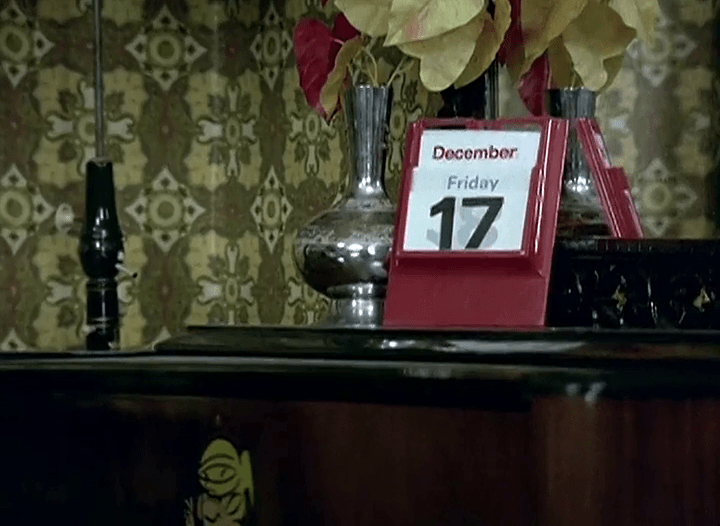


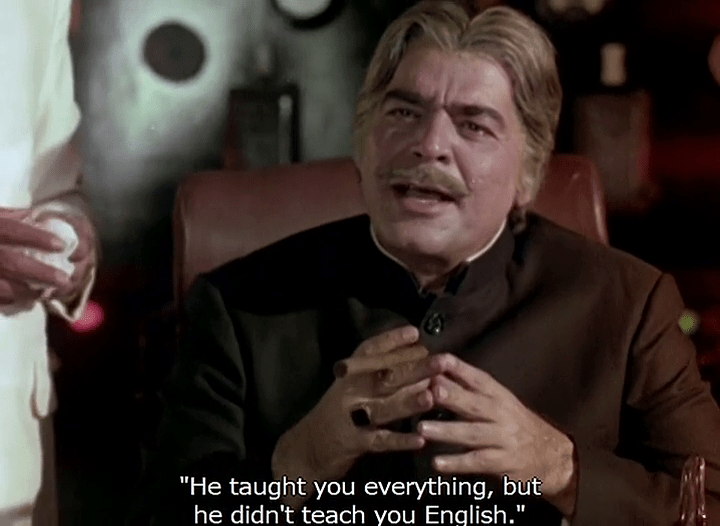
I love this. The clue is Chris Trager L I T E R A L L Y in flashing lights. Kalicharan is the debut film by director Subhash Ghai, whose love for the big canvas of cinema later earned him the nickname Showman. He’s not operating at that scope in Kalicharan, but this seems like a hint of what’s to come. In addition to just being a fun puzzle for the audience to mull over along with the characters in the film, NO17/LION would not work in the Hindi language or script (which cannot be flipped vertically like the capital letters I or O), and very late in the film the lead criminal catches Kalicharan out on being an imposter because he doesn’t know English and is illiterate—formal training a proper DSP would surely have.

These details make me wonder if there’s a little anti-imperial and anti-classist message in here: like Kalicharan, you don’t have to know English or even be literate to contribute to the well-being of the nation or even to be a decent person who can make respectable choices. More obviously, the film is about reform through kindly but targeted intervention. An honest man put in horrible circumstances can make him seem “bad” to authorities (because of course Kalicharan has a tragic backstory! Are you new here?), but the love of a father figure, a worthy woman, and a nation that needs a hero can make him good again. We love a redemption arc! Kalicharan needs a specific project to remind himself of who he really is, and India needs this specific man because of the twist of fate in his lookalike face.
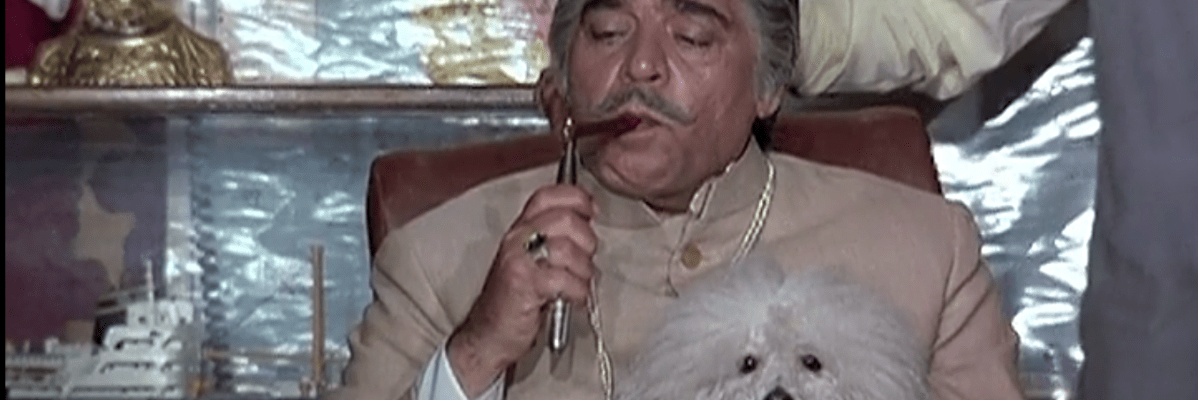
Second: the villain lair. It’s not in my personal top 10 (a very elite group), but it is a delight all the same: a desk full of telephones, each of which starts ringing in succession as the film opens, a fluffy white dog (who reminds me of Muppy from early episodes of The Muppet Show), a canpoy bed, a clear glass holding-cell sort of chamber, a stuffed tiger, random women in bikinis, an escape hatch that drops into a barn full of livestock (including cows who are implied to die in a fire set to hide the evidence of the lair, which quietly makes the villain even worse), and beep-booping machines that do nothing but beep-boop.


Third: the star. I have a vague memory of reading somewhere that “Shotgun” Sinha got his nickname because of his line delivery. Even if that isn’t true, it certainly could be, if this film is anything to go by. To get a sense of what he does here, think of the barkiest dog you’ve ever heard from a neighbor’s yard at 5 in the morning, then scale that sound to a human bass voice with its effect amplified by the very presence and nature of a swaggering, mustachioed 70s film star. It’s a stylized approach that somehow feels like a variation on, rather than a departure from, what the other shouty Bombay action heroes were doing at this time. You probably wouldn’t want it in an aesthetically subtler film, but it works here. I don’t know what the first Indian film is to use the “criminal lookalike impersonates a cop and reforms/improves in the process” plot, but I do know the most famous example of it, Don, comes 2 years after Kalicharan, and for Hindi film history people it’s fun to think about Shotgun getting to try it before his mega-revered colleague Amitabh Bachchan.

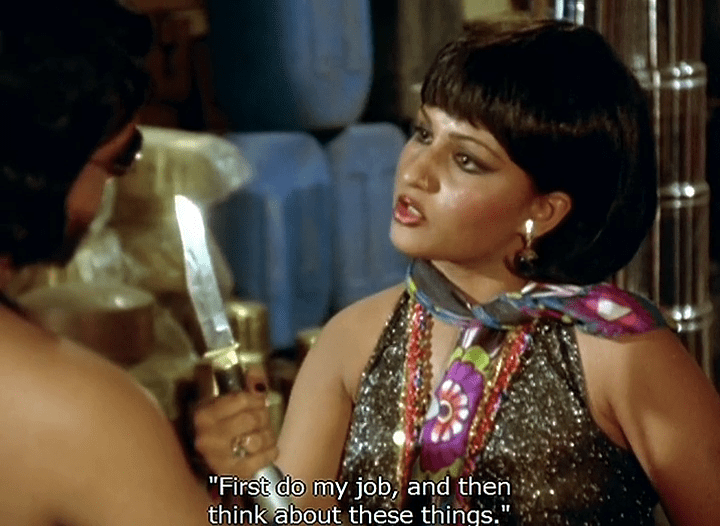
Fourth: the texture provided by almost everybody else in the film. Kalicharan is packed with people who know exactly what they’re doing. My favorites are Reena Roy (my favorite avenging snake) and Denzongpa. As Sapna, Kalicharan’s love interest, Roy manages to hold her own against the significantly macho ethos of everything around her despite being given not a whole lot to do. She also gets moments of pure fashion glee, like her wild and sparkly “bad girl” outfit, several pairs of leather gloves, a Barbie-pink evening gown with boa, and a cape worn over a dress with white lacy collar and cuffs.

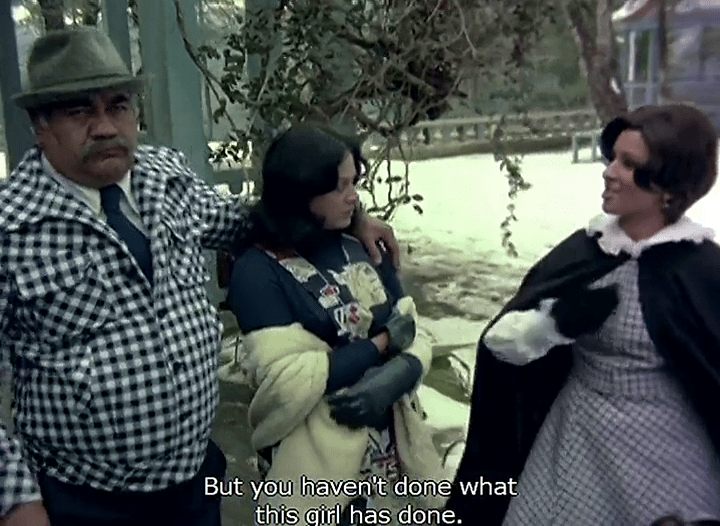

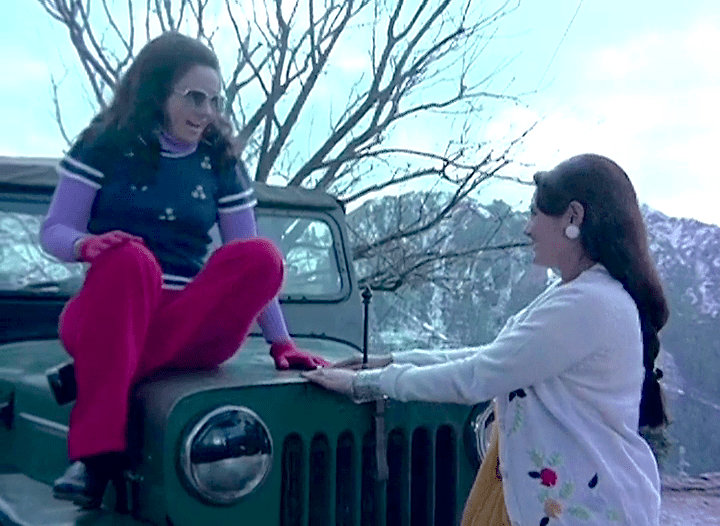
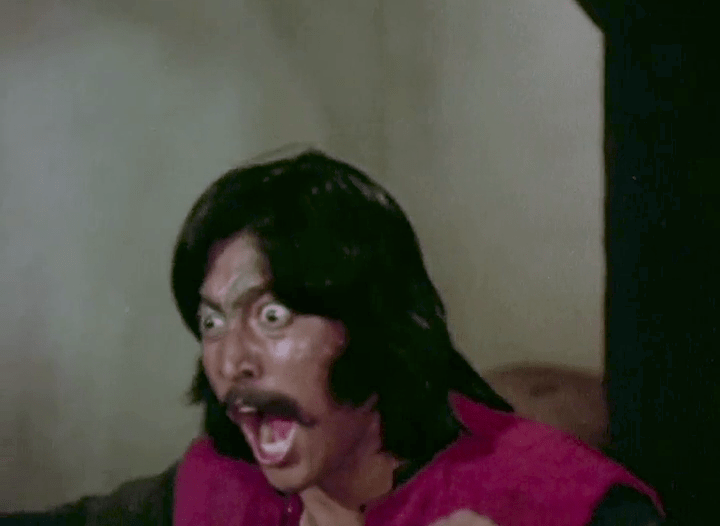
Denzongpa is one of those incredibly talented actors whom Bombay never used to his fullest potential IMO, here serving as a two-scene antagonist-turned-comrade who has a fight with Sinha using tridents and hopping on one leg.

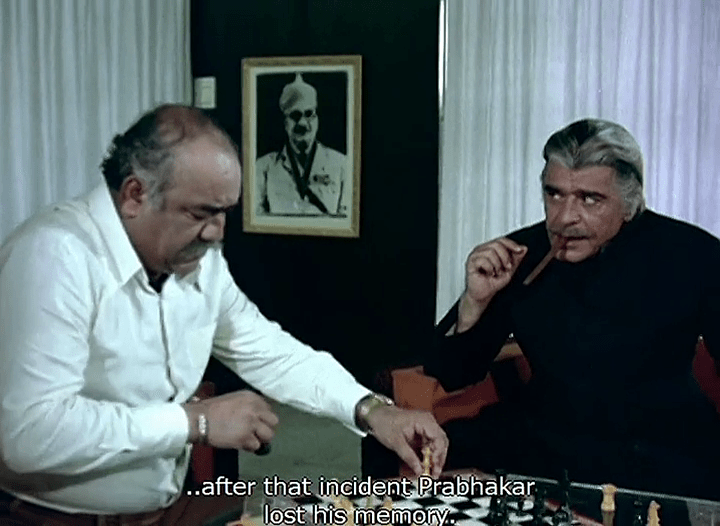
People with more delicate tastes than I have might propose that Premnath is sluggishly declamatory in this film, and sadly I tend to agree. Usually this kind of supervisory inspector character is on screen far less than Premnath is, so he does actually have a negative impact here, wailing on about the death of Prabhakar whom he loved as a son and arguing with any criticism of his suspiciously rich friend Dindayal (Ajit), but the rest of the film is so fun that I don’t mind.
Kalicharan exemplifies what has come to be my favorite thing about Hindi cinema, which is that it creates a world in which we simultaneously know exactly what is going to happen and have no idea what to expect, accepting almost any variation of the unfolding and revealing of typical plot elements within certain values and parameters. For example, we know the good guy will figure out who the bad guy is, but did we suspect the aha moment would come exactly as it did? No, we did not, but neither are we completely surprised to learn these things. All things are possible except for the great immutables. As long as certain requirements are met—e.g. there will be an item number, quite possibly with Helen but with details that are up for grabs, such as her backing dancers will be mariachis, Santa Claus will be on hand, and the audience will wear creepy masks. What a wondrous dichotomy this is.
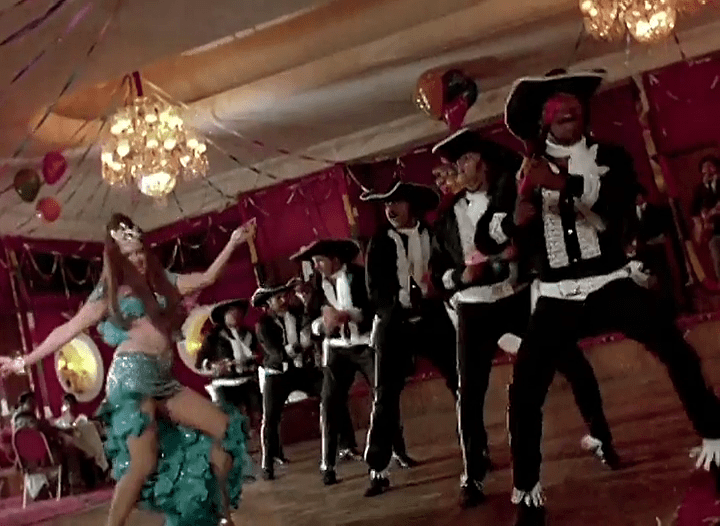
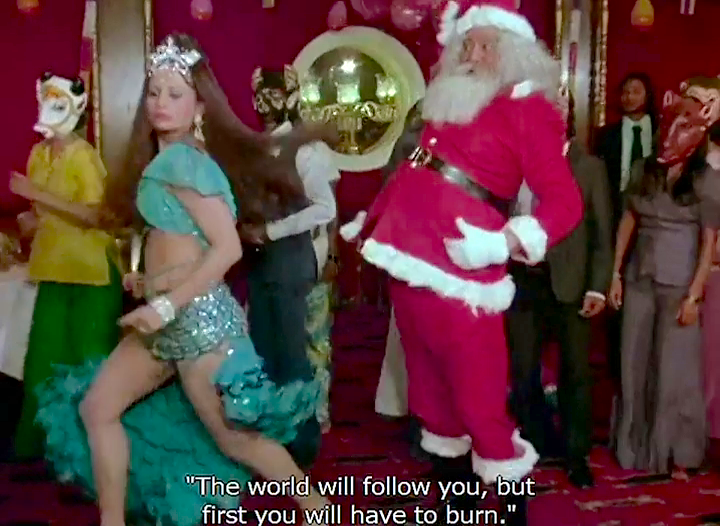
If you’re in the right mood, Kalicharan will do you a masala solid. Watch it on Einthusan with English subtitles here.

~~~
Every year villains compete to be listed in Beth Watkin’s exclusive top ten villain lair list.
Categories: Screen




 The Cultural Gutter