
“When she took up with Louis Judd, she went out of circulation just like that.”
~ Woman at a Satanist cocktail party in The Seventh Victim (USA, 1943)
CW: Suicide; Depression; A Terrible Psychiatrist
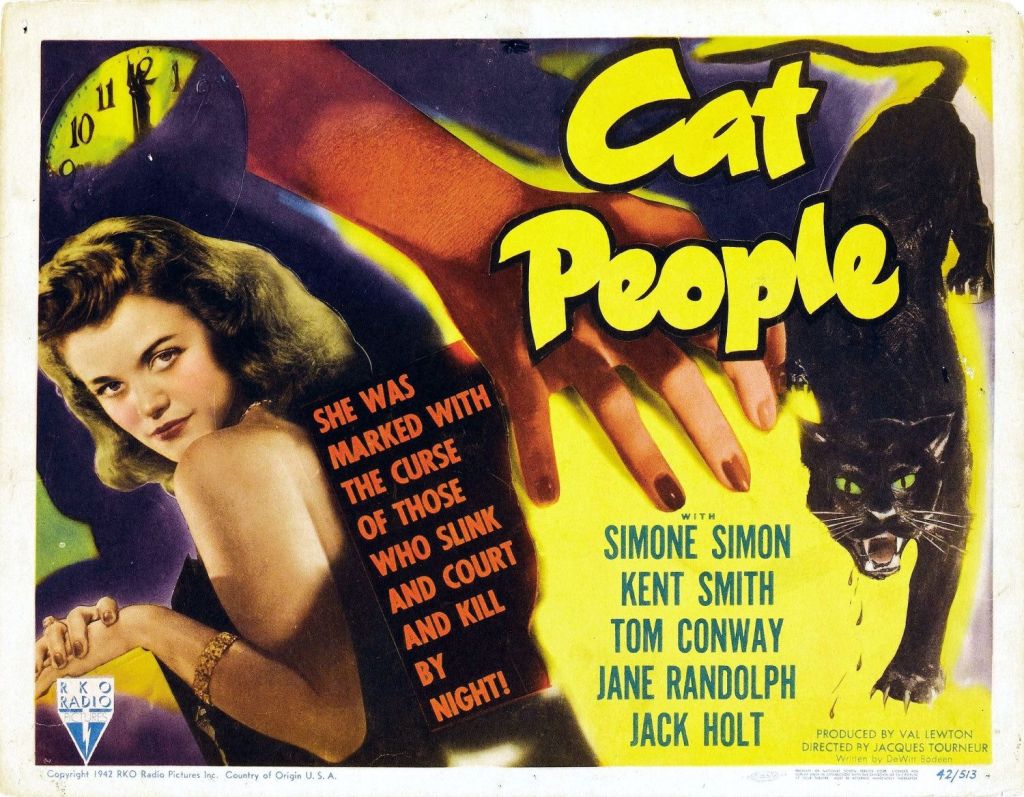
I thought that I was done writing about terrible people for the year. But I need to ponder just one more, Dr. Louis Judd. Judd is a supporting character played by Tom Conway in two RKO horror movies: Jacques Tourneur’s Cat People (USA, 1942) and Mark Robson’s The Seventh Victim (USA, 1943). Dr. Judd while suave, sophisticated, sardonic and lightly mustachioed is a remarkably bad psychiatrist. He drifts into and out of Manhattan’s occult and supernatural demimonde. Like many a tourist, he is not careful and he leaves more than memories.
Judd treats women with serious problems—one who turns into a panther when angry or aroused and another who is part of a well-to-do coterie of Satanists in Greenwich Village. Judd attempts to help these women nearly simultaneously or close enough.* And he fails them both spectacularly. Judd’s treatment consists of a combination of hypnosis, collecting his patients’ secrets and sexually pursuing his patients. This works out for him because he sees sex with his patients as therapeutic for both of them. And one of the most interesting things about these films, is that they do not seem to think Judd is as helpful as he does. His patients, Cat Woman‘s Irena Dubrovna and The Seventh Victim‘s Jacqueline Gibson, are far more sympathetic.
Dr. Judd and the Cat Woman of the Upper East Side
In Cat People, Irena (Simone Simon) is afraid that having sex will cause her to transform into a panther and kill her husband. She hails from a secret village in Serbia that survived being exterminated by the Serbian King John. Irena’s family escaped, resulting in the women of her village becoming enormous cats when angry, jealous or sexually aroused. Irena herself moved to New York to become an illustrator. She lives a placid life and spends her days drawing and visiting a black leopard at the Central Park Zoo. One day while sketching the leopard, she meets Oliver Reed (Kent Smith), and they end up talking in Irena’s apartment. She tells him the story of her people and her fear that there is something evil inside her. They continue to see one another. There are signs, though, that Irena is not mistaken. A Siamese kitten Oliver gives her is terrified of Irena. And when Oliver takes her to exchange the kitten for a bird, Irena can’t enter the pet shop without the animals panicking. Oliver respects Irena’s boundaries, though it seems like he intends to wait her out. Despite Irena’s fear, they are married. At a Serbian restaurant where they celebrate with friends, a strange cat-like woman in black sequins (Elizabeth Russell) approaches and addresses Irena, saying, “Moja sestra”—my sister. This alarms Irena and all her fears return.
Irena’s not wrong to be concerned. She scares her parakeet to death trying to catch it in a very cat-like manner and then feeds its body to the leopard. Oliver suggests she seek help. Irena asks him to find the best psychiatrist in New York. Enter Dr. Louis Judd, on the recommendation of Oliver’s friend Alice (Jane Randolph). It’s not a good suggestion. Irena is upset that Oliver discussed their sex life with Alice, no matter how 1940s coded the discussion was. And Freud prepares no one for women who transform into panthers. To Judd, Irena is an obvious case of frigidity, although he never calls it that. After hypnotizing Irena, Judd finds the root of her problem in her childhood, as expected, and dismisses her fears as fantasy. When Irena asks him what she should tell her husband, he answers, “What does one tell a husband? One tells him nothing.”
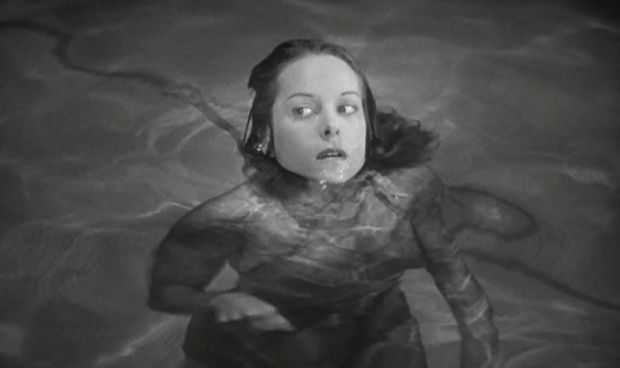
Irena goes home and finds Oliver and Alice waiting for her. Alice asks how the appointment went. Foreshadowing Judd’s smooth skeeviness, Ann notes “the way he goes around kissing hands makes me want to spit cotton.” Irena is understandably upset. Over the course of the film, Oliver and Alice become closer—bonding over Oliver’s marital trouble and Irena’s fears. Irena’s growing jealousy leads her to stalk Alice in two seminal scenes that influence horror to this day. In one, Irena follows Alice on the sidewalk along Central Park. Alice hears heels echoing her own and then silence. As she starts to run, a bus comes to a startling stop. There is also a tense scene when Alice treads water in the middle of a YWCA pool and is menaced by shadows, growls and Irena herself.
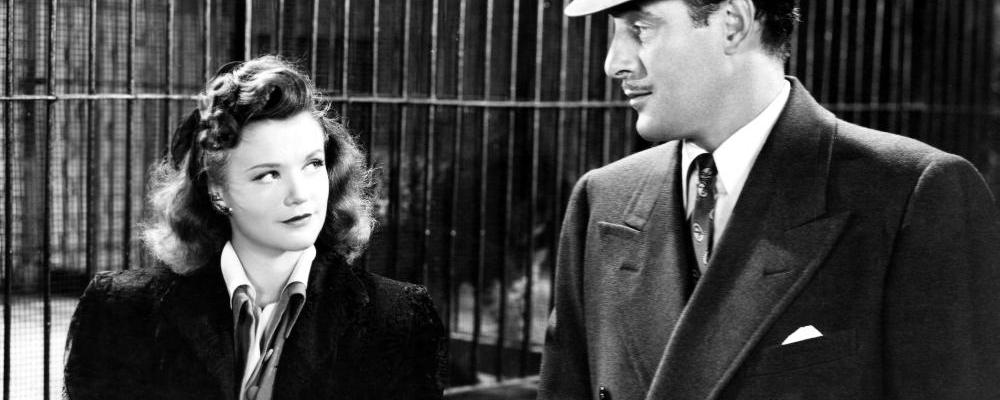
For his part, Judd stalks Irena without the excuse of being a cat person. When Irena doesn’t return after her initial appointment, Judd finds her visiting her favorite leopard. When she asks him how he found her, Judd creepily tells her that she told him many things when she was hypnotized. Then, because he can’t help but try to show Irena that he knows her better than she knows herself, Judd compliments Irena on not stealing the key to the leopard’s cage when she had a chance. Judd ascribes to Irena an unconscious desire to loose death on the world, but in his pursuit of her, Judd’s the one with the strong death drive. Irena tells Judd that he cannot help her, but Judd continues to believe sex with him sure can help her. That night, Irena has dream. Judd appears as the vengeful King John and equates King John’s sword with the key. Even Dream Judd gives bad advice to Irena. He’s probably frustrated she didn’t equate the sword and key with his own phallic object. Instead of coming to him, Irena steals the key to the leopard’s cage.
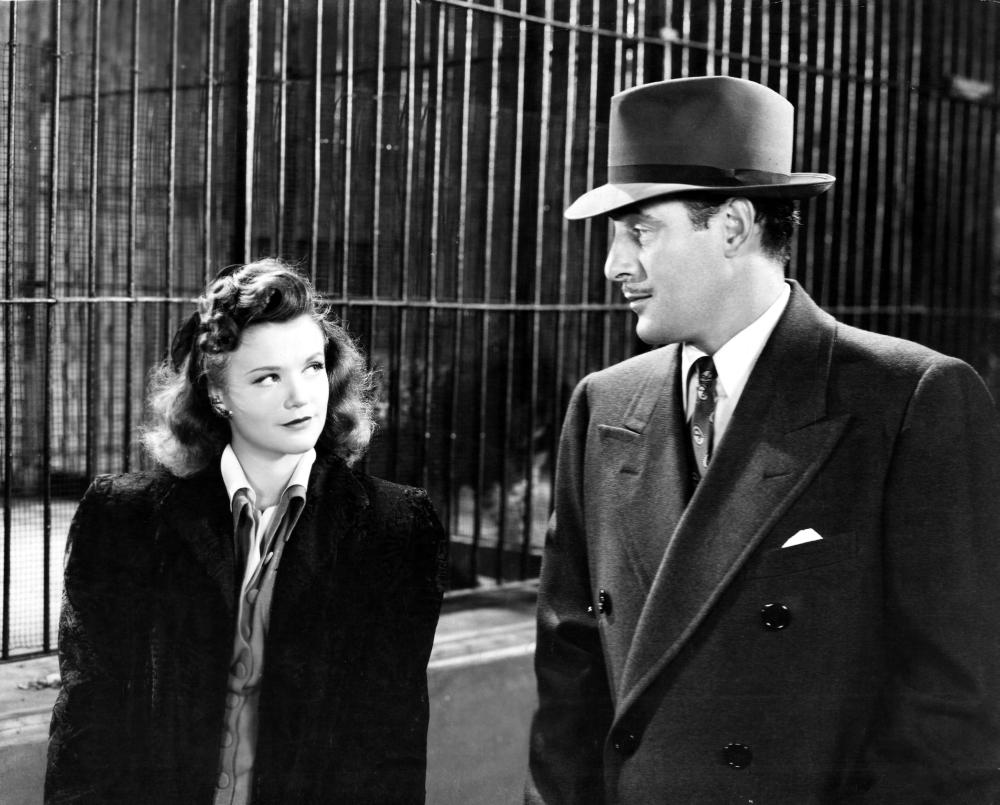
After her terrifying experiences, Alice warns Judd that she believes Irena is a cat person. Judd can’t believe that he would ever be wrong or that he couldn’t handle Irena. He’s dismissive and shows her that his cane conceals a sword. Because of course Dr. Judd has a cane sword.
When Irena, experiencing blackouts, goes to Judd asking for help, he accuses her of keeping secrets from him. In a remarkable display of emotional manipulation, he says,
“I can’t help you, but I can warn you. These hallucinations approach insanity….At this moment, I could go before a board and have you put away for observation. You are that close to real insanity. I can’t help you. You can only help yourself.”
Judd tells Irena to throw out her cat art and forget the stories of her country. And she believes him. She believes she can be free of her fear of herself—until Oliver tells her that he loves Alice. Meanwhile, Judd meets with Oliver and Alice about committing Irena. He even suggests Oliver annul their marriage before institutionalizing Irena so he can start a new life. They wait for Irena to return home to spring the news on her, but Irena wisely stays away. Oliver and Alice give up and go back to their office. As part of his run at being the worst, Judd pretends to forget his cane at their apartment so he can slip back in later and catch Irena alone.
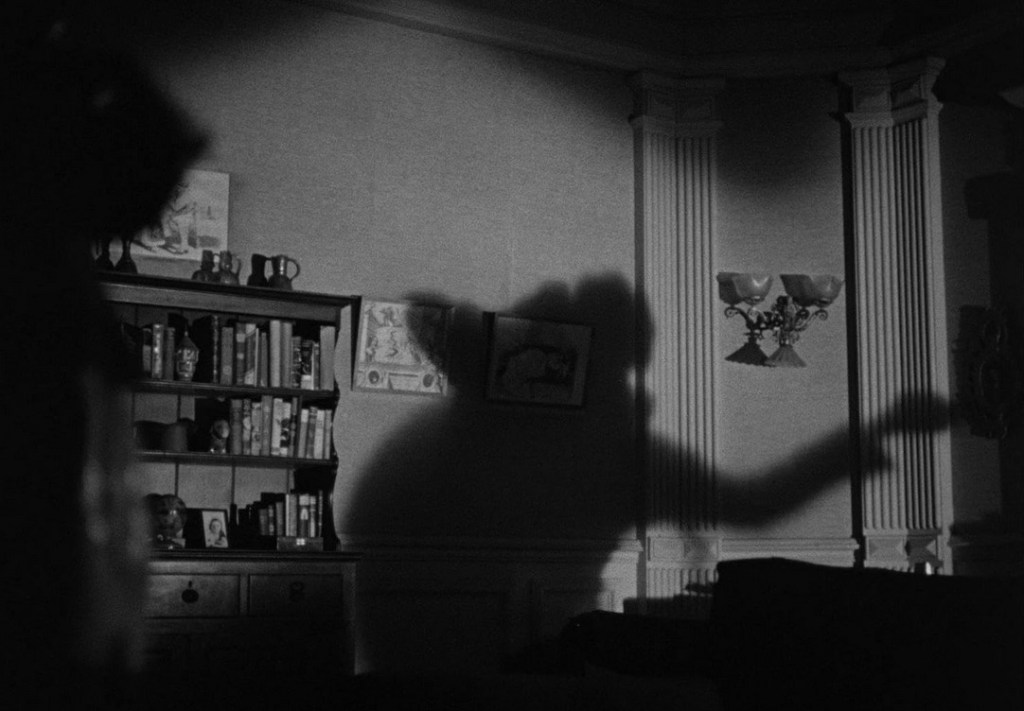
Judd waits for Irena at her apartment to complete his betrayal of her as a patient. He has convinced her husband to send her away to an institution where, I presume, Judd would have control over her. She would be isolated, and, if Judd had succeeded in convincing Oliver to leave her for Ann, she would be alone. He would be her only protector. And now he embraces and kisses her. It’s not hard to see this as an attempt at corrective rape. For Dr. Judd, and for many people of his time, women’s sexual dysfunction was relatively simple and disinterest in sex or in sex with cisgendered heterosexual men are basically the same problem. Probably the result of either too much attachment to one’s mother or insufficient attachment to one’s father. The cure was to have sex with the right man to straighten a woman out. Judd ignores Irena’s disinterest because of his own desires and his own belief in his potency. Sex with him will solve all of Irena’s problems. The thing is, Judd is Irena’s problem. And so she solves it her own way. Enraged, Irena turns into a panther and mauls him. Judd stabs Irena and she kills him. When she is human again, Irena finds the only peace she believes she can. She releases the leopard before dying herself. Unfortunately, the leopard dies, too.
Judd doesn’t die just because he’s a terrible psychiatrist, but it’s part of why he dies. He didn’t necessarily believe he would save Irena, but Judd sure got off on the idea—to Irena and the leopard’s detriment. It turns out that Irena’s understanding of the situation was far more accurate than Judd’s. And it turns out that Judd was the deluded one. Cat People, if nothing else, is a good argument for easily accessible divorce and screening your therapist thoroughly.
Dr. Judd and the Satanists of Greenwich Village
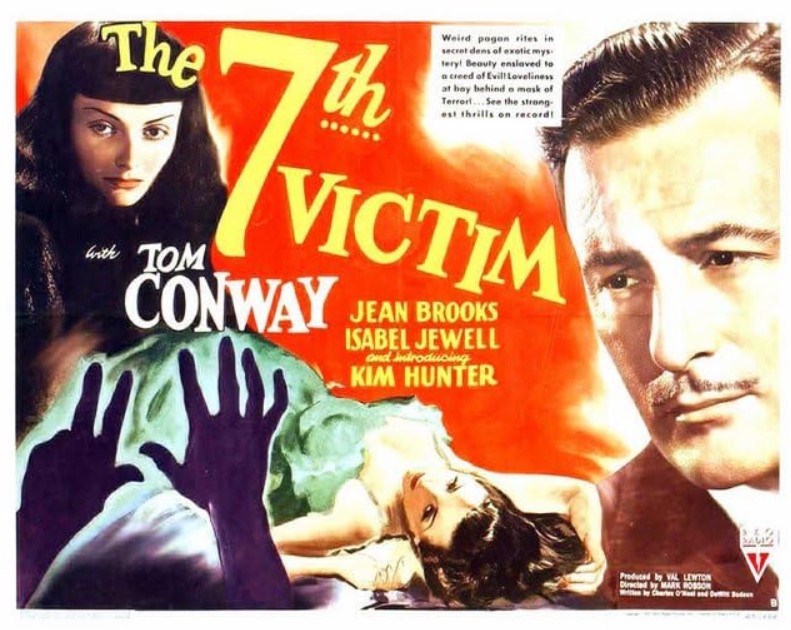
You might think that death would be the end of Louis Judd, but he returns as a supporting character in The Seventh Victim. RKO Radio Pictures allowed horror unit producer Val Lewton to make the films he wanted as long as they came in under $150,000, were no longer than 75 minutes, used executives’ pre-approved film titles, and made money. And Cat People made money. Lewton, screenwriter DeWitt Bodeen, and director Mark Robson must have been interested in the deeply flawed Louis Judd to bring him back for something of a prequel where he, Manhattan itself and the presence Elizabeth Russell* are the only links to the first film. Of course, Conway had taken over a series of popular adventure films, replacing his brother George Sanders in The Falcon in 1942, so there might have been some box office considerations. But they didn’t have to cast him as Judd again in the RKO horror movies. Conway appears in Lewton and Tourneur’s I Walked With A Zombie (1943), but not as Judd. Judd’s terribleness as a person and a psychiatrist underscores the horror of The Seventh Victim as does his arrogance.
As The Seventh Victim opens, Jacqueline Gibson (Jean Brooks) is missing. Her sister Mary (Kim Hunter) leaves her cloistered all-girls boarding school to find Jacqueline. Mary’s search takes her to the infernally themed Dante’s Restaurant in Greenwich Village. She discovers Jacqueline keeps a room above Dante’s that contains only a chair and noose. Mary meets a number of people during her search: Bohemian poet Jason Hoag (Erford Gage); Esther Redi (Mary Newton), who now owns Jacqueline’s cosmetics company, La Sagesse**; Francis (Isabel Jewell), a stylist at La Sagesse who is probably in love with Jacqueline; Gregory Ward (Hugh Beaumont) a lawyer who’s secretive about being Jacqueline’s husband; and private investigator, Irving August (Lou Lubin). Through them, Mary discovers that Jacqueline was a member of a small Satanic salon, the Palladists.
Mary also meets Dr. Judd, but he is less help than Jason and Mr. August. Judd is apparently already semi-retired as a psychiatrist. He tells a receptionist who is seeking help for her alcoholic father, “I don’t practice anymore. I find it easier to write about mental illness and leave the cure of it to others.” And then blithely adds that alcoholism a “rather sordid.” Too sordid for Louis Judd who is waiting in her reception area to ask her boss, Gregory Ward, for money that could be either extortion or help for Jacqueline. It feels like both. When Gregory initially refuses until Judd tells him where Jacqueline is, Judd responds, “You’re a curious man. You’re willing to endanger Jacqueline’s life to satisfy your own curiosity.” Which is quite something coming from Judd since his curiosity was responsible for Jacqueline’s disappearance.
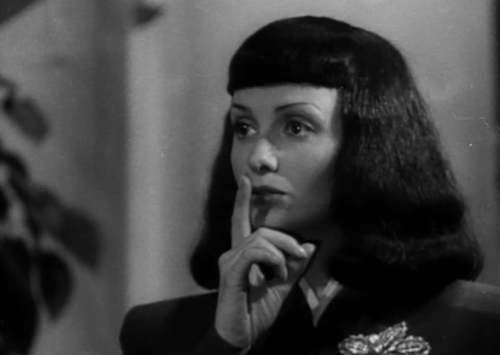
I assume Judd took on Jacqueline as a patient because of her perfect bangs and intriguing occult connections with the Palladists. As always, in trying to help Jacqueline, Judd makes her problems worse. He solicits information from her about the Palladists. On discovering that Jacqueline has told Judd about them, the Palladists lock Jacqueline in a room at La Sagesse while they decide what to do with her. The Palladists are very civilized and eschew violence. Jacqueline escapes—with the unwitting help of Mary and Mr. Archer—and seeks help from Judd. But Judd is ineffective in protecting her. Judd takes Mary to the hotel room where he has stashed Jacqueline and then bails on Mary when he realizes Jacqueline has fled once more. Abruptly, Judd decides to flee himself, saying, “She’s left me to meet them alone. I can’t….I can’t stay here. I have to leave you.” Leaving Mary to face “them” alone.
There is a scene cut from the final film that reveals how the Palladists discovered that Judd knows about them. After all, if Judd hypnotized Jacqueline, he might be the only one who knows what she said during their sessions. In the extant film, it seems Judd’s arrogance has led him to mingle with the Palladists. I assume Judd crashed a Palladist tea and then quipped Jacqueline into a death sentence. Perhaps, as with Irena, Judd wanted to show Jacqueline that there were no Satanists in Greenwich Village. It’s all done to help. Isolating Jacqueline, being the only one who knows where she is, the only one who has access to her, well, that’s necessary, too. Judd enjoys his access to secrets at and he enjoys other people knowing that he knows things about them. Perhaps he even enjoys the crises he creates in his patients’ lives.
Judd certainly enjoys access to beautiful women and a sense of control over them. We discover that besides Irena and Jacqueline, there is a third unnamed woman who Jason mentions. Jason tells him, “I saw her with you once. I saw her with you twice. I never saw her again.” It’s strongly implied that Judd was intimate with this woman as well. Judd later tells Jason that the woman had become “an ugly raving thing” that he had institutionalized. The man has a pattern.
If you thought that Judd might be the sort of man to take on only women he finds attractive for his practice and then get embroiled in their dangerous lives to the extent that he might crash a Satanist cocktail party, draw a lot of attention to himself by doing mentalist card tricks all the while telling himself that this provocative action is helping, you’d be right. That’s exactly what Judd does. Jason takes Mary to that very Palladist cocktail party and confronts Judd about keeping Jacqueline separated from her sister. Judd tries to distract him by needling Jason about his writer’s block. When Judd finally takes Mary, Gregory and Jason to Jacqueline, Judd mourns the change in his own circumstance. “For me, this seems to be the end of a delightful relationship.” Which is really something to say when Jacqueline is hunted, haunted, suicidal and increasingly agoraphobic during her time with him, a licensed healthcare professional.
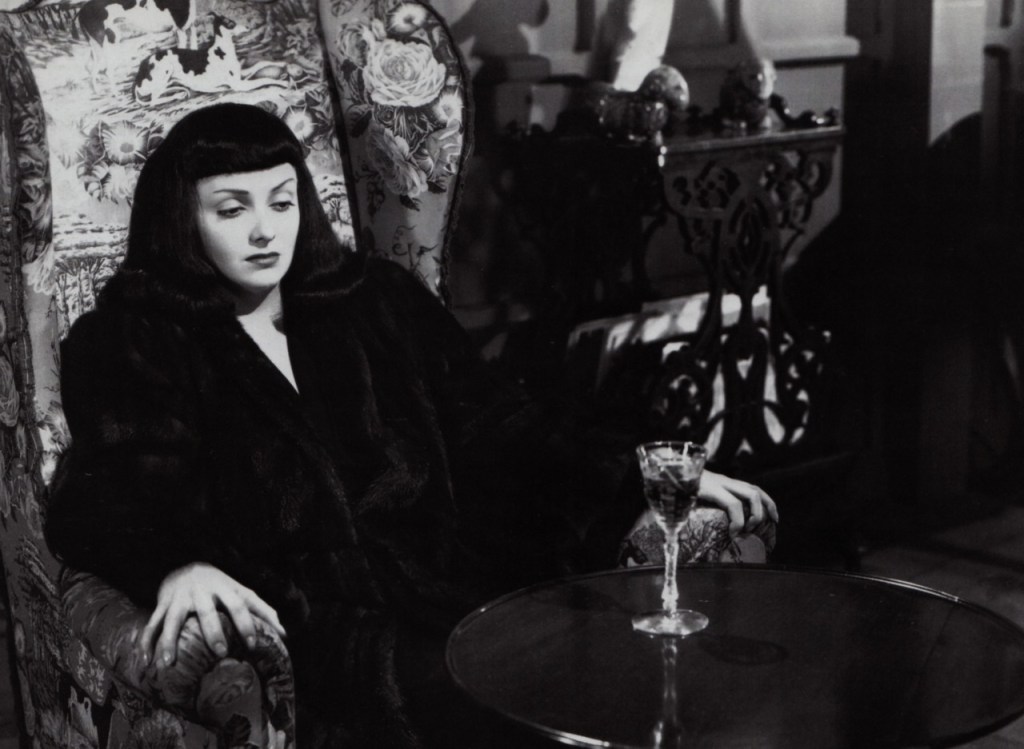
Two men kidnap Jacqueline while Mary is at work. They take Jacqueline to a well-appointed parlor to be pressured into killing herself by the Palladists. Sure, Ward and Hoag could have been watching her more effectively, but I blame Judd because he has presented himself as the only one clever enough to protect Jacqueline. He is as feckless in The Seventh Victim as he was in Cat People. The Palladists offer Jacqueline a very civilized sherry glass full of poison. But as someone who sees death as an act of individual freedom, Jacqueline refuses. As the Palladists attempt to harangue Jacqueline into drinking, her friend and possible lover Francis breaks and shrieks at Jacqueline to get it over with. After hours of refusing, Jacqueline reaches for the glass. Francis knocks it to the floor, saying, “The only time I was ever happy is when I was with you. You were always good to me.”
The Palladists let Jacqueline leave, but a hired killer pursues her in a tense set piece that parallels Irena’s stalking of Alice in Cat People. Once she escapes the killer, Jacqueline goes to her room above Dante’s Restaurant. She talks with her very sick next door neighbor, Mimi (Elizabeth Russell), who decides to try to live before she dies. Jacqueline decides she has lived enough and will end her life on her own terms. Then she goes into her room and we hear the thud of a chair falling as Jacqueline hangs herself.
Good job, Judd.

There is a tremendous amount of Lesbian subtext in The Seventh Victim and in Cat People, depending on how you read Irena’s fears and her response to the cat-like Serbian woman at the Belgrade restaurant. In The Seventh Victim there’s an all-girls boarding school, which if you know, you know. There is the formidable Miss Redi. There is a woman at the Palladist cocktail party who hints at what she and Jacqueline have done together. And there is poor, broken-hearted Frances. It all makes me wonder what exactly Judd was treating Jacqueline for. Jacqueline herself simply says she was unhappy. But whether he’s treating her for an attraction to women, depression, or a morbid obsession with the idea of death, Judd rapidly moves from focusing on Jacqueline’s mental health to his own interest in the Palladists. I’d be very curious, too, but I am not a doctor who’s responsible for my patients’ well-being. Judd’s curiosity and desire leads to Jacqueline’s death just as his disbelief and desire lead to Irena’s.
Both movies rely on the disquieting the sense that something unknown, possibly unknowable, might exist behind the rational, mundane facade of brownstones and cocktail parties, maybe even something itching right beneath our skin. Judd believes he stands in a totally rationally motivated opposition to irrationality. Smart, sardonic, self-satisfied, exquisitely skilled at rationalization and profoundly selfish, Judd is absolutely certain that he knows what the world is. For Judd, whatever is beyond what he delineates as rational is relentlessly gendered and sexualized. He tries to eliminate whatever he considers irrational, superstitious or even inconvenient, especially if it happens to be a woman’s disinterest in him. And Judd’s sword is his belief in his own self-defined objectivity, his rationality and, most fundamentally, his disbelief. Judd wields his disbelief to dispel whatever he chooses not to accept. While others try to will things into being with the power of their belief, Judd tries to erase inconvenient truths with the power of his disbelief. You would think that he would have learned better by the time of Cat People. After all, that film opens with a quote from his fictional book, The Anatomy of Atavism, and he likely wrote that before the end of The Seventh Victim. “Even as fog continues to lie in the valleys, so does ancient sin cling to the low places, the depressions in the world’s consciousness.” But Judd never examines his own irrational impulses. And he never learns. I would hate see the damage his self-help books do. Dr. Louis Judd is a terrible psychiatrist, possibly the worst psychiatrist.
*This hinges on the presence of Elizabeth Russell in Cat People and The Seventh Victim. In The Seventh Victim, she is Jacqueline’s neighbor who is dying alone and afraid of dying. Jacqueline gives her courage to live what life she has left. Mimi dresses up and goes out. Meanwhile in Cat People, Russell plays an unnamed woman dressed very similarly to Mimi. who approaches Irena during the wedding reception at the Belgrade Restaurant and addresses her. She might not only fear death, but like Irena, fear killing someone she loves.
**In another influential horror scene, Redi menaces Mary in a shower scene that prefigures Psycho (USA, 1960)
~~~
Carol Borden does not have perfect bangs, but they are pretty good. And she has a panther in her heart.
No part of this text or any text on the Cultural Gutter site may be used to train artificial intelligence systems without the written permission of the author and The Cultural Gutter.




 The Cultural Gutter
Actor Tom Conway’s character Dr. Judd, in The Seventh Victim, actually references the somewhat now-archaic term “dipsomania” for alcoholism-which he also vainly perceives as “rather sordid”….
LikeLike
Yes, I decided to go with “alcoholism.”
LikeLike