

After 21 years of watching lots and lots of Indian films, my life is still tragically underpopulated by Indian secret agent movies. Fortunately, there is at least one reliable purveyor: director Ravikant Nagaich, whom we haven’t seen around on the Gutter for ages (shame on me!). After debuting as a director with Farz, one of India’s earliest entries into the James Bond-y genre, Nagaich would go on to make several more. Keemat (Price) is his second entry in the genre.
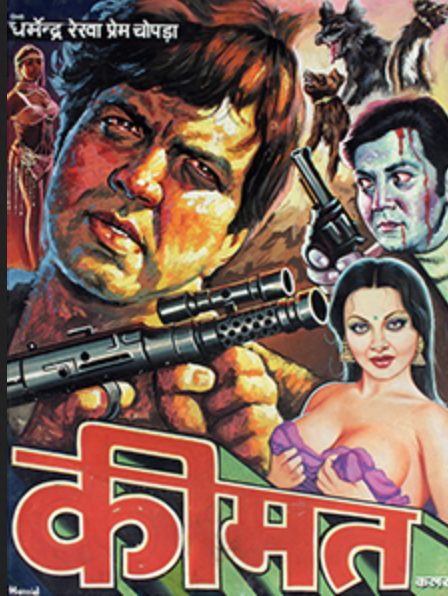
If you’re new to spy films from this part of the world, the basic thing to keep in mind is that Hindi cinema (I’m speaking specifically of this language industry and don’t know enough about others to say) in the 1960s and 70s was not always fond of the anti-hero, so incorporating Bond’s lifestyle has been tricky. Catching criminals? Absolutely ok. The flexible morals that are part of the espionage package? Maybe not.
From the film’s introduction, we know roughly what the mission of Agent 116 (Gopal, played by Dharmendra) will be. A criminal gang is luring girls with promises of glamorous jobs abroad only to get them so addicted to drugs that they are willing to sell their bodies to pay for their habits and, of course, make the gang rich. The police have been unable to figure out what’s happening, and it’s becoming a national embarrassment, so Agent 116 is called in to help solve the mystery. Along the way he meets Sudha (Rekha), who is looking for her sister among the disappeared. And…that’s about it.
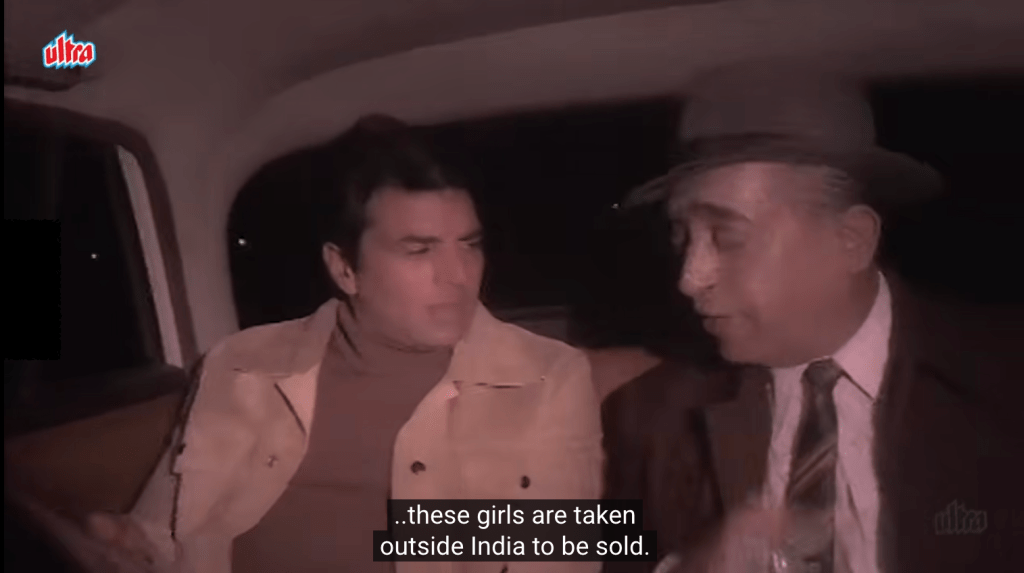
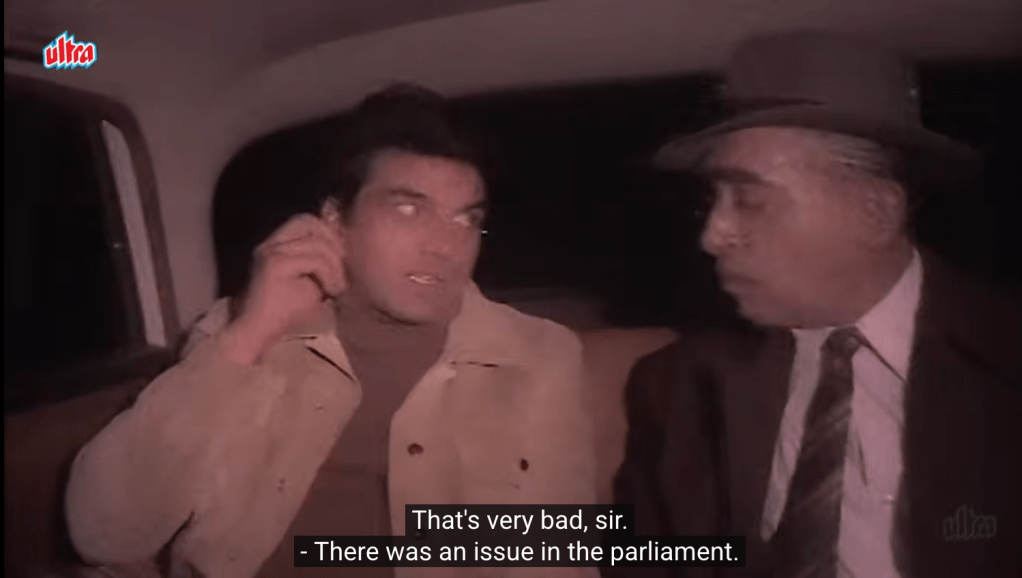
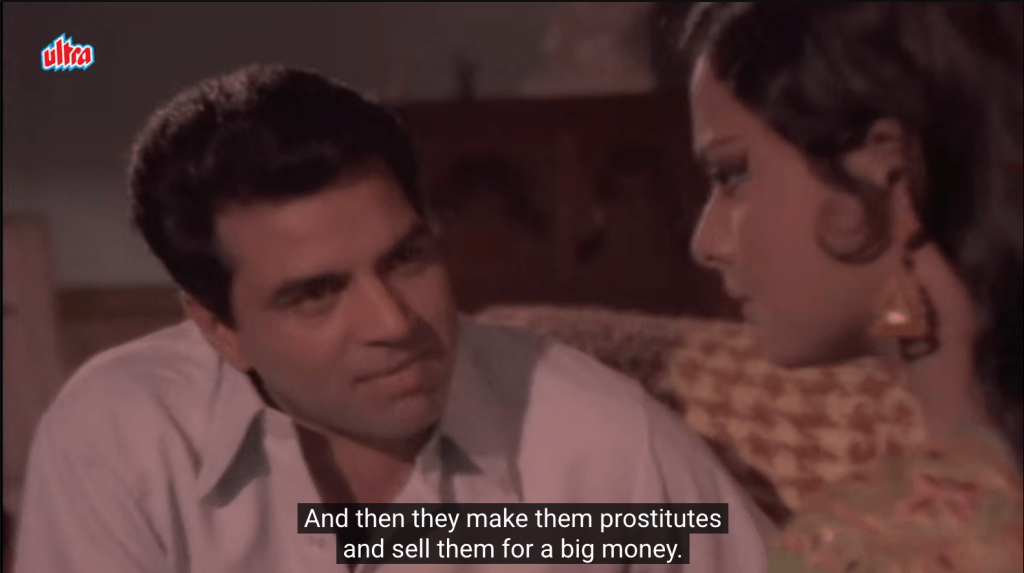
Alert readers will note that there really isn’t espionage here—just a criminal case that the Bombay police can’t solve. So does Keemat even count as a spy film? I do think the action Agent 116 undertakes is on behalf of the nation (more on that later), and Gopal describes himself as a government man (sarkaari aadmi). But more importantly, Bond is clearly the template here, so let’s rule it in based on ✨ vibes ✨ if nothing else and not worry about it any further.
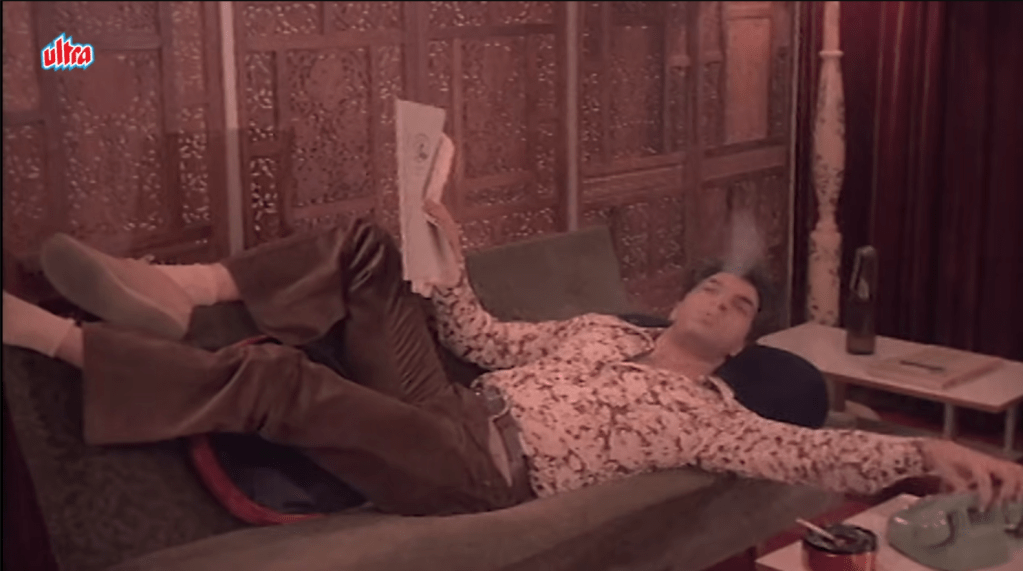

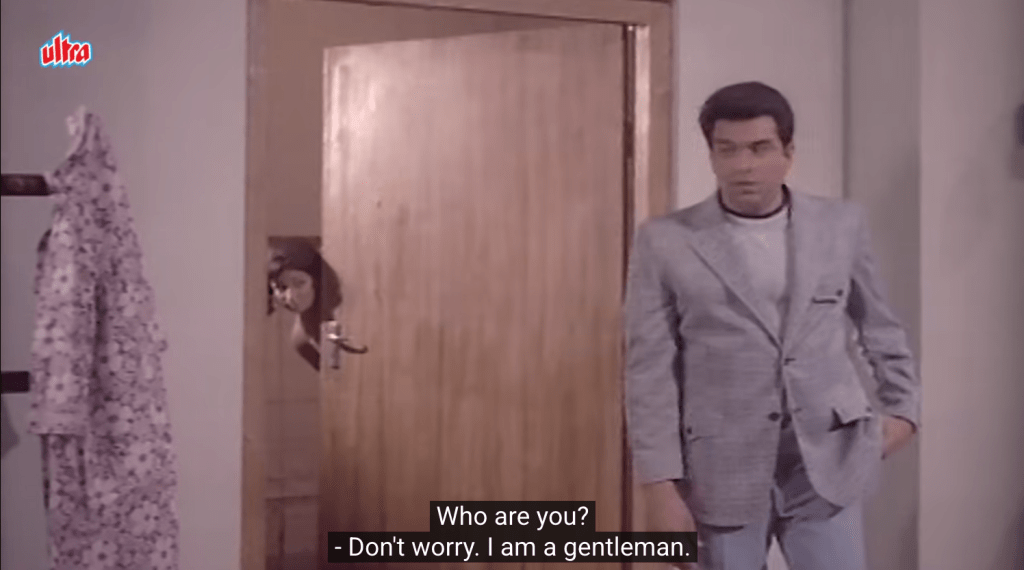
The laid-back heroics of star Dharmendra are a major reason to watch Keemat. He all but winks through most of the film as Gopal/Agent 116 on the hunt for human traffickers, happily dispatching baddies with barely a hair out of place before delivering one-liners or kissing the heroine. Dharmendra is a Hindi film star like no other, and after his death at the end of 2025, it is my duty and honor to share another of his films with Gutter readers. He had an astonishing career for decades, starting as sensitive romantic lead, transitioning to a funky action hero in the 1970s, then a growling machine-gun-toting elder in the 1980s and 90s (remarkable, really, given that he was in his 50s at the time), and eventually beloved paterfamilias, still melting hearts at age 88 in one of his last films (Rocky aur Rani Ki Prem Kahaani). His obituary in the New York Times used the phrase “easygoing machismo,” and I couldn’t agree more. The macho side of his persona must be acknowledged, but equally significant is the absolute effortlessness of his charm. Playing a Bond-like character who is steamy and aggressive while also doing the right thing for India is a perfect fit for him, and I can’t think of any other male stars at the time who could have done it as well. They simply aren’t formidable enough in this kind of context.
Director Nagaich seems to take a Eurospy-appropriate approach to running this whole project: that is, maximum results with minimum effort. A lot is done with looks and visual connections rather than dialogue, which suits Gopal’s demeanor perfectly. Nagaich (and whoever wrote this; the film credits one person with “story idea” and another for dialogues but no one for overall writing) drops interesting ideas that could have been more prominent threads or at least points to reflect back on here and there. The criminals’ violation of women’s bodies can be read as a comparison to foreign invasion of the motherland. Drugs pollute physically, and sex work pollutes morally. But more could be done with the idea that national social issues like poverty and dead-end or drudgery-filled home lives drive these girls to succumb to the temptations of a cosmopolitan lifestyle and follow the groomer/intake staff. A documentary on Nagaich talks about spy films as escapist, but it also seems likely to me that barely 25 years after independence from Britain, there’s a desire to use art to explore ideas about what a new nation perceives as its strengths (the ability to put forward a brash, brusque hero like Dharmendra who approximates what Sean Connery does) and potential weaknesses (women who are no longer content to only work in the home or marry young at their parents’ direction). Bond is nothing if not competent across international contexts, and I can imagine creatives in India wanting to explore how their cultures can belong to such a world too.
The more I think about it, the more the film seems like Gopal reminiscing about events in his own solipsistic memory. Everything unfolds in a style that matches his character, and the elements included are the aspects of the story he’d want you to know. He’s not interested in the philosophical turmoil of nation-building, but at least he’s a good storyteller. We in the audience just happily go along with what Gopal tells us we want, as does everything/everyone else in the film.
While this is definitely the hero’s film—no surprise, given the basic format—there are some interesting things going on with the women. The bad guys state that part of the brilliance of their plan is that none of the girls they ensnare will be able to flee because the girls’ “bad” behavior means they will no longer be welcome back in their homes, rendering them even more desperate and dependent on the criminals. Fortunately, the film makes no such judgment. Sudha, who is the sister of one of the victims, flat-out says that she will take her sister back no matter what she’s done or where she’s lived. In a cinema culture that tends to have victims of sexual assault kill themselves rather than live with the shame of being attacked, the idea that women could survive sex work and be welcomed back into the family unit is a significant piece of this film, even if it’s not a stylish or high-octane component.
This may be stretching things, but I’m also tempted to say that the idea of a national intelligence organization helping find missing girls is significant because it indicates that these missing people have value. It may be a sort of commodified “women belong to their parents or to men partners” value, but what if it’s more a sense that women deserve bodily autonomy or are important to the well-being of the nation? There aren’t state secrets or weapons in Keemat—just missing girls. In a country that has a very recent history of female infanticide, isn’t the idea of investing resources in rescuing women kind of radical? Another small strand in the film is the attempt by a newspaper to track what’s going on, and just as Gopal is going to meet the reporter in a safe house, he’s thrown from a balcony to his death. This too punctuates how evil the criminals are: the fourth estate is also important to the new nation’s functioning. Is Keemat…progressive? I’m not sure the film is taking a stance, exactly, but there’s enough material present that I want to poke at it a little bit.
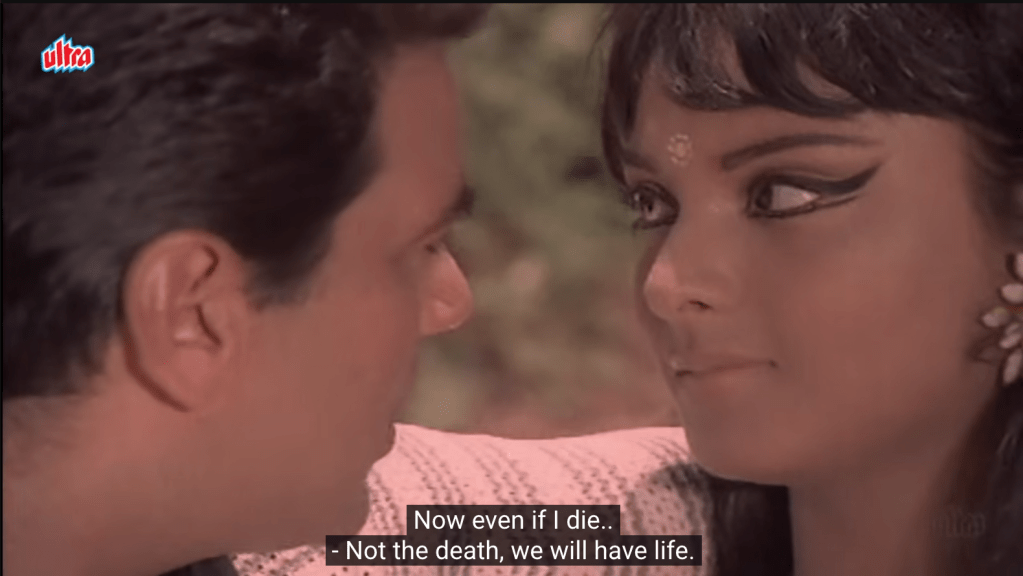
Additionally, we get a heroine who’s a little naughty by the standards of mainstream Bollywood in 1973: drinking, staying the night at a strange man’s house, kissing her fella as he reclines on a bed. Sudha has no regrets and, amazingly, suffers no consequences! This attitude absolutely fits the Eurospy vibe.
Gopal and Keemat definitely deliver on suave, silly, action fun. Weird and overly-complicated methods of silencing traitors (which I won’t spoil because it’s a hoot) is one of many James Bond boxes ticked with great gusto by the cast and crew of Keemat. Others include:
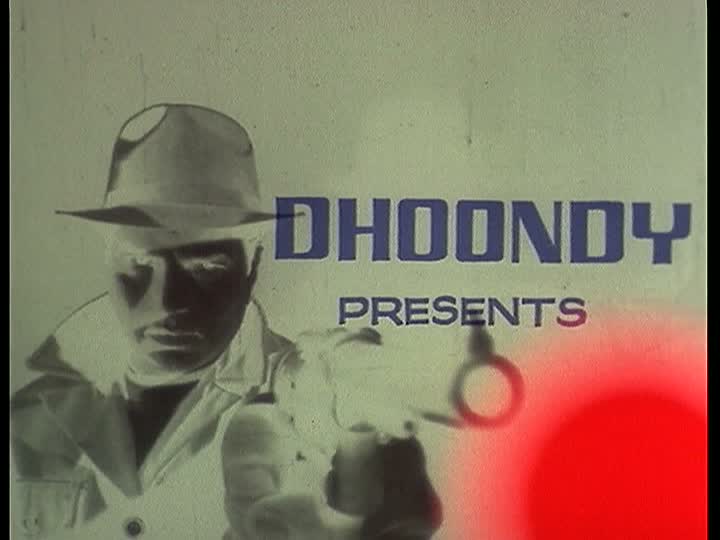
- groovy titles and theme music complete with brass and surf guitars (link below), as well as overall fantastically stylish music by Laxmikant-Pyarelal,
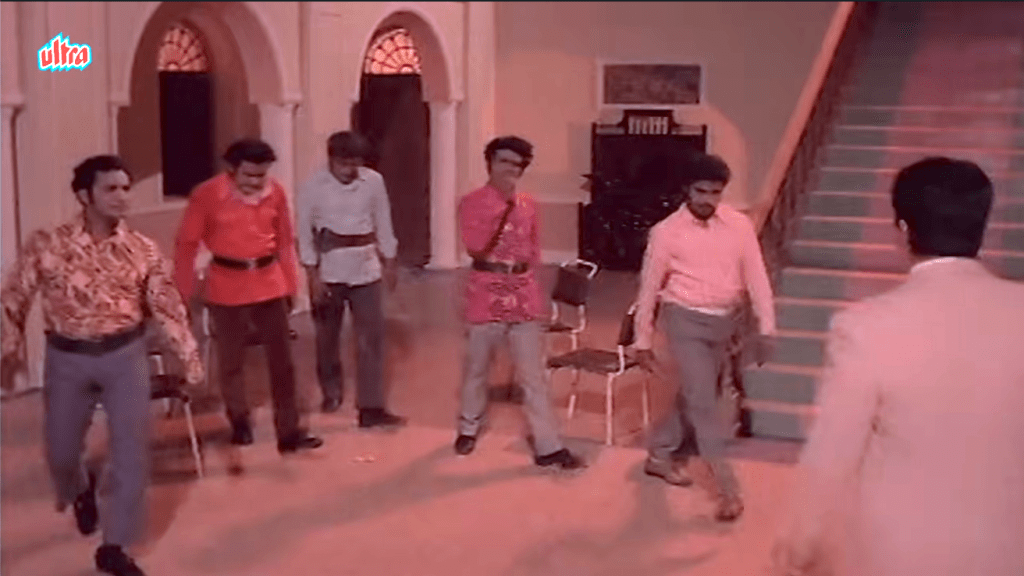
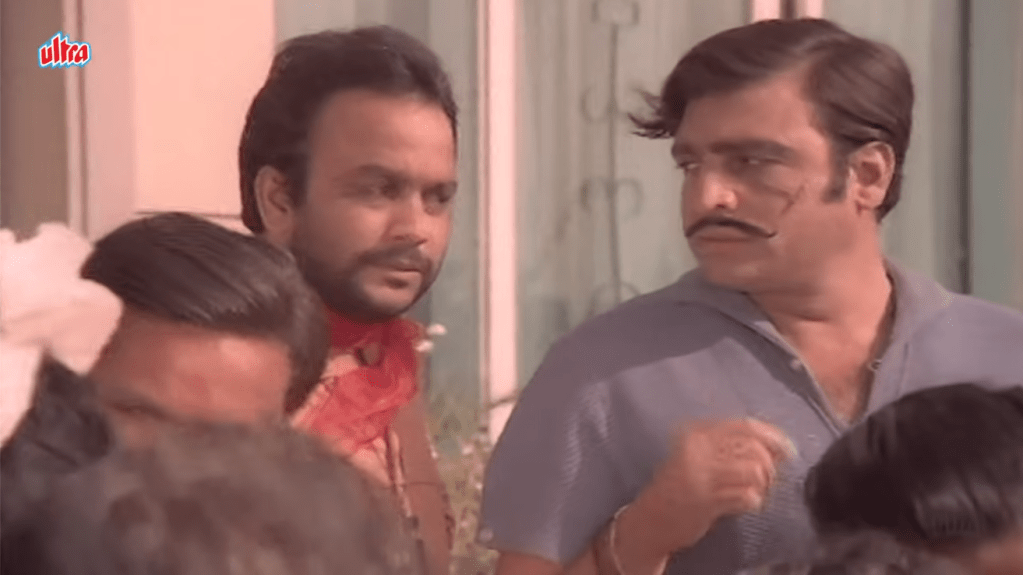
- a dripping-with-bad sub-baddie,
- a maniacal, exaggeratedly silly arch villain who has a stylized hideout and animal companions,
- a plan to acquire great riches that involves oppressive labor practices and moral degradation of the less fortunate,
- Interpol
- and dry delivery and droll humor by the lead agent.
This being 1973 Bollywood, there are also:
- shots of vintage scenery,
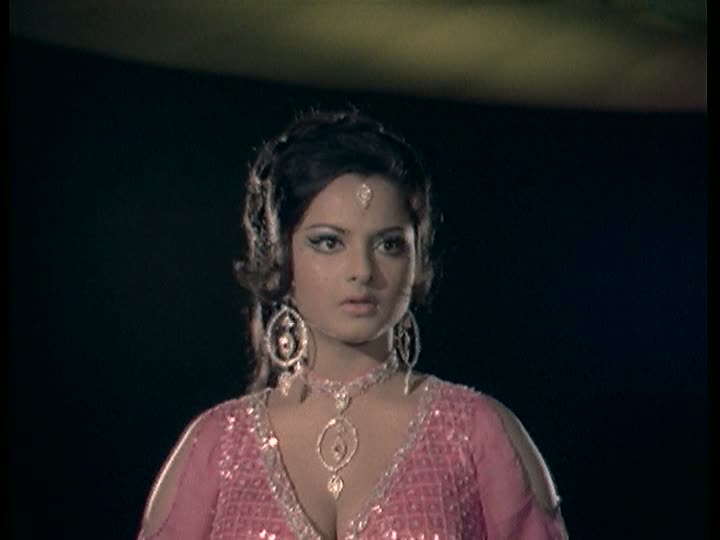
- fabulous wigs and outfits for women and men alike,
- glamorous makeup, with extreme eyeliner that does not meet in the corner as the look to sport even when you’re in uniform
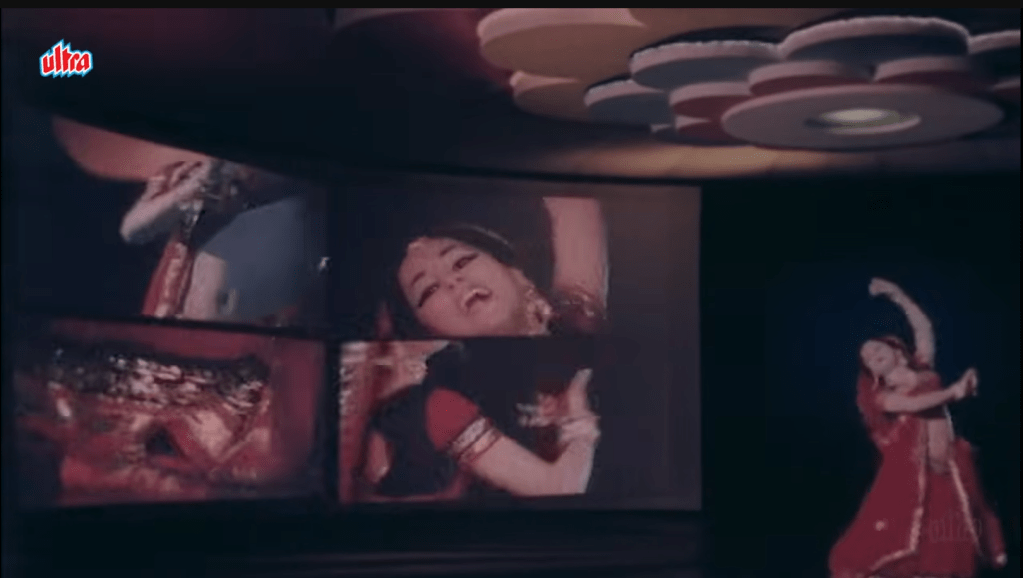
- and a nice variety of songs, including a chronicle of Sudha’s sister’s (Padma Khanna) descent into the groomer’s world (see her get drugged and begin dancing in increasingly suggested ways, culminating in her photograph being taken in an aparently compromised position); a cabaret performance by Jayshree T; Rekha drunk dancing in her nightie; and the big number featuring the enslaved girls being auctioned off to a room of international buyers.





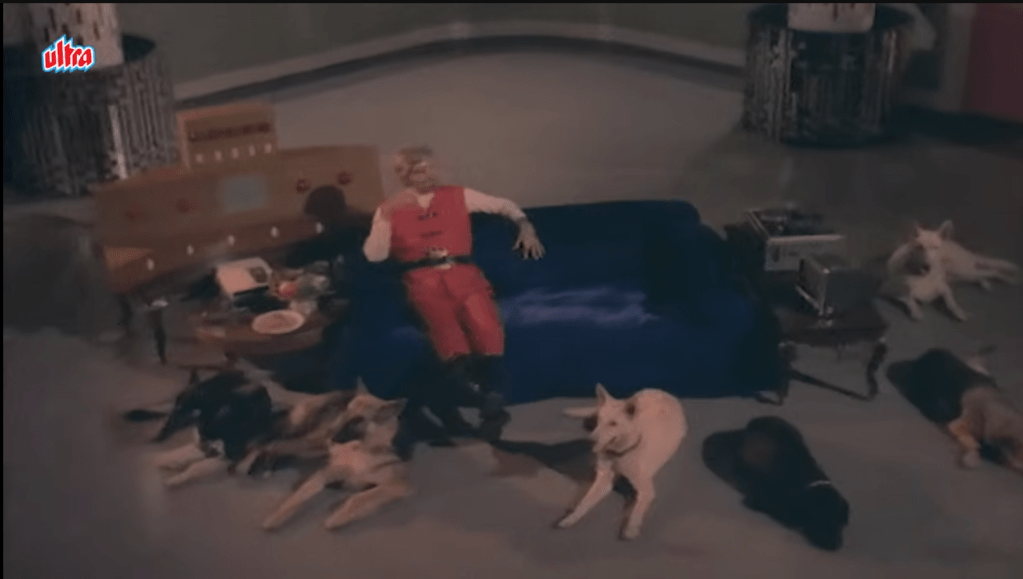
Please imagine these lists in a “it’s the journey, not the destination” sort of way. Keemat is a wonderful collection of fun ideas and scenes that don’t add up to much, but it doesn’t matter because everything is so enjoyable.That’s more or less what I said about Nagaich’s Farz too, but“ stylish and fun spy movie” is a mighty legacy to leave.
Keemat is available for free on Youtube with English subtitles. An English-language documentary on Ravikant Nagaich’s work is available on the Indian cinema site Cinemaazi. To read a little more about mid-century spy projects in Hindi cinema, take a look at my writeup on Nagaich’s debut film Farz here. And if you’d like a recent Hindi spy film, I fully recommend Pathaan, currently available on Amazon Prime in the US.
~~~
Beth Watkins is a civilian bystander and certainly does not sit on a chic couch stroking a cat as she schemes.
Categories: Screen




 The Cultural Gutter


