

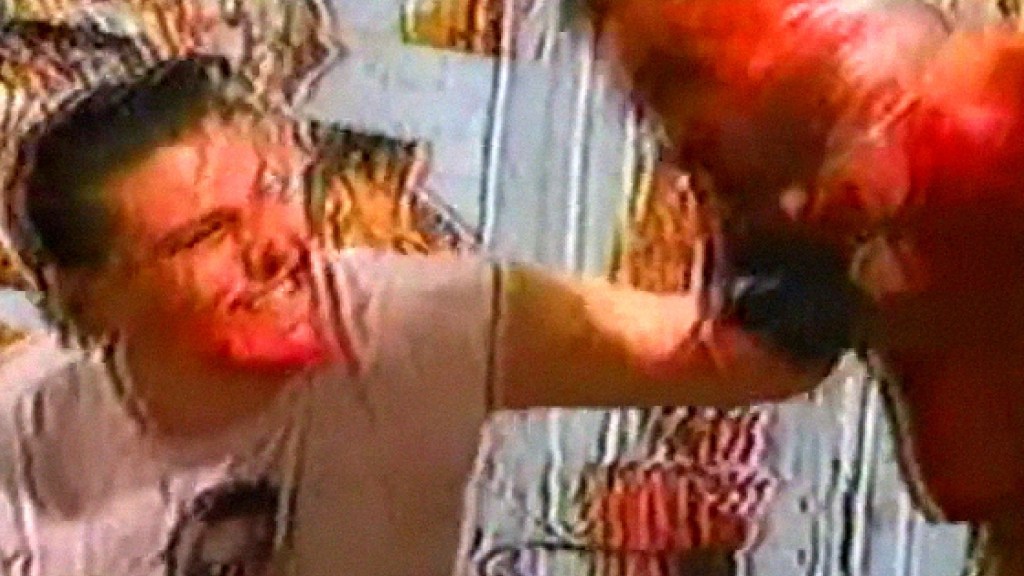
August Underground (2001) is one of those films defined by word of mouth and rumors. When it came out, the internet wasn’t as all-encompassing as it is now; things were still spread manually, passed around in niche underground networks. The internet was still in its “wild west” phase, where you could see almost anything with zero oversight or moderation. In my early twenties, I was sucked into dark rabbit holes, perusing websites like eFukt, Ogrish, Consumption Junction, and Rotten.com. On these sites, you could see actual death mixed with extreme movie clips, and it was hard to tell what was real or fake. August Underground was a snapshot of this era, when artists were experimenting with blurring the lines between fantasy and reality.
There is no narrative in August Underground, as it is intended to emulate “regular” people recording things for their personal collections. The video follows Peter (played by the director, Fred Vogel) and his chatty, unnamed buddy and cameraman. It pulls zero punches and immediately drops the viewer into a fucked up situation: a woman is tied to a chair in their basement and is being brutally tortured by the two men. They have murdered her boyfriend and spend most of their time degrading her and laughing about it. The SOV aesthetic and well-executed amateurish editing go a long way to sell this as a realistic situation in which two nerdy losers have discovered that they enjoy inflicting pain on others. The environment has a small-town vibe, perhaps a commentary on the suburban ennui that can lead to boredom and mania.
Nowadays, True Crime is a trendy hobby, with numerous miniseries on Netflix and thousands of podcasts dedicated to it. YouTubers film themselves putting on makeup while chatting about cases, savoring each gruesome detail, and centering their personalities and brand around it. Even with all of this attention, there is still a disconnect from the brutal reality of the violence and death in these cases and the extreme suffering that these genuine people went through. Although August Underground is over twenty years old, it still holds power by showing the grim reality of what “True Crime” is actually about. It’s not glamorous and seductive; it’s two maladjusted dorks who are making poop jokes while murdering innocent people. It’s a subversion of serial-killer tropes, stripping away the cool factor and mystique and showing it for what it really is. This movie puts you front and center and rubs your face in the blood, puke, shit, and piss.
Since it’s shot on video, it’s harder to make out what is going on (probably for the best), and there are many long takes where there isn’t much going on. Structurally, this doesn’t always make for scintillating viewing, but astute viewers can glean tidbits about the characters from these extended scenes. The two characters in it have Beavis and Butthead energy so the tone is a bit goofy at times; it’s disarming and makes the torture scenes more jarring when they do happen. The main character trait one can pick up on for Peter, at least, is that he is a raging narcissist, even going so far as to wear a shirt with his face on it during one of the torture sequences. Oddly, even though there is a lot of nudity, there is very little sexual violence shown, seemingly one of the few concepts considered taboo even for these psychopaths. The practical gore effects are excellent and will have any viewer squirming in their seat.
It is difficult to say if this film is “good,” but it is intriguing as an experiment in depicting transgressive elements. Found footage films were finding their footing and audience at the time, and Fred Vogel decided to explore the limits of the genre almost immediately, forever establishing the film in infamy.
Vogel followed this up with August Underground’s Mordum (2003), a work that ups the ante on every possible level, producing one of the most appalling and gruesome films ever made.
Peter (Fred Vogel) is back from the first film, and he has new serial-killer partners in crime: his unstable punk girlfriend, Crusty (Cristie Whiles), and her brother, Maggot (Michael Todd Schneider). The movie immediately throws the audience into depravity; Peter walks in on Crusty having sex with Maggot (!), and all hell breaks loose from there. There is slightly more forward motion in the plot in this outing, as it follows the three psychos through their misadventures and torture sessions. Peter houses a white-hot jealousy of Crusty’s relationship with her brother, and all three characters are various shades of fucked up.
Crusty adds an interesting feral vibe to the atmosphere. I hesitate to label it as “female energy” exactly, but it’s a distinct brand of crazy that heightens the situation. She has a penchant for self-mutilation, and to be the center of her attention feels extra dangerous because she has zero regard for herself and shows even less for her victims. There are more torture scenes in Mordum, and they are much more intense than in the first film, showcasing how much the team has improved their practical effects. Seen out of context, one could pass off isolated clips from this film as real life. The sexual elements have also been ramped up; where the original film seemed to shy away from showing such things, Mordum wallows in them. The actors do a great job of selling the insanity; at times, it teeters on the edge of performance art.
After watching this film (and most other transgressive works), people’s main questions are: “Who is this for?” and “Why was this made?” To answer the former question, people are inherently curious about death. Especially in the West, death is hidden from the public eye, discussed in hushed whispers, and hidden behind velvet curtains and mahogany coffins. Works like August Underground rip the sheets off the bodies and expose the darkest aspects of humanity. As for the latter question, the answer is simple: because they can. Art shouldn’t be used only to explore positive emotions; sometimes it’s therapeutic to experience negative emotions in a safe space, whether that’s in a dark theater where nobody can see your face or in the privacy of one’s own home.
Serial killers Pete and Crusty are still at it in the third entry of the August Underground series, with the aptly chosen tagline Penance. While the hand-held home-movie digital-camera style is carried over from the first two films, the degraded VHS aesthetic has been set aside, making it much easier to see what’s going on. Penance feels like a return to form of sorts, especially on the heels of the balls-to-the-wall insanity of Mordum , which was an onslaught of gore and mayhem for the audience to endure. Pete and Crusty’s relationship has waned somewhat, and their interactions as a couple are laid bare, showing how it has been disintegrating over time.
The film has much more downtime, spending long segments following the two lovebirds as they bum around town, aimless and restless. Whenever their boredom gets to be too much, they engage in senseless murder, capturing people, and torturing them in their basement. While they are still dangerous to themselves and others, their killing feels less vicious and manic and more exhausted and depressed.
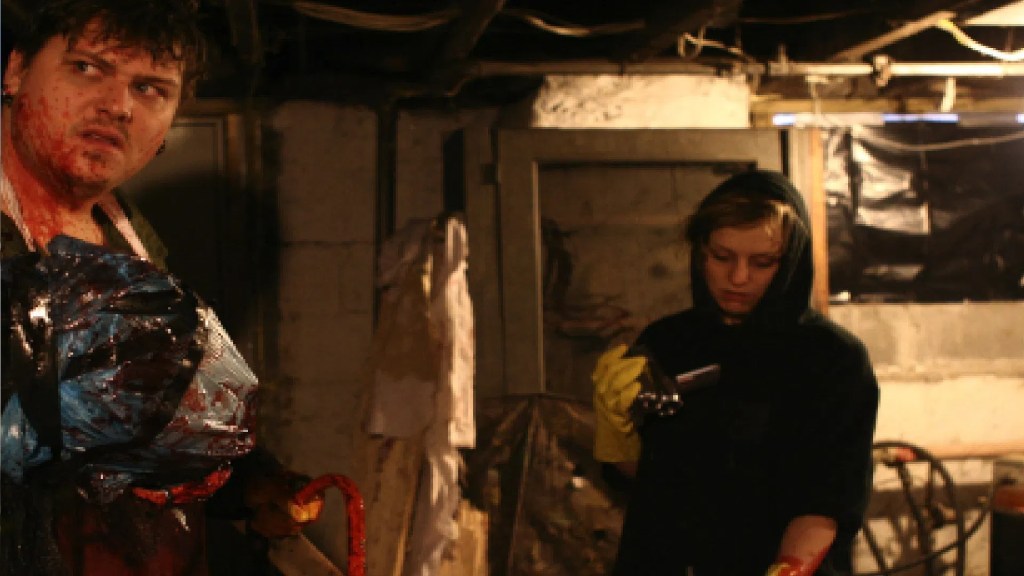
It seems as though the violence isn’t hitting their dopamine the same way, not unlike long-term drug addicts. They are going through the motions, as it were. Crusty and Pete were connected through violence against others, but obviously, this isn’t sustainable. Early on in the film, while torturing a family in their home, Pete is unable to get an erection while trying to sexually assault someone, which showcases his inner turmoil and dissatisfaction with himself and his actions.
Crusty also seems to be having second thoughts, and she begins to seek validation from sexual encounters with random men. At one point, during a torture session, Pete cuts the fetus out of a pregnant woman’s body. Crusty goes into hysterics, sobbing wildly, perhaps mourning the life she never had. In another universe, she and Pete could have had a family or, at the very least, a happy and stable relationship based on love instead of hate. Eventually, they destroy themselves both physically and mentally, enacting their versions of penance, but without any absolution, only oblivion.
These two degenerates aren’t written to elicit sympathy, and it seems wrong to extend them empathy because they have never given it to any of their victims. Instead, it explores the environment that can produce these kinds of people and the society that wants to glamorize them and their actions. If Pete and Crusty were real people, they would undoubtedly have TV miniseries based on them, ready to dive into the gruesome details for an audience to consume mindlessly.
~~~
Michelle Kisner is a film critic, freelance writer, and advocate for physical media.
Categories: Uncategorized