
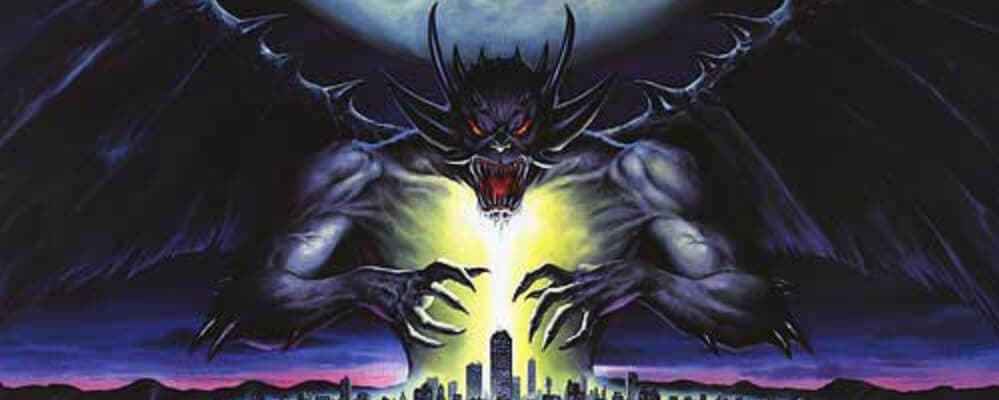
This week’s Guest Star is Michelle Kisner. Keep up with her on Instagram at @robotcookie!
~~~
“Mankind, you are an ignorant race. How foolish it is to believe your kind rules the Earth. Know now that you are not alone; there are unseen worlds that exist parallel to yours. These are the worlds of the Makai, a race of demons. And the Jujinkai, those that are half-man and half-beast. There is an ancient legend, a prophecy foretelling the appearance of a super being every three thousand years. He is called the Chojin! A god above all gods, the Overfiend! The Chojin will appear through the body of a human, and with his great power, he will unite the three worlds. He will create a new world, a world of peace and harmony. His time has now come!” ~The Legend of the Overfiend
My first encounter with Urotsukidōji was in my teens; I spotted the VHS boxset on the shelf at my local Suncoast while shopping with my mom. As any “oldtaku” will tell you, back in our day, Suncoast was the place to be if you loved anime. In the ’90s, anime was an expanding but still niche interest, and it was hard to find brick-and-mortar places that sold it. Suncoast always had a vast selection, and if you wanted to buy three episodes of your favorite show for 40 bucks, they had you covered. Interestingly, they would mix the hentai (adult animation) with the regular anime since it was all marketed similarly. So that is how I convinced my mom to buy me Urotsukidōji; she had no idea it was anything other than the usual “weird Japanese cartoons” I regularly watched.
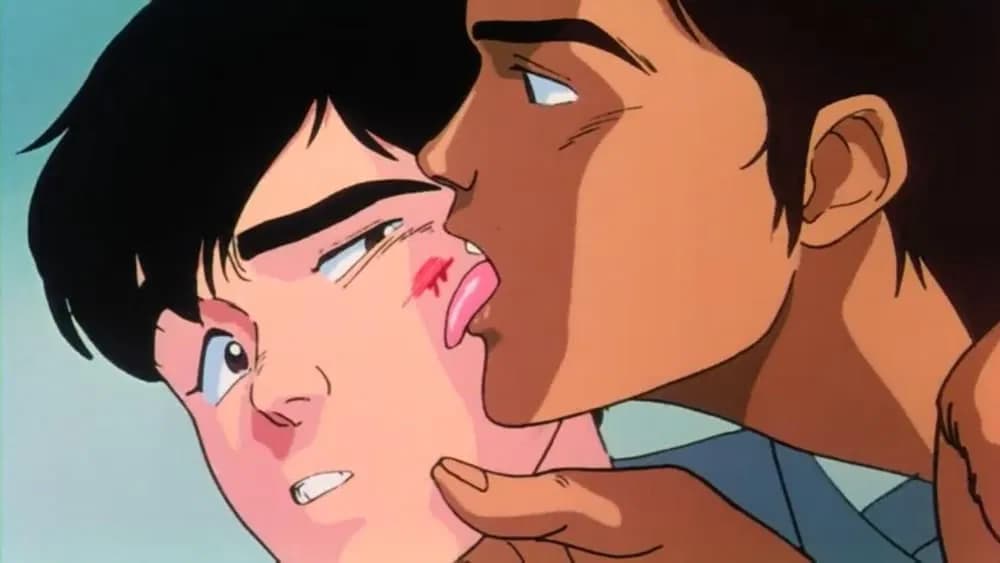
I didn’t know what hentai was at the time. I was attracted to the sweet-looking demons on the box art, and as a massive fan of Fist of the North Star (1986) and Demon City Shinjuku (1988), I was sold. When I got home and popped it into my TV/VCR combo set in my bedroom, I was in for a surprise when I discovered that it wasn’t just a fun, gory anime—there were people having sex! Not just people either; there were gross monsters, and they were getting it on, too! It was eye-opening, but even so, the epic storyline, gorgeous animation, and fascinating characters reeled me in. Core memory created.
Urotsukidōji was created by mangaka Toshio Maeda in 1986 for a Manga Erotopia publication. It follows the adventures of Amano Jyaku, a demon/human hybrid who was kicked out of the beast realm by The Great Elder and sent to the human world on a mission. He has to locate the Chōjin, an all-powerful demon god hiding in a human body. Maeda’s manga is humorous and full of silly jokes, puns, and slapstick comedy. There is a whole lot of sex, of course, but due to the censorship laws in Japan at the time, Maeda had to get creative with the genitalia; in an interview, he stated, “At that time pre-Urotsukidōji, it was illegal to create a sensual scene in bed. I thought I should do something to avoid drawing such a normal sensual scene. So, I just created a creature. His tentacle is not a penis as a pretext. I could say, as an excuse, this is not a penis; this is just a part of the creature. You know, the creatures, they don’t have a gender. A creature is a creature. So it is not obscene–not illegal.”
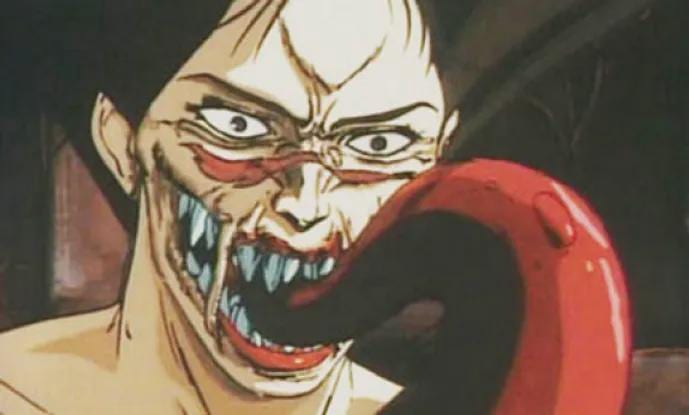
“Tentacle porn,” or “Tentacle rape,” as it is sometimes crudely called, wasn’t exactly new at the time, but Urotsukidōji popularized it, mainly when it was imported to the West. The manga version of the story flirts with the notion, with some of the demons having long tongues or abnormally extended penis-like appendages, but in the anime adaption, it’s much more prominent. Actual tentacles popped up more in Maeda’s later works, like LA Blue Girl (1992) and Demon Warrior Koji (1999), and he has been associated with the concept ever since, which he gleefully leans into.
The anime OVA adaptation of Urotsukidōji, localized in the West as The Legend of the Overfiend was directed by Hideki Takayama and is a loose retelling of the manga with the many hijinks skipped over. Takayama’s version is more like horror porn, with an emphasis on the dark and the grotesque. Where the manga was, for the most part, somewhat lighthearted, the anime is nihilistic and apocalyptic, focusing more on murder and mayhem than sex. In both versions, much of the sex is non-consensual, focusing on “mind-breaking,” where the victim is engulfed in so much supernatural pleasure that they lose their sense of self and awareness of their surroundings. The amount of sexual assault on display can be off-putting, and in combination with the extreme gore, it can also be overwhelming.
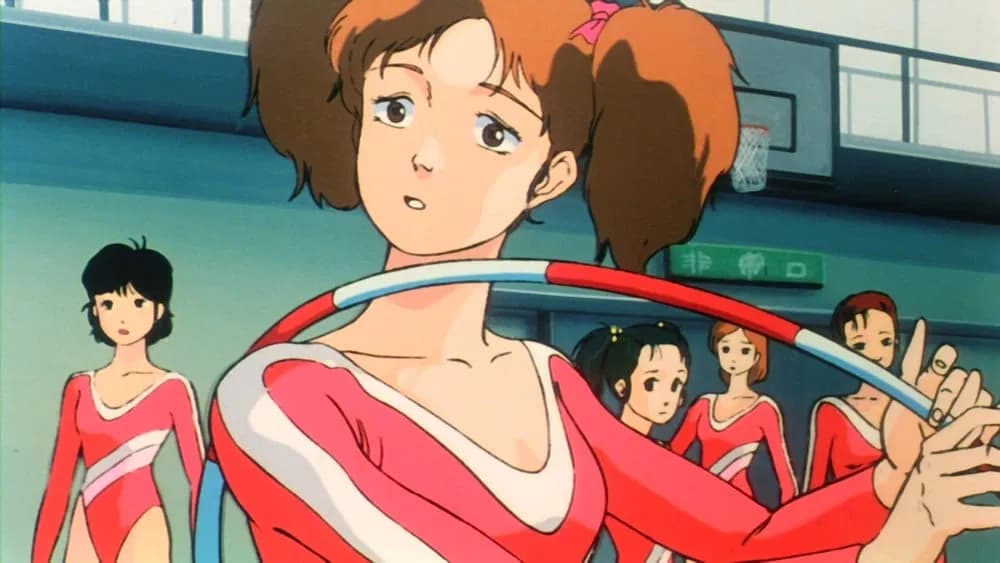
One of the most intriguing contrasts between Maeda and Takayama’s takes on the material is their treatment of women and the exploration of masculinity. In the manga, for example, Akemi, one of the female main characters, is sex-positive and highly outgoing, often soliciting sex from her boyfriend, Nagumo. In the anime, Akemi is virginal and reserved, a fragile flower who must be protected, which is a build-up to her eventually being “defiled” by the monsters, which is also a common kink in hentai. No matter how powerful a female character is in both versions, they are easily overcome and assaulted by the male characters, and the more sexually free they are, the more they are punished in the story.
Nagumo is depicted as weak and powerless in both the anime and the manga, but he harbors a powerful entity inside him: the Overfiend. In this way, he serves as a self-insert for the male audience, a power fantasy. Even if they are perceived as feeble, there is the potential to be strong and virile. When Nagumo transforms, his body changes shape, becoming large and muscular, with particular attention to his member, which grows to double in size. For a piece of media that is solely aimed at straight men, there are a lot of homoerotic connotations and phallic obsessions. Conversely, there is an exploration of humiliation kink as well, when Yūichi Niki, a short nerdy classmate who is in love with Akemi, is offered power by the demons in the form of pulsating demon penis, the catch being that he has to cut off his penis to attach the new one. He, too, morphs into a bigger, more potent version of himself but loses his mind when his strength is no match for the Overfiend.
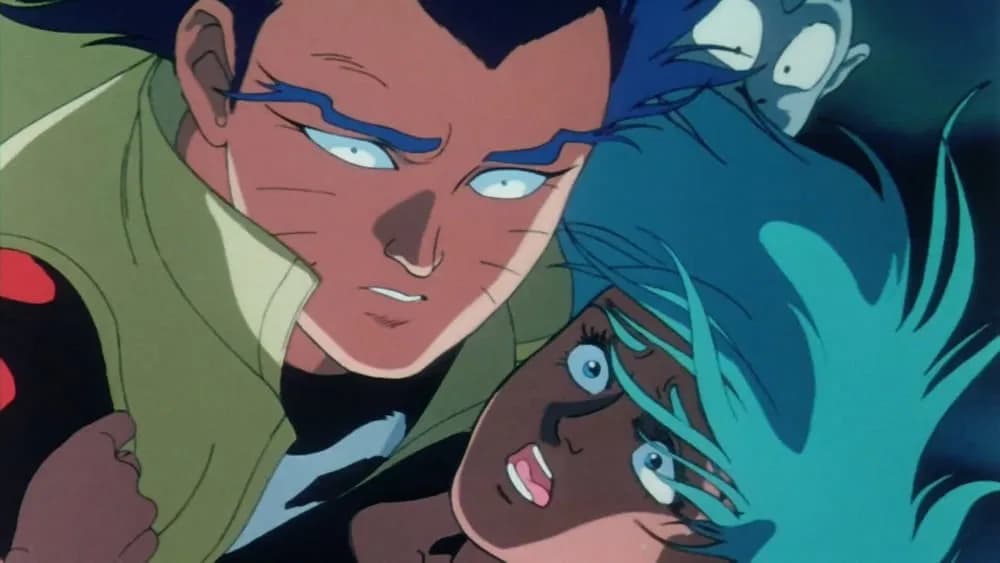
Japanese media in the ’80s was preoccupied with the end of the world, and it’s no different in Urotsukidōji. Each of the story arcs ends with some immense destruction, from a hospital being blown up by the Overfiend’s colossal penis and subsequent ejaculation (!) to the annihilation of the beast, human, and demon realms. The Overfiend is death incarnate, a means to the end, a catalyst of change. Unlike most anime, all of the characters in this story are doomed, and their worlds have been reduced to flaming rubble and desolation. The one seed of hope is that with this destruction, something more beautiful can be created and that if enough time passes, all this horror will finally be forgotten.
~~~
Keep up with Michelle Kisner on Instagram at @robotcookie!
Categories: Guest Star



 The Cultural Gutter