
Cyclops (1987)
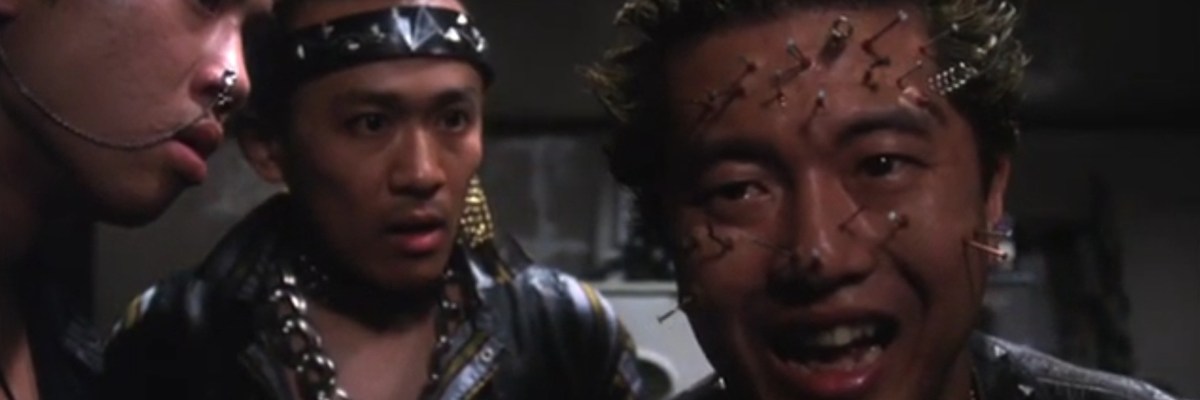
Japan made a good number of direct-to-video horror shorts in the ’80s, and Cyclops is one of the better ones, even though the story is almost incomprehensible.
Takamori (Kazuhiro Sano) is obsessed with birth defects, specifically “cyclopia,” where the two eyes fuse together in the womb to form one single eye. Though it is extremely rare, it can be caused by the mother’s exposure to environmental toxins. Takamori seems to believe humans with cyclopia are the next step in human evolution, and he conducts highly illegal and unscrupulous research to unlock the mutation’s secrets. Takamori’s sister, Miyuki (Mayumi Hasegawa), attracts the attention of one of his colleagues: a tall, intimidating, sunglasses-wearing dude who seems to be hiding something sinister.
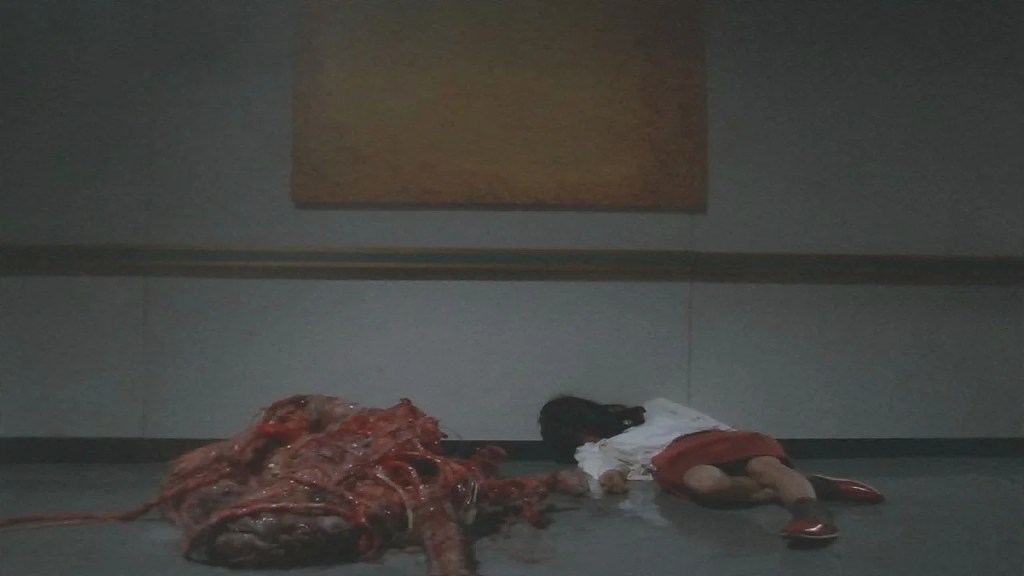
Honestly, the story becomes very convoluted early on and keeps adding new bizarre information as it goes along. Thanks to the short runtime, this doesn’t become too much of an issue because the climax comes quickly, and the last twenty minutes are so jam-packed with sloppy and sticky body horror that thoughts of the plodding first half melt away (like everyone’s faces). Cyclops feels like an homage to the disgusting body-transformation sequence in Cronenberg’s The Fly (1987), with some extra sci-fi lore hastily tacked on. It’s a gooey good time, just don’t try to figure out what the hell is going on for the first thirty minutes.
Battle Heater: Kotatsu (1989)
Battle Heater shows its hand right at the beginning, depicting a car crash with obvious low-budget model work and then having the real car run over the model. That sets the tone for the rest of the film: a goofy horror-comedy that doesn’t take anything seriously. Even the title gets in on the fun; a priest who feels an evil energy coming from the apartment building (which is also the main setting of the story) is crushed by a meteorite (!) with the title emblazoned on its side.
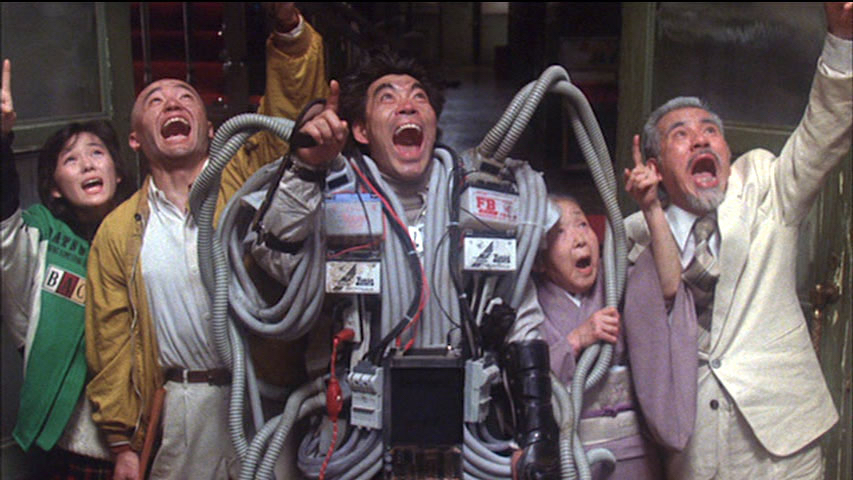
The story begins in a junkyard where Furuichi (Pappara Kawai) and Hama (Akira Emoto), two electronics repairmen, rifle through the trash for usable spare parts. Furuichi finds a kotatsu, a small table with a heater attached underneath, in the pile. Elated, Furuichi drags it back to his apartment to ward off the chill of winter. Unbeknownst to him, the kotatsu is possessed by an evil demon with a taste for human flesh. Only Furuichi and Hama can stop the ravenous kotatsu from sucking all the electricity from the building and eating all of the residents.
Although it is apparent that the film was made on a low budget, the creature effects and gore are top-notch. The soundtrack is rad too; the majority of it is from punk band Bafuko Slump, who also stars in the film! Battle Heater suffers a bit from a jumbled and chaotic narrative that makes it hard to follow at times, but fortunately the wacky cast of characters brings the viewer back into the story. Several of the apartment dwellers have their own side stories going on outside of the man-eating kotatsu; the most amusing being the married woman and her lover who have murdered her husband and are trying to unsuccessfully dispose of his body.
Battle Heater almost feels like a parody, jumping back and forth between the monster attacking people and ridiculous situations. The kotatsu seems to have an insatiable hunger for voltage, sending its fanged plug out like a snake searching for unprotected outlets. Once it reaches its full power, it is a formidable force, with a huge maw and the ability to “walk” around on two of its table legs to munch on whoever it pleases. The climax of the movie is a sight to behold, and makes up for all the parts in the middle where it drags a bit. Definitely a film that should be on anyone’s list who loves ’80s-era creature features.
Dragon Head (2003)
Dragon Head (based on a manga of the same name) doesn’t waste any time getting to the action: within the first ten minutes of the film, there is a horrific bullet train crash that involves a bunch of young students on their way home to Tokyo from a field trip in Kyoto. Only three survive: Nobuo (Takayuki Yamada), an unpopular, bullied student; Teru (Satoshi Tsumabuki), an unassuming, average young man; and Ako (Sayaka Kanda), a skittish girl. Nobuo immediately loses his mind in the aftermath, brutally beating a seriously injured teacher to death for not stopping the bullies from harassing him and terrorizing Teru and Ako. The first third of the film plays out like a miniature Lord of the Flies situation.
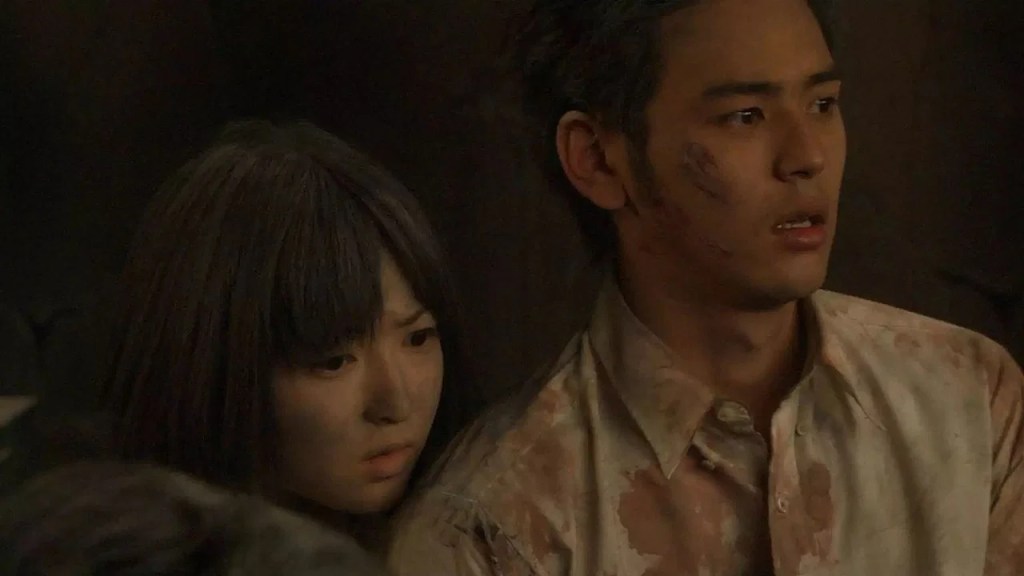
Once Teru and Ako escape Nobuo’s clutches, the film begins in earnest. After climbing out of the collapsed subway station, they discover the surface has been irrevocably changed by some natural disaster and is completely blanketed in white and grey ash. Every building is in ruins, and the remaining populace is shell-shocked and listless. Food and water are in short supply, and the duo has to figure out how to survive in this new, harsh environment.
The decimated countryside looks excellent; it appears to be a mix of real sets, models, matte paintings, and CG compositing. It truly feels overwhelming and hopeless as the two students trudge through the ash, looking for safety. The other wanderers and pockets of humanity they encounter are either curled up in a corner waiting to die or aggressively violent, out to take what supplies they can get by any means necessary.
There is not one single moment of respite in the entire film, just staggering despair. The world is so hopeless that Teru and Ako come upon two children who have been lobotomized by their deceased surgeon father, an act of mercy in his eyes, because they will live without the ability to feel the horror of their new living situation. It’s a bleak narrative, and it brings to mind films like Threads (1984). It’s difficult not to draw parallels between this situation and the terror of the nuclear bombing of Japan in WWII.
Perhaps the closest thing to hope in Dragon Head is the two protagonists’ will to survive no matter what. No matter how bad it gets, they turn to each other for support, bolstering each other’s spirits with love and compassion. Even though the film ends on an ambiguous note, the viewer can take solace in the fact that even though the world has crumbled away around them, Teru and Ako might make it through as long as they stay together.
~~~
Michelle Kisner is a film critic, freelance writer, and advocate for physical media.
Categories: Uncategorized