

I’m not even sorry about that title. Boom (2003, directed and written by Kaizad Gustad) really is about a group of models behaving badly. But it’s also an artifact of one of the classic paths to stardom in Bollywood: the model-turned-actor. The models in the film have to act like thieves, and several actors in the film are models in real life. To quote Fabio in Zoolander, it’s a story of slashies. This is not a career trajectory I spend much energy thinking about—tall bodies with pretty faces being no guarantee of anything other than just that—but Boom got my wheels turning.
This is a film that everyone who watches Hindi movies has heard of but, at least in my corners of the internet, that nobody says anything about other than that it is bad. And that, dear reader, is simply not enough to go on. What kind of bad is it? Is it distasteful? Dull? Unwisely cast?
Let’s discuss.
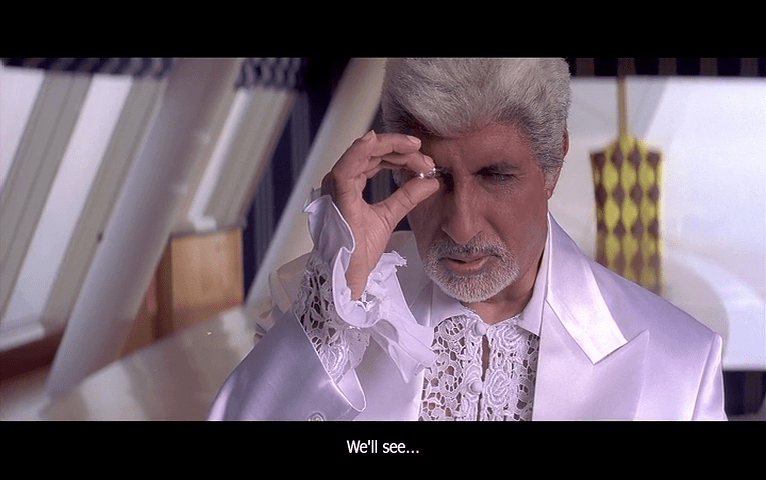
The reason so many of us have heard of Boom is because of its jam-packed cast. Its coterie of villains includes Amitabh Bachchan, one of India’s biggest stars of all time (and last seen on the Gutter as the Travolta character in the Face/Off-inspired Aks), playing a very unserious crime boss in head-to-toe white reading comic books; Jackie Shroff, whose star rose as Bachchan’s began to fade a decade later; and Zeenat Aman, one of Bachchan’s frequent romantic leads and fellow ass-kicker in their heyday. There are Gulshan Grover and Javed Jaffrey, stalwart character actors who specialize in villainy and comic relief (respectively) doing a spin on their usual. There is Seema Biswas, graduate of the National School of Drama. And then there are…the real-life models who play models: Madhu Sapre, the debut of future superstar Katrina Kaif, and someone you may have heard of even if you don’t watch Indian films, Padma Lakshmi.
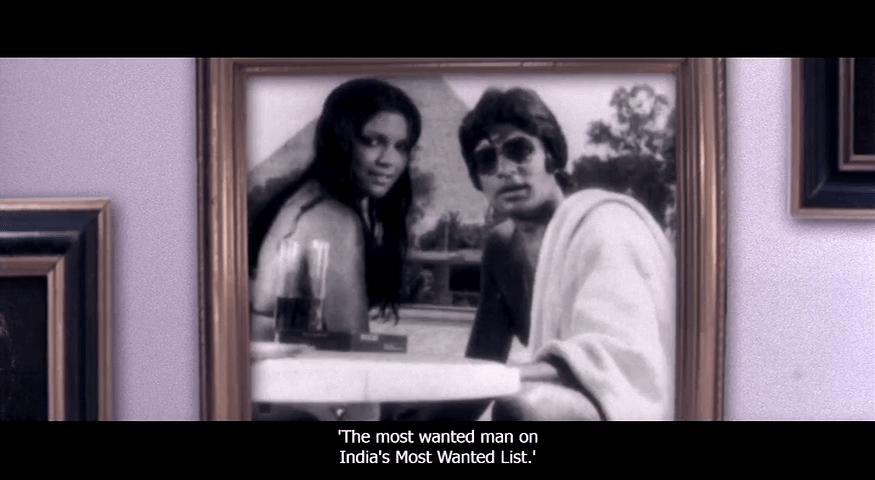


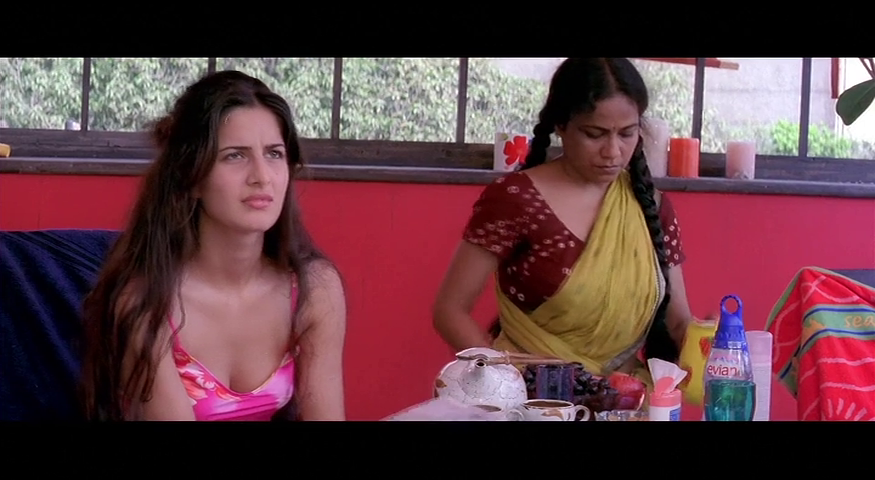
I’m bothering to write all of these names out because they all deserve mention; this is a truly weird group of people, even in a cinema tradition that loves a “multi-starrer” (a very useful Indian English term) and throws together cast with different specialties. It’s not at all unusual to see India’s art film powerhouses in mainstream, and even B-grade films or worse (“worse”), but somehow I did not expect Seema Biswas—best known for her portrayal of the harrowing life of gang-member-turned-politician Phoolan Devi, for which she won the National Film Award—playing housemaid to Katrina Kaif, who in the 2010s became one of Bollywood’s highest-paid stars despite constant criticism of her acting and inability to speak Hindi. In addition to the three women playing models in the film, there are a few other real-life models too. Aman, Shroff, and Jaffrey all worked as models before their acting careers took off. While modeling (and the seemingly related world of beauty pageants) is a relatively common start for women in Bollywood, I was struck by this film having at least two men who had followed that path too. Fabio would be so impressed by this slew of slashies.
The plot of Boom is straightforward, at least compared to some of the other Indian films I’ve brought to the Gutter (but I will refer to characters by the actors’ names, since there are so many of them—but of course the performers are not responsible the content of the film). Three women models accidentally interrupt a heist when they knock over one of their rivals on a catwalk and she spills diamonds from her hair onto the floor.

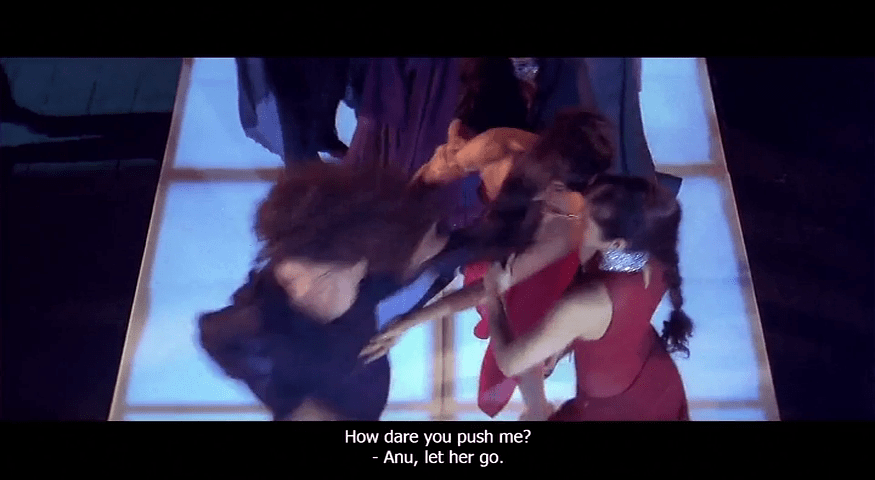
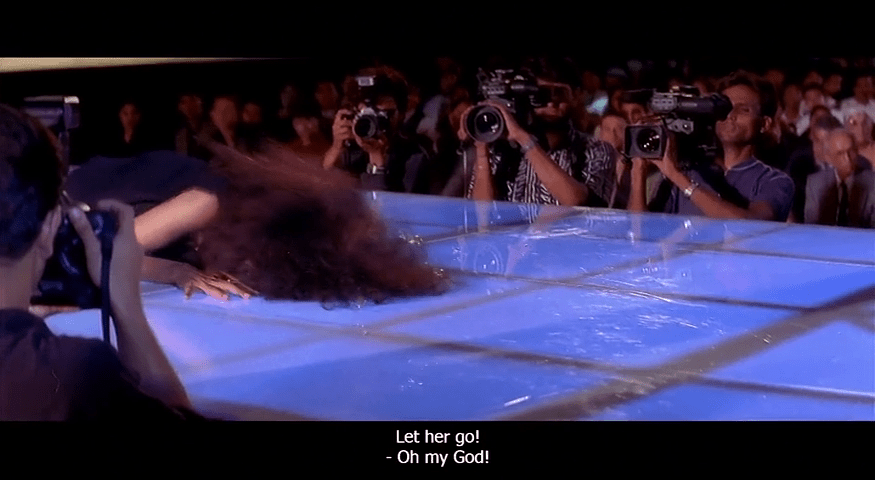
“THAT’S why her hair is so big,” I yelled at my tv! “It’s full of diamonds!”
Greedy audience members scoop up the loot and run away, and our heroines are stuck: the crime lords whose deal they accidentally ruined demand recompense, and Jaffrey is always around with a gun to make sure they stay in line. There are a few more threads that flesh this all out, mostly among Bachchan, Shroff, Grover, and Jaffrey, who hate each other but grudgingly work together. We see more of Bachchan’s immoral activities like trafficking Indian girls into the UAE, and Aman’s work as his right-hand woman in a sort of lean-in boss-bitch arc. But Boom is mostly about Kaif, Lakshmi, Sapre, and Biswas trying to find their way out of the mess. Everyone in the film is interested in themselves above everyone else, which makes them easy to manipulate. The heroines are, of course, by profession skilled at using beauty to distract from the effort they’re expending, so it’s a reasonable leap of movie logic for them to succeed at convincing the criminals that they’re toeing the line. They are, in fact, models who have to become actors.
I didn’t find Boom bad as much as tacky, and even that is partly due to the aesthetics of its time; 2003 is a nadir in style (we’re dealing with low-rise jeans and layered tank tops/Christina Aguilera Drrty levels of fashion, not actual couture). Early in the film, the camera zooms in on Shroff licking a newspaper picture of Bo Derek, and later he gets way too close to a heroine’s cleavage (and the camera is equally lascivious). As the models’ keeper, Jaffrey constantly leers and points a Freudian-ly large gun at the women and does pelvic thrusts outside their door.


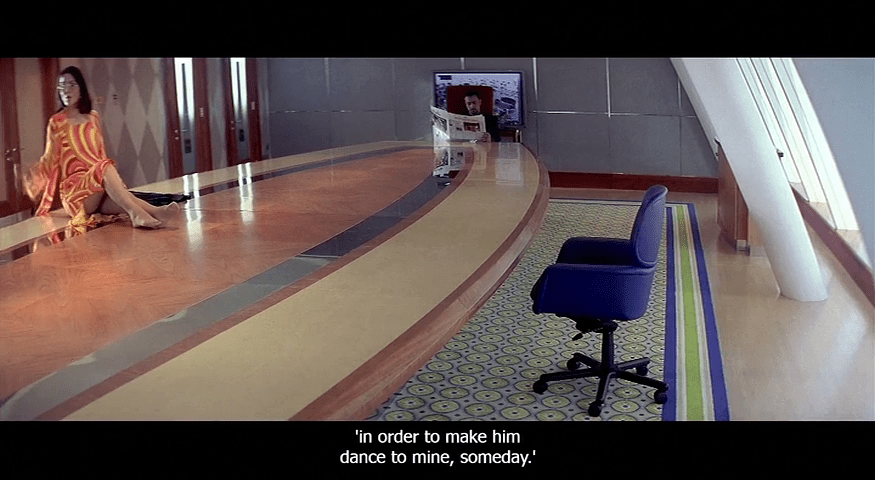
Bachchan’s treatment of some of the trafficked girls is gross too; there is cruelty in the way he and Aman assess their appearance and dispatch of those found wanting. And Aman, never Bollywood’s greatest dancer, has to shimmy across a board room table to her best-known song from the 70s, and it’s just not convincing.

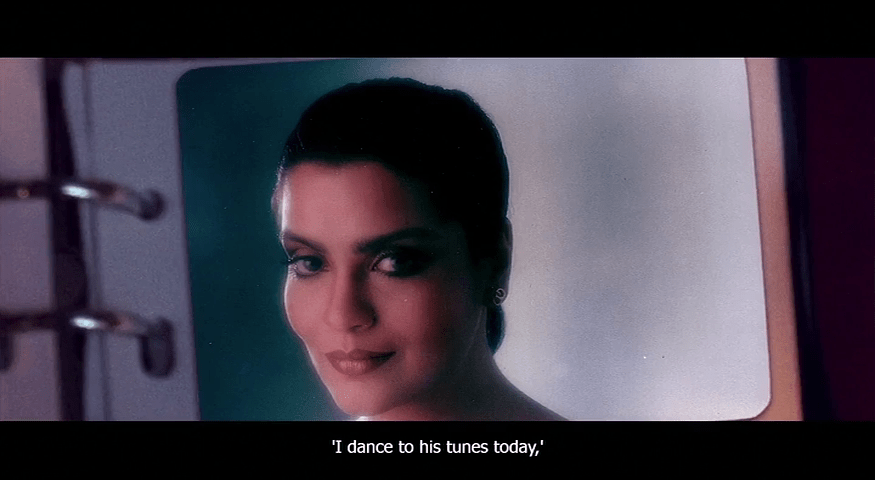
Boom has its fun, though. The brother-esque bonds and rivalry of Bachchan, Shroff, and Grover is a perversion of Bollywood’s beloved tropes about brothers, whether biological or spiritual, who unite by the end of a film. Jaffrey lunges around in t-shirts as tight as the women’s clothes, suggesting vanity is not gender-specific. When forced to rob a bank, the three models wear masks of their own faces, turning their physical beauty into something flat, grotesque, and even menacing. In the middle of the bank robbery, one of their victims has a song sequence (I assume a hallucination as he lies bleeding?), turning a typical nightclub-style number into something completely tragic.

One of the contributors to the wikipedia entry for Boom describes it as a black comedy, and I don’t disagree. It does use humor and a sense of absurdism about greed, competitiveness, and real-life issues like Indian criminals hiding out in the Middle East. [Spoiler ahead!] I think it could also be argued that the film is poking fun at older men’s limited views of younger or lower-class women. Biswas’s servant character proves to be the brains of the women’s plan to get the better of their captors, and she and the models succeed because the gangsters didn’t expect them to be so capable. “Just because someone is very pretty doesn’t mean she isn’t also smart” might be one of the lessons here. The three models are generally kind of juvenile in that sexy-baby-pouting way young women are encouraged to be, but they’re not stupid, and they’re certainly adept at creating a surface impression of seduction and compliance while secretly doing something else.
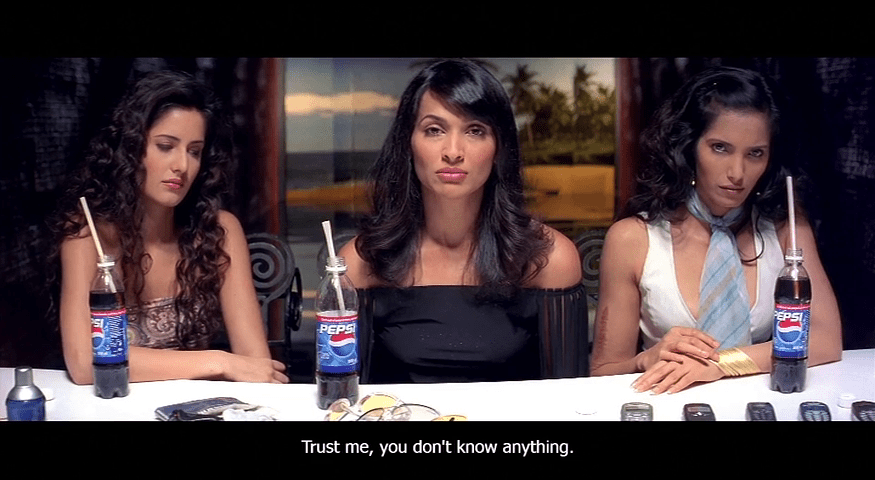
I thought about Zoolander a lot while watching this. Its evil designer Mugatu brainwashing the model into a perfect assassin is not too much different than gangsters using “walking coat hangers” to pocket gems. In both scenarios, nobody counts on models being capable of, and interested in, thinking for themselves. In Zoolander the whole fashion industry gapes without really seeing and in Boom it’s men who assume they’re at the apex of deviousness. Fortunately for Derek, Hansel, and our intrepid trio, to be ogled is to be overlooked.
Boom is available with English subtitles on Einthusan.tv. (There is also an upload on Youtube on which you can turn on auto-translated subtitles in various languages, including English. I spot-checked a few places and they seemed imperfect but passable if you’re really keen to watch this.)
~~~
Beth Watkins may or may not be planning hair-based heists.
Categories: Screen




 The Cultural Gutter