

Years ago, when we were both new to Indian cinema, Gutter contributor Keith Allison mentioned to me that he was hoping to find a Bollywood film that also featured ninjas. This is the kind of question I love: its answer could just as easily be “of course there’s no such thing”—after all, there is apparently no Bollywood remake of Footloose, which, as a musical about endearing, earnest young people whose one joy in life is dancing, seems tailor-made for Bollywood—as it could be “duh, yes, there was a director in the 80s who only made films about ninjas.” Would Keith’s wish be a white whale or something so de rigueur that it’s hardly worth mentioning?
Fortunately for all of us, there is indeed at least one mainstream Hindi movie with ninjas in it, and I think it’s exactly the kind of thing that readers of the Gutter want to know about. It is called, simply, Commando, and it features director B. Subhash leading his favorite star, disco and B-movie hero extraordinaire Mithun Chakraborty (last seen on the Gutter in Karate), in a series of 80s action good times.
The first time I saw Commando almost 20 years ago, I was very unimpressed. But I was also ignorant and a little snooty. 1980s action cinema from any country is not my forte at all (I’ve never seen the Schwarzenegger Commando, for example), so if this film is referencing or copying fight or chase sequences in other films (and I assume it is, because this vintage of Bollywood tends to), I’m not catching it. But that doesn’t mean I don’t enjoy the heck out of what’s being presented. To paraphrase the late, great Todd Stadtman, sometimes when Bollywood offers me so many delights at once, I feel like Caligula, completely high on excesses. On this rewatch, I wondered if the moments of glee in Commando might just spoil me for anything else.
The film opens with our hero Chander as a child, being put through a training regimen by his father, an army officer. Chander’s dad has a lot to say about the importance of physical exertion and sacrifice on behalf of the motherland. I’m very accustomed to Hindi movies showing main characters as children in opening sequences, but I am not at all accustomed to them featuring such grueling phys ed class nonsense.
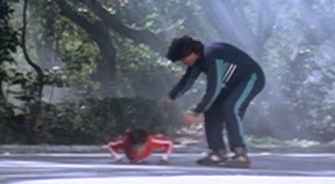

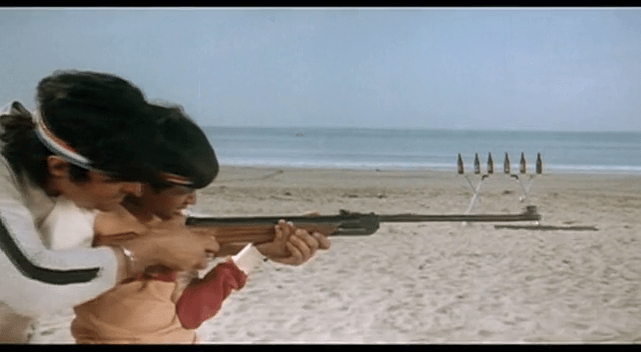
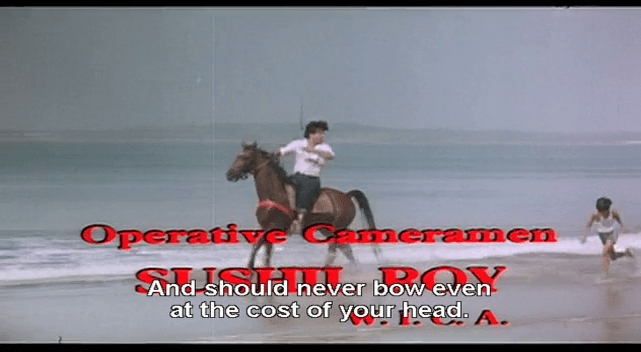
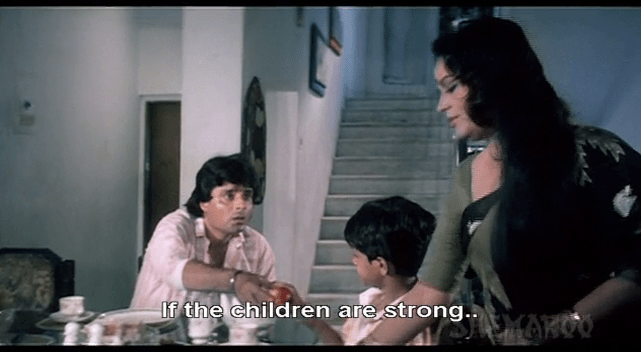
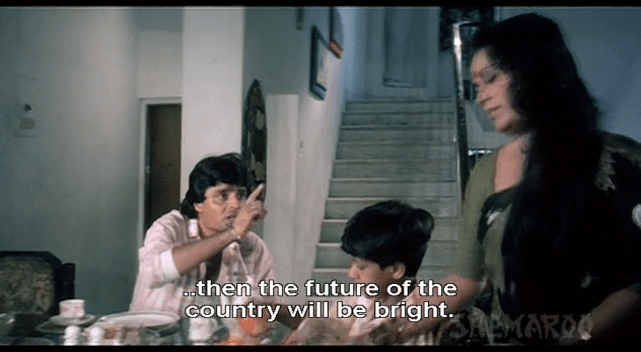
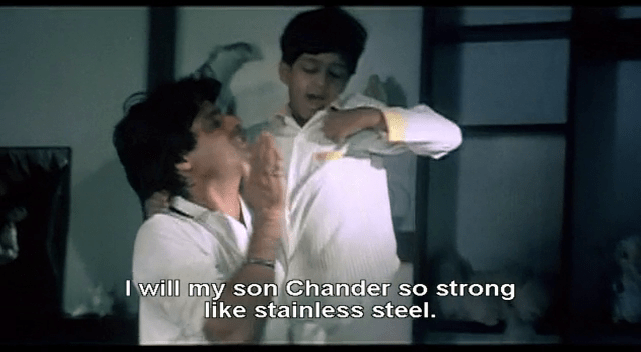
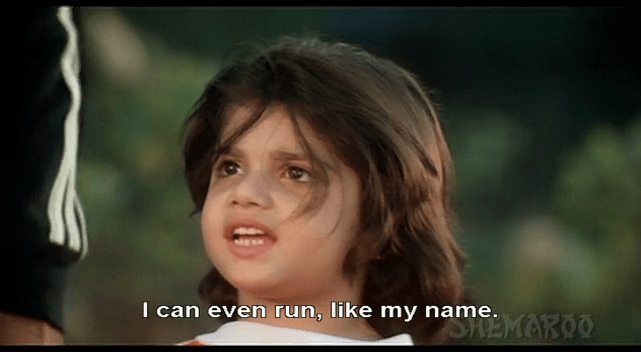
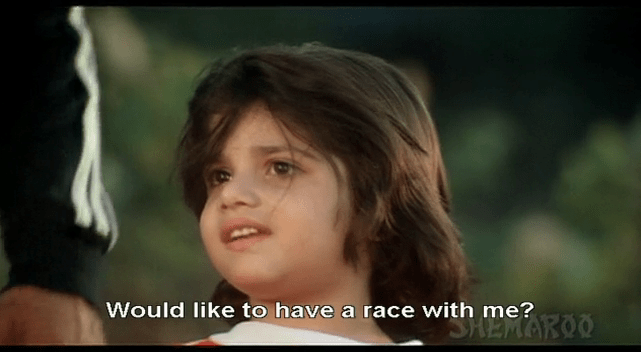
While out jogging one day, they meet one of the dad’s colleagues also exercising with his daughter Zumzum, so called because she runs fast. Zumzum takes no guff from Chander, and I appreciate it. Unfortunately, Zumzum is about to disappear from the screen for a very long time, but please remember her for later.

The grownups are soon off to an important deployment: attending a speech by prime minister Indira Gandhi. Despite being seated in the front row of the auditorium and not, say, anywhere near the prime minister on stage, they foil an assassination attempt…but die in the process. At Chander’s father’s funeral, a commanding officer (Shashi Kapoor) steps up to help comfort Chander as his mother’s grief loosens her grip on reality.

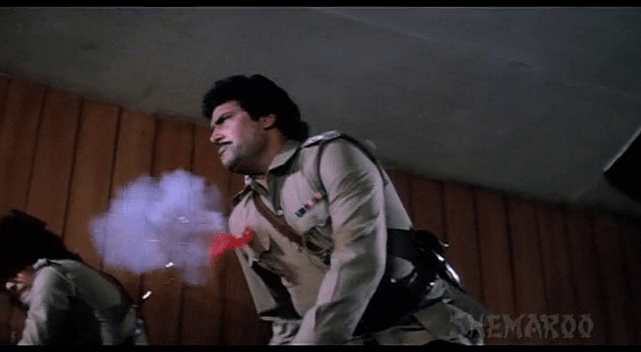
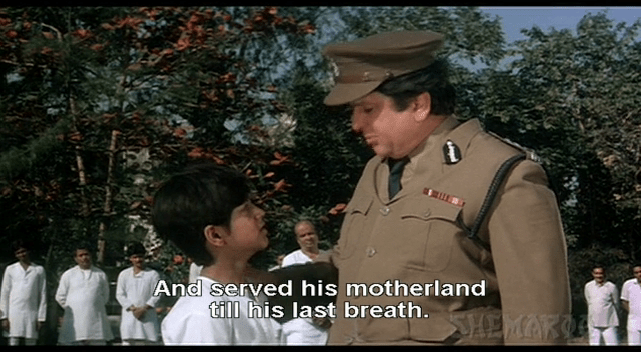
The extremely repetitive theme song begins (“Commando! Commaaaaando!” Commando!”) over footage of grown Chander (Mithun Chakraborty) running furiously down a road. He bids goodbye to his mother, now institutionalized, and like Zumzum before her about to disappear from most of the rest of the film. Chander heads off for his new job as a—you guessed it!—commando at an ammunition factory.
I must pause here to ask ponder what “commando” even means in this setting. Is he in a branch of national armed services? The police? A private militia? To be honest, I’m not even clear if his dad was in the police or the army, but the film showed an army recruitment billboard, so we’ll go with that.
The would-be assassins from Chander’s childhood now inhabit a fancy HQ building, and they’re in search of big weapons to instill disarray and violence in India. Why? No idea. Like so many other Bollywood villain plots, this is a spin on the business model of the gnomes on South Park‘:”phase 1: collect underpants…phase 2: ?…phase 3: profit.” Since the Indian army and police have made it impossible to import weapons, their leader, Masaloni (Amrish Puri), dressed in a black jacket and boots like his Italian near-namesake, reveals they can now make their own supply because he’s planted one of their own, Mirza (Shakti Kapoor), inside the same ammunition factory where Chander works.
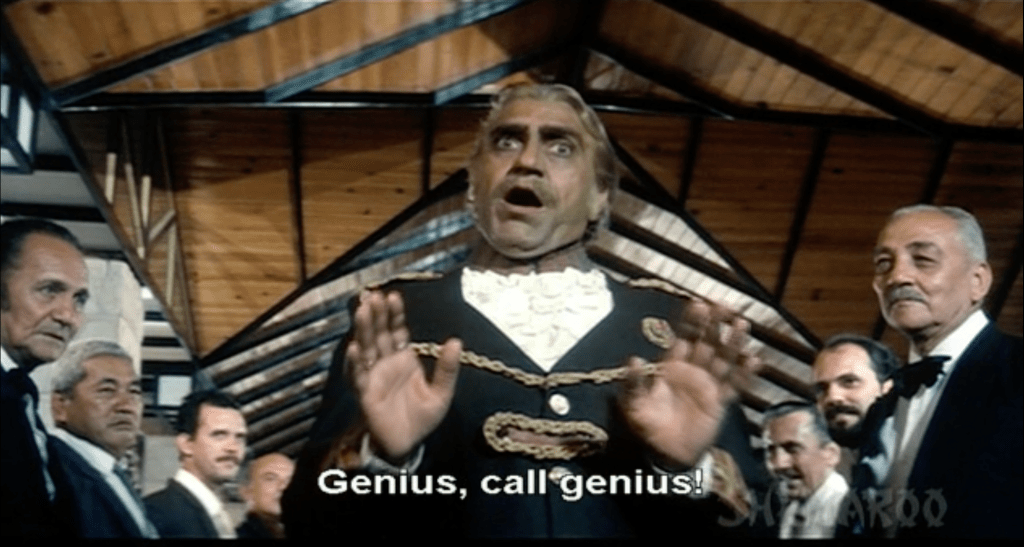
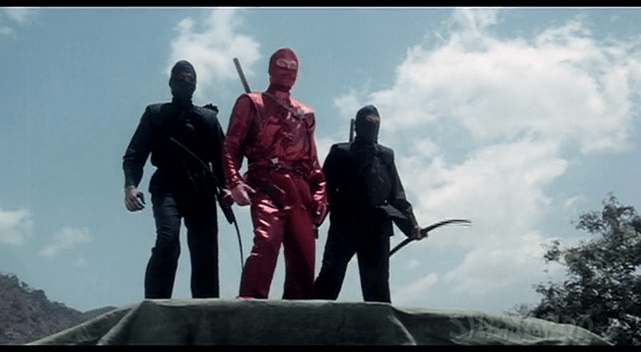
At just 25 minutes into the film, we get our ninja training sequence…with all of my favorite vintage villain actors looking on…and it’s set to music from Star Wars!!!
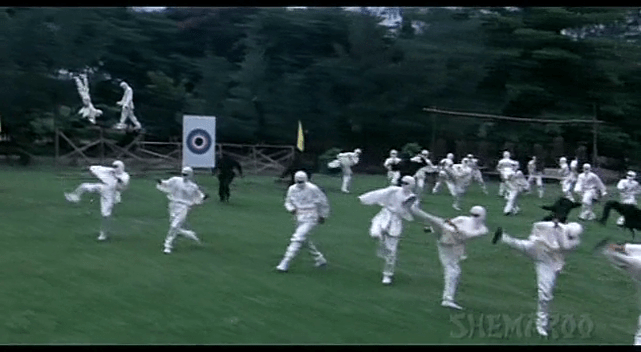
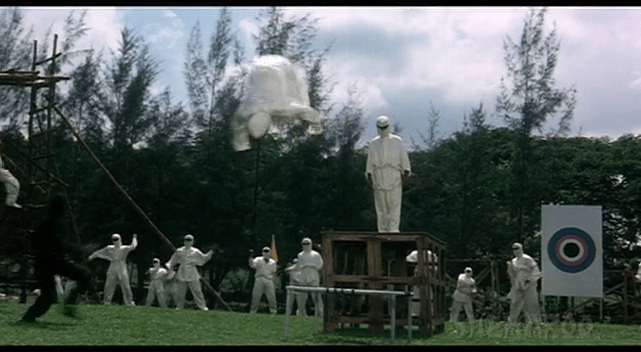
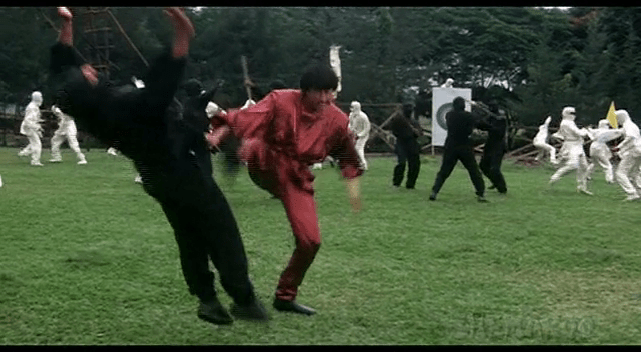
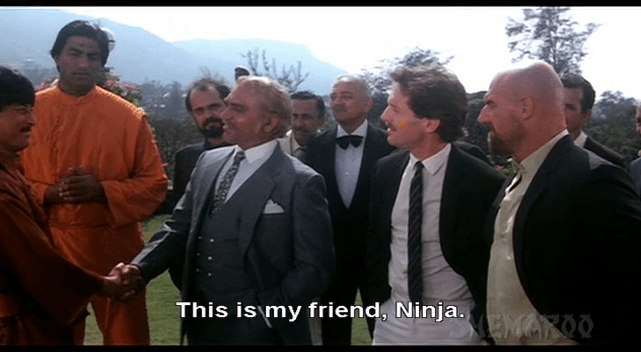
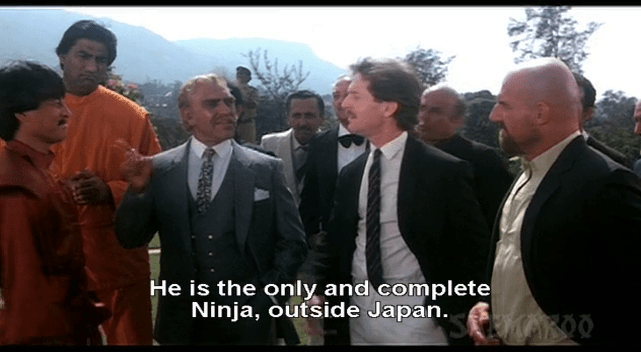
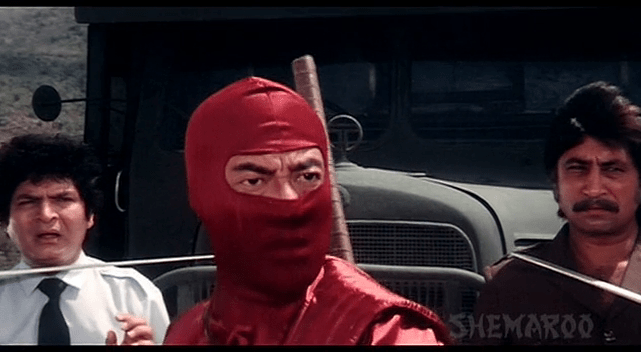
The cherry on top? The head ninja (Danny Denzongpa, in red in the images above) is named Ninja. Bollywood of this era loves to name second-tier villains and henchmen with the actors’ own names, and I was shocked to get a job title—some may say a vocation!—instead of “Danny.”
Another key member of the factory staff is M. C. (Dalip Tahil); I’m not sure what his job is, but he is depicted early on as not exactly above board. He fits right into the corporate culture; no one we’ve seen on the factory’s management team is above board. M. C. is dating the factory owner’s daughter Asha (Mandakini), a headstrong thrill-seeker, and I breathe a sigh of relief: finally a woman character who seems likely to get more than two scenes.
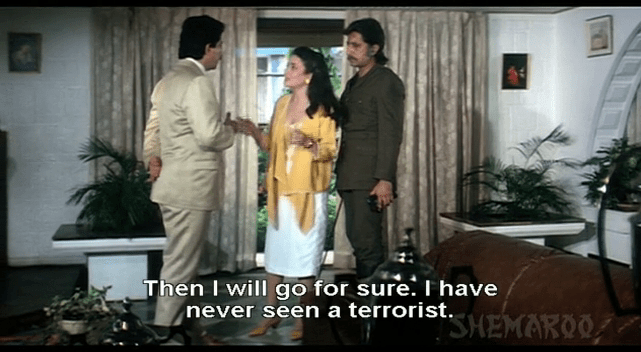
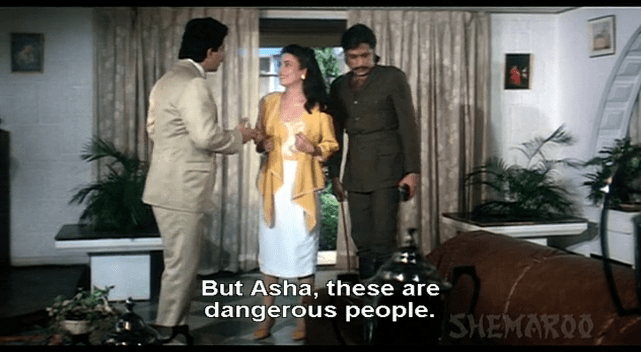
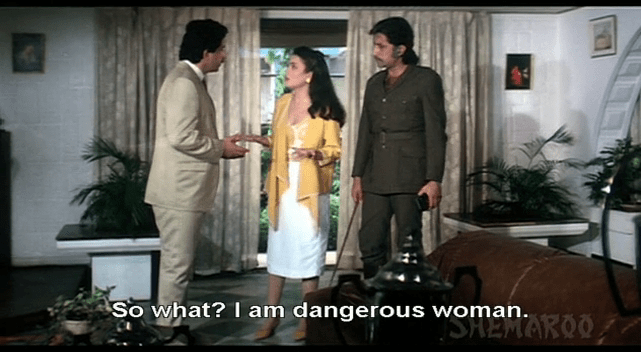
Asha demands M. C. let her join a convoy carrying a shipment of weapons, which she doesn’t realize is being diverted by Mirza into Masaloni’s hands. Sure enough, despite the presence of all the commandos, the factory vehicles are surrounded by gun-toting men hiding in fields. Asha manages to escape in Mirza’s car, and in the confusion Chander regaina control of one of the factory trucks. Ninja sends some of his men in to attack the commandos, who of course have no idea that they’re being set up by their corrupt boss Mirza. Chander and Asha exit into the fields, pursued by ninjas. Masaloni orders them killed, despite Asha’s ties to the factory owner and to M. C.
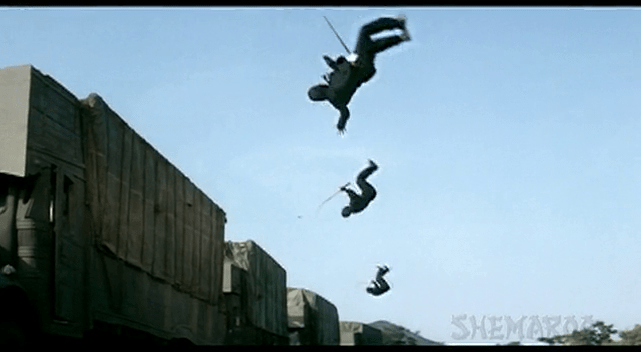
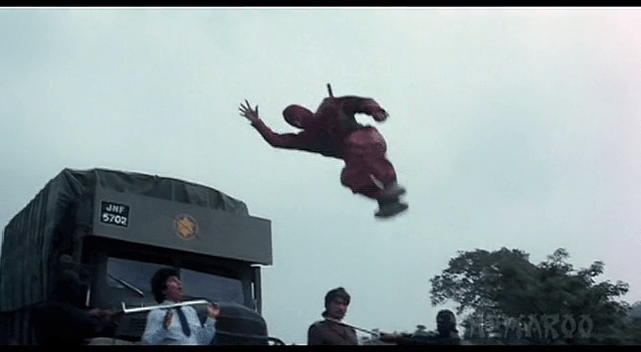
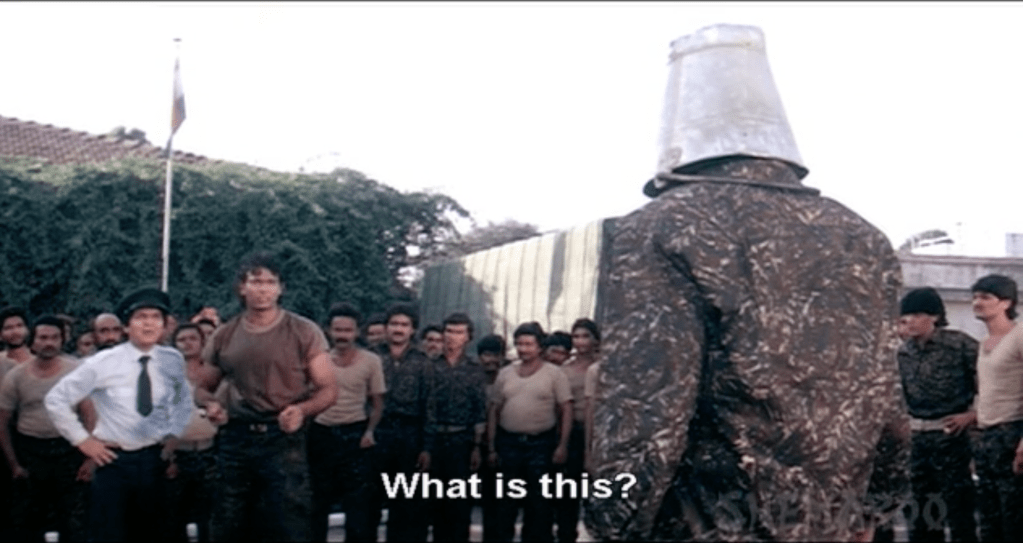
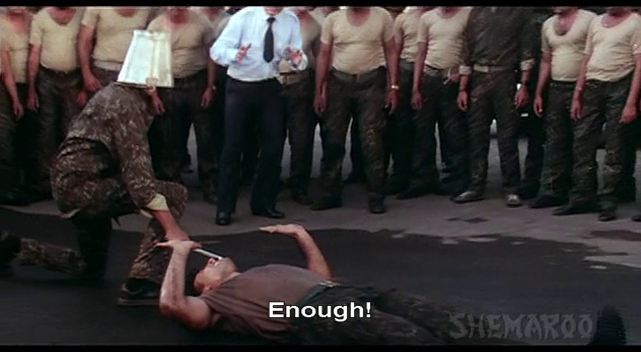
Once back at work, Chander is chewed out by M. C. and Mirza for his unwitting role in the flubbed weapons theft, and he seems to realize something fishy is afoot. Chander’s fellow soldiers blame him for the deaths of members of their corps, and Diler SIngh (Hemant Birje) attacks him for it. Diler eventually concedes Chander is the better fighter, especially because of his unconventional techniques like putting a bucket over his head when Diler is ready to hit him with a wrench. I’m no expert in film fight choreography, and I gather many people find Mithun Chakrborty’s brand of action goofy at best (but beloved all the same). This is another moment that I just love, even if it makes no sense—Chander’s childhood drills led us to expect he’d be a good boxer or sharpshooter, but why not throw a literal wrench into things?
Asha lures Chander on a motorcycle ride to a snowy mountain range, where they get caught in a storm and have to take shelter in an abandoned cabin. There’s an earlier sequence in their escape from Masaloni when they had to take shelter in the wreckage of a plane crash (which I have completely glossed over because it features odious comic relief), so this scene feels really redundant to me. However, it does offer a disco love song in the snow.
This song is another Caligula moment: as happy as I am by the concept of a disco love song in the snow, Bollywood should be able to make something better with these ingredients than this limp offering. I do give perfunctory points for wardrobe, though, because so often in snow-set love songs, the heroine is in gossamer saris or other outfits utterly inappropriate for the climate. I love a daredevil heroine who organizes sensible yet stylish outfit options.
The film seems to have known viewers might be disappointed in that song, so a few scenes later Asha has a birthday party, featuring a rendition of the theme song with Asha in sequins, choreography with Chander designed to make M. C. jealous, and all the commandos shimmying around in party hats. (I apologize for this not playing within the Gutter site; an India media company seems to be paying curiously close attention to files from this film.)
Musically, I prefer the snow song, but this set piece is closer to the vibes I was expecting.
The entire ammunition factory management team angry at Chander, and even Asha’s dad has joined in, opposing their romance. He’s sent on another deadly mission, delivering weapons to a storehouse that is staffed by Ninja’s ninjas. While he’s busy fighting them off, one of Masaloni’s goons steals the shipment. Chander manages to catch up and hides in the truck to see where it has been re-routed. He discovers a meeting of all the bad guys, discussing how, despite their attempts to sow communal discord, India is still too strong to break. The way to finally accomplish it? Give drugs to the youth, a method of ruin familiar to anyone who endured Reagan-era public service announcements.
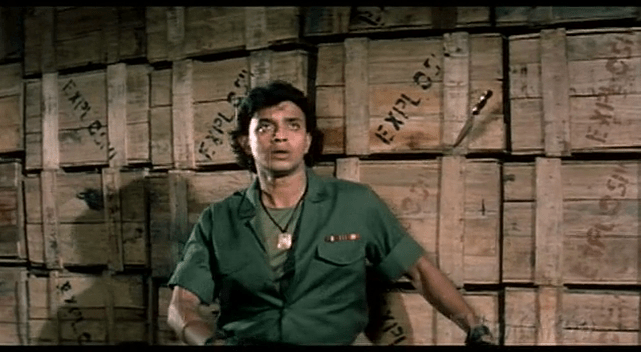
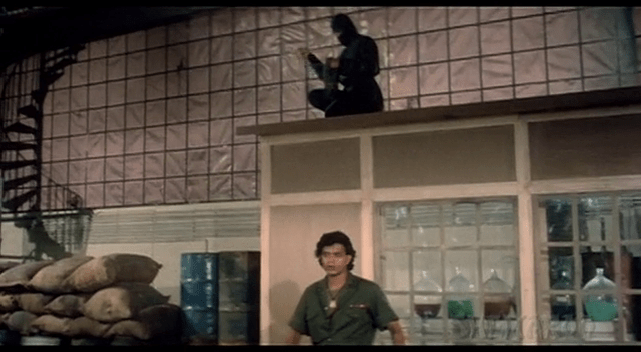
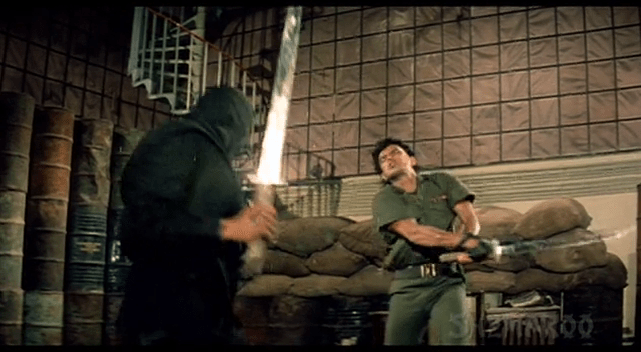

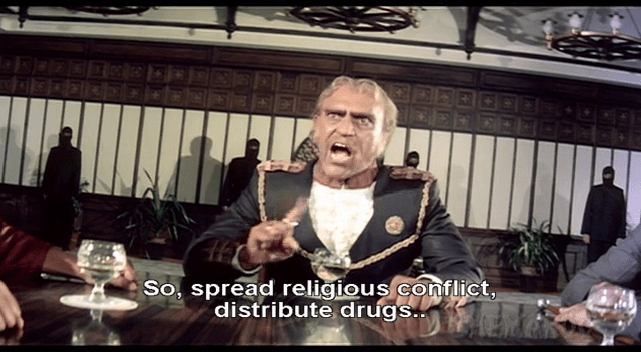
Asha brings the truth to her father, who is at least suspicious enough to assert his control over shipping so that nothing gets out of the factory without his knowledge. M. C., realizing his smuggling days are over, returns Masolini’s advance for the weapons…and then Ninja drowns him in a swimming pool. While Masaloni approaches Asha’s father directly to try to make a deal for the weapons, Ninja kidnaps Asha as the ultimate bargaining chip.
Out of options, Chander and Diler pay a visit to Chander’s avuncular officer friend from childhood, now an Inspector General. The IG advises them on how to proceed: now that Asha has been taken across an international border, the army can’t help rescue her because the neighboring nation—it is ALWAYS a “neighboring nation” in Bollywood of this era—would view such activity as an open hostility. He encourages them to destroy the evil HQ high in the Himalayas. He also advises them to look for a compatriot woman spy at HQ…and given the paltry number of women in this film, you can probably guess who she is.
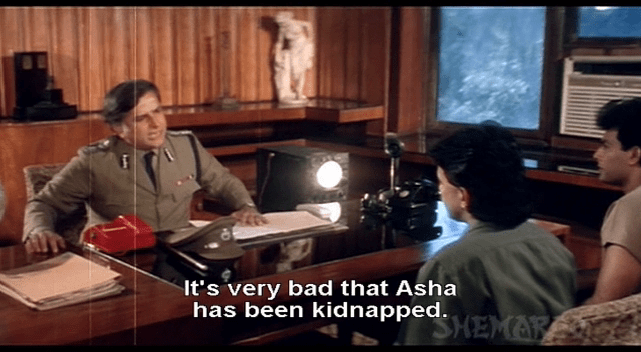
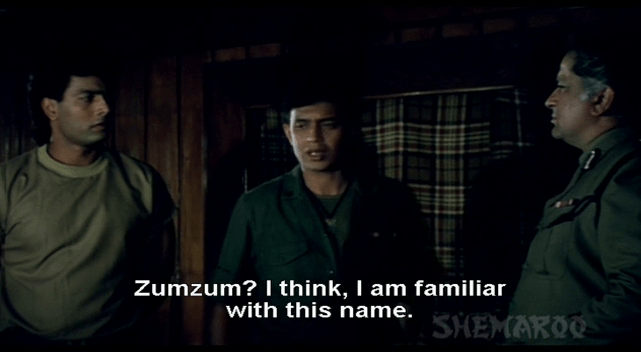
Chander and Diler parachute into the HQ and immediately join Zumzum’s (Kim) dance number, dropping Chander’s childhood code name as they arrive so she knows who he is.
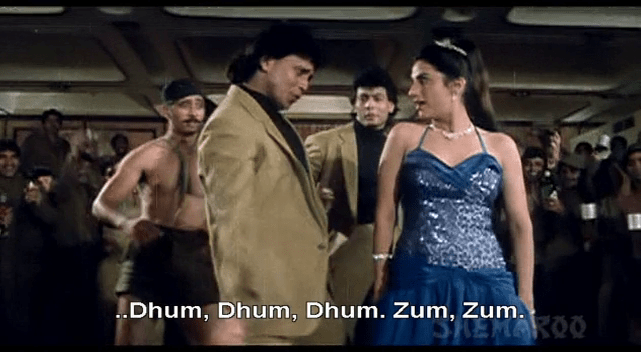
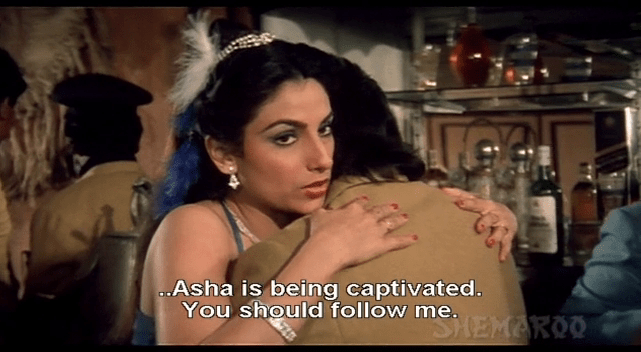
Even if you have no intention of ever watching this film, this song is worth sampling. This is closer to the level of artistic energy I expect from star Mithun and music director Bappi Lahiri—plus the setting and choreography they deserve. It also has bits of spy shenanigans and an appearance by yet another veteran Bollywood henchman, Mac Mohan. (And if your only Hindi film experience is the kitsch classic Disco Dancer, then you’re going to be excited by the casting.)
The rest of the film consists of a variety of showdowns set to more Star Wars music, with Chander/Diler/Zumzum/Asha on one side and various enemy foot soldiers/Masaloni/Ninja on the other, rambling across an assortment of HQ facilities, outdoor mountain settings (including a glass-walled gondola dangling above the villains’ complex), and another political speech in an auditorium.
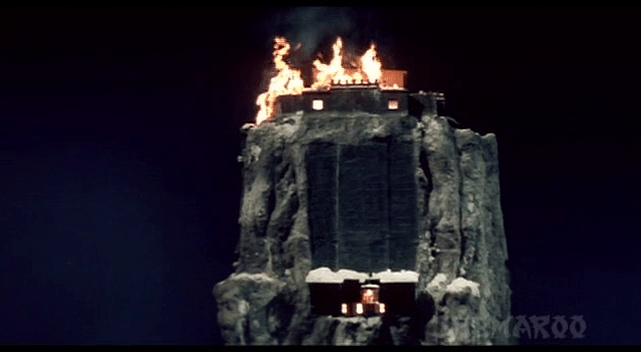
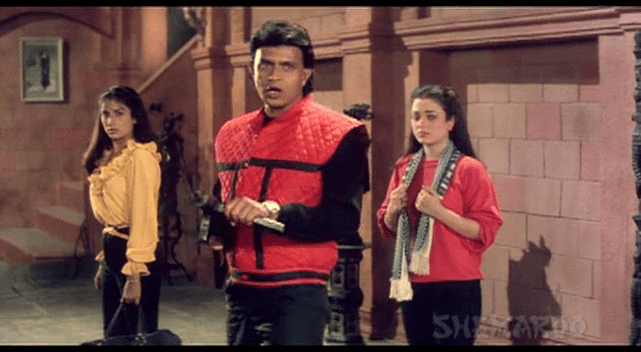
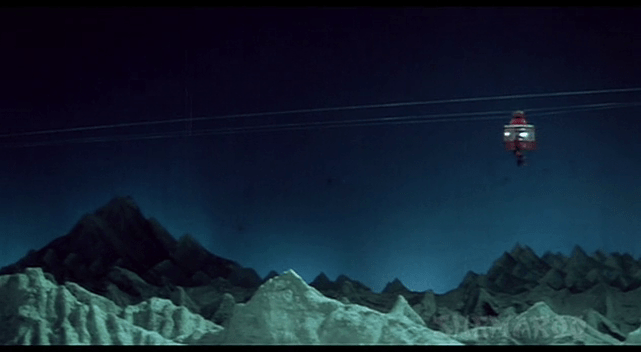
Upon rewatching Commando after many years, I do agree with my past self that some of the players in this film are not at their finest. Mithun seems a little lethargic, and Mandakini doesn’t bring any oomph to Asha’s brattiness. In the Indian film blog community of yore, much was made of the unrealistic practical effects in the film, mostly models and painted backdrops, but now I admire their can-do spirit.
Commando does many things right. The plot is remarkably straightforward for mainstream Hindi, with the eminently skippable comic relief side plot contained to the first half. The costumes probably weren’t expensive and they have a sort of Thriller album hangover, but they generally make sense, and in snow sequences people have on actual coats and boots, which is less common than you might expect. The many villains, who are all absolute pros at this type of work, seem to be having a good time. While their evil plan is sketched broadly, there are also small lines that provide texture. Masaloni’s plans suggest an idealized Indian self-conception: India is unbeatable because its diverse peoples get along and help each other. During his final attack, Chander saves two of the most traitorous henchmen—both played by white actors!—to be killed separately, sending them off with a special sneer about how India’s Hindus and Muslims are indivisible. These moments have no real political depth, and maybe they’re just an update of the typical British imperial baddie, but I find an interesting distinction here. Commando‘s villains aren’t anti-India because they’re pro-Neighboring Nation, and India won’t win because it’s more macho or has more firepower. Maybe 2025 goggles are making me feel ok about this kind of softer jingoism, but the idea that a nation’s strength lies in how its people care about one other really works for me. Does the film bother to show Hindus and Muslims getting along? No. That was more of a 70s mainstream Hindi film concept, and those films weren’t titled things like Commando. But still.
In her brief time on screen, Kim has so much more presence than Madakini that I wonder why they weren’t cast the other way around. I have high expectations of Shashi Kapoor (seen many times on the Gutter) because he’s one of my favorite Indian actors of all time, and not surprisingly he brings the right energy to this role: he knows it’s not about him, and he lends an elder statesmanly, firm assurance to proceedings. My only wish is that he’d had a scene with Danny, with whom he starred in a few excellent masala films in their younger years.
I also love the Himalayan setting. Usually Hindi cinema uses snow romantically: it may trap people around a cozy fire in an abandoned chalet and give them an excuse to cuddle up tight, but cold weather is rarely genuinely menacing. In most films, people playfully throw snowballs or go on foreign ski holidays to prove their wealth and worldliness, but here there are full-on pursuits with skis and tumbling boulders. Commando wisely uses the mountains for frolicking and for danger.
I’m sure some of my esteemed Bollywood colleagues will disagree, but I think Commando‘s highlights render it worth a watch, especially if you’re interested in global 1980s action films. In my opinion, Mithun Chakraborty and all of these villain actors are absolutely sine qua non for Hindi cinema. It’s not the finest example of the deployment of any of its constituent elements—other than the ninjas, of course—but it’s a worthy experiment all the same.
Commando is available with English subtitles on Einthusan.tv outside of India (and without subtitles in a variety of Youtube uploads).
~~~
Beth Watkins couldn’t be a ninja–or could she?
Categories: Screen




 The Cultural Gutter
Loved this—smart, funny, and oddly tender. Your read on Commando as equal parts dad-movie sincerity and Looney Tunes excess really clicked for me. The way you track the film’s “cartoon physics” without sneering made me appreciate its craft (and ridiculous charm) all over again.
LikeLike