
I’ve had a cruddy day, so please indulge me in a visit to my favorite micro-genre of mainstream Indian cinema: people looking for things in Calcutta.I love a mystery. I love characters on a quest for knowledge that is ultimately used for resolution or even justice. I am captivated by fictional depictions of Calcutta—now Kolkata, of course, but I gravitate to things set in the mid 20th century or earlier, well before its name change—a place simultaneously Indian, British, and deeply cosmopolitan.
Those of you new to Byomkesh Bakshi, as he is more often spelled, just know that he is beloved. BELOVED. Originally created by Sharadindu Bandyopadhyay in a series of novels starting in 1932, Bakshi stories have been adapted for radio, tv, film, and beyond. As far as I can tell, the 1990s tv series on India’s state channel is the most well regarded, even though it’s in Hindi and not Bengali like the books. No less than Satyajit Ray was the first to adapt the stories for a feature film, and his Chiriyakana in 1967 won the first-ever national award for best director and best actor (Uttam Kumar as the detective), so IMO the bar was set high from the start. In 2015, this film was just one of four Byomkesh projects, so 80 years after he first appeared, this character is very much significant in popular media.
In this version, beautifully produced with the budget and cultural heft of Yash Raj Films, director Dibakar Banerjee starts his truth-seeking hero out before he was heroic. We follow Bakshy (Sushant Singh Rajput) on his first case, one he almost begged to get because nobody saw his genius—and in fact found him so irritating that the first time we see him, he gets punched in the face. Amid the roar of air sirens in WWII Calcutta, he slowly gains the trust of Ajit (Anand Tiwari), whose father’s disappearance the two investigate. He builds networks, he gathers information, he synthesizes, he guesses—and then he’s wrong.
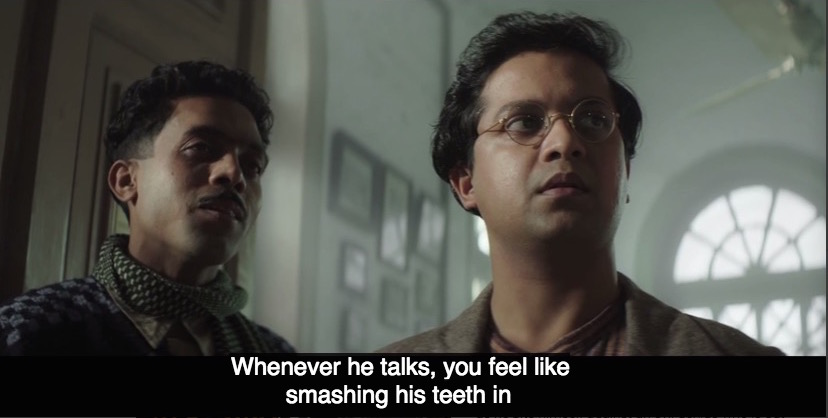
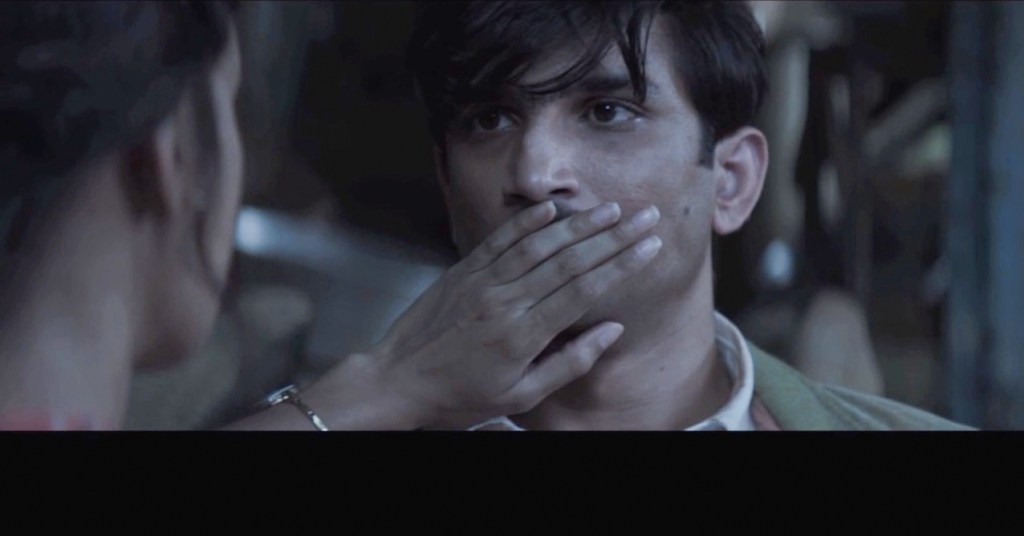
What I love about this particular dank, risk-filled, and high-energy adaptation is how much FUN it is, in addition to being rich, thorough, elaborate, and engaging. I don’t usually associate “fun” with wartime drug trafficking and squishy gore (there are several not-for-the-squeamish moments), but that’s what Banerjee is so consistently able to do. The story and its attendant details and visuals fold back in on themselves; things that seem throwaway as they happen pop back up later as context or stage-setting. This film strikes the balance that must be so hard for mysteries: there has to be suspense, but there also have to be clues and answers among what the author introduces, because solutions that come out of nowhere are frustrating. The world of Detective Byomkesh Bakshy! is big enough to let the questions jangle around but not so big they peter out.
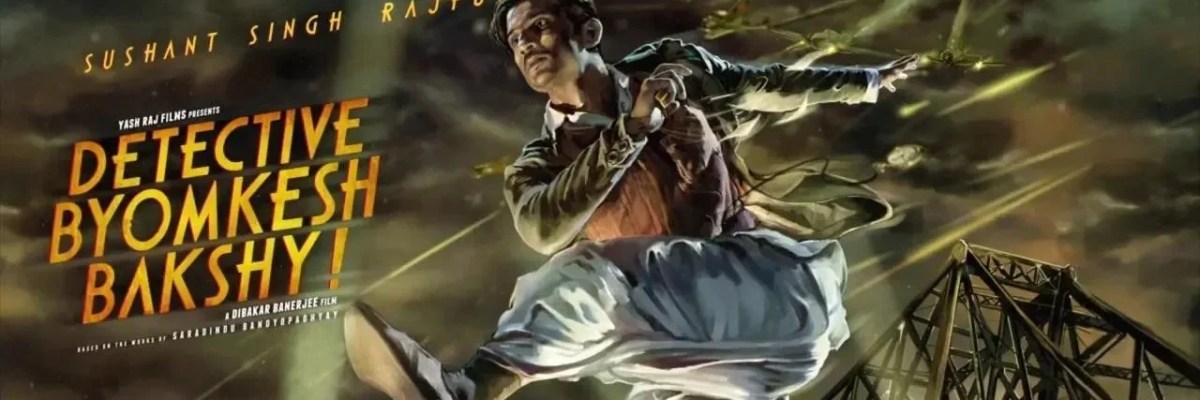
The acting is consistently excellent, full of moments of the actors reveling in their characters’ bravado, frustrations, and vulnerabilities. To me, Sushant Singh Rajput is a great choice for the arrogant but faltering young Byomkesh, who is clearly keen on his own keenness but by no means a super sleuth. He embodies the ! of the film’s title consistently: bounding around, rushing to share his findings, leaping physically as well as intellectually. There are moments when the actor’s “2015 movie hero physique” is a little distracting for his character’s station in the film, but that really can’t be helped, and some effort is put into showing Byomkesh’s need for physical effort and presence (and resignation to the consequences when he is out-gunned). He is particularly good at an unexpected aversion to dead bodies, showing the empathy and humanity of a hero who depends so much on projecting if not worldly-wisdom then savviness of the moral complexities of his work.
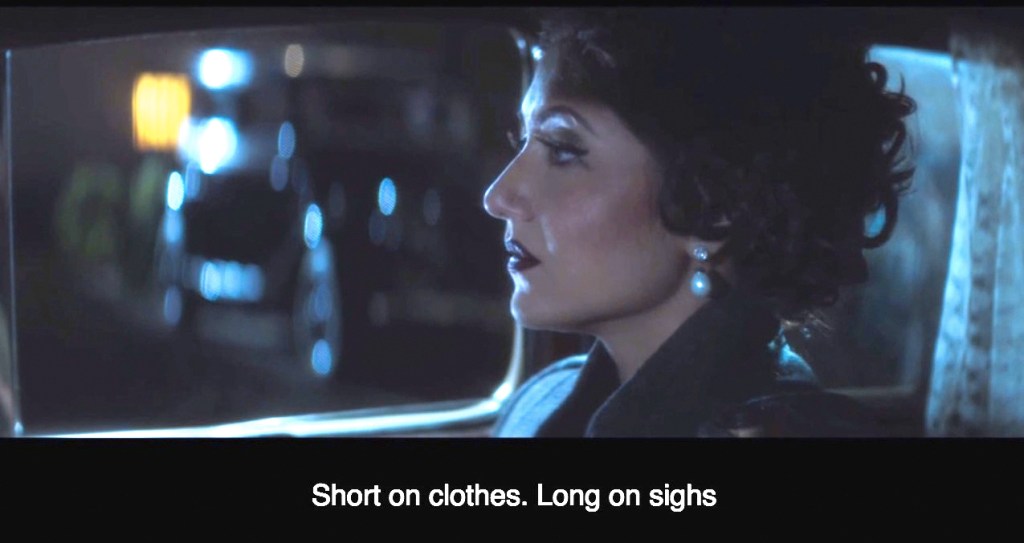
Anand Tiwari creates a companion with plenty of punch and a mind of his own (in this film he doesn’t even feel like Byomkesh’s sidekick), the grief and confusion of his father’s disappearance plain on his face. Neeraj Kabi, who feels different in every film I see him in, is well placed as a dignified elder who calls Byomkesh out on his nonsense, clearly enjoying being in a twisty mystery. Movie-within-the-movie star Anguri Devi (Swastika Mukherjee) is a lot—clever, scheming, brazen, and courageous, like many femmes fatales before her—but I’m inspired to indulge her, maybe because of the innate heightened drama of wartime and of her character’s star power.
Divya Menon as Satyawati, a relative of some of the people uncovered in the investigation, doesn’t get as much to do but portrays an important blend of competence and fear, maybe serving as the audience stand-in, behaving completely appropriately for a normal, essentially face-value person who’s shocked to find herself in a criminal world but also manages to keep some of her wits about her. I think she’s the only major character who doesn’t overtly lie to anyone, making her…the standard-bearer of morals, yet in a different way than the “woman carries honor” pattern that disgusts me so much in more conservative films. She’s not a vessel or a canvas; she has brains and agency and demonstrates integrity.
Banerjee loves stories about scheming and fallible characters, and his flair for imperfect people is perfect for handling a mystery story. I love that the film is not afraid for its hero to make mistakes, especially in a story that is establishing the character (or re-establishing, depending on how you feel about the Byomkesh canon). Byomkesh repeatedly gets duped by misdirection, called on his bluffs, and bashed in the head, as do police, politicians, and other criminals. Everyone can fall for tricks, and this feels like a metaphor for the dangers of the war that swirls around all of them. Does the disappearance of one person matter when Japanese bombs threaten this allied outpost on the eastern front? Banerjee takes Rajput’s vitality and harnesses it to such weird—and to me gleeful—effects: in these beautiful posters for the film, the hero flies but only because he’s a puppet, and he looks forward boldly but does not see the danger behind and above.
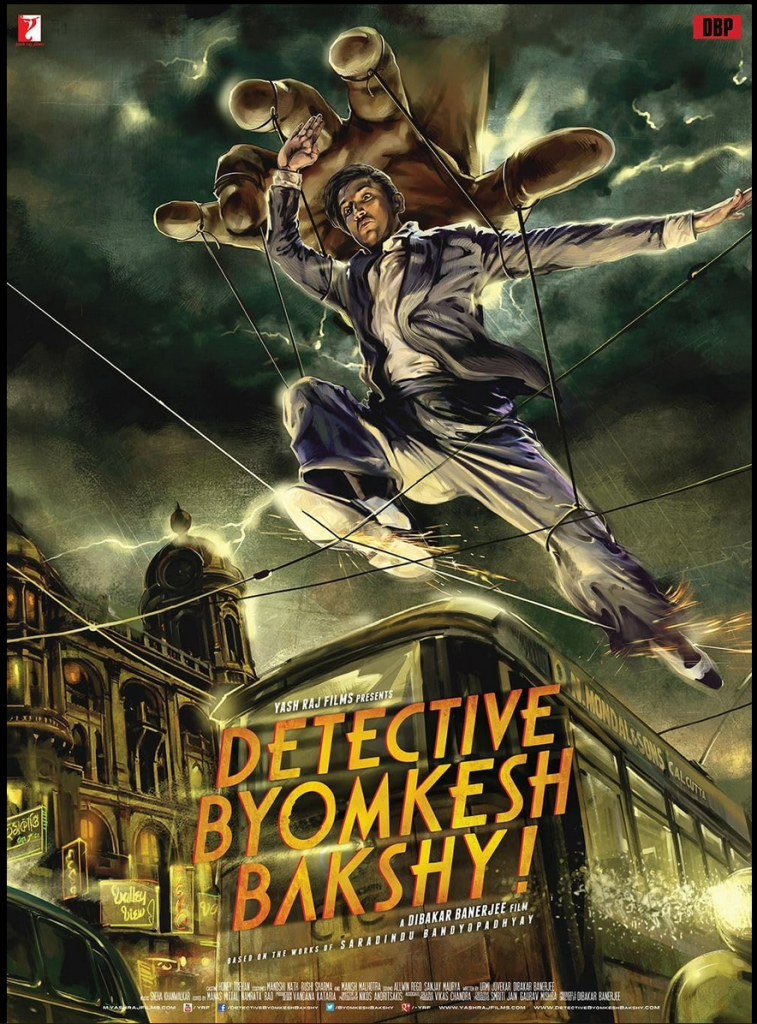
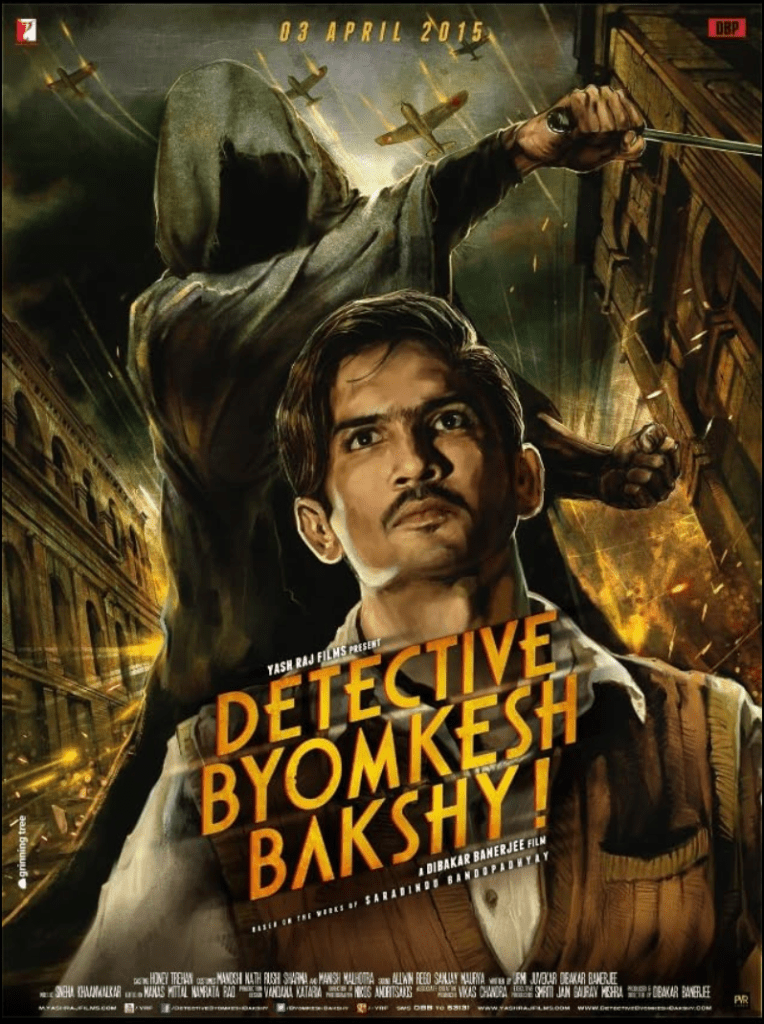
For viewers like me who are used to western-focused depictions of World War II, this is a new twist: maybe to Calcuttans, the Japanese are just another diabolical invader. In the real-life India of the era this film is set, Churchill was deliberately starving millions of Indians by diverting their food supply to British soldiers. Indian audiences know this without the film having to say it, of course, and the film doesn’t say it. It’s a foundational rumbling of bleakness that makes me at times nihilistic about everything in the story and at others even more desperate for Byomkesh to figure out what’s going on, one little victory amid the relentless slog of war, the lights flickering out as air raid sirens roar.
Everything else in Detective Byomkesh Bakshy! is, to me, perfect. I’ll start with the soundtrack, because it functions so differently than music tends to in mainstream Hindi films. Songs usually appear as big-scale production numbers with dance (or at least very organized movement) that advance the story, express characters’ feelings, and contribute to mood, and they generally cohere under the overall umbrella of the film, regardless of how many people’s voices are heard in them. Here, a huge assembly of artists comes together and absolutely soars creatively within the stylistic demands of period films while also sounding modern. The lack of typical big-name Bollywood composers and singers as well as of typical song picturizations gives this world some thrilling edge. It adds to the suspense: even if you’ve heard the whole soundtrack before watching the film, you still don’t know which song is coming when or how it will be used, and you will never see a song here unfold the way Bollywood has conditioned you to expect.
For example, the following video does not appear in the film, but look at how it functions as a complement to the film: the modern-day Sushant Singh Rajput is intrigued by clues and struggles against the grip of his 1940s period character, his high top sneakers suddenly replaced by Bakshy’s wingtips and so on until he is entirely transformed.
Aspects of the songs also tie to the multicultural world of the city and time period this film inhabits—not the same cultures, of course (though some screaming Japanese metal or sampled/reconfigured traditional Chinese songs would have been pretty on point), but the music reminds us this is a setting in which people and their influences come, mix, and go. It is surely not a coincidence that a lyric about evil and faith (“I walk through the valley of the shadow of death”) is in the language and religion imposed by some of of Calcutta’s invaders. Just as Byomkesh pings from clue to clue, the music does too. This concept is all over the background score, even pulling in the sounds of actions in the film, like a Chinatown dockyard drug deal accompanied by a murky, eerie combination evoking bianzhong reverberating underwater while a series of electronic bleeps punctuate above like wartime radar.
I’ve read a few opinions referring to this film as lightweight and/or its story as silly. I can’t agree with that; the execution of the body count alone gives it some dramatic heft, as does the very setting of wartime world getting squeezed and desperate for conclusion. What I do think is true is that while the film is completely serious and diligent in its world-building and narrative support and execution, it is not particularly making complex or grand statements about human nature or trying to teach us anything. There’s a lot going on, but it remains crisp and even giddy with momentum. It is far too careful a film to be lightweight.
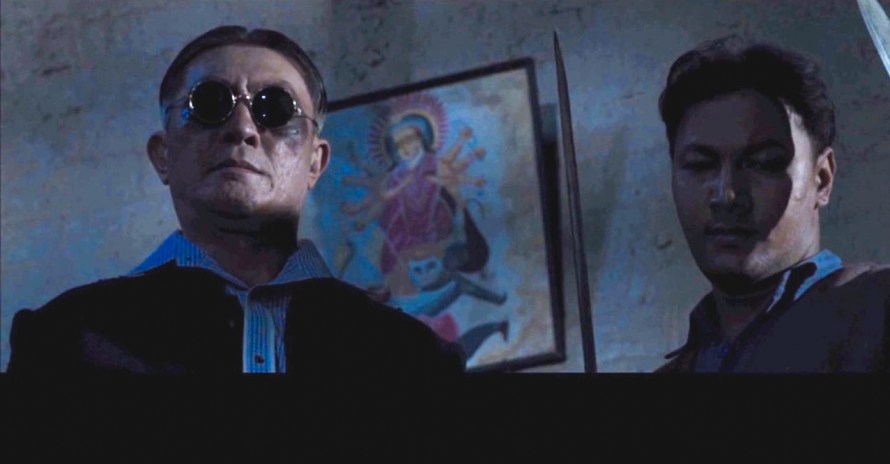
As you might guess from my description of my favorite micro-genre, plus what I’ve written about here before, I’ve seen a lot of cinematic depictions of Calcutta, and this one cements itself into its locale without using most of the stereotypical elements. I expect that level of creativity from Dibakar Banerjee (himself Bengali, of course), but it really is rare in my experience to see a movie even mention Calcutta without jokes about fish, a shot of the Victoria Memorial, alleyways of unpainted puja idols, or a framed photo of Tagore. Banerjee does none of these things. He does include the Howrah Bridge (just barely opened at the time of this story) and the Indian Coffee House, but I assume the latter makes narrative sense, given Byomkesh and Ajit’s phase of life. The city’s beloved goddess Durga appears, right under the shadow of a blade drawn in anticipation of destroying a demon.
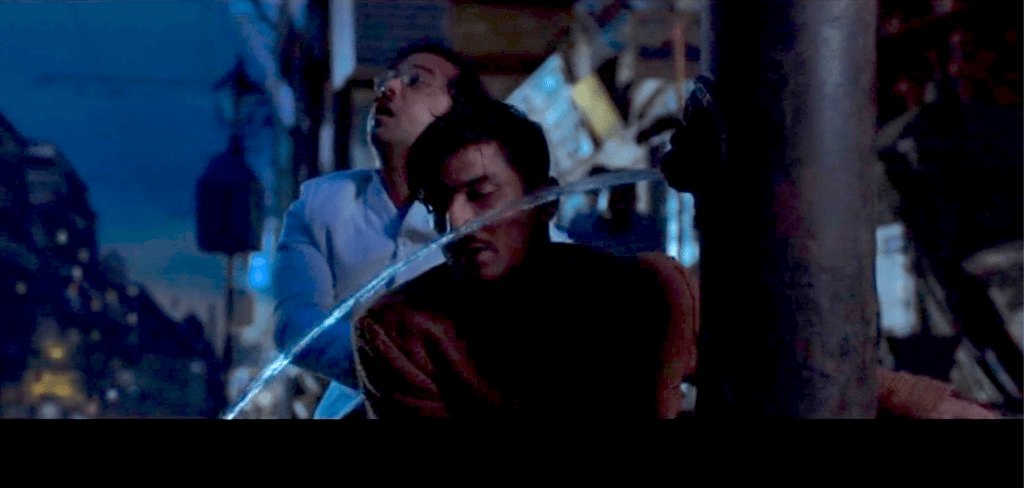
My favorite sequence in the entire film is just a few seconds long but illustrates all of what I love about the movie. Byomkesh and Ajit have just encountered two sickening corpses and had to fish for clues amid all the blood and chaos of a crime scene, and as they stagger out into the street, the air raid sirens blare and all the lights along the street are switched off and passers-by scatter for safety, leaving them in multiple meanings of isolation and darkness. Byomkesh, clearly rattled and revolted, stumbles to a water fountain and douses himself in a jittering time-elapse, as though trying to absolve everything his world has become. But within another minute, in his own home, he has to face down his enemy, making the water seem more like a baptism for what is to come rather than cleansing what has already happened.
Due to a bit of luck, I once met star Sushant Singh Rajput very briefly at a screening of a different project. When I told him this was my favorite film of the year it came out and how glad I was he was in it, he flashed me a movie-star grin and said “not many people agree with you.” I replied that they were wrong, he smiled and thanked me, and I left him to his more important interlocutors. The ending of the film very much seems like the creators hoped it would be the start of a series, but energy from audiences didn’t quite seem to be at that level, and just a few years later, Rajput died by suicide.
DBB! is forever an outlier experiment: lush, dark, and energetic, it remains one of its kind, and I’m grateful I had the chance to say so to its star and now to all of you.
Try a taste of this world in the trailer:
And if you get hooked, the film is on Netflix and Google Play.
~~~
Consulting detective Beth Watkins prefers to solve her mysteries at home with tea, a blanket, and no unsavory corpses.
Categories: Screen