
One afternoon, I was out listening to music on a walk. A guy stopped me on the sidewalk in front of a church to inform me that walking around outside with both earbuds in isn’t safe. He thought I didn’t realize it’s important to be able to hear my surroundings. I listened, bemused, because any grown woman, no matter how sheltered you believe her to be, likely knows more about personal safety calculations than this nice, earnest man. For example, before I even walked out my door I considered whether to wear one, both or any earbuds. If I wear only one, I can hear my surroundings better. But maybe it’s a time of day and an area where I am willing to wear both so I can listen to music. Sometimes it’s safer to wear both. It makes me less approachable. And if I ignore men who want to explain to me what “you’re edible” means, ask me if I’m a hooker or express concerns about my apparent obliviousness to my safety in public, they might take it as pride-saving rather than yelling at me. And honestly, this man should not have assumed I even was listening to music. I was taking a walk at a time when experience has taught me I am more likely to be approached.
I thought about explaining this to him. I thought about telling him I stopped because he approached me while I was obviously wearing earbuds. That’s a red flag on its own. Even though I believed—and still believe—he probably wasn’t a threat to me, I didn’t know how he would take being corrected. And then there’s the calculation in how much extra effort it is for me to explain it to him when I just want to enjoy my walk. So I said, “I usually do.” He went on a while longer trying to impress on me the importance of being aware of my surroundings. I was polite and when he was done, I continued on my walk and left one earbud out until I felt like I was far enough away from him.
I cannot remember a time when situational awareness was not there in my mind, humming along in the background. For a while now, I’ve been thinking about situational awareness in film—how it’s represented, how it’s gendered, who has it on screen, and who doesn’t. So often the people most likely to have it in real life—women, for instance—are portrayed as not having any situational awareness at all. While the people portrayed as making tactical, on-the-fly evaluations about safety blunder unaware into some serious cinematic situations.* They are usually cisgendered, heterosexual men who are members of a dominant ethnic or cultural majority wherever the film is set. People who think consciously about safety only sometimes, and not always. So when I saw a realistic depiction of a woman’s situational awareness in Travis Stevens’ A Wounded Fawn (USA, 2022), it was exhilarating. At the same time, the utter lack of situational awareness by samurai when they are not on the battle field in Kaneto Shindo’s masterpiece, Kuroneko (Japan, 1968) continues to confound me.
BIDING HER TIME / MAKING HER MOVE
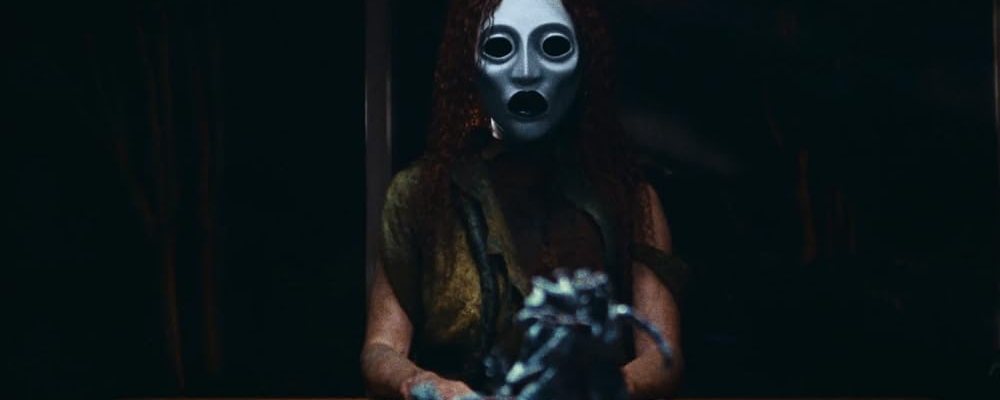
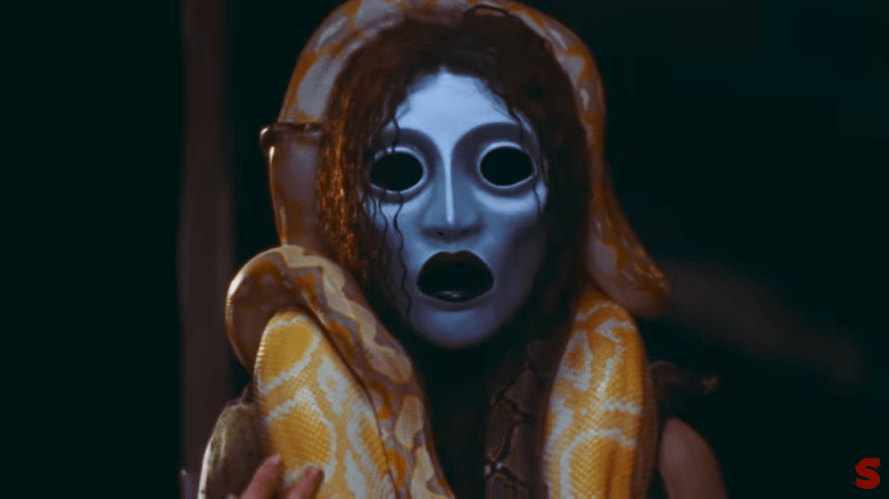
A Wounded Fawn is a wonderful mix of Greek tragedy and slasher movie immersed in references to the art of female Surrealists Remedios Varo, Leonora Carrington and Kati Horna. Museum curator Meredith (Sarah Lind) decides to take up art buyer Bruce Ernst (Josh Ruben) on an invitation to a romantic getaway at his remote cabin. But Bruce is also a serial killer. Like Kuroneko, A Wounded Fawn is about power, gender, and the blind spots of certain kinds of masculinity. And like Kuroneko, A Wounded Fawn is grounded in an older theatrical tradition, in this case Aeschylus’ The Eumenides.
When I wrote about A Wounded Fawn before, I mentioned how Meredith takes note of Bruce’s accumulating red flags while he drives her to his cabin in the woods. It has none of the usual signs. In many horror and crime films, a woman’s awareness that she is in danger from a man she’s in a car with is represented by increasing and visible panic. She tugs frantically at a locked passenger door. She pounds on windows. She might even scream or cry. More recent films and series have gotten better about their portrayals of women in dangerous situations.** But female victims all too often only become aware that they are in danger suddenly and specifically. It is hard, after all, to portray women’s constant, often half or unconscious assessments around higher or lower risk levels. In film though, it often has not occurred to a woman that she is in danger until it’s too late. That moment happens with startling ferocity and music or silence to match. It’s a fantasy, I think, a fantasy of innocence that screenwriters, filmmakers, and/or creative executives want to uphold or believe their audience wants to maintain.
I accept door handle jiggling and the female victim who can’t conceive of violence in the same way I accept so many other conventions and tropes. It’s a short hand way of conveying information; she’s in danger and knows it. It’s way of ratcheting up audience response as we see and feel her fear, the loss of her life, the pain of how things could have been different, and possibly the loss of her innocence about the true nature of the world. But the thing is, it’s occurred to every woman, Trans and cis alike, Trans man, and AFAB person that they could be attacked and killed. And that they will likely be blamed–if ever so kindly–for it.
In A Wounded Fawn, both Meredith and an earlier victim Kate (Malin Barr) convey their awareness that their situations are potentially dangerous without telegraphing the typical cinematic signs. Kate merely stands at her front door thinking for a few moments, before deciding to let Bruce into her home so she can call her clients with an offer Bruce has made to buy a statue of The Furies. As Meredith, Lind doesn’t go through the stereotypical motions of a woman realizing she’s in danger. She’s aware of the risk and noting every single one of Bruce’s red flags. It’s subtle, mostly looks and slight pauses, because so much of real world safety depends on sketchy men not seeing you wonder about them. Meredith can’t afford to let Bruce know she’s noticed something’s not right. There is a wonderful moment in the cabin bathroom where, after talking to a friend on the phone and discovering Bruce probably murdered Kate, Meredith takes a moment to have her feelings, then looks in the mirror and puts her game face on. The face that says she is completely unaware Bruce is a murderer. The face that tries to keep things calm till she sees her chance to get out. It’s one of my favorite moments in the whole film. And it delights me so much that in such a stylized, Surrealist film, Meredith—and Kate—act like women do in real life.
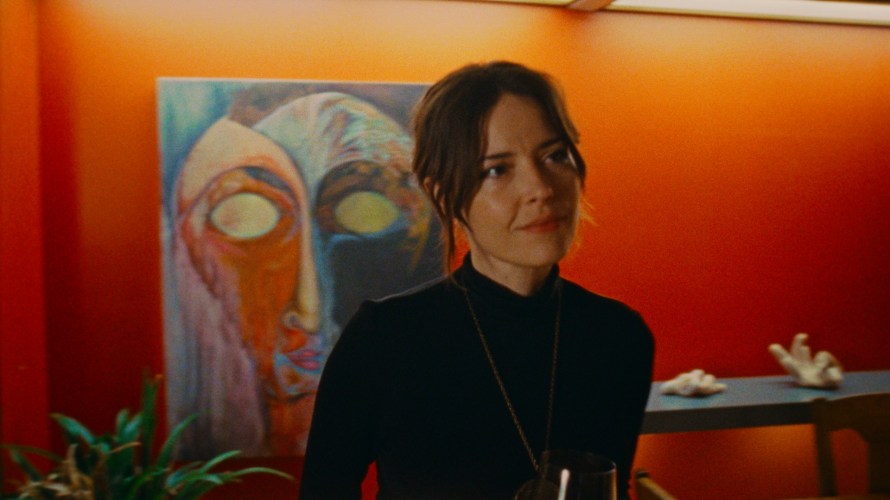
So it was surprising to me when a cis male friend mentioned to me he had wondered why Meredith didn’t seem to notice Bruce’s red flags. What had seemed so evident to me was not visible to him. That’s probably why women’s awareness of potentially dangerous men is so broadly portrayed in other films. For comparison, I asked the Gutter’s own Alexander MacFadyen about Meredith’s car ride with Bruce. He felt Meredith noticing Bruce’s red flags was glaringly obvious. I also asked a couple of cis female friends. They had independently appreciated it, too.
In A Wounded Fawn, Bruce believes he’s undergoing a transformative hero’s journey. He thinks that Meredith in the form of the Fury Tisiphone is there to personally guide him towards redemption. He cannot or will not understand that the Furies are there to hunt and hound him to his death. And Bruce dies failing to understand the situation that he is in.
MEN RIDING CONFIDENTLY TO THEIR DOOM
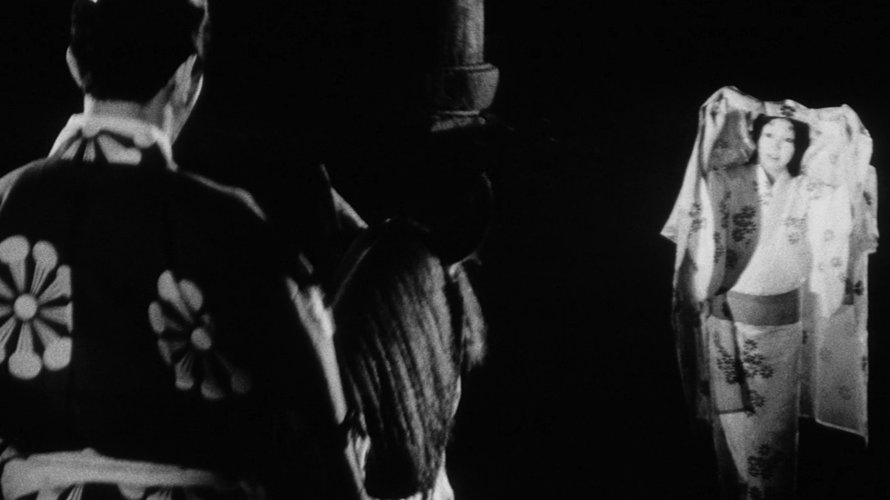
In Kaneto Shindo’s Kuroneko, there are men who cannot or will not understand that they are being hunted and killed. And this remains confounding to me in ways I can understand intellectually but never feel deeply in my bones. The samurai in Kuroneko are veteran soldiers. But most of these men seemed to have no situational awareness anywhere but the battlefield or when sweating before the Emperor’s anger. It is an explicit state, not an implicit one. And every time I revisit Kuroneko, it still stuns me watching men willingly ride to their doom, a doom that seemingly remains invisible to them.
Set in the Heian Era, Kuroneko opens with the rape and murder of Yone (Nobuko Otowa) and her daughter-in-law Shige (Kawako Taichi) by a group of starving soldiers. The family cat laps up their blood, a sure sign of a bakaneko or monster cat story, and the women return three years later as cat spirit ladies ready to avenge themselves by killing all samurai. Unfortunately, Shige’s conscripted husband (Kichiemon Nakamura II) has been given a new name, Gintoki, and promoted to the rank of samurai. It’s a tragic and eerily beautiful ghost story and a story of sex, gender, power and war.
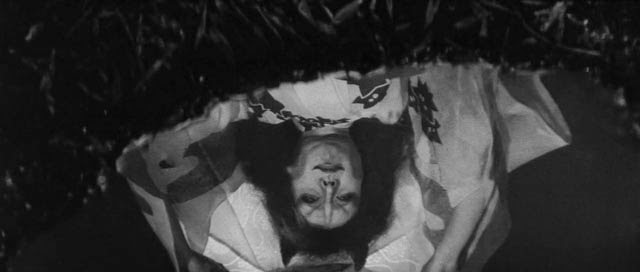
Among the many things that Kuroneko does so well is display the oblivious arrogance of men who believe they are in control all the time in every situation. Danger must never be acknowledged, unless it comes from more powerful men. The illusion of untouchability, of power, of action without consequence, is more important than not having one’s throat torn out. When told of the cat killing his men, their commander Raiko, angrily exclaims, “What ghost would dare hate us?” It’s almost impossible to relate how flabbergasting their choices are to me. These men know there are vengeful cat demon ladies haunting the woods outside of Kyoto. They know the cats are targeting samurai specifically—tearing out their throats and leaving their dead bodies to be found in a nearby bamboo grove. They even know the spirit’s methods. Late at night, a beautiful, refined young woman stands at the Rashomon Gate and asks a samurai to escort her through the grove. And yet one after another, the samurai follow her into the forest to an isolated, well-appointed manor hoping to have sex and then she tears their throats out one by one.
Personally, I would not even get to the point where I considered if the potential sex were worth the throat-tearing or not. I do think the men’s desire is part of their absence of situational awareness, but I don’t think that’s all of it. The samurai just cannot conceive of a woman killing them, even it it might be something that only looks like a woman. They might joke about it being worth it, as men often do when discussing sexy women who kill in other movies.*** It’s a bit of a thrill, not something to be considered in terms of danger and safety. Not something that could really happen to them. These samurai cannot conceive of being prey. And all of them, save Gintoki, are killed by the cat demon ladies in the woods.
CAT DEMONS, WEREWOLVES, VAMPIRES, AND MERMAIDS: THE FREEDOM OF NOT BEING PREY
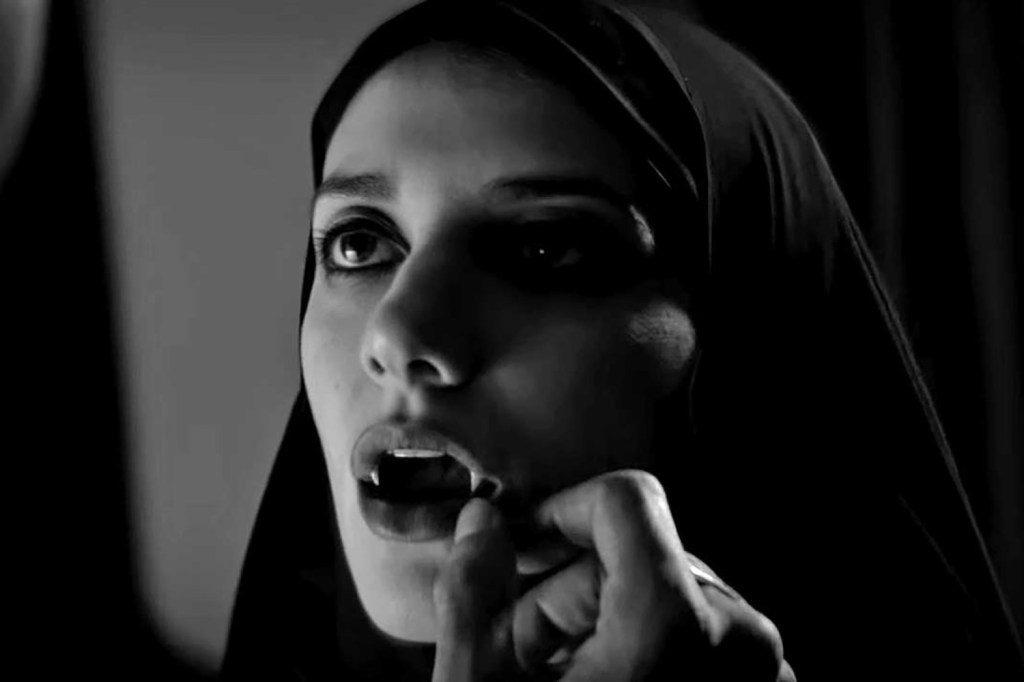
I cannot imagine how free it would feel, and how oblivious it would feel, not having a constant evaluation running in the back of my mind. There are some films where we see women who have been freed from the burden of situational awareness. Unsurprisingly, these women generally become monstrous. Even in A Wounded Fawn, Meredith and Bruce’s previous victims, Kate and Leonora (Katie Kuang), become Furies to him, chthonic deities who take revenge on men who have escaped punishment. In Kuroneko, Yone and Shige make a deal with the Gods of Hell. They pursue their revenge against samurai, but, in their way, the women are also freed. Not only the freedom of rampaging monsters embracing instinct over intellect pursuing their desires and needs regardless of the cost to others—the freedom of the predator. These monstrous women have the new freedom of not being prey. They can wander the night at will. They can be as promiscuous or as disinterested in sex and love as they want without calculating how dangerous a man’s damaged ego might be, without weighing how much worse an already bad encounter might go.
For women in films as different as A Wounded Fawn and Kuroneko, in Ginger Snaps (Canada, 2000), When Animals Dream (Denmark, 2014), A Girl Walks Home Alone At Night (USA, 2014) and in a more complicated way, Jennifer’s Body (USA, 2009), there is a newfound freedom in embracing the monstrous. And in The Lure (Poland, 2015), there is the inverse: Mermaids who have no fear of violence or assault, singing and dancing at a club until one falls in love with a doofus bass player, becomes a human woman, and dies of it. I suspect it’s part of why werewolves, bakaneko, vampires, she-demons and monsters of all kinds have always appealed to me and to so many other people most often subject to violence and most often blamed for the violence done to them. That freedom of being able to just exist in the world even if only for the length of a full moon or the duration of a curse.
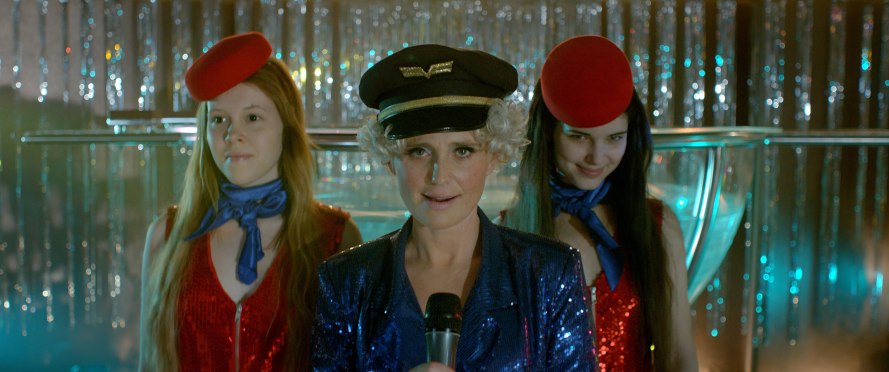
in Agnieszka Smoczyńska’s The Lure.
*In an alternate version of this, I write about Cable Guy (USA, 1996), a comedy in which focuses on a man who apparently cannot perceive red flags till its too late and he’s befriended a stalker, and Play Misty for Me (USA, 1973), which deliberately inverts stalking movie conventions in a time of anxiety about Women’s Liberation.
**Respect to Ride Or Die as Octavia Spencer’s Deborah, trapped in a car with gangsters, carefully plans an action and waits to tip her hand till she’s ready episode 2 .
***There is so much to say about this in the context of Jane Schoenbrun’s Teenage Sex And Death At Camp Miasma (2026).
~~~
Carol Borden is a perfectly normal human being. There is no reason to be concerned.
Categories: Screen




1 reply »