
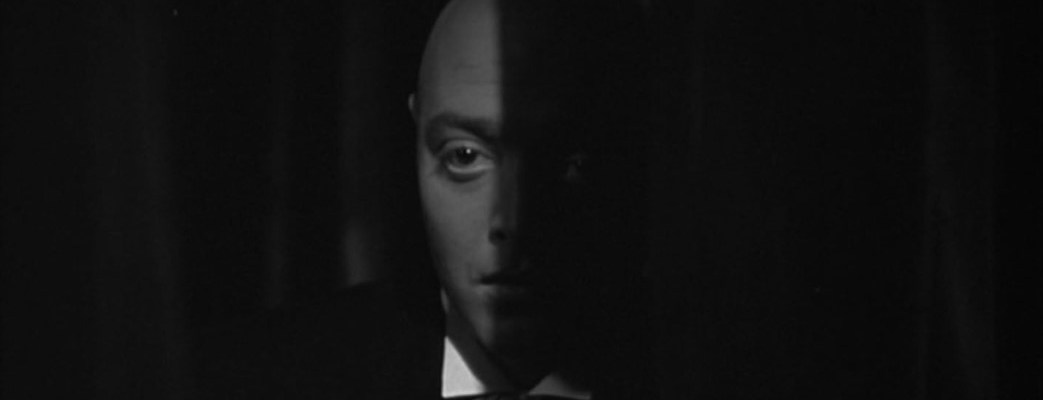
You’ve seen and even more likely heard Peter Lorre, even if you don’t know the name. His large, sad eyes, soft voice, distinct accent live on exaggeratedly in Looney Tunes cartoons, episodes of old television series like Route 66, Alfred Hitchcock Presents, as the inspiration for Ren’s voice in Ren & Stimpy (“You stupid idiot“), on the Ship Of Lost Souls in The Simpsons, and most recently as Dr. Peter Lorre, the whistle-blowing mad scientist in Coyote vs Acme (USA, 2026). As an actor, Peter Lorre is probably best remembered now for his character roles in film noir and campier horror. But in the early 1930s, Peter Lorre had two roles prefiguring sympathetic killers like Dexter Morgan and Hannibal Lecter. In Fritz Lang’s M (1931), Lorre plays serial killer Hans Beckert. And in Mad Love (1935), Lorre plays Dr. Gogol, a man who isn’t exactly a serial killer yet, but there are signs.
In M, Beckert was terrifying not only in his stalking of children, but in his humanity. He is a serial killer who unlike Dexter and Dr. Lecter presents no slick surface of secret virtue, self-control, or self-acceptance. He is not someone who only kills killers or the rude. His murders are not just or elegantly presented, but despite all of that there is a throughline from Beckert to representations of serial killers now. Beckert is recognizably human. He is horrified by what he has done and what he feels compelled to do. It just doesn’t stop him. Confronted by an underworld court who have taken action when the police fail, Lorre as Beckert reveals who he is and what he has done. And everything about it is ugly. “Who knows what it’s like to be me?” Beckert howls in pain and despair. But the sympathy and pity he wants is impossible.
M (1931) might be Peter Lorre’s best performance and role, but Mad Love (1935) is my favorite. And Lorre brings this same genuine, tragic and contemporary humanity to his role as Dr. Gogol in Karl Freund’s underappreciated Mad Love. Both films are excellently rife with Expressionism, but Mad Love is a much less “realistic” story than M. In Mad Love, Lorre plays something he would rarely play in later decades: a man of refinement and tragic depth, a man who is respected by his community, a surgeon at the pinnacle of his career who has so far to fall, a man who destroys his whole life because of his obsessions. It’s always surprised me that Lorre is portrayed as a purveyor of “corny” monster movie horror—and I have nothing against monster movie horror—when his non-comedic horror is still so grounded in human horrors. While M and Mad Love are extremely stylized, Lorre does not play literal monsters; he plays terrible men. As much as I love Lorre in films like The Maltese Falcon (1941), The Black Angel (1946), The Raven (1963), and Tales of Terror (1962), they don’t give Lorre the same latitude for his talent.
After fleeing the Nazis in Berlin and Paris, Lorre shot two films in Britain, including Alfred Hitchcock’s first take on The Man Who Knew Too Much (1934), before arriving in Hollywood. Lorre was coming in hot his success in M. Hot enough that he could receive top billing in his first American film, Mad Love. Set in 1930s Paris, the film adapts Maurice Renard’s 1920 novel, Les Mains du Orlac / The Hands of Orlac, the origin of many evil hand stories and films. It is a story often told from the perspective of Orlac, a talented pianist who loses his hands in an accident and becomes worried the hands grafted onto him are murderous. This perspective is certainly on display in Robert Wiene’s 1924 Orlacs Hände—starring Conrad Veidt as Orlac—and two later adaptations, Edmond T. Gréville’s The Hands Of Orlac (1960) and Newt Arnold’s The Hands of a Stranger (1962). These adaptations focus on Orlac’s response to losing his hands, his fear that he has been given the hands of a murderer and his belief that he is doomed to become a murderer himself.
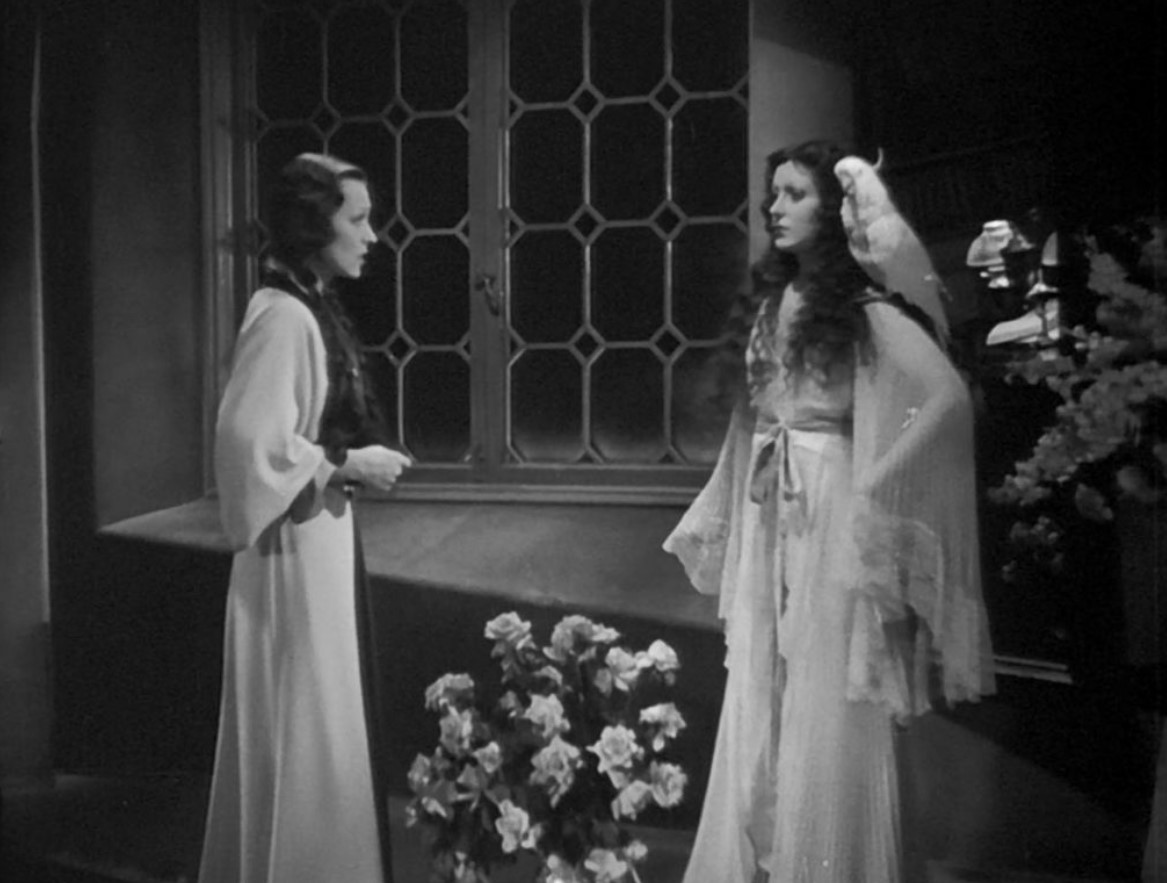
Mad Love switches the focus from Stephen Orlac (Colin Clive) to Dr Gogol, the brilliant surgeon who grafts new hands onto Orlac. In Mad Love, Orlac’s suffering is almost an afterthought. The film spends more time with and sympathizes more with both Gogol and the object of his obsession, the actress Yvonne Orlac (Frances Drake), than it does with Stephen Orlac himself. It is Gogol’s suffering and madness that is at the heart of the film. His antagonist is Yvonne’s disinterest in him sexually and romantically. Orlac is not a rival, but an obstacle, as Gogol struggles to get Yvonne to accept, if not requite, his feelings and to overcome the distance she deliberately puts between them.
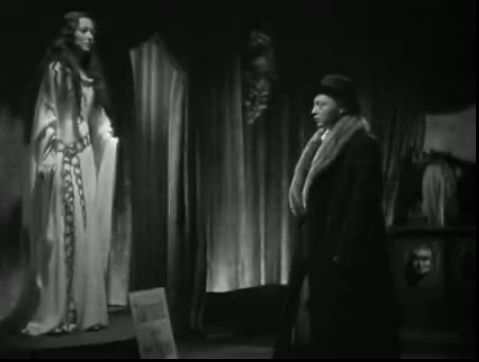
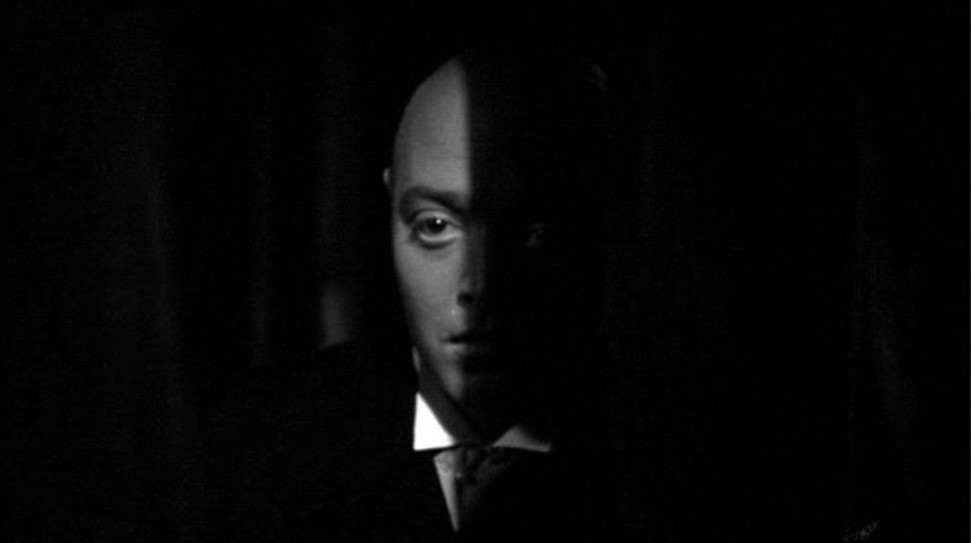
Mad Love opens as the show is about to begin at the Théatre des Horreurs as we ourselves enter a world of abstracted horror. The Théatre is a stand-in for Paris’ Grand Guignol–a theater dedicated to thrilling and terrifying audiences with grisly scenes and set pieces. Yvonne is being dressed for her performance. Meanwhile, Gogol buys tickets from a demon, gazes upon a wax figure of Yvonne as a medieval duchess tortured by her husband for her infidelity, and then leaves his coat and hat with a coat check woman dressed as a headless man. Back in Yvonne’s dressing room, we hear on the radio that her husband, pianist and Modernist composer Stephen Orlac, is about to take the stage. Dr. Gogol has his own box, where watches Yvonne, infatuated with her as she appears on stage.
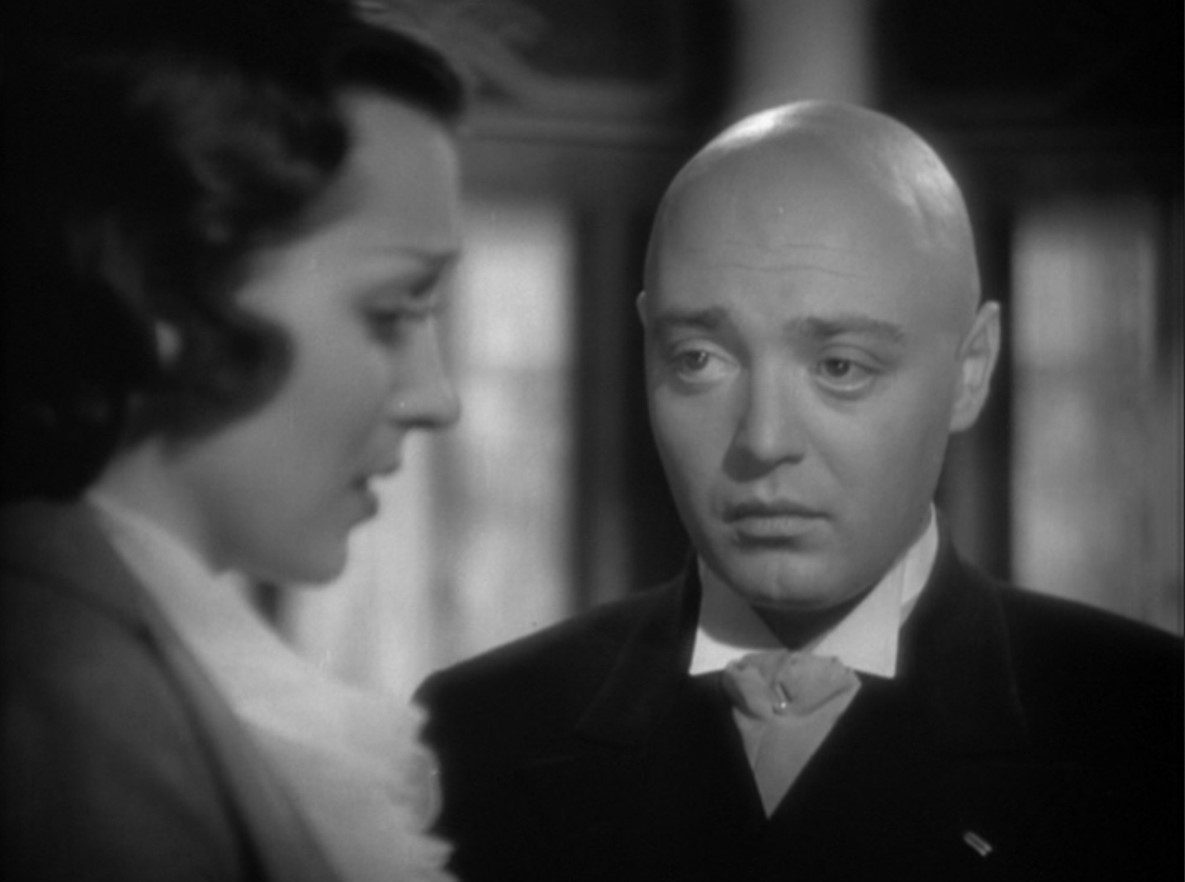
Gogol is both tremendously accomplished and tremendously lonely. As he asks after performing an almost miraculous surgery, “I, a poor peasant, have conquered science. Why can’t I conquer love?” While Gogol expresses himself in the language of mad science, Lorre makes the sentiment feel immediate and genuine. Gogol presents sympathetically as an affluent, elegant, compassionate, and philanthropic surgeon who can perform miracles at his private clinic, with his colleague Dr. Wong (a dashing young Keye Luke). At first, Gogol appears shy and gentle–a man whose feelings for a beautiful woman are sadly unrequited and can never be requited because she has married someone she loves. But Gogol reveals himself more and more over the course of the film.
Initially, Gogol plans to approach Yvonne and tell her of his love for her. He expects to win her—to conquer love as he has conquered science. When Yvonne invites him to listen to her husband’s piano concert on the radio, Gogol is stunned. He cannot believe she has a husband. He never considered the possibility. Worse, this is Yvonne’s final performance at the theater. Gogol is late on all counts. Interrupting this awkward moment, cast member invites Gogol to Yvonne’s farewell party. And, in a gesture that is thoughtlessly and unintentionally hurtful to both Yvonne and Gogol, the cast invites Gogol to kiss her as the price for a piece of her guillotine-decorated cake. Gogol shoots his shot, but his kiss does not win Yvonne’s heart. Instead, she leaves to meet her husband and Gogol buys the theater’s wax figure of Yvonne and has it sent to his house. He names the figure, “Galatea,” after the sculpture of a beautiful woman brought to life by the mythical sculptor Pygmalion. But, as he tells us, he is no Pygmalion. He is not even Henry Higgins. He cannot make the wax figure come to life with his love, his organ playing, or his reading of Elizabeth Barrett Browning’s sonnets. Galatea is not enough for him. Yvonne’s friendship is not enough.
When Stephen’s hands are crushed in a train wreck, Yvonne has him taken to Dr. Gogol’s clinic, begging Gogol to save them. Gogol tries to win her heart by transplanting a new pair of hands onto Stephen. Later, Yvonne admits she knew how Gogol felt and asked him anyway, but continues to affirm that they are just friends. While telling Yvonne that being near her is all he’s ever wanted, Gogol implements a final plan—one he had conceived even before Yvonne’s admission. Gogol’s tactics are gaslighting, the power of suggestion and a magnificently creepy outfit. But Gogol’s initial target is not Yvonne. It is her husband. He will drive Stephen mad and when Stephen is locked up, Yvonne will be his.* Disguised as a man who was seemingly brought back from the dead with advanced medical science, Gogol makes sure that Stephen knows that his new hands were hands of a killer, Rollo the knife-thrower (Edward Brophy). As his doctor, Gogol tells Stephen that he is suffering from a repressed memory involving knives and a wish he will not allow himself to express, implicitly a wish to kill his father. Gogol tells Stephen that if he could just remember, he would be cured instantly. While seeming to assuage Stephen’s fears that he is becoming a killer, Gogol deliberately reinforces and exacerbates them.
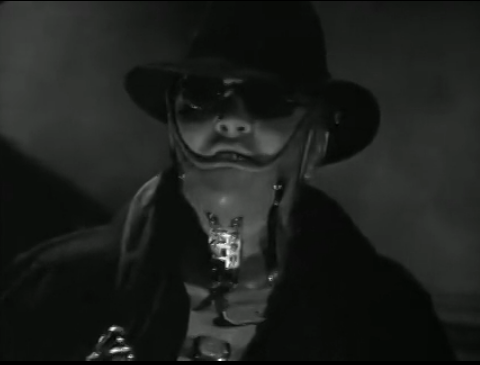
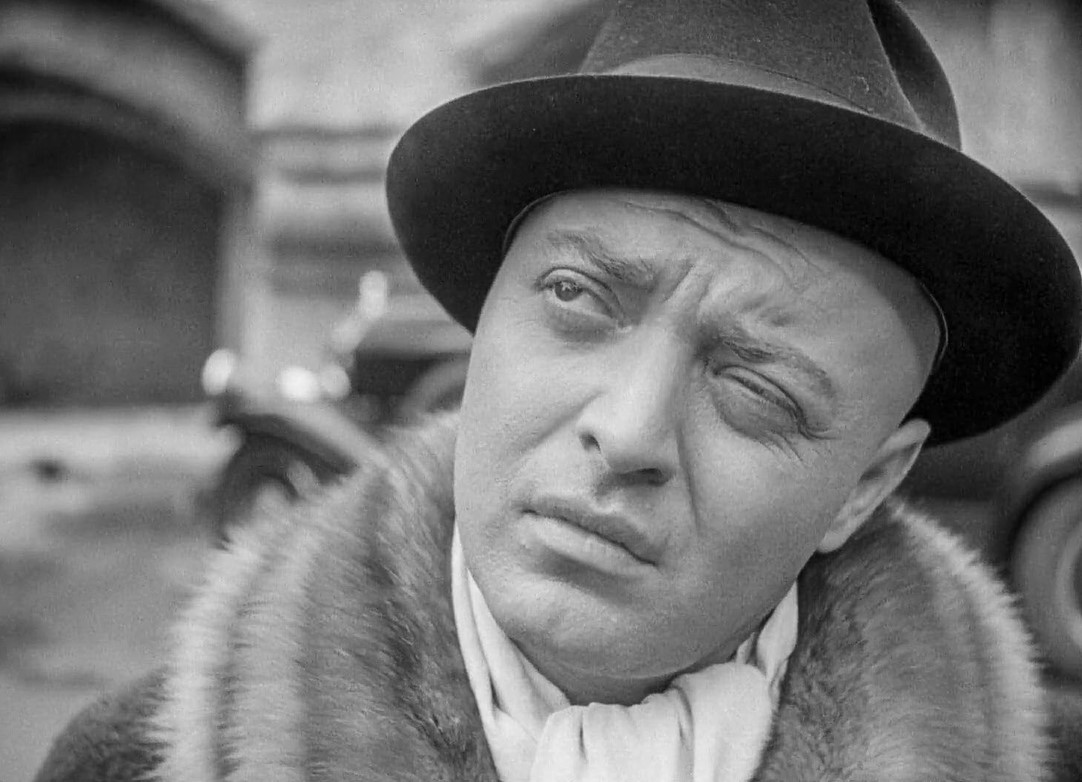
Lorre’s performance in Mad Love has layers. He brings both real human pathos and real human awfulness to Dr. Gogol. Most of us have had unrequited feelings and Lorre embodies those feelings so well. But it also becomes increasingly apparent that Gogol lacks empathy. He says the right things. He knows how to perform compassion and care when he must, but faced with conflicting desires, these emotions slide right off Gogol’s face and out of his voice. Thankfully, Dr. Wong is there to take over when Gogol literally walks away from his patients because of an opportunity to see Yvonne or attend an execution. Yes, he likes to watch executions and, as an eminent person in the community, Gogol receives word whenever a criminal is about to be killed. There is a fantastic scene as Gogol watches the execution of Rollo, Orlac’s hand donor. We do not see the guillotine fall. Instead we see Gogol’s detached, appraising gaze following the blade as it drops. Not horrified. He is not visibly excited or aroused, as so much “madness” was depicted in American movies by 1935. Gogol is detached.
At the same time, Gogol’s apparent worship of Yvonne obscures his entitlement and even misogyny. Gogol is a man who says he has “never known the touch of a woman.” His implication is that he has been spurned and that Yvonne should become his because of it. Perhaps he has been spurned, or perhaps Yvonne is the first woman who has interested him. His housekeeper claims to be the only woman who has ever been in his house, until he brings home “Galatea.” While he wears the fashions of 1935 and quotes both Elizabeth Barrett Browning and Robert Browning, Gogol feels like a very contemporary lonely, entitled and resentful man. Though the film is almost 100 years old, he is not all that different from current lonely, resentful men who feel betrayed by the objects of their obsessions and become cruel or violent. Gogol could be a “Nice Guy (TM),” “incel,” “red-pilled,” or a “man going his own way” today. When Lorre finally plays Gogol’s mad love with maniacal laughter and dissociation, it is because Gogol has realized he cannot accept Yvonne as a person and her wax figure is not fulfilling enough. As his housekeeper notes while feeding his pitcher plant, “He likes dead things.” Gogol likes the idea of Yvonne more than Yvonne and he likes her dead.
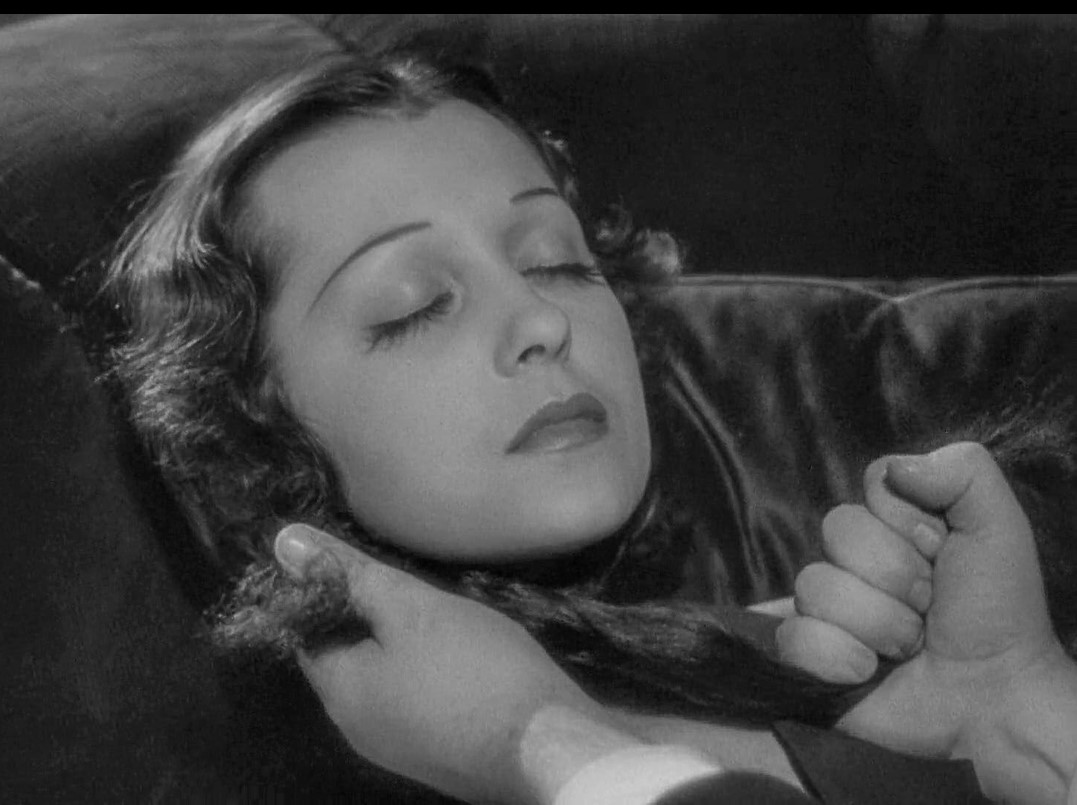
In the end, staged horrors, a standing date with Madame Guillotine, and possibly even the surgeries he performs are not enough and Gogol gives in to his desire to kill Yvonne and keep her dead body with him always, telling himself, her and us, “She feels no pain.” Gogol is paraphrasing Robert Browning’s “Porphyria’s Lover” (1836) from just over 100 year before.** It’s a poem about a man who strangles a woman with her own hair to have her and keep her just as he wants her forever.
I propped her head up as before,
Only, this time my shoulder bore
Her head, which droops upon it still:
The smiling rosy little head,
So glad it has its utmost will,
That all it scorned at once is fled,
And I, its love, am gained instead!
Porphyria’s love: she guessed not how
Her darling one wish would be heard.
And thus we sit together now,
And all night long we have not stirred,
And yet God has not said a word!
There is so much of the Grand Guignol, the absurd, and the stylized in Mad Love that there is no reason the characters shouldn’t be as well. Lorre plays Gogol with an awareness of these elements but with an emotional fidelity and even restraint before Gogol’s madness reaches its final form. Lorre is remarkably skilled in conveying emotion with his eyes and even a sudden blankness on his face—Gogol’s tenderness toward Yvonne, the crushing heartbreak revealed on his face when she mentions her husband, his blind longing, his belief that the feelings he has are so powerful that they cannot be anything but returned. Peter Lorre didn’t have to play Gogol this way. Another actor might have chosen a less sympathetic, layered characterization. But Lorre brought someone recognizable–even now–to Mad Love. I only wish we got to see more of these kinds of starring roles for Lorre.
*On the Hannibal tv series, of course, Hannibal uses a similar plan to make Will Graham his. But instead he plans to liberate Will be letting his meningitis go undiagnosed and pushing him towards becoming a murder husband.
**Gogol also quotes Oscar Wilde’s 1897 poem, “The Ballad of Reading Gaol,” as he menaces Yvonne with, “Each man kills the thing he loves.”
This piece originally appeared in a slightly different form at Biff Bam Pop.
~~~
The Gutter’s own Carol Borden, a poor peasant, has not conquered science.