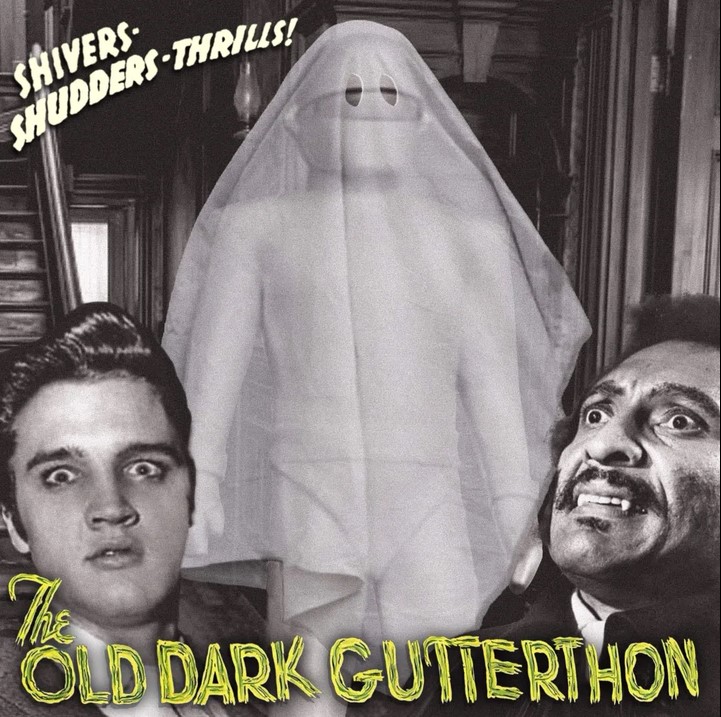

Full confession: I have seen this movie three times and it still gave me a jump scare as I rewatched it to prepare this essay.
~~~
Ittefaq (“Coincidence,” 1969) is enthralled by disorientation. Director Yash Chopra and writer G. R. Kamath discard mainstream Hindi cinema’s usual, even defining, components like song sequences, giant casts, and expansive romances. The film’s title promises the kinds of order-restoring twists that this cinematic tradition loves, like long-lost family members unknowingly encountering one another in unrelated circumstances—exactly the kinds of coincidences that Chopra’s earlier blockbuster Waqt revels in and wrangles into a happy, satisfying whole. Until its final minutes, Ittefaq is a story of deception, distrust, and opportunity. (And don’t worry: this is a spoiler-free discussion!)
Its truly weird opening sets the stage perfectly: after police vehicles roar through Bombay at night, the camera switches to POV footage of someone walking slowly through an apartment filled with people, with no sound except the camera’s footsteps, for almost an entire minute. This is the opposite of giving a hero a grand entry scene: this is turning a normal action like entering an apartment into a complete mystery. Whose apartment is this? Who are all these people and why are they gathered here just to stare at us wordlessly?
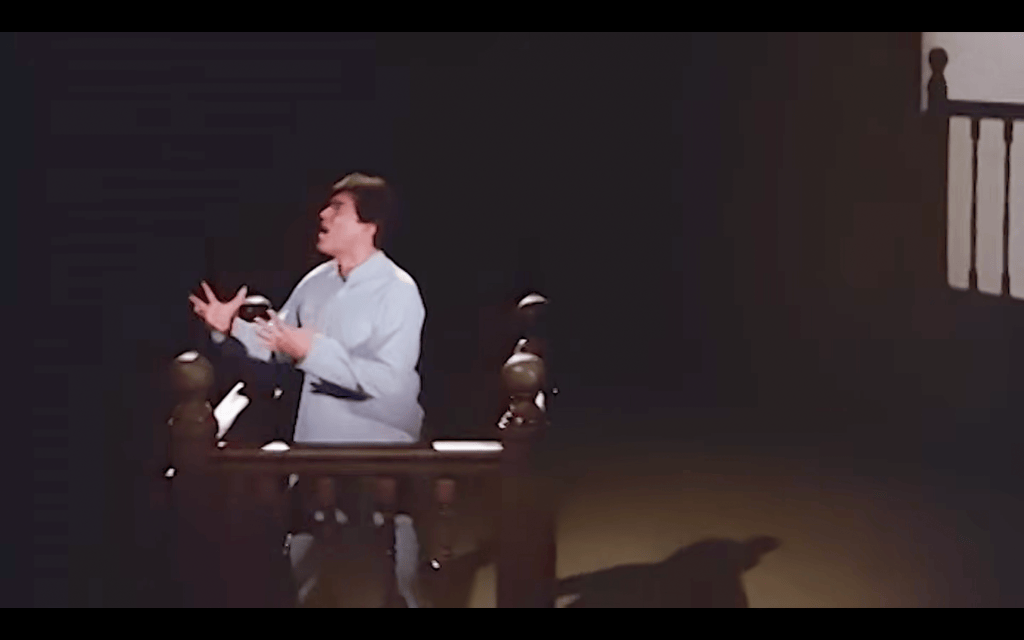
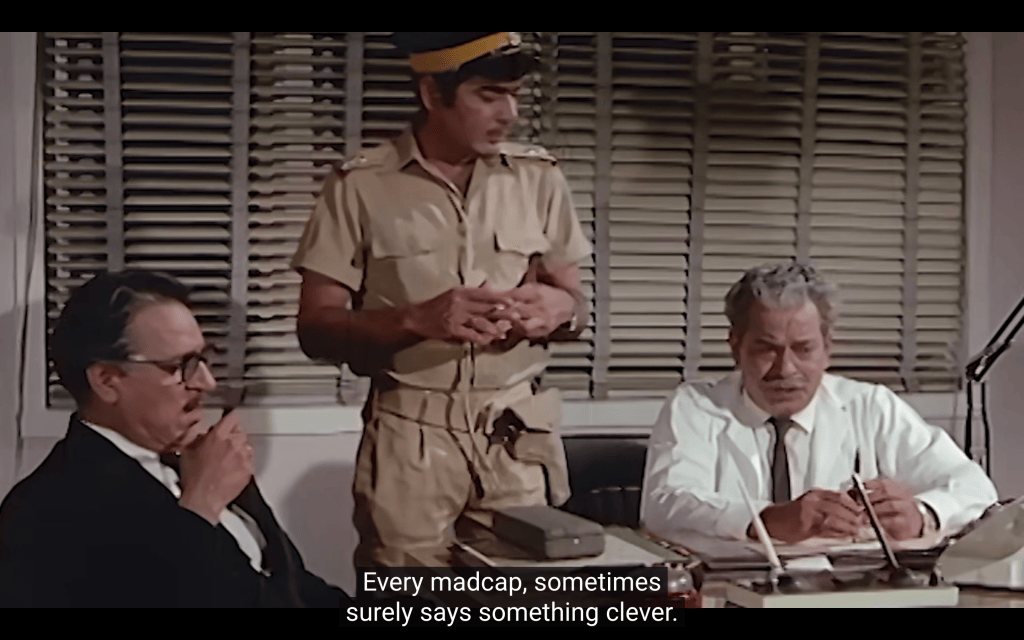
The silence is burst by dramatic strings and brass in the background score as we see a corpse on a bed, and the camera swings back to identify our perspective: we are Rajesh Khanna as Dilip Roy, an artist accused of killing his wife. Next is an abstracted version of Dilip’s trial, with dramatic lighting isolating him on the witness stand, where he raves about his innocence. He’s taken to a mental hospital, where three professionals calmly discuss his state: his doctor, his lawyer, and the police officer assigned to watch him. When Dilip is summoned to join them, he chides their halting attempts at gentle conversation: if he’s declared insane, he’ll be locked up in the hospital forever, but if he’s deemed mentally sound, he’ll be executed for murder. At this point in the film, it’s unclear which verdict would be just. On his way back to his room, he escapes the guards and flees into an evening thunderstorm.
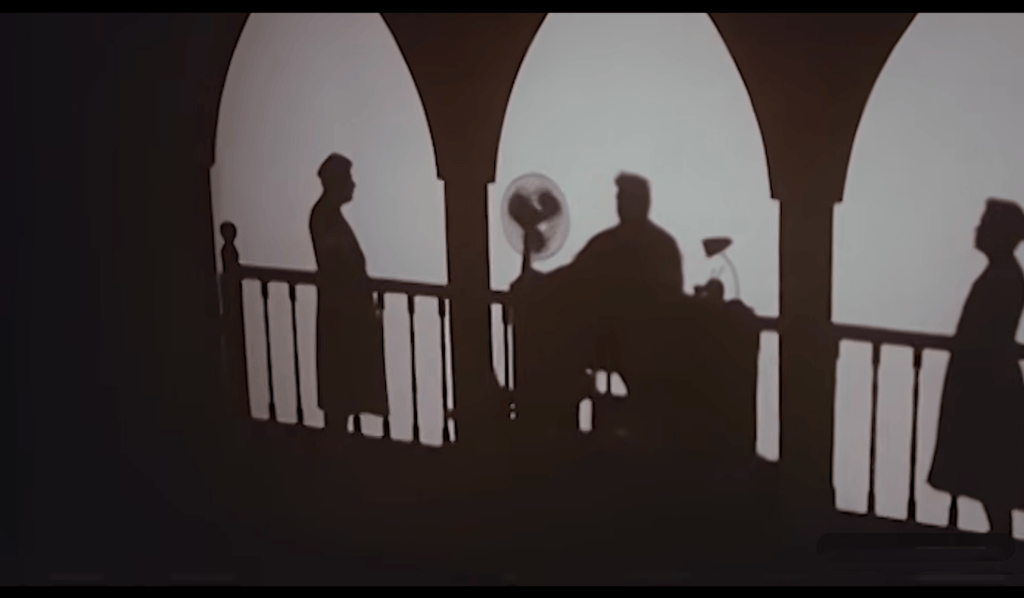
After these introductory sequences, the film abandons the outdoors and public spaces and moves to the setting of most of the remaining 80 minutes. Rekha (Nanda) is alone in her house, listening to the radio news that warns of Dilip’s escape. As she closes the windows against the rain and the news, of course Dilip slips into her house. The rest of the story will probably be familiar to anyone who has watched a mystery set in some intensified location, and this does feel quite Agatha Christie-ish (in a good way!). Rekha and Dilip find themselves isolated by circumstance—by coincidence!—rather than by weather or geography.
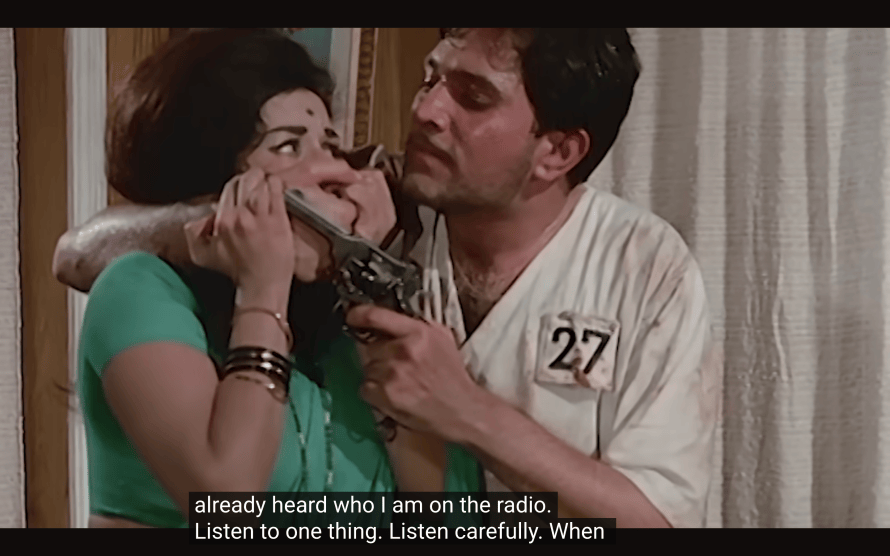
In true Bollywood fashion, the strangers thrown together do start to soften towards one another. Flashbacks establish Dilip as a cranky and self-centered artist with a wife who doesn’t appreciate his need for solitude, and Rekha says her husband is frequently away on business and they have no children, leaving her alone in a house that doesn’t feel lived in. They’re both a little odd within their society: they don’t have the markers of marriage (spouse and children in tow), and he is a creative soul in a world that generally finds art careers quirky at best. They start to feel sorry for each other—he for crashing into her world, she for the injustice he claims is responsible for his plight—and they start to behave more like friendly host and guest.
But this film has no interest in lingering on anything that’s “true Bollywood fashion,” so the coziness is temporary. The cycles of mistrust escalate: Rekha has no idea what Dilip’s intentions are, and Dilip can’t figure out why she doesn’t just run out the door when she cracks it open for the police sweeping the area for Dilip. Eventually, a second major question is thrown into the mix, giving Dilip another mystery to solve in addition to the Richard Kimble-y background noise of what happened to his wife.
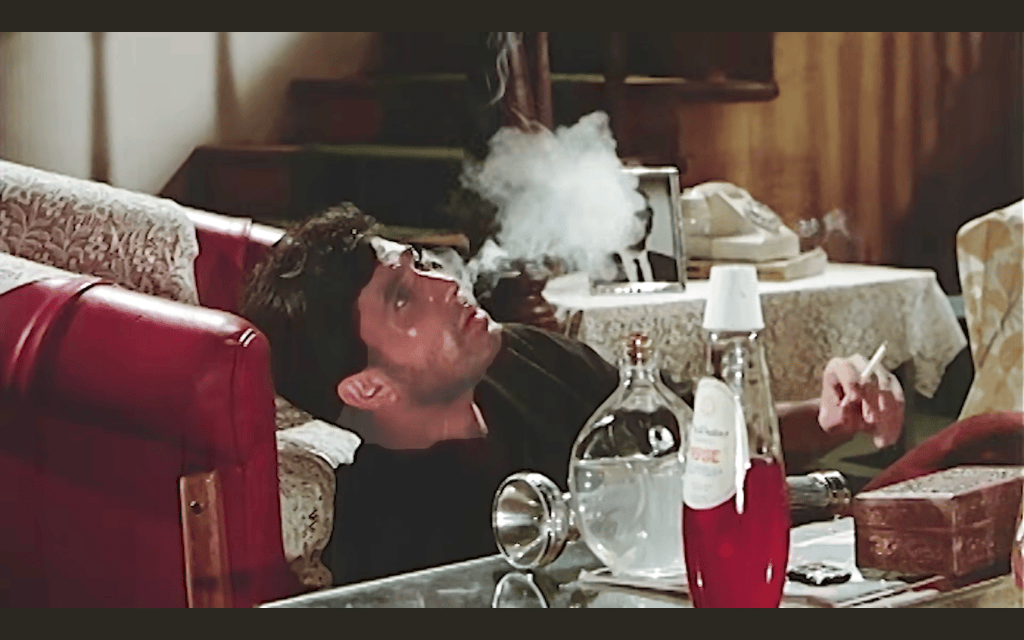
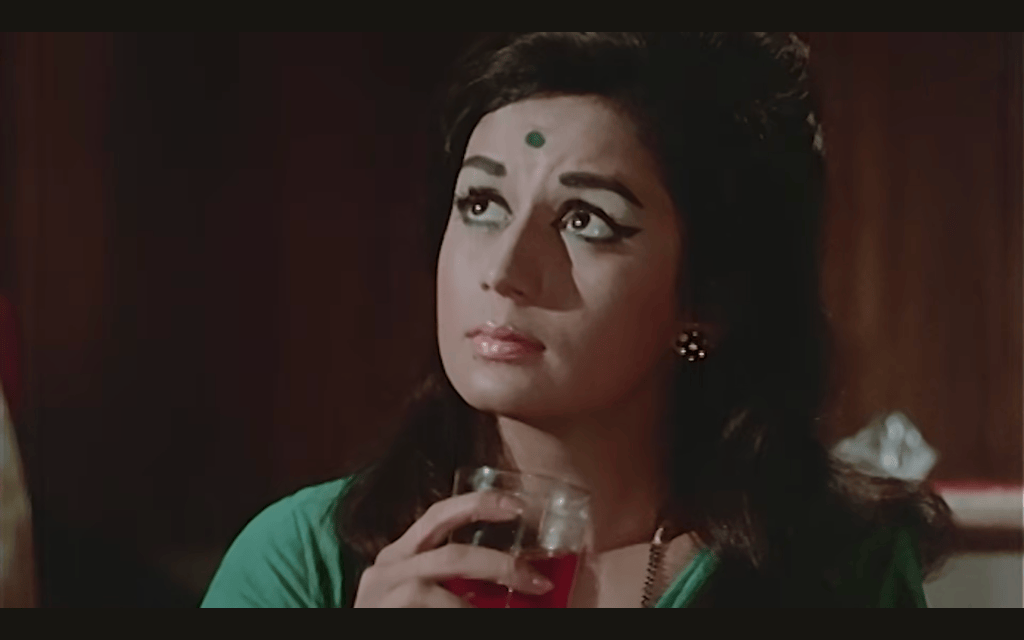
Do you remember what I said a few paragraphs ago about there being no song sequences in this film? It’s really one of the most destabilizing things about the project. Wikipedia says this is only the third Hindi film ever to have no musical sequences in it. I can imagine a way to work one or two in: Rekha singing to herself as Dilip dozes, for example, or even a cabaret number in a flashback to the night Dilip’s wife died or to Rekha’s early days of marriage (which she does mention in dialogue). But I’m so glad they aren’t there, because their absence further disorients the viewer: “we’re not like the other movies you’ve seen lately,” it purrs.
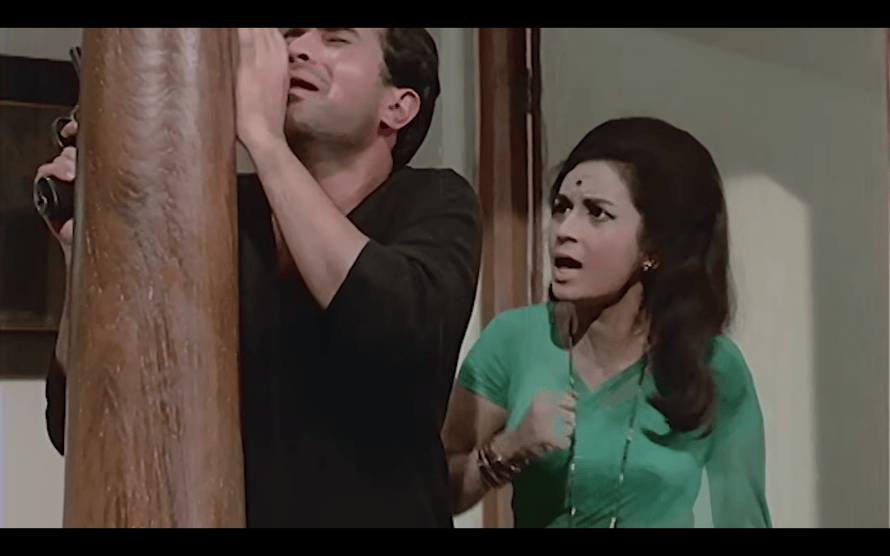
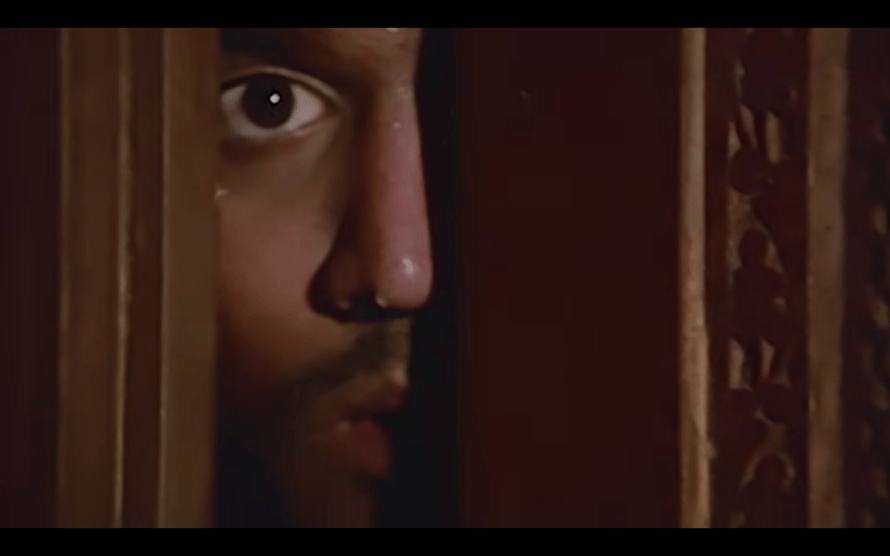
Similarly unusual is the decision to constrain the location in about 75% of the run time. I couldn’t think of any film made before this one that spends such a big proportion inside just one structure. When you learn that Ittefaq was an adaptation of an American stage play (Signpost to Murder, probably via the film of the same name starring Joanne Woodward), the set design of Rekha’s house makes perfect sense. A central living room has a door on one side leading to the kitchen, and an upper level hallway runs along the back of the living room, staircase in full view, with plenty of cabinets and closets to hide in. Fortunately, cinematographer K. G. Koregaonkar (who would work with Chopra many more times) moves the camera high and low and to different vantage points within the house, reminding us that neither Dilip, Rekha, nor the viewer can grasp the entire scene. There’s a surprising amount of activity for the middle of a stressful night too. Dilip bursts back and forth across the room, runs upstairs when someone knocks at the doors, peers through latticework with a gun ready to shoot Rekha if she gives him away. She nervously cowers and shivers, her eyes darting around for ways to save herself.
With so much focus on just two roles (Rekha and Dilip), the people playing them have to really nail it, and I gotta say, Nanda and Rajesh Khanna are perfect. This is not praise that I would expect to lavish on either of them; I find her performances to be whimpering and his to be scattered with smarminess and false notes. In both cases, this may be due to scripts and direction as much as to the actors’ abilities, but still, they’re not the stars I would have picked. Both are frantic in their own ways, and she in particular brings such range to the performance, swinging from fear to curiosity and pity to anger and self-protective scheming. Rekha is every bit as complex as Dilip, and I bet this is not the kind of role people would have expected for Nanda.
My only complaint about Ittefaq is its last moments. The score turns sappy, the dialogue praises bravery and good citizenship, and an unseen narrator blathers on about how criminals can never escape divine justice. But even then, an unexpected gunshot punctuates the moralizing, as though the film’s strange form is struggling against Hindi cinema’s habitual moral tidiness until the bitter end. I rewatched particular scenes a few times in a row while writing this, trying to decide if certain little plot holes really matter. I don’t think they do. Even if you know nothing of the context this film comes from, it’s a fun thriller. If you do know about mid-century Hindi cinema, then Ittefaq is an amazing experiment.
Watch Ittefaq with English subtitles (and optional English dubbing, which is dreadful) for free on Youtube. (The subtitles are labeled as being in Hindi, but they’re in English, I promise.) If you wish to see this film without spoilers, stay far away from its Wiki entry!
~~~
Beth Watkins should be lit more dramatically in her abstracted office.
Categories: Screen