
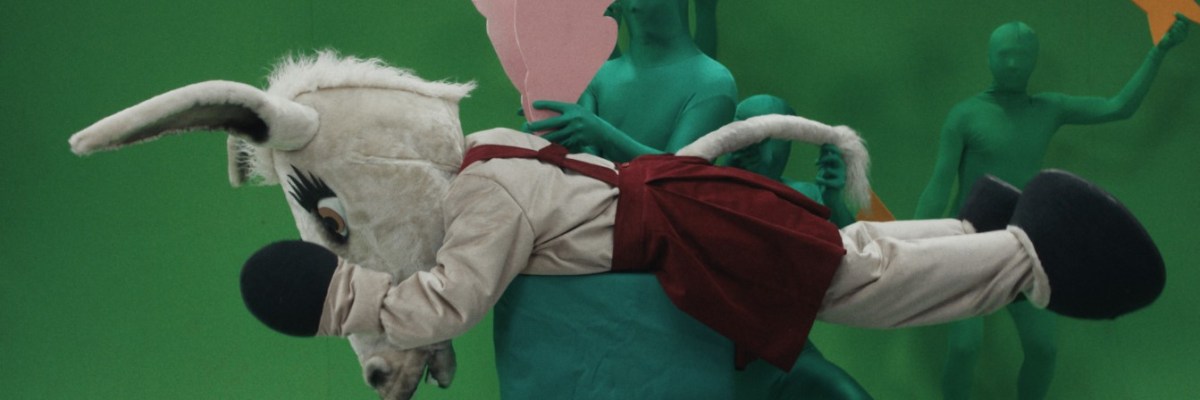
There’s still some screenings today, but Fantastic Fest 2026 is over for me at least. I had a good festival this year. I didn’t get to watch all the films I hoped to, but it’s hard to be disappointed when I know I’ll see most of them eventually. And what I really look forward to every year is discovering films I didn’t even know existed and seeing wonders. And I saw wonders this year.
There was barbaric adventure and delightful Low Fantasy. I witnessed a princess traveling through time and genre to rediscover love. I saw a vigilante superhero and a villainous convenience store cashier. Narrators intoned ancient lore over animated illustrations. I beheld jiangshi in a karaoke bar in Dublin and a demon in a studio apartment in Austin. And a particular joy for me this year was joining in cinematic celebrations of the collaborative and the handcrafted.
Here are the films, in roughly the order I watched them.
Kylgor in the Grisly Abyss (Canada, 2026)
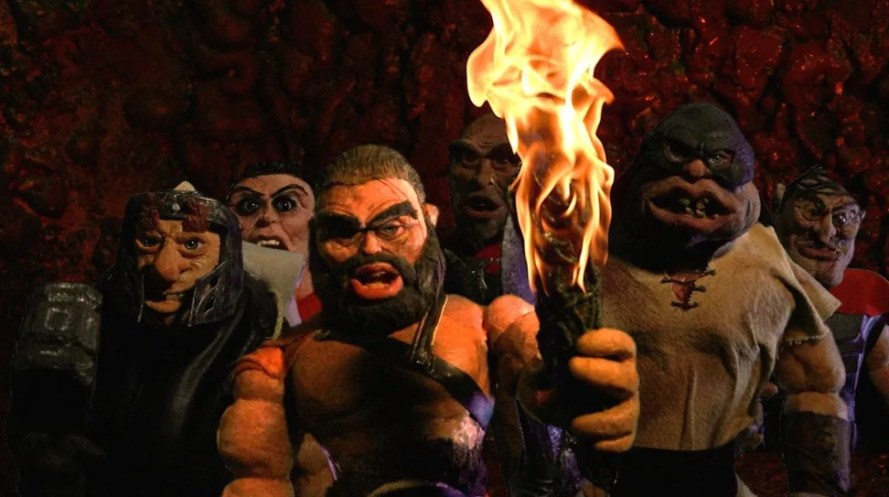
I want more low fantasy I want more barbarian heroes, more weird creatures, more eccentric worlds created by eccentric weirdos who aren’t afraid to have a narrator read backstory over maps and illustrations for 3 minutes before the opening credits. No prior origin story establishing the character. Just, bam you are with them in media res and the res is a fight. Mason Newton DeRushie’s Kylgor in the Grisly Abyss has all these elements and adds more: latex-y puppets, stop motion animation, geysers of corn syrup blood, gnarly practical effects gore, and all the creativity an insanely low budget and a dedicated group of friends and family can unleash.
Kylgor the Conqueror (Timothy Paul McCarthy) and his sworn brothers plan to avenge the destruction of their villages by the evil King Kath (Justin Major). But after killing Kath, the warriors are plunged into the Grisly Abyss, a terrifying and hostile subterranean world. A small squad of King Kath’s soldiers plummet into the abyss with them. Will the enemy soldiers with with Kylgor and his people or will they prove a continuing threat? This question is far less important than you might think because everything in the Grisly Abyss is trying to kill everything else very successfully.
While I suspect the film is inspired as much by Jim Henson and Brian Froud’s fantasy film about a hostile world that must be restored to balance, The Dark Crystal (USA, 1982), as by Robert E. Howard and Heavy Metal / Metal Hurlant, Kylgor’s pace is so relentless in a subterranean world hostile to apparently all life that we don’t have the time or the resources for many vistas of strange beauty and wonder. We have violence and gore to get to. A disclaimer at the end of the film reads: “Many puppets were harmed in the making of this picture.” And, yes, there were scenes of puppet and stop motion violence I don’t think I’ve seen the like of before—not even in Phil Tippett’s Mad God (USA, 2022). I mean this as a compliment.
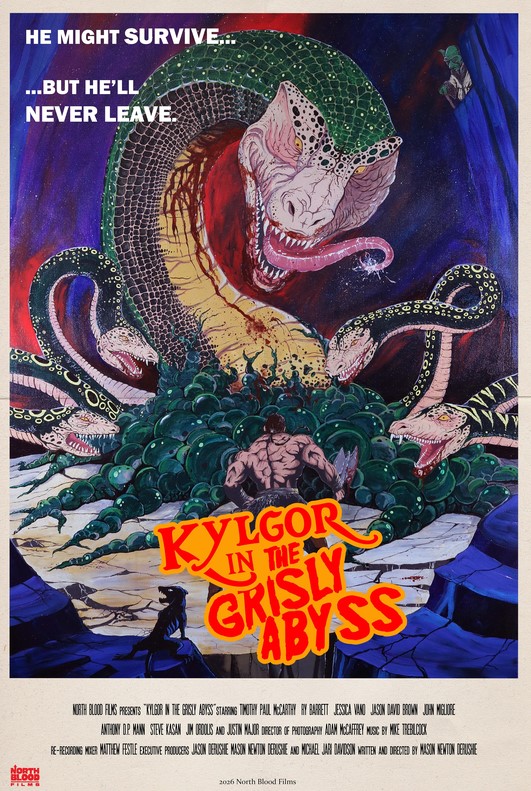
As much as there were stunningly gross moments, there were moments that charmed me as well. I love to see an skeletal king on an ancient skull-bedecked subterranean throne. The vista of the characters emerging into crystal cave was marvelous. Mike Trebilcock’s score perfectly captures the heroism and majesty a sword and sorcery film score should. A monster’s savagely detached clawed hand flying across the screen as a kind of wipe in a montage of Kylgor fighting his way to freedom made me laugh in delight. The use of background character action figures for wider shots and to show characters’ reactions to events emphasized the feeling of watching action figure play. Those defiantly unarticulated figures and everything else in the film is shamelessly what they are and I loved it every time I saw them. I also appreciated a reference to one of my favorite Jimmy Wang Yu films, but I won’t give away a surprise by naming it here. And the movie’s lighting, blocking, and shot composition are more interesting than many a franchise blockbuster. They’re interesting, in part, because DeRushie and his family and friends who came together to make the film fully embraced their medium, their materials and their resources. I love how much love Kylgor In The Grisly Abyss was made with.
Donkey Princess (Chile / France / Netherlands / Uruguay / Germany, 2026)
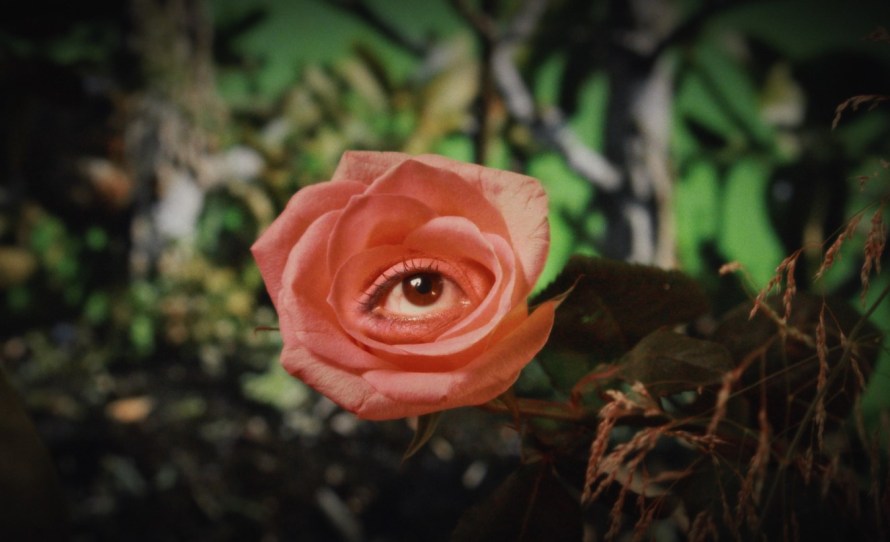
Princess Diana (Antonia Giesen) grows up in a fairy tale world with her mother the Queen (Victoria Giesen) and her father the King (Francisco Melo). A plague hits the unfortunate Kingdom of Chile and Diana’s mother dies. Her father is heartbroken. Determined to protect Diana and his subjects from feeling the pain of heartbreak, the king issues a decree declaring that love is a plague. He orders anyone exhibiting symptoms of love to be banished to the Valley of Thorns. But hearts cannot be protected from love—not someone else’s heart and not your own. Diana falls in love with a newly arrived stranger, Lalo (Andrew Bargsted), who gives her a bracelet that grants wishes. Lalo tells Diana that “these wishes will not come true in your kingdom, but rather a distant one and in another time.” He hopes that she never has to use it, because if she does there is a chance she will hurt someone she loves. The lovers are caught and Lalo is banished. Prevented from following him, Diana, uses the bracelet and travels to many places, times, and even genres to rediscover her love.
Cristóbal León and Joaquín Cociña’s Donkey Princess is a thoughtful fairy tale* about the dangers of love, wishes, loss and letting go. Like many such stories, it is not suitable for small children—unless your small children love Jan Švankmajer and the Brothers Quay as well as Shelley Duvall’s Fairy Tale Theatre, Jim Henson’s Storyteller and contemporary dramas about relationship issues and elder care. There is some horror and gore beyond the existential horror so many fairy tales (and dramas) illustrate.
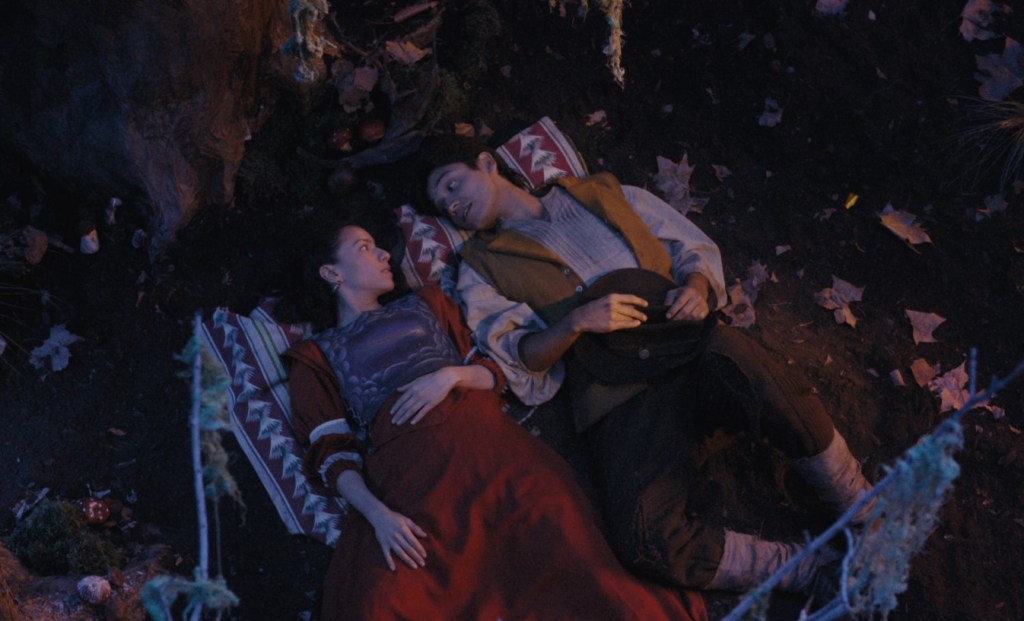
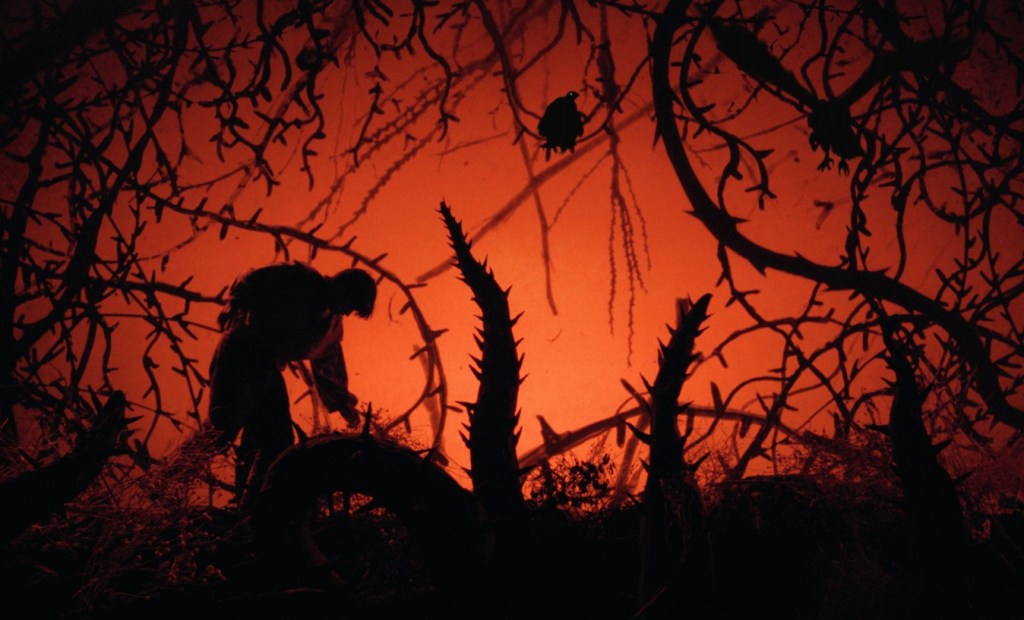
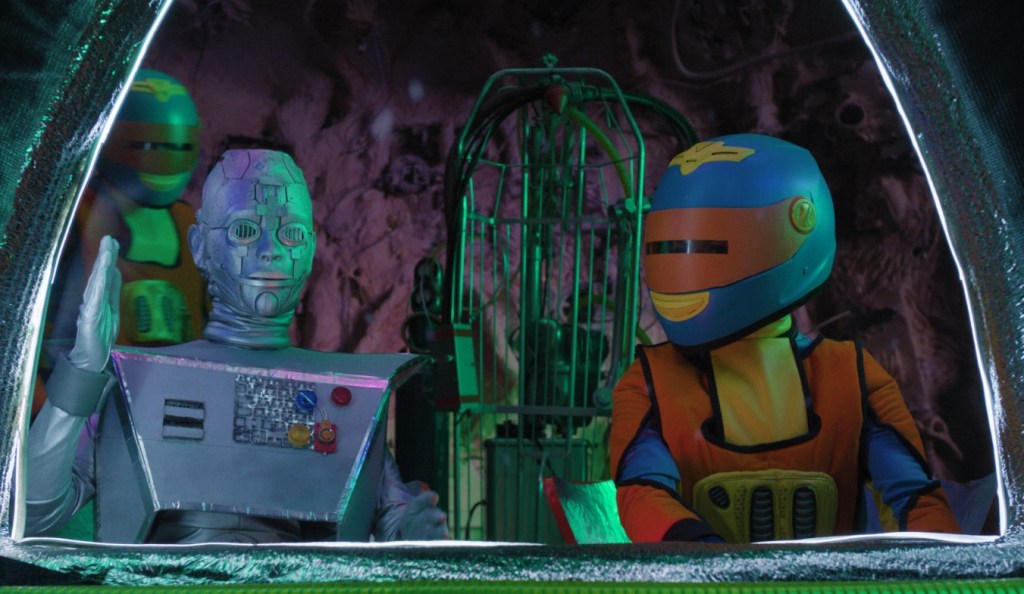
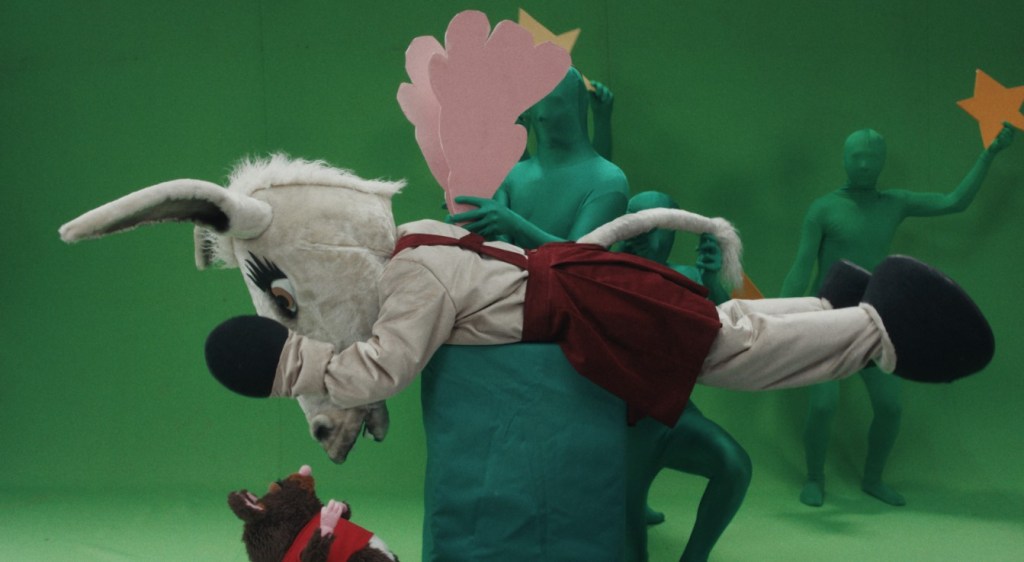
I loved Donkey Princess—all the times, places and genres represented in it, all the methods of creating the story. I loved how the film itself embraced the possibilities of film and filmmaking. The movies I’ve been drawn to lately have been ones that feel handcrafted. Movies that not only accept and work with artificiality and “looking fake” as a result of financial constraints, but embrace and celebrate the art and artifice of staging and performing stories. They celebrate all the varied arts and mediums that can go into making a film. I remember vividly a moment in Jane Schoenbrun’s recent Sex & Death At Camp Miasma (USA, 2026) when the camera reveals that not only is the snowy forest our protagonist walks through a backdrop, but reveals brushstrokes if you care to look. In Kylgor In The Grisly Abyss, I was delighted by the use of immobile sculpted figures set in the background of a shot. They allowed for the creation of wide shots and gave a sense of scale, but also “reacted” in awe and wonder to a subterranean cavern filled with purple crystals.
Donkey Princess is a very different movie than either Sex & Death At Camp Miasma and Kylgor In The Grisly Abyss, but like them it embraces the handcrafted and, like Kylgor in particular, the collaborative. Donkey Princess reaches for truths about love, loss, and letting go by means of fairy tale and artifice. There are live actors, puppets, stop-motion, 2D and 3D animation, painted backdrops, and miniatures that recall the stylized miniatures of both Expressionist filmmaking and Czech animation. There are costumes that are stagier, some that are low-budget foam tokusatsu science fiction as well as contemporary clothing. The work is visible to the viewer not only in its materiality—paper-mâché, hand-woven crowns and headbands, latex puppets, practical effects gore, and animations that are equal parts Jan Švankmajer and Louis Nevelson’s boxy sculptures in miniature—but we even see filmmakers’ hands adding insects to miniature sets. And in the credits, León and Cociña note that the film was made in a gallery at the Matucana 100 Cultural Center in Santiago, Chile. The making of Donkey Princess itself was an exhibit that gallery visitors could observe. The film is a wonder and a celebration of art all around.
Like so many other fairy tales, Princess Donkey is filled with delight, comedy, horror and many, many wonders. And I am still thinking about it, because the film itself seems like the kind of complicated wish the bracelet grants taking us to places, to our desires and fears given form, but only in another kingdom and another time.
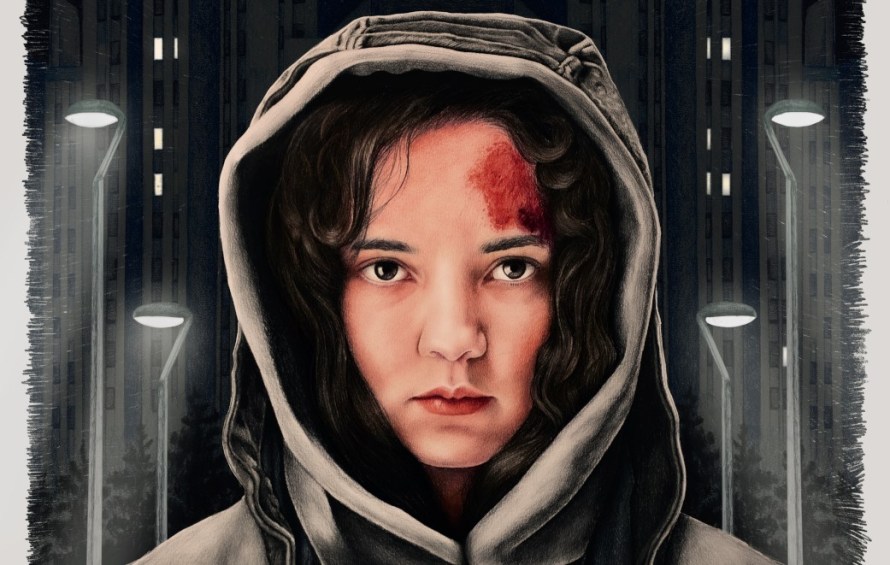
Girl In The Night (Slovenia, 2026)
Rok (Urban Kuntarič) works the late shift at a convenience store in an unnamed city. He inhabits liminal spaces during liminal hours—places and times where anything seems possible, and the rules of social life seem suspended or more malleable. In his convenience store demimonde, Rok acts on urges to steal. He steals candy bars from his work as his co-worker (Maja Sever) sleeps, listens to music on headphones or watches things on her computer. As he bikes to work, it even seems increasingly possible to act on his impulse to steal a bicycle locked up along the path. His daytime life is more populated, but only with his best friend, Kremer (Rok Roudi). They watch tv together, eat together, and watch birds at a local lake. That is, until Kremer brings home his new boyfriend, Nik (Nejc Jezernik), and Rok meets a woman, a late night vigilante (Lara Wolf), at his work. Rok finally steals a bicycle—her bicycle—so he can see her again and become her sidekick in the search for her turquoise Victoria 1937 bike. And, perhaps, so he can become the low stakes, low level masked villain he was always meant to be.
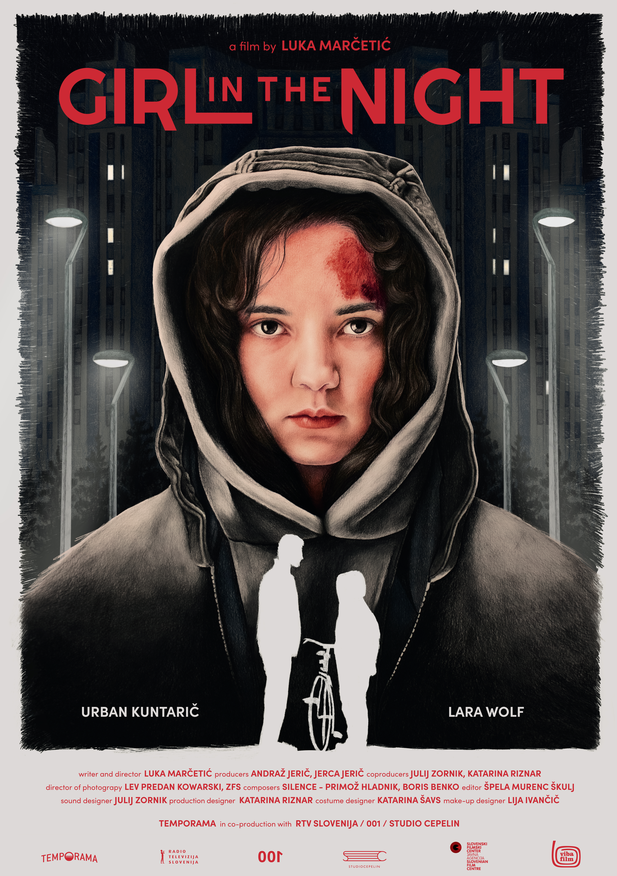
Girl In The Night is a story about friendship, jealousy, and change. It’s a portrait of late night life in small cities or in city neighborhoods that seem empty except for the quiet yellow glow of street lights. It’s a deadpan comedy about how we change ourselves, hoping to be who the people we want to impress want us to be. And it’s the story of a vigilante, a low stakes superhero, called to address the problem of that community’s missing pets and stolen bikes. The Girl feels a bit like Batman, and like Batman, there is a nemesis who rises to meet her. Rok dons an ersatz cape and, as a mask, pulls a dark red shirt over his face, glares out of the neck hole and ties the sleeves behind his head. Rok fulfills his calling to low stakes theft and to spend time with The Girl as both a loyal sidekick and a nemesis who betrays the values of the neighborhood. In doing so, Rok finally creates a destiny for himself.
I mention Batman, but the Girl is more in line with Batman’s predecessors—masked avengers like The Shadow. Or perhaps she stands between them. The Girl struggles with the limits of the violence she believes is necessary to do justice. Her crime fighting costume, like the Shadow’s is mundane utilitarian clothing—a double layer of hoodies over dark shirt and pants. (Rok’s super villain, however, wears a mask and cape reminiscent of The Shadow’s crimson and black colors, but also of the covers of Ed Brubaker and Sean Phillips’ Kill Or Be Killed). But this is all an aside. The Girl struggles over what the limits of violence are and what the appropriate punishments are for those who injure the community by stealing bicycles. Rok struggles with all of his feelings—his feelings as sidekick and villain, his feelings for the Girl and for his best friend. And In Girl In The Night, the stakes and consequences are, like much of daily life, both comic and sad.
Writer/director Luka Marčetić does a wonderful job of capturing the feeling of a city at night when most everyone is asleep. It’s one of my favorite feelings. The use of street lighting at night, a more natural white light outside during the day, and the actors’ flat affect all enhance the isolated and liminal feeling of the film. I was a little disappointed in its ending. I was hoping Marčetić and the Girl would make a different choice, but the ending is not out of line with everything else that happens in the film. I enjoyed the low stakes crime and heroism after so many galactic battles and cities destroyed in superhero franchise movies. And the low stakes betrayals in Girl In The Night were enough for me to really feel them.
Kung Fu Deadly (Ireland/Australia)
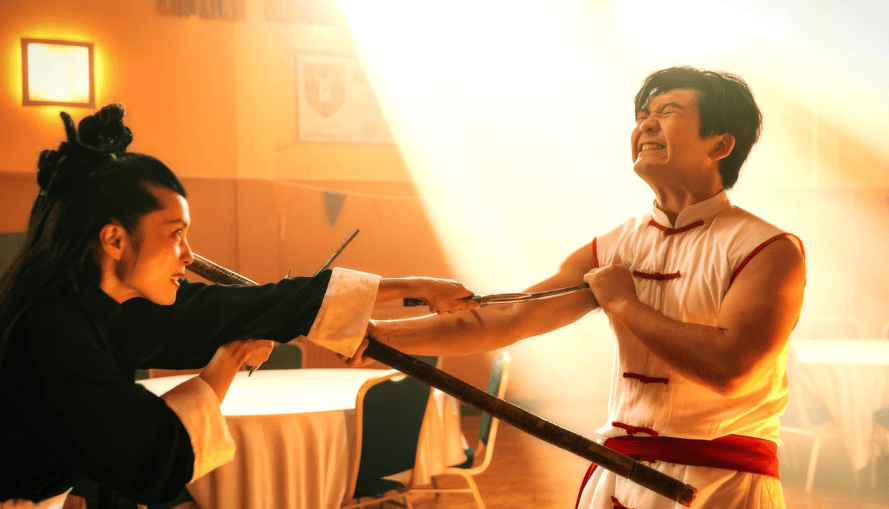
When a neighborhood in Dublin is beset by a swarm of rats, exterminators Danny (actor/comedian Steven He O’Byrne) and Frank (Michael Tient) are on the job—because they desperately need the money. Unfortunately for them, the rats are fleeing a newly released jiangshi, a Chinese vampire, who has recently been uncrated and is under the control of a local gangster in a flashy sequin jacket, Marrs (Max Huang). They are out of their depth until Lian (Gemma Chua-Tran), a guardian sworn to fight jiangshi, teams up with Danny and Frank. But T’ang (Jason Tobin), the jiangshi, is seeking his to free his beloved Demon Queen (Finola Xie) so she can release her horror upon the world. Unfortunately for T’ang, it turns out that Danny has a destiny to protect Dublin from jiangshi.
I suspect director Fergal Costello, co-director/action choreographer Lee Huang, and writer Paddy McDonald have an affection for a particular era of martial arts movies. And not only the kung fu horror comedy of the Mr. Vampire series and Sammo Hung’s groundbreaking, Encounters of the Spooky Kind (Hong Kong, 1980), which unleashed hopping vampires on the world.
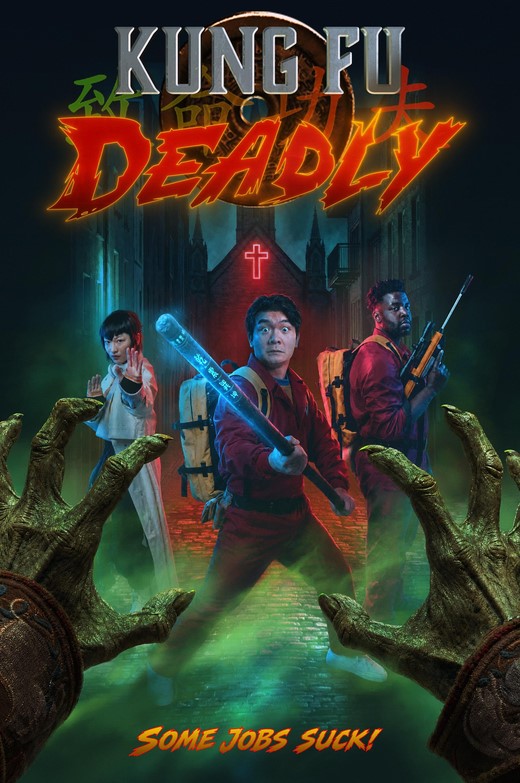
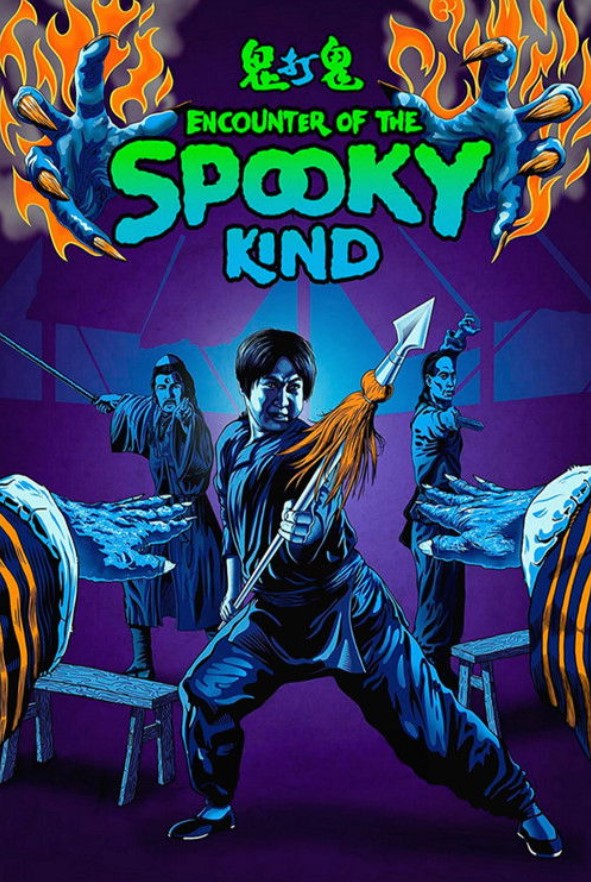
Kung Fu Deadly also channels the 1990s and 2000s crazy weird fun of Jet Li’s Hollywood era. There are the saturated colors, the kind of cool the villain embodies in his slinky sequin jacket, the cosmopolitanism set in a particular place, Dublin. And while you should not expect Jet Li, the action choreography is solid. Gemma Chua-Tran, Finola Xie, Max Huang and Jason Tobin are the standouts during fights in a cast made up more of traditional actors and comedians than martial artists.
Kung Fu Deadly tells a standard kung fu movie story of a young man discovering that he does have the ability to stand up to evil. And that’s fine. Sometimes what you want in your kung fu horror comedy is the old reliable tropes. The opening animated narration warning about the Demon Queen and the hero who will arise had a nice illustrative style that reminded me a bit of Kagan McLeod‘s old graphic novel, Infinite Kung Fu. I also really enjoyed the jiangshi make-up. It was green and latex/silicon, but also flexible enough that Jason Tobin in particular could express all his wicked jiangshi energy. But where Kung Fu Deadly really shines is the chemistry between the actors. The friendship between Danny and Frank feels very real. All the actors clicked, in fact. My only complaint is that sometimes some of the jokes and exposition slowed down the pace of a film that should really keep moving. Of course, a lot of the jokes and a lot of this film are not aimed at me. They are for a Dublin audience delighted to see spice bags, a shout out to the North Side, actor/musician Steve Wall, not to mention jiangshi and kung fu shenanigans right there in Bram Stoker’s old stomping grounds.**
Terms & Conditions (USA, 2026)
Years ago, I was on a streetcar in Toronto—Carlton, I think—and a couple of young guys were talking loudly about how they planned to summon a demon that night. They didn’t mention what they planned to do once they had, but they were intent on summoning your classic hellfire and brimstone Christian demon. Nothing seemed to change in the city, so I assume they failed. I remember thinking, though, “If you do summon a demon, you deserve what you get.”
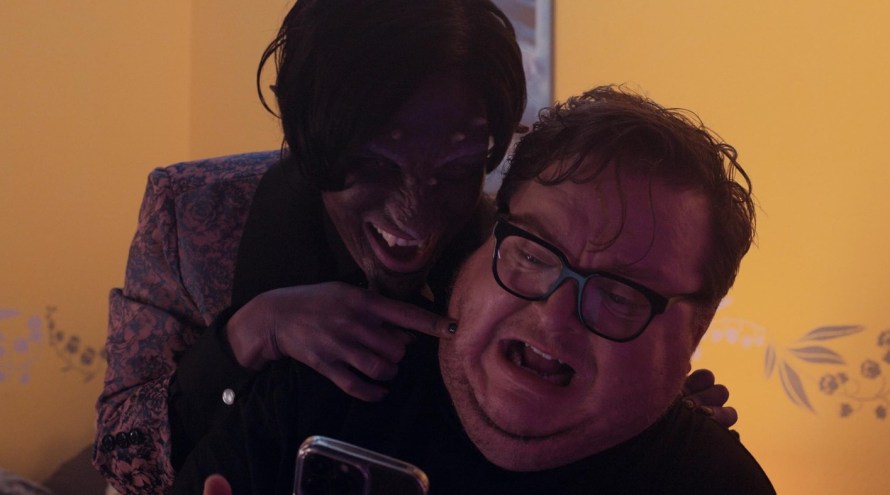
Kev Dooley’s Terms & Conditions (USA, 2026)—based on a short story by Frank M. Taylor—is a comedy short that definitely shows a man who summons a demon and deserves what he gets. I say that not to spoil anything, but so that the audience who will most likely enjoy this short will see it.
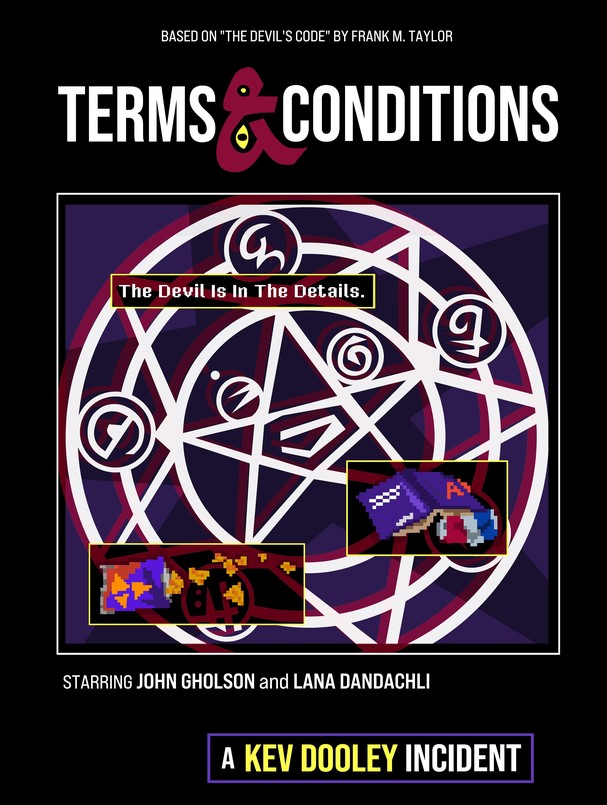
An angry incel tech bro named Rob (John Gholson) feeds a slew of occult Latin texts into ChadPDG (voiced by Dooley) to translate a ritual so he can summon the demon Astaroth (Lana Dandachli) to punish a female co-worker who turned him down at work. But Astaroth is genderqueer and Rob doesn’t seem to notice. He’s too intent on getting his wish and maintaining his belief in his cleverness. He summoned Astaroth and they must obviously obey his commands, right? But Astaroth recognizes a douche when they see one. After all, that’s part of their job.
Dandachli plays Astaroth with appropriately diabolical glee. Her Astaroth’s ironic assessment of Rob’s wishes and desires is delightful in both Astaroth’s enjoyment of it and Rob’s total misreading of it. Astaroth loves their work and that’s always great to see. Gholson does a fantastic job portraying the arrogant deluded entitlement and gullibility of a man absolutely convinced he is a genius and in control despite the significant amount of evidence to the contrary. There’s a wonderful and hilarious moment when Rob strides from his computer to his summoning circle area rug*** giving brisk orders to ChadPDG. Gholson’s Rob radiates delusions of power that seem adopted from science fiction and fantasy. He acts as if he’s starship commander, a high tech CEO, or some kind of techno mage having occult rites sent to his phone by his AI in his studio apartment. Rob presents the worst of both tech bros and ritual magick bros in one AXE body-sprayed package. He’s immamentizing his resentments and his delusions with both Latin and technology.
Terms & Conditions was the only short film I watched at Fantastic Fest this year, and I thoroughly enjoyed it. I always enjoy translation and summoning based-humor.**** Fun, genderqueer demons are my favorite demons. And who doesn’t enjoy seeing ironic, comedic justice done to people who not only deserve it, but summon it themselves?
*after Charles Perrault’s Donkeyskin.
**I assume the rats streaming away from T’ang’s shipping crate were a homage to the many rats that accompany Dracula and his crates in both film and book form.
***Dennis Wheatley’s Duke de Richleau would be appalled by both its existence and its state.
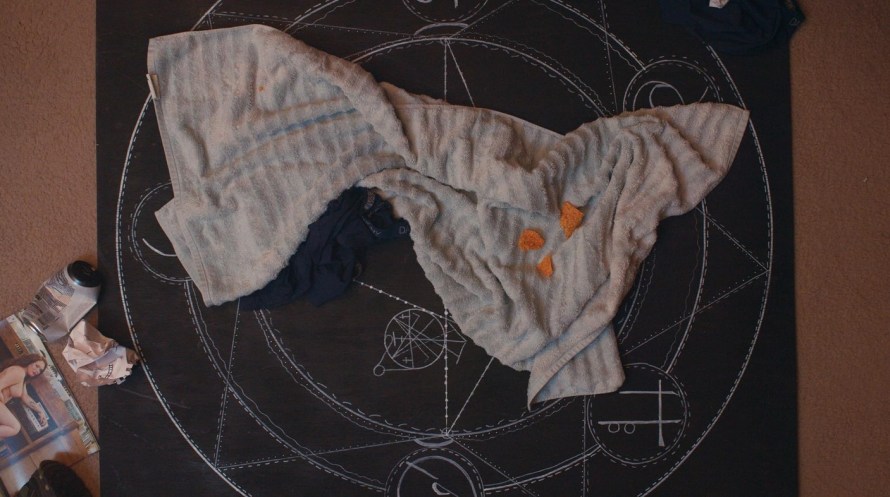
****Terms & Conditions might be a fun watch with one of my favorite FEWDIO shorts, “Vargel Geroth, Monster from Hell.”
~~~
I received a review copies of these films. And my first impressions of the films appeared in a slightly different form at Monstrous Industry.
Carol Borden rides into the night on a turquoise Victoria 1937 bicycle.
Categories: Screen